 Apply now
 How to apply
 Save course for later
 Send me a PDF copy
 I want more info
Choose the major that interests you most
‘I chose to study the Bachelor of Biomedical Science because of the flexibility of the degree. The first year of study provided me with a taste of each major, enabling me to tailor my second and third years of study to align with my interests. Now, I have found a passion for human anatomy and physiology, particularly the cardiovascular system.’
Explore QUT laboratories
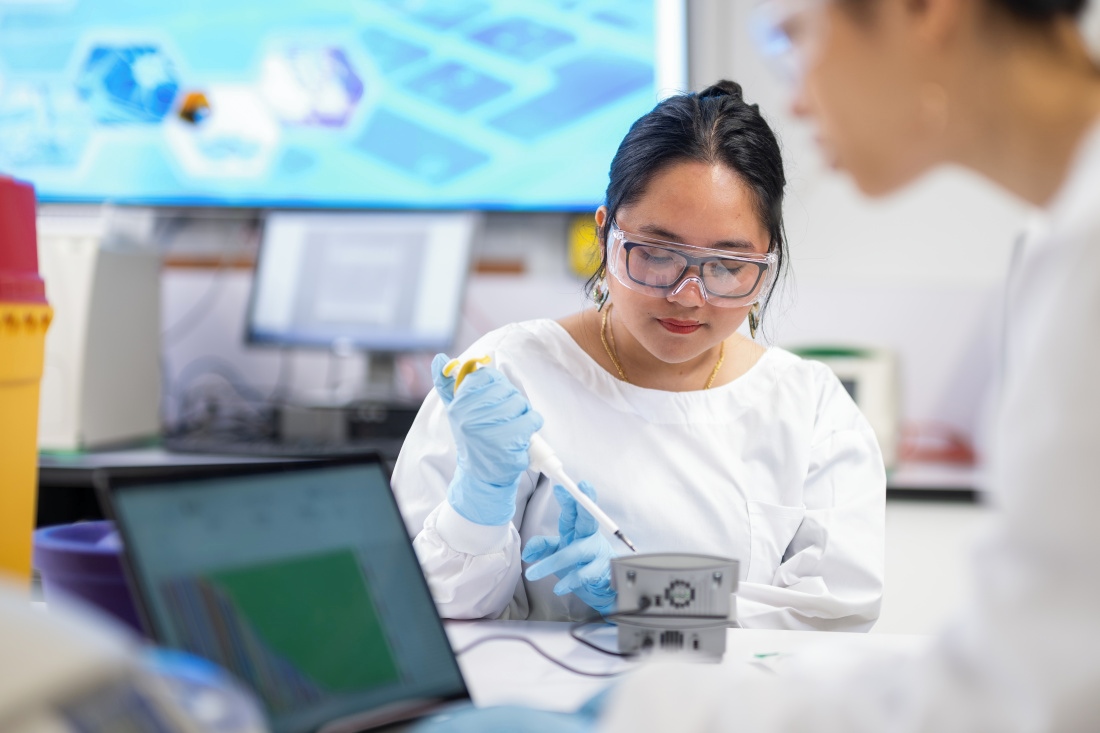
Take a sneak peek at where you will learn if you choose to study biomedical science or medical laboratory science at QUT. You’ll be learning in the laboratories from Semester 1 of your first year. Check out the spaces where you’ll master lab skills.
What's it like studying biomedical science?
‘My favourite unit in biomed is definitely physiology: it covers so many different topics from neuroscience to clinical physiology, to pathophysiology – studying how and why we get disease. I think it’s one of the best units to broaden your understanding of the body. Every unit is different, we do hands-on learning in practicals, and learn important skills like professional communication and presenting.’
Explore biomedical science careers
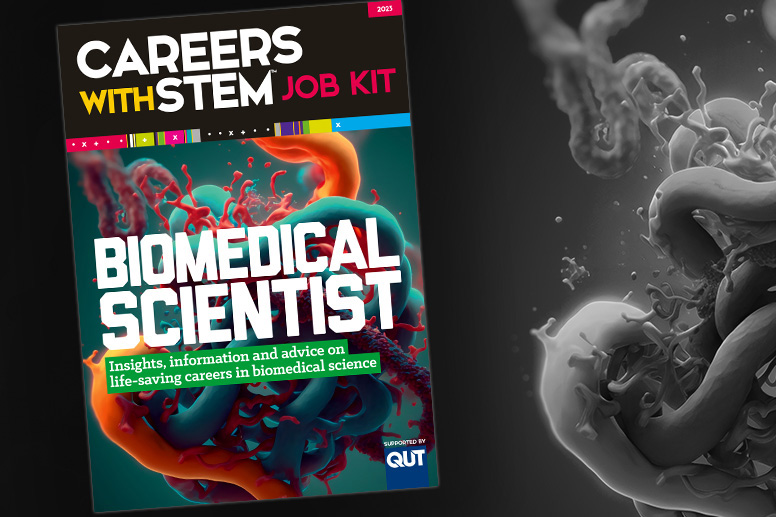
Read our Bioscientist Jobkit to discover biotechnology careers, see a day in the life of a real graduate, and find out where biomedical science could take you. If you’re curious about science, interested in health or medicine, and love the challenge of solving problems, biomedical science could lead you to a dream career in a laboratory, in biotech industries, or even (with further study) as a doctor.
Prepared for my future career in medicine
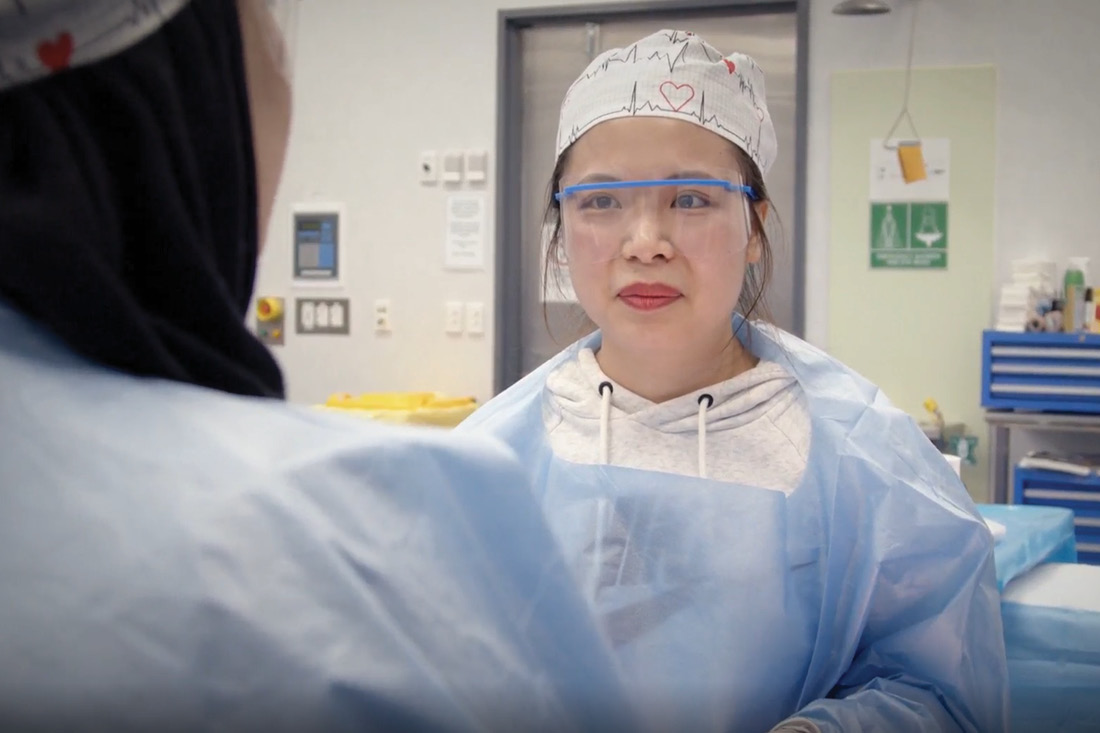
'We have access to a world-class surgical anatomy laboratory to investigate the causes and effects of diseases. We’re fortunate to be able to develop surgical skills through lessons in medical instrumentation using this fully equipped clinical laboratory. This training has prepared me for my future career in medicine.'
Bachelor of Biomedical Science graduate
Learning beyond the textbook
'As an international student, I was looking for a strong sense of community. At QUT, I found one that is welcoming, collaborative, and inspiring. The Bachelor of Biomedical Science course felt professional from the very beginning. We worked in teams, participated in research projects, attended seminars, and had the chance to connect with academics who were genuinely passionate about helping students grow. Studying biomedical science here doesn’t feel like reading from a textbook. It feels like being part of something real.'
Bachelor of Biomedical Science student
Strong connections with industry
'I know my subjects address the most current, clinical and scientific challenges and discoveries as my teachers are researchers themselves and the subjects are co-designed with industry. The strong connections with industry and government partners means the study I do in my course is up-to-the-minute with international thinking and standards.'
Bachelor of Biomedical Science graduate
Bridging theory and practice
'As part of my degree, I had the incredible opportunity to complete a research placement, where I contributed to a project investigating novel long non-coding RNAs in cutaneous melanoma. This hands-on experience, along with other lab work and industry placements, gave me a true insight into the world of biomedical research. QUT’s innovative and engaging approach to learning including case-based assessments and real clinical scenarios helped bridge the gap between theory and practice.'
Bachelor of Biomedical Science student
A variety of career options
'I chose the Bachelor of Biomedical Science because it offered a wide variety of options for either postgraduate study or work. The skills you acquire throughout your study open many doors for real world work. The course allows you to develop industry-ready and hands-on skills from day one and you really gain the qualities valued by employers as you learn with clinicians, researchers and leaders.'
Bachelor of Biomedical Science (Anatomical Sciences)
Hands-on learning
'One reason I chose QUT was the emphasis on flexible and practical, hands-on learning. QUT’s biomedical science course offers weekly practicals for all units. So we could be in the laboratory for up to 10-12 hours a week, which is not commonly offered in other biomedical science degrees. Practical classes provide us with invaluable laboratory experience, preparing us with the skills we’ll need in our field.'
Tailor your degree to interests
'I chose to study a Bachelor of Biomedical Science to build a solid academic foundation for a wide range of health professions, including clinical practice, research, and scientific roles. The flexibility of the degree, which allows you to tailor your course to various study areas, along with QUT's autonomous learning environment, really attracted me to study here.'
Bachelor of Biomedical Science student






Highlights
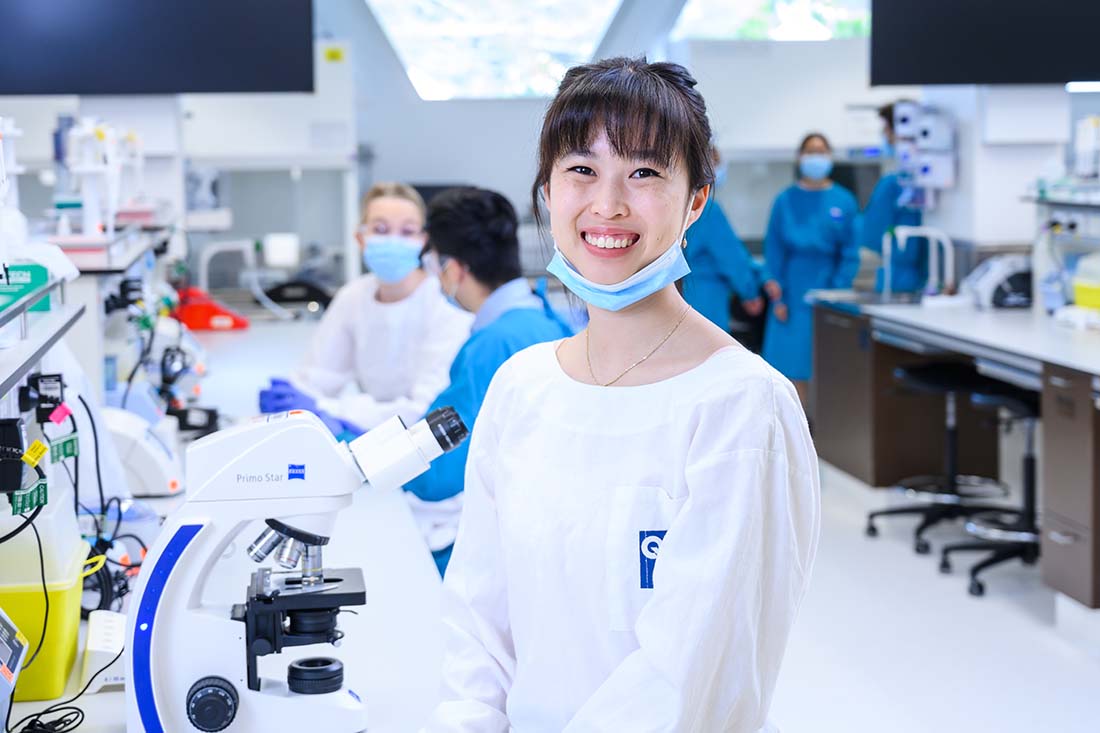
- Be in the laboratory from day one working on real biomedical and relevant scientific problems
- Use industry-standard equipment to develop practical skills employers like to see
- Gain real-world experience with opportunities for placements in biomedical research institutes and biotechnology laboratories in the science industry
- Choose major and minor study areas to suit your interests and broaden your knowledge
- Build your capabilities by pairing this degree with one in business, law or mathematics or a vertical double with the Bachelor of Biomedical Science/Master of Data Science
Highlights
- Use industry-standard equipment in the laboratory from day one working on real biomedical and relevant scientific problems to develop practical skills
- Gain real-world experience with opportunities for placements in biomedical research institutes and biotechnology laboratories in the science industry
- Choose major and minor study areas to suit your interests and broaden your knowledge
- Take opportunities to work with researchers, clinicians and industry leaders who have made ground-breaking discoveries
- Graduate with a strong foundation for further postgraduate study in medicine or allied health
Why choose this course?
The Bachelor of Biomedical Science is perfect if you’re looking for a career where you make ground-breaking discoveries that help people all over the world. The discoveries in biomedical sciences help advance our understanding of human health and develop treatments for diseases to improve quality of life.
You will have flexibility to select a major and two minor areas of study to suit your interests, broaden your career opportunities and prepare you for a career in areas with increasing demand. Choose to major in human anatomy, human physiology, infection and immunity, cell and molecular biology, and human biochemistry.
The course is also suitable if you would like to continue studying medicine and allied health. You will graduate with a strong understanding of how the human body works and apply this knowledge in health and disease, which is a great foundation for further medical studies.
Real-world learning
You have the option to include two work integrated learning (WIL) placements to your study plan that credited towards your degree, giving you an opportunity to trial various workplaces and areas of interest.
Gain research experience
Extend your studies with extracurricular activities by taking part in Vacation Research Experience Scheme (VRES) or research assistant positions. VRES allows you to contribute to groundbreaking research between semesters as part of a paid research project. You will get to try your hand at research before deciding whether to pursue a research degree. Explore health research topics currently available.
Real-world learning
You will develop your practical skills using state-of-the-art laboratory equipment in our modern laboratories on campus, starting from your very first week. You will work on real biomedical problems and gain hands-on experience from the beginning. The extensive practical skills you gain while working on industry-standard equipment will develop your confidence and give you an advantage when starting your career.
You will have opportunities to gain real-world experience that employers value as part of your course with up to 480 hours of work integrated learning (WIL) placements in biomedical research institutes and laboratories in the science industry. You have the option to study two separate WIL placements that credited towards your degree, giving you an opportunity to trial various workplaces and areas of interest.
Get research experience
Extend your studies with extracurricular activities by taking part in Vacation Research Experience Scheme (VRES) or research assistant positions. VRES allows you to contribute to groundbreaking research between semesters as part of a paid research project. You will get to try your hand at research before deciding whether to pursue a research degree. Explore health research topics currently available.
Learn from the best
You will learn from award winning teachers and from leading researchers from world-class research centres, including the Translational Research Institute and Queensland Institute of Medical Research Berghofer, and partner research facilities at major Brisbane hospitals. QUT researchers have made groundbreaking discoveries in cancer biology, infectious diseases, tissue engineering, the microbiome, genetics and vaccine development.
Explore this course
You will develop a strong practical foundation and understanding of human biological systems and the application of this knowledge to health and disease.
You will be taught by experts in the field, including researchers who are world experts in addressing current global health problems in areas including cancer biology, tissue engineering, genomics, immunology, infectious diseases, the microbiome and vaccine development.
Customise your degree
You can find your passion from your first year with foundational study, then choose from a range of exciting and rapidly evolving areas to meet your career and study goals.
Anatomical sciences
Build a deep understanding of the structure of the human body. Gain hands-on skills in dissection, histology, developmental anatomy, and the analysis of medical images interpretation. Examine real examples from QUT’s collection including a skeletal collection, film library, pathology museum and human donor material.
Cell and molecular biotechnology
Study the cellular and molecular mechanisms of health and disease. Research cancer biology, tissue engineering, stem cells, genomics and protein science. Explore the role of cell and molecular biotechnology in advancing personalised medicine.
Human biochemistry
Learn the structure, function and properties of proteins and molecules that regulate our cells and tissues, metabolism, hormone action and disease. Learn protein science (proteomics) and apply advanced technologies to disease, uncovering new diagnostic and treatment approaches.
Human physiology
Understand how the human body works—from as small as a molecule to the whole body working together. Physiology underpins the study of disease, pharmacology, and medicine. Develop research skills to design and conduct laboratory-based research projects.
Infection and immunity
Study how infectious agents like bacteria, viruses, yeasts, fungi and parasites cause disease and explore modern methods for diagnosing, treating, controlling, and preventing them. Discover how our immune system combats or causes disease and how it can be harnessed as treatments.
Clinical physiology (minor)
Apply clinical physiology techniques for testing patients for cardiac and respiratory illnesses, sleep disorders and neurophysiological disorders and discover career avenues in this growing field.
Double degrees
Broaden your career opportunities with a QUT double degree. A double degree allows you to combine two bachelor degrees to specialise in two fields. You will pursue different interest areas, gain complementary skills and knowledge, and gain career flexibility and a competitive advantage in the workforce.
Consider the following double degrees with a Bachelor of Biomedical Science:
- Business: develop your career in a drug regulation, compliance or policy development role in government; as an analyst for venture capital and investment banks or consultant to innovation commercialisation companies; or in the research sector.
- Law: work as a solicitor, barrister, in-house counsel, or lawyer to government health departments, the pharmaceutical industry or drug commercialisation companies.
- Mathematics: collect, collate and analyse data; build and interpret mathematical models that reveal new insights into patient treatment regimens; and develop new models of care that optimise the quality and efficiency of health care.
You may also want to consider our Bachelor of Biomedical Science/Master of Data Science to will graduate with a bachelor and master degree in just four years. You will study disease processes and modelling of diseases progression to increase your employability across Australia and internationally.
Careers and outcomes
Imagine a career of ground-breaking discoveries working in research institutes, universities, hospitals and biotechnology companies. Or work in science journalism, or companies involved in the development and marketing of new diagnostic and treatment products.
The Bachelor of Biomedical Science provides a wide range of career options. Our graduates are employed locally, nationally and overseas and work for research institutes, universities, hospitals and biotechnology companies. There are increasing opportunities in consultancy, science journalism and companies involved in the development and marketing of new diagnostic and treatment products.
Graduates who complete the clinical physiology minor as part of their studies may also work as a sleep scientist, neuroscientist, respiratory scientist or cardiac scientist.
This course also provides a foundation for further postgraduate study in medicine or allied health. Postgraduate study provides graduates with the opportunity to pursue leadership and management roles in biomedical science, and the knowledge and skills to operate your own research lab and create new products.
Professional recognition
Depending on the units selected in final year, graduates will be eligible for membership into one or more of the following organisations:
- Australian and New Zealand Association of Clinical Anatomists
- Australian and New Zealand Bone and Mineral Society
- Australian and New Zealand Forensic Science Society
- Australian and New Zealand Society for Cell and Developmental Biology
- Australian and New Zealand Society for Immunology
- Australian Society for Biochemistry and Molecular Biology
- Australian Society for Medical Research
- Australian Society for Microbiology, Australian Neuroscience Society
- Australasian Association for Clinical Biochemistry and Laboratory Medicine
- Society of Reproductive Biology
- The Endocrine Society of Australia
Possible careers
- Biochemist
- Biomedical laboratory officer
- Biomedical science researcher
- Biotechnology scientist
- Cardiac and vascular scientist
- Health researcher
- Laboratory assistant
- Laboratory technician
- Medical equipment sales
- Medicine (after further study)
- Neurophysiologist
- Reproductive technician
- Respiratory scientist
- Scientist
- Sleep scientist
Your Course
Year 1
You will undertake units covering chemistry, physics, anatomy, pathology and cell biology, providing a solid knowledge base for the topics covered later in the course. With QUT's practical approach to teaching, you will not only learn the theory, but gain a wealth of practical experience in state-of-the-art laboratories. You will also gain an introduction to the essential communication skills required for a career in the health and medical professions.
Year 2
You will have the option of choosing a major and two minors from five key biomedical scientific disciplines to align with your own career goals: anatomical sciences, cell and molecular biology, human biochemistry, human physiology and infectious diseases. You will have the opportunity to complement your studies by choosing a university wide set from a discipline outside of biomedical science, such as behavioural science, public health, human rights, entrepreneurship, mathematical sciences, international business or study a language. A minor is also available in Clinical Physiology which includes a 400 hour Clinical Physiology internship in which you will be placed in a hospital with professional clinical physiologists who will provide training in physiological instrumentation and measurement, recording, interpretation and reporting of clinical data. You will also have opportunities to gain real world experience as part of your course in Work Integrated Learning placements in biomedical research institutes and laboratories in the science industry.
Year 3
In the real world, the design and completion of successful research and/or business projects demand that individuals gather information, solve problems, work effectively as a part of a team and analyse and communicate results in a critical manner. Therefore each major in this course will culminate in a capstone unit which will require you to apply the knowledge and skills developed through your course. Capstone projects include human anatomical dissection, contemporary laboratory based research projects in biochemistry, physiology and cell and molecular biology, and diagnosis, characterisation and development of appropriate responses to an infectious disease outbreak scenario.
Course Design
The Bachelor of Biomedical Science comprises first-year studies in chemistry, physics, anatomy, pathology and cell biology, providing a solid knowledge base for the topics covered later in the course. Units in the second and third years combine advanced studies with theoretical, practical, and problem-solving skills. Several units in the area of humanities and applied health are an integral part of the course.
The Bachelor of Biomedical Science provides the necessary knowledge and skills to enter a career in biomedical research, with integration of research design and implementation, scientific writing and communication and practical laboratory skills embedded through each year of the course.
Furthermore students will be well prepared to sit GAMSAT which is designed to evaluate mastery and use of concepts in basic science as well as the acquisition of more general skills in problem solving, critical thinking and writing. The Bachelor of Biomedical Science provides a solid grounding in GAMSAT testing areas: reasoning in humanities and social sciences, written communication, reasoning in biological and physical sciences (including chemistry, biology and physics).
- ATAR/selection rank threshold
- 70.00
These thresholds are the lowest adjusted scores to which QUT made an offer in Semester 1, 2026.
Don't have a ATAR/selection rank?
- Course code
- LS40
- QTAC code
- 418401
- CRICOS code
- 052768K
-
- Gardens Point
-
- Gardens Point
- 3 years full-time
- 6 years part-time
- Part-time students should note that daytime attendance is required. Some lectures and tutorials may have evening sessions.
-
Non-standard attendance may apply in relation to capstone experiences and in the case of professional placements or industry projects where selected.
-
Non-standard attendance may apply in relation to capstone experiences and in the case of professional placements or industry projects where selected.
- 3 years full-time
-
Non-standard attendance may apply in relation to capstone experiences and in the case of professional placements or industry projects where selected.
-
Non-standard attendance may apply in relation to capstone experiences and in the case of professional placements or industry projects where selected.
- February
- February
Assumed knowledge
Before you start this course, we assume you have sound knowledge of the subject/s listed below. If you don't have the subject knowledge, you can still apply for the course but we strongly encourage you to undertake bridging studies to gain the knowledge:
- Biology (Units 3 & 4, C) or Chemistry (Units 3 & 4, C)
- English, or Literature, or English and Literature Extension, or English as an Additional Language (Units 3 & 4, C)
- Mathematical Methods, or Specialist Mathematics (Units 3 & 4, C)
Year 12 early offer scheme
If you're a current Queensland Year 12 student, you may be eligible to receive an offer for this course on the last day of Queensland Year 12, before receiving your ATAR or selection rank.
Find out more about the QUT Year 12 Early Offer Scheme
Helping you to get into your course
If you don't think your ATAR or selection rank is high enough to get into this course, you can guarantee your entry with guaranteed advanced standing by upgrading through one of the following programs which you can select as one of your QTAC preferences:
QUT College Diplomas
As a QUT College Diploma in Health Science (Health Studies) graduate you will automatically receive a Semester 1 (February intake) offer to start the Bachelor of Biomedical Science within one week after completion of the diploma. You will also automatically receive up to 48 credit points credit transfer.
Find out more about the QUT College Diploma in Health Science (Health Studies)
Offer guarantee
If you achieve an ATAR or selection rank of 72.00 or higher (including any adjustments) and satisfy all other admission requirements, you are guaranteed an offer for this course in the Semester 1 offer rounds, up to the main offer round in mid-January.
VET guarantee
If you have completed an AQF certificate IV, diploma or higher, and satisfy all other admission requirements, you are guaranteed an offer for this course in the Semester 1 offer rounds.
Advanced standing
If you have prior studies or work experience, you may be eligible for advanced standing (credit). You can apply for advanced standing once you've been accepted to QUT. If you're in your first semester of study, you must apply for advanced standing within 10 days of receiving your offer.
Deferment
You can defer your offer and postpone the start of your course for one year.
More about deferring your offer
Adjustments to your ATAR/selection rank
Any adjustments you receive to your ATAR or selection rank will be applied to this course.
Find out if you’re eligible for an adjustment to your ATAR or selection rank
Offers we made to school leavers in Semester 1, 2025
The figures listed in the tables below reflect the offers that were made to recent ATAR students. The entry thresholds box at the top of this page shows the lowest adjusted ATAR/selection rank required to receive an offer for all applicants for the most recent January QTAC offer round.
| Excluding adjustments | Including adjustments | |
|---|---|---|
| Highest ATAR/selection rank to receive an offer |
Selection rank
99.20
|
Selection rank
99.95
|
| Median ATAR/selection rank to receive an offer |
Selection rank
79.35
|
Selection rank
81.30
|
| Lowest ATAR/selection rank to receive an offer |
Selection rank
64.60
|
Selection rank
70.05
|
You can find out more about your fellow students’ backgrounds with this course’s student profile.
Other admission options
If you are of Aboriginal or Torres Strait Islander descent, you may be eligible for admission through our Centralised Assessment Selection Process (CASP).
I completed my studies outside of Australia
Select the country where you completed your studies to see a guide to the grades you need to apply for this course.
If your country or qualification is not listed, you can still apply for this course and we will assess your eligibility.
Assumed knowledge
- Biology (Units 3 & 4, C) or Chemistry (Units 3 & 4, C)
- Mathematical Methods, or Specialist Mathematics (Units 3 & 4, C)
You must have achieved this study at a level comparable to Australian Year 12 or in recognised post-secondary studies.
I completed secondary school in Australia
Assumed knowledge
Before you start this course we assume you have sound knowledge in these areas:
- Biology (Units 3 & 4, C) or Chemistry (Units 3 & 4, C)
- Mathematical Methods, or Specialist Mathematics (Units 3 & 4, C)
- ATAR/selection rank
- 70.00
Offer guarantee
If you completed secondary school in Australia and achieve an ATAR/selection rank of 72.00 or higher (including any adjustments) and satisfy all other admission requirements, you are guaranteed an offer for this course.
VET guarantee
If you have completed an AQF certificate IV, diploma or higher, and satisfy all other admission requirements, you are guaranteed an offer for this course.
Minimum English language requirements
Select the country where you completed your studies to see a guide on meeting QUT’s English language requirements.
Your scores and prior qualifications in English-speaking countries are considered. Approved English-speaking countries are Australia, Canada, England, Ireland, New Zealand, Scotland, United States of America and Wales.
If your country or qualification is not listed, you can still apply for this course and we will assess your eligibility.
We accept English language proficiency scores from the following tests undertaken in a secure test centre. Tests must be taken no more than 2 years prior to the QUT course commencement.
| English Test | Overall | Listening | Reading | Writing | Speaking |
|---|---|---|---|---|---|
| IELTS Academic / One Skill Retake | 6.5 | 6 | 6 | 6 | 6 |
|
Cambridge C1 Advanced
You must share your results with QUT through the Candidate Results Online website. |
176 | 169 | 169 | 169 | 169 |
| PTE Academic | 58 | 50 | 50 | 50 | 50 |
| TOEFL iBT Australia Test (120 scale) | 79 | 16 | 16 | 21 | 18 |
Don't have the English language score you need? We can help!
We offer English language programs to improve your English and help you gain entry to this course.
When you apply for this course, we will recommend which English course you should enrol in.
Course requirements
There are requirements that you will need to meet as a student in this course. You will need to identify these requirements and ensure you allow sufficient time to meet them. Some of these requirements have associated costs.
Blue card: You must undergo a criminal history check for working with children and be issued with a suitability card (blue card) before commencing clinical placement/practicum in an organisation where they may work with children or young people.
The processing of your application may take several months so you must submit your blue card application to HiQ as early as possible to ensure you have your card before you begin any unit that requires contact with children. There is no charge for student blue cards. Students who already have a blue card must register it with QUT.
Information is available from the Additional course requirements and costs website.
Course requirements
There are requirements that you will need to meet as a student in this course. You will need to identify these requirements and ensure you allow sufficient time to meet them. Some of these requirements have associated costs.
Blue card: You must undergo a criminal history check for working with children and be issued with a suitability card (blue card) before commencing clinical placement/practicum in an organisation where they may work with children or young people.
The processing of your application may take several months so you must submit your blue card application to HiQ as early as possible to ensure you have your card before you begin any unit that requires contact with children. There is no charge for student blue cards. Students who already have a blue card must register it with QUT.
Information is available from the Additional course requirements and costs website.



Your actual fees may vary depending on which units you choose. We review fees annually, and they may be subject to increases.
2027 fees
2027: Fee available from October
Additional Costs
There are requirements that you will need to meet as a student in this course. Some of these requirements have associated costs. Information is available from the Additional course requirements and costs website.
2027 fees
2027: Fee available from July
Additional Costs
There are requirements that you will need to meet as a student in this course. Some of these requirements have associated costs. Information is available from the Additional course requirements and costs website.
2026 fees
2026: CSP $9,500 per year full-time (96 credit points)
Additional Costs
There are requirements that you will need to meet as a student in this course. Some of these requirements have associated costs. Information is available from the Additional course requirements and costs website.
2026 fees
2026: $57,200 per year full-time (96 credit points)
Additional Costs
There are requirements that you will need to meet as a student in this course. Some of these requirements have associated costs. Information is available from the Additional course requirements and costs website.
Student services and amenities fees
You may need to pay student services and amenities (SA) fees as part of your course costs.
HECS-HELP: loans to help you pay for your course fees
You may not have to pay anything upfront if you're eligible for a HECS-HELP loan.
You can apply for scholarships to help you with study and living costs.
QUT Excellence Scholarship (Academic)
QUT's premier offering for students with outstanding academic achievement.
- Scholarship eligibility
- Academic performance
Equity scholarships scheme
A scholarship for low-income students studying in any faculty.
- Scholarship eligibility
- Struggling financially
QUT Elite Sport Scholarship
QUT's premier offering for students with outstanding sporting achievement.
- Scholarship eligibility
- Sporting excellence
International Merit Scholarship
A high achievement scholarship for future international undergraduate and postgraduate students.
- Scholarship eligibility
- Academic performance
International Talent Scholarship
A new scholarship for 2026 that covers tuition fees, with eligibility based on your prior academic achievements.
- Scholarship eligibility
- Academic performance
Keep up to date
Ready for your next step?
Finishing school?
Everything you need to know about choosing a uni straight from school.
How to apply
We'll break down the application process, from QTAC to accepting your offer.
Ready for your next step?
How to apply
We'll break down the process, from applying to accepting your offer.
Flexible study
Explore the options that could make postgraduate study work for you.
QUT courses for you
Like to save your courses?
Please enter your first name and email so we can save your courses for you