Beside The Rivers Brown
QUT students, 2026
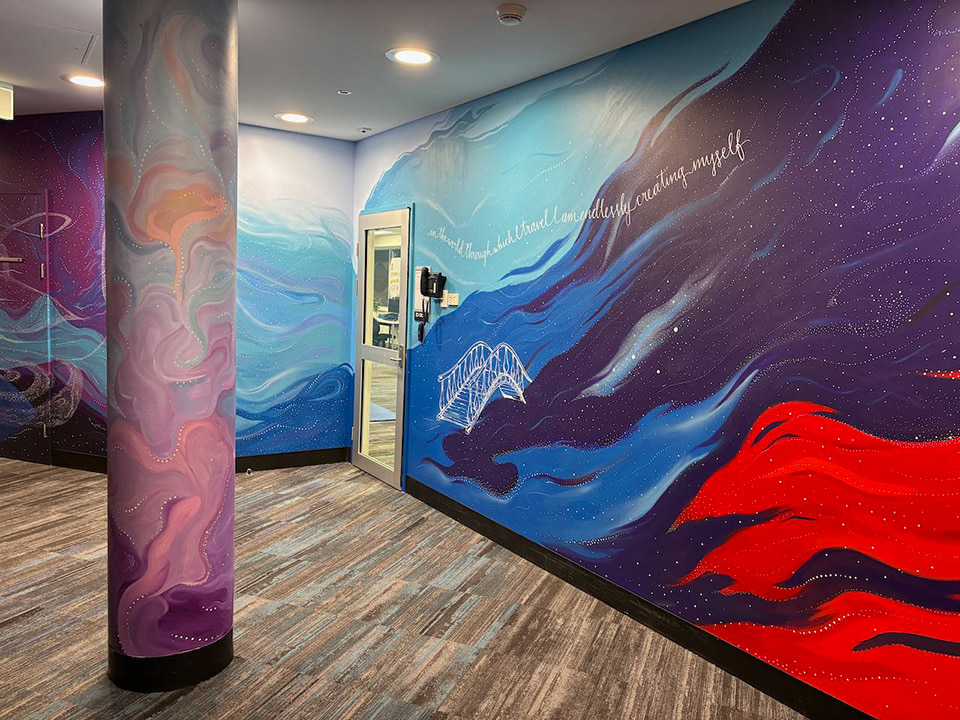
This mural was conceived and executed by QUT School of Creative Arts students as part of their final year workplace learning unit.
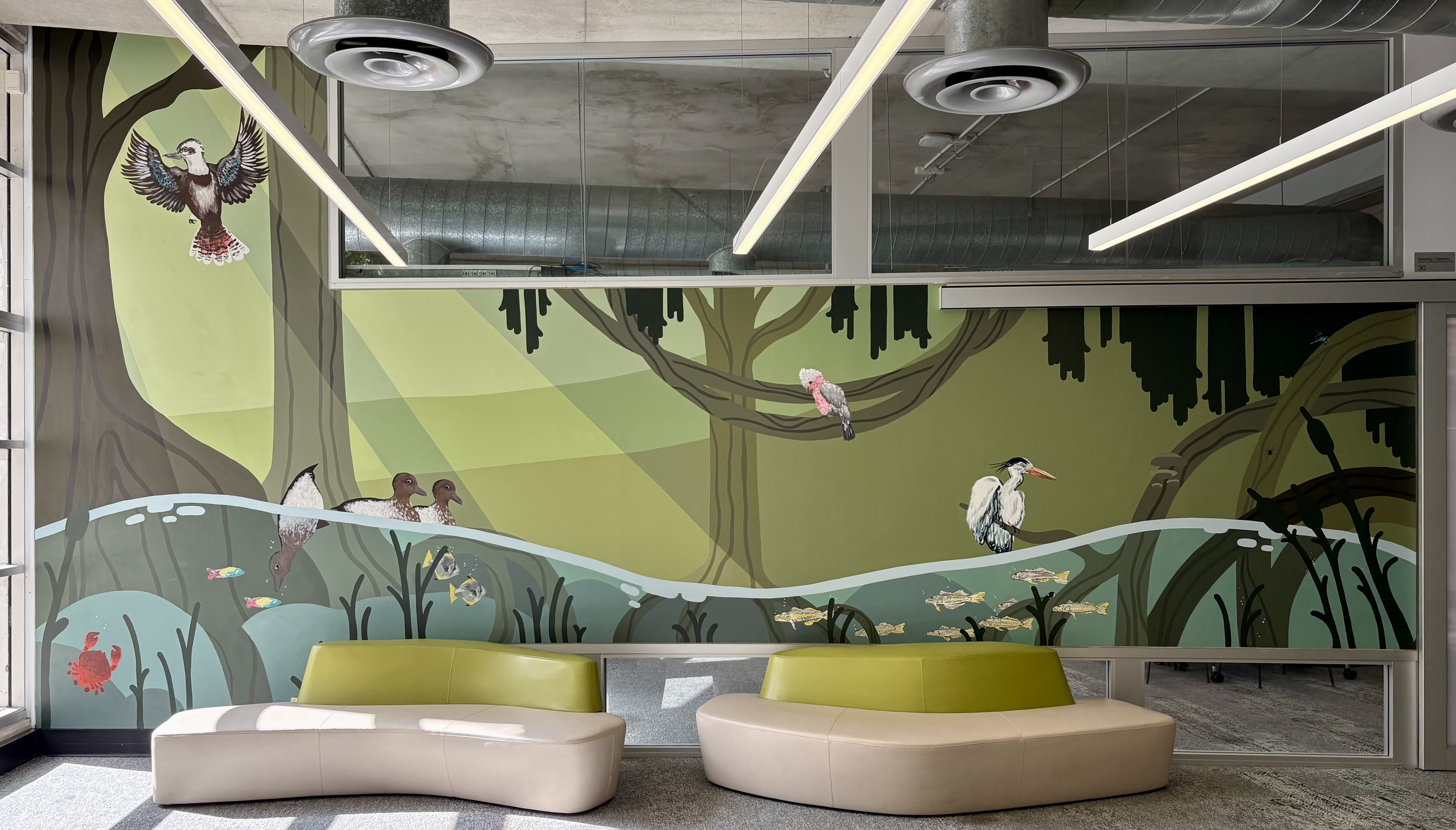
Responding to the brief developed by the YourSpace team, our collaborative artwork was designed to create a calming and engaging atmosphere for the students who use this room. We wanted the people who use the room to feel welcome and part of the QUT community, while also drawing connections between this indoor space and the outdoor setting framed by its large glass wall. One of our other aims was to make a mural that offered the potential for continual discoveries, noting that students had a tendency to visit the space regularly and often for long stretches at a time.
This artwork depicts a local mangrove environment, a distinctive feature of QUT’s riverside environment. The artwork features various wildlife dotted across the wall, allowing the audience to discover new details on every inch of the composition. A mangrove environment is one of the most biodiverse and interconnected parts of Earth's ecosystem; its connectivity is its strength, and to us this connectivity and diversity perfectly reflects the harmonious nature of the wide range of individuals and cultures that comprise the QUT community.
The title of the mural Beside the Rivers Brown is inspired by the iconic Australian poem My Country by Dorothea Mackellar. Paraphrased from the poem, it references the Brisbane River and its surrounding ecosystem, both of which significantly influenced the mural's design.
This mural promotes the idea that together, no matter who we are, we all play a crucial role in this ‘mangrove’, and that the more people and diversity we have in our community, the stronger we are.
The Sketchbook
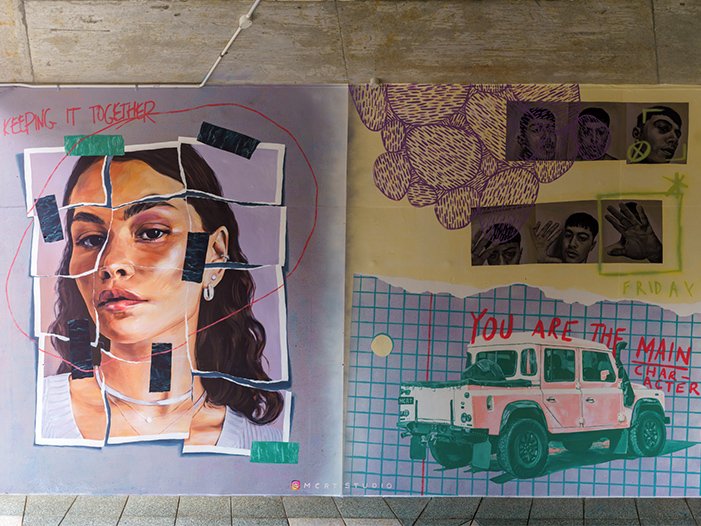
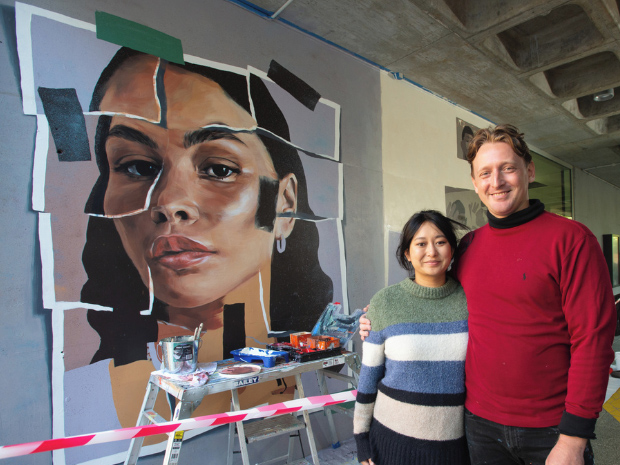
@MCRT.Studio, 2023
This artwork is inspired by the location where it sits. The library is home to thousands of books, but sometimes the most meaningful content in a book is your thoughts and sketches in a journal to help you keep going.
This artwork depicts a fictional story of a protagonist and her sketchbook. It houses raw emotions in self‑reflection, her thoughts and encouraging quotes. The artwork portrays the value of self‑reflection and self‑expression through writing, treasuring memories and drawing, which can help individuals better understand their thoughts, emotions and experiences - promoting self‑awareness and self‑care practices.
Self‑encouragement is a powerful tool that can help individuals overcome self‑doubt, fear and adversity. By acknowledging their strengths, celebrating their accomplishments and focusing on their goals, people can build self‑confidence and resilience, and ultimately achieve what they set out to do. This is a nice reminder for the location and the students who pass by 'The Sketchbook'.
Sleeping Languages in Queensland
Said Dokins, 2018
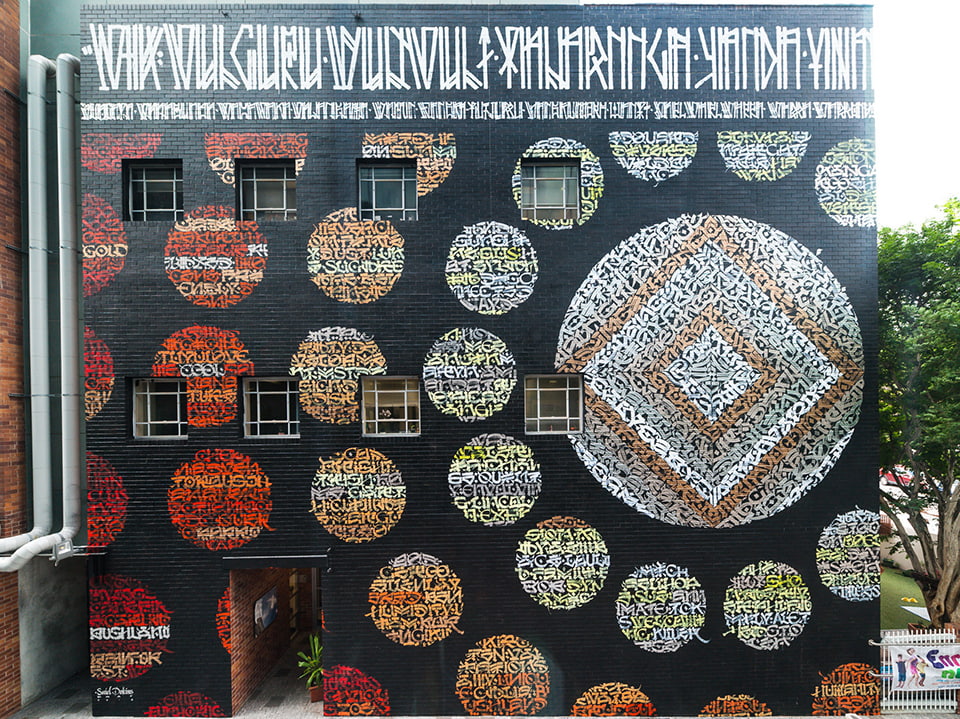
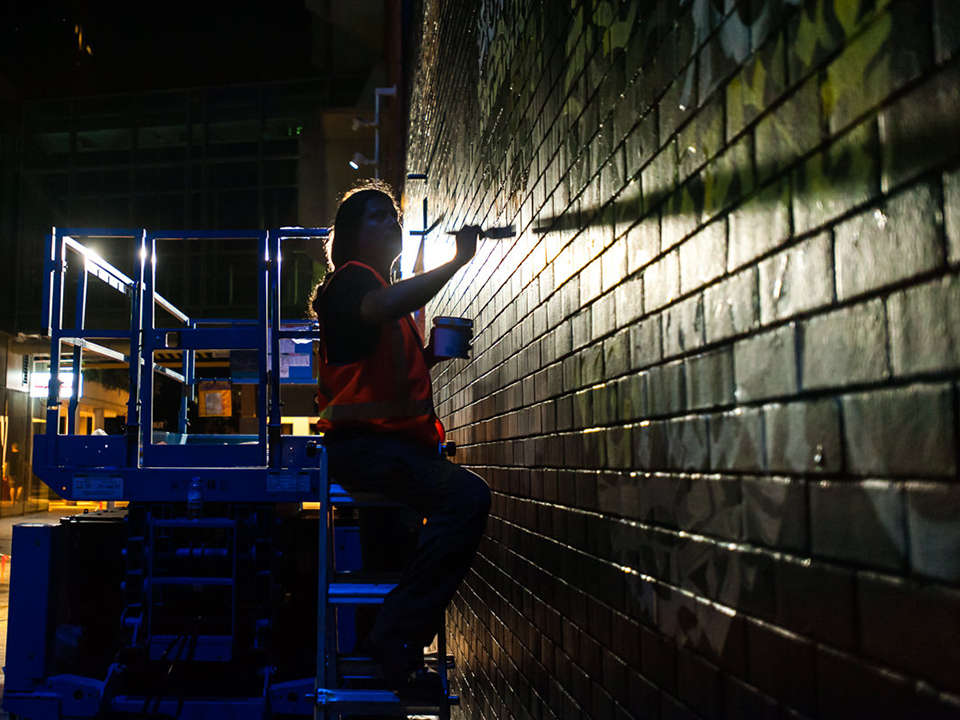
In the context of the Brisbane Street Art Festival (BSAF) in Queensland, Australia, I've created a mural intervention called 'Sleeping Languages in Queensland' that explores dormant memories through the lens of language.
This artistic project aims to highlight the rich and diverse Aboriginal cultures that are fundamental to Australian heritage. This mural serves as a profound acknowledgment and tribute to the Traditional Owners of the lands in Brisbane and throughout Queensland. It pays homage to the Aboriginal and Torres Strait Islander peoples who have faced displacement from their ancestral
communities and territories, enduring a history where their languages were silenced, their ceremonies prohibited, and their cultural practices suppressed.
Inspired by the deep engagement and cultural expressions of Aboriginal communities, I’ve crafted a calligraphic composition that incorporates references to approximately 125 Aboriginal languages from Queensland, many of which are currently considered endangered. However, to experts in Aboriginal culture and linguistics, these languages aren’t just endangered but dormant, requiring dedicated efforts to awaken them.
Within this same mural, I’ve integrated the names and stories of individuals I encountered during my time in Brisbane, weaving together a collective history where elements of nature and cultural diversity intertwine with echoes of colonialism and globalisation. This narrative encapsulates the ethereal inscription of Aboriginal heritage that persists between the realms of the past and the present.
To bring this mural to life, I worked closely with the team behind the Brisbane Street Art Festival and Digi Youth Arts, a respected organisation committed to preserving and celebrating Aboriginal cultures. This collaborative effort ensures that the program actively
supports and nurtures Aboriginal artists while also encouraging murals that authentically portray the stories and experiences of these communities. As a Mexican artist with Haitian ancestry from my great‑grandfather and indigenous roots from my grandparents, I deeply empathise with the challenges of displacement, identity, racism and historical oppression. Recognising the importance of narratives depicting resilience and resistance in the face of adversity, my artistic endeavours aim to enrich conversations surrounding the diaspora and racial conflicts.
Through my work, I aspire to cultivate empathy and raise awareness among diverse cultures.
Passing Through
DOES, 2019
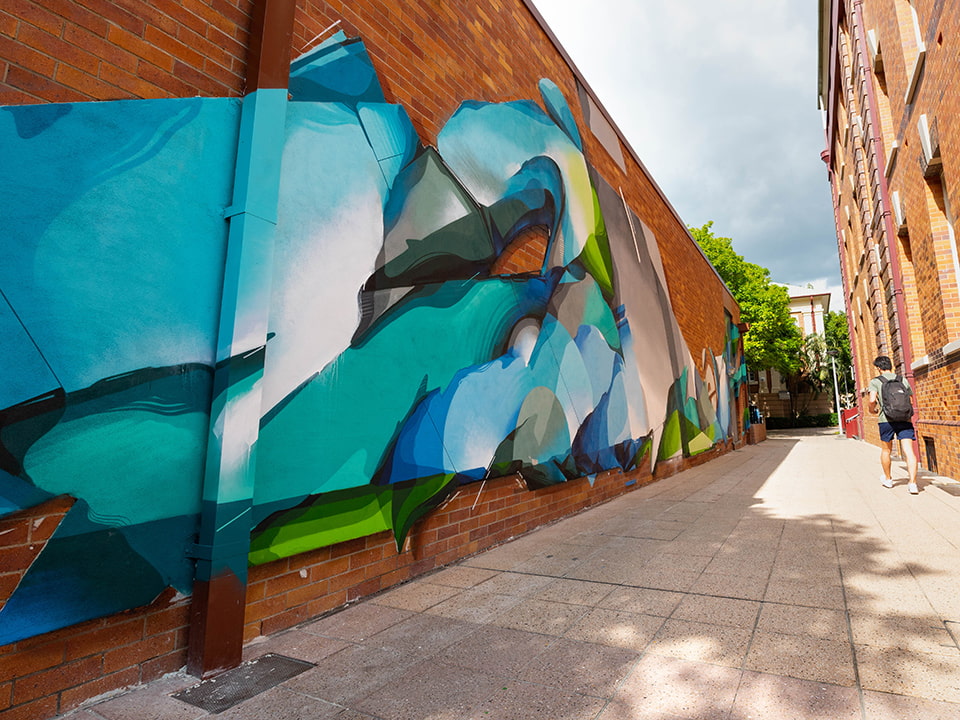
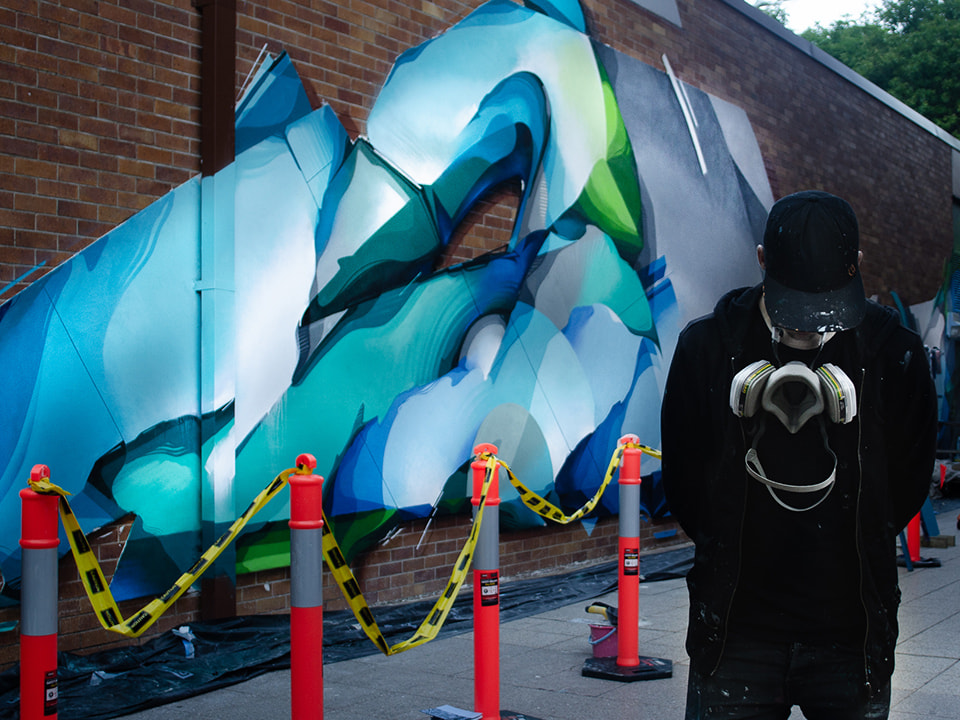
The wall in question forms one half of a corridor - which is a main thoroughfare used by students and teachers bustling through the grounds to their next lecture. With the wall originally constructed in small red bricks - a heritage construction material common
to Brisbane - DOES added a layer of cement to the existing surface, creating both a new layer, and a new beginning. Knowing the lush green surroundings of the area, and the often blue skies that we are blessed with in Queensland, DOES set to work with a colour palette that would reflect the environment.
Working under the pretence of using graphic and abstract shapes for mass appeal, and to create a sense of direction simulating the movement of people through the alley. The trained observer will notice that the artwork still contains the last three letters of DOES' name. The ‘D’ is absent from this dimension, perhaps living in a left-hand section of wall that exists purely in the viewer’s imagination.
Sidewalls
Medianeras, 2019
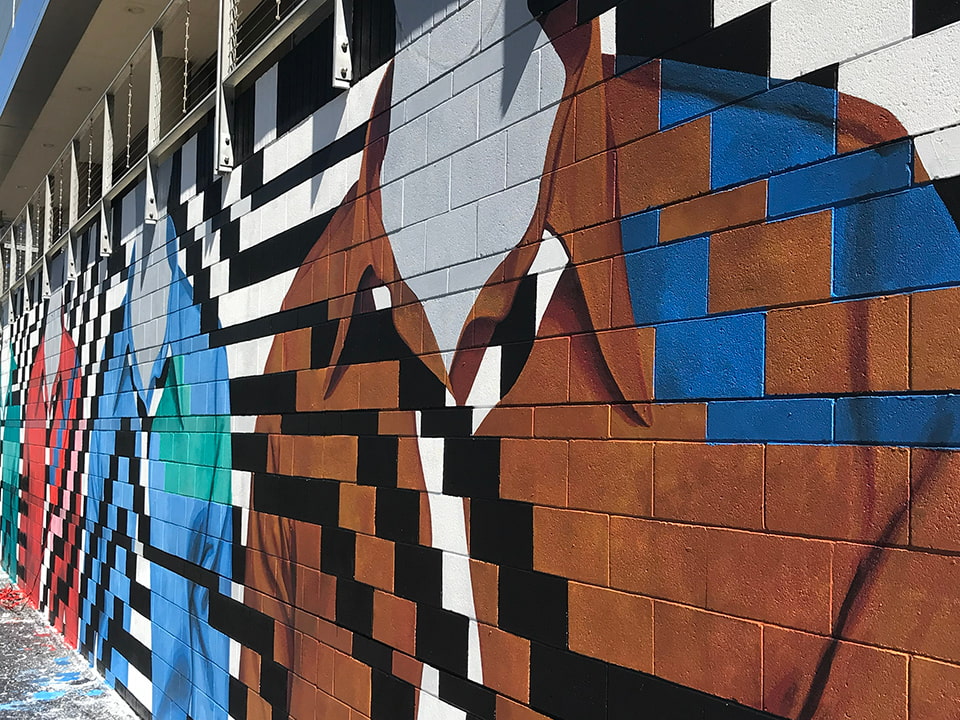
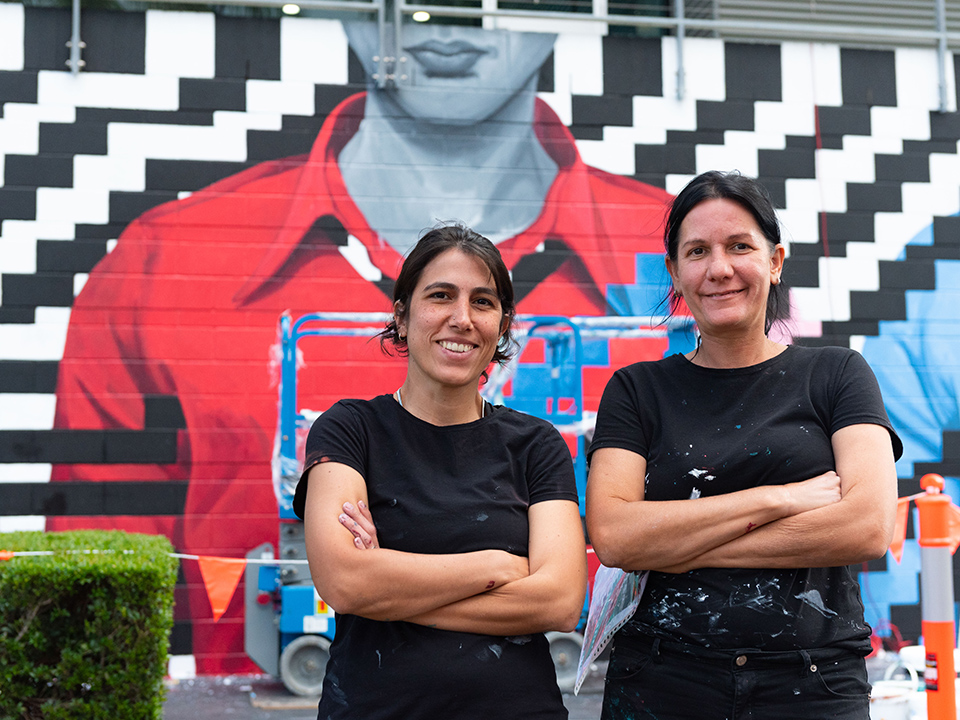
Unlike the walls, which are often built to divide spaces, the side walls are those shared between neighbours. This concept interests us because we believe that public art, besides making cities more beautiful, claims the idea of a shared place - by all individuals. We created the duo Medianeras (side walls) when we met each other and decided to unify our artistic production, to be a couple in life and in art.
Making murals on public walls is for us to communicate the idea that art is for everyone and everything we create on the street is linked to possible changes. We tend to think about the different points of view that someone passing by can have, simply because things can change depending on where they are viewed from.
When we paint murals, we do it by paying attention to the environment, the characteristics of the place and the people who live there. From our Argentine‑Latin American identity we dress the walls that we create with colours and iconographies that we invent from our past.
Perspectives
Guirao, 2024
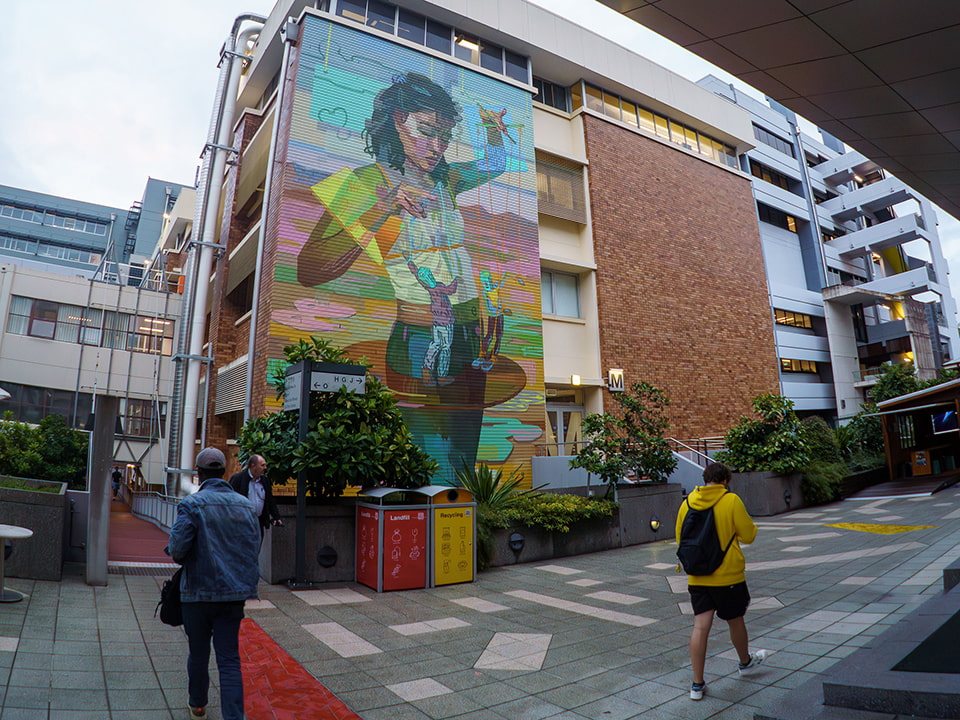
'Perspectives' is an artistic initiative that highlights the importance of exploring themes from various angles to deepen our understanding of reality. This proposal aims to merge different artistic styles into a unified work, reflecting the richness of approaching concepts from multiple perspectives.
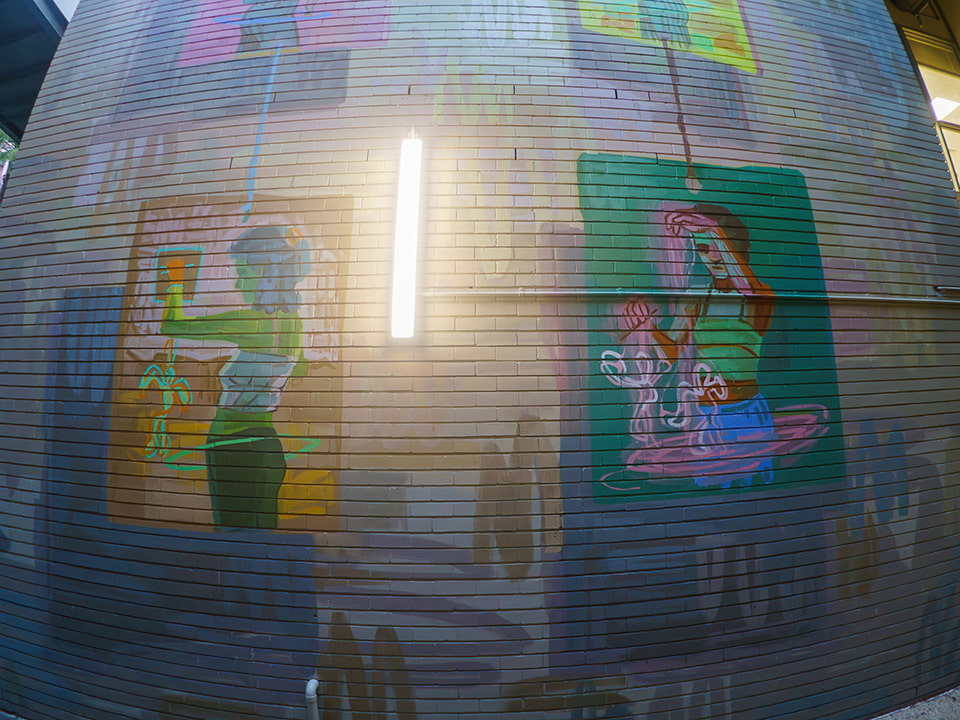
The centrepiece of this initiative is a surreal depiction of a young woman manipulating puppets, with two translucent panels crossing her arms. These panels act as windows to other artistic styles, reinterpreting what is seen through them: the left panel shows Fauvist influences, while the right incorporates elements of drawing and engraving.
The choice to use puppets symbolises the importance of observing situations from a critical distance, allowing for a broader and more varied view of reality. This method of representation emphasises how different artistic styles can offer new perspectives on what lies behind the panels.
The ultimate goal of 'Perspectives' is to go beyond the artistic realm, encouraging reflection on how we construct knowledge. By promoting interdisciplinary exploration and fostering a more holistic understanding of the world, this initiative underscores the need to integrate diverse perspectives for the enrichment of human knowledge.
Through the Screen
QUT students, 2024
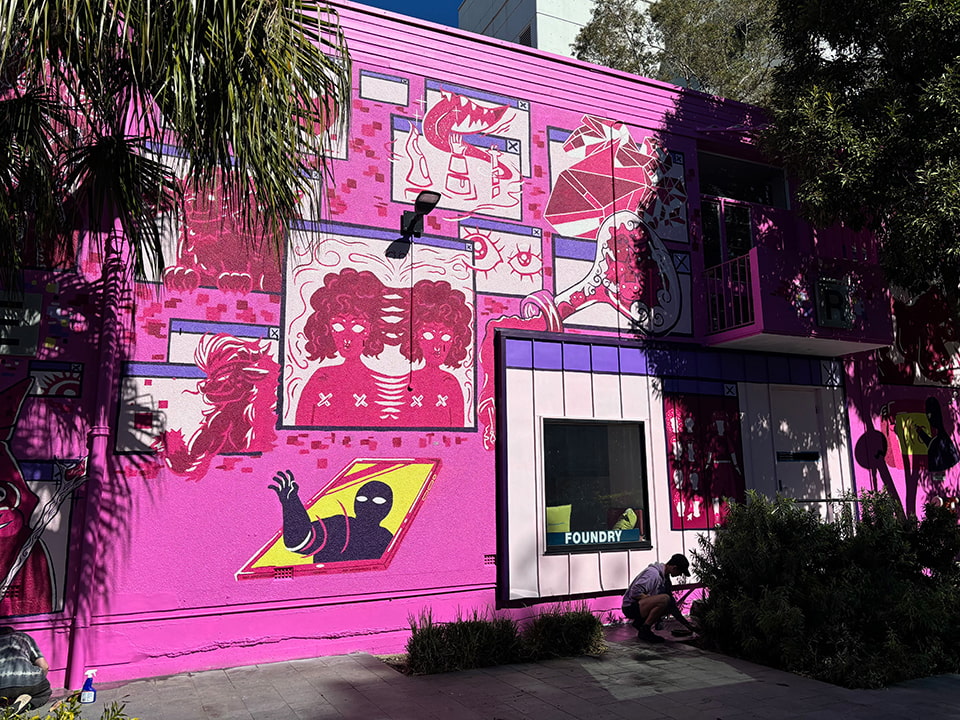
'Through the Screen' uses retro web aesthetics to explore how young LGBTIQA+ individuals discover their identities online. Pop-up windows display avatars and glitched characters, symbolising deviation from societal norms. An anonymous figure emerges from the shadows into a digital realm, representing personal growth and self-discovery.
With its deliberately old-fashioned style and nostalgic iconography, the artwork creates a timeless representation of digital exploration and self-expression within the LGBTIQA+ community. This visual narrative celebrates the transformative power of technology in shaping queer identities and fostering community connections.
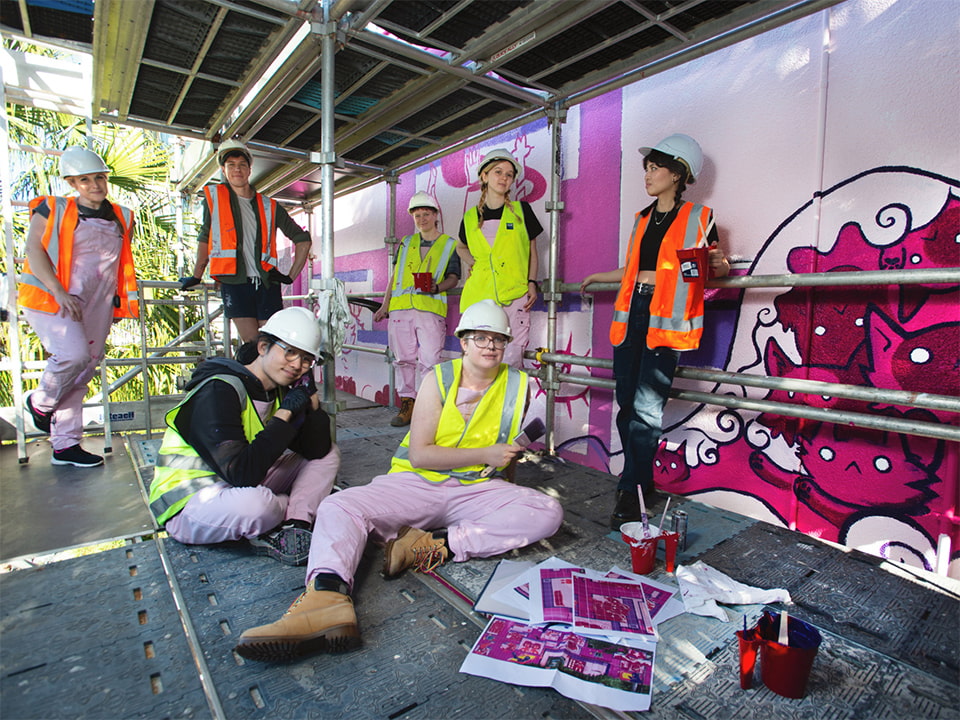
'Through the Screen' celebrates the diverse LGBTIQA+ community at Queensland University of Technology (QUT). Created by a multidisciplinary team of queer students and their allies, it combines traditional painting techniques and iterative digital processes to transform the R Block Library façade into a vibrant campus focal point.
The project, aligned with the QUT LGBTIQA+ Action Plan 2023-2025, emerged from a recognised need for supportive spaces on campus. It empowers queer student voices and fosters a sense of belonging through creative placemaking. This artwork stands as a testament to the QUT commitment to inclusivity and the power of student-led initiatives in shaping campus culture.
Celestial Metamorphosis
QUT students, 2024
'Celestial Metamorphosis' is a mural project by queer students and allies, commissioned by QUT and developed by visual arts and design students. This mural stands as a vibrant tribute to inclusivity, creating a sanctuary that warmly embraces all. Rooted in the ethos of the LGBTIQA+ community, it mirrors openness, whimsy, and adaptability, honouring the fluidity of expression and thought.
Scattered dots across the mural's expanse evoke a celestial dance, symbolising our collective journey towards cohesion and understanding. The subtle use of the rainbow spectrum unifies the overall design, reflecting the diversity within the community.
Striking a balance between structure and ambiguity, the mural invites viewers to form their own interpretations of the elements depicted, reflecting the artists' aim to guide without imposing, encouraging collaborative perception.
An augmented reality feature allows viewers to immerse themselves further within this starry landscape, also alluding to the sanctuary that digital spaces and communities can provide to LGBTIQA+ people.
'Celestial Metamorphosis' serves as a beacon of inspiration, celebrating the convergence of diverse perspectives and the ever-unfolding dance of human expression. It stands as a testament to the beauty found in embracing our differences and shared humanity.
Patches
QUT students, 2024
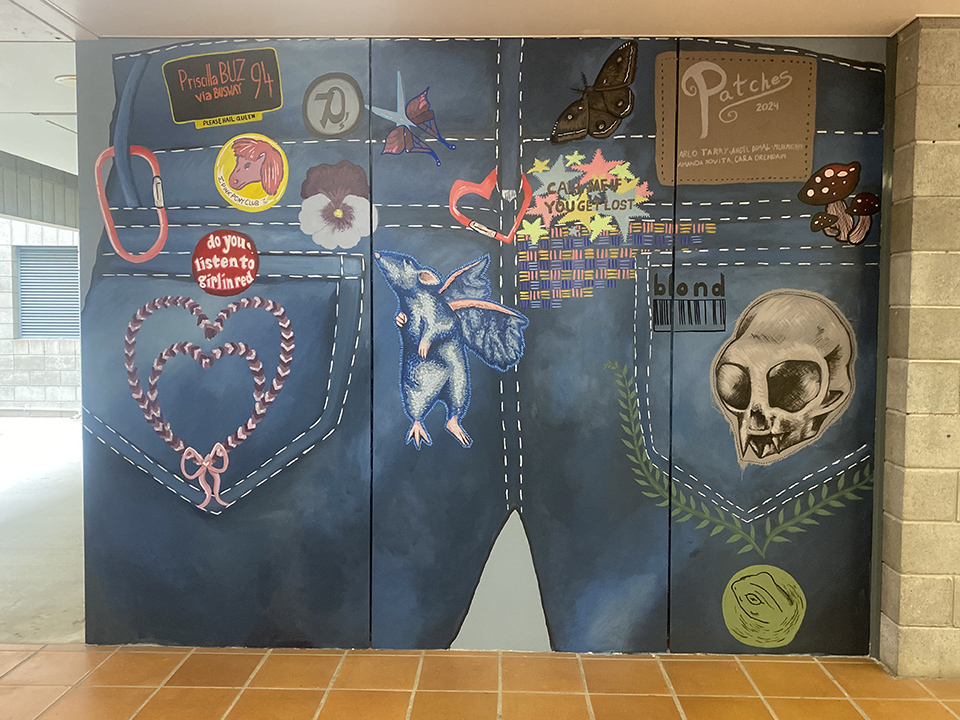
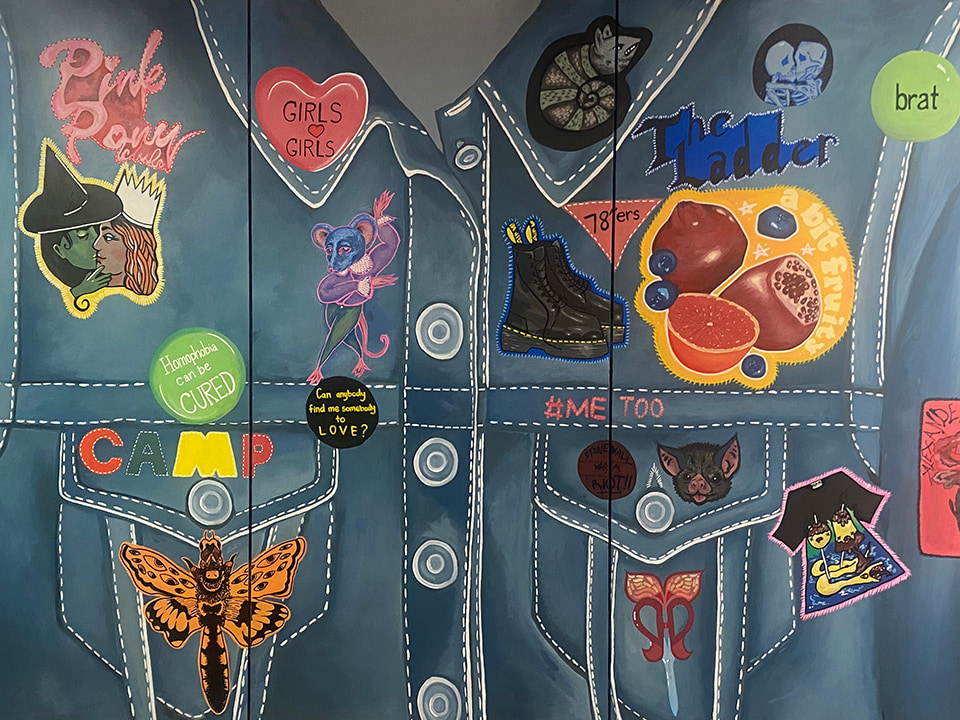
'Patches' is is a mural project by queer students and allies, commissioned by QUT and developed by visual arts and design students. It celebrates queer culture and identity, aligning with QUT's LGBTIQA+ 2023-2025 Action Plan. The artwork combines traditional techniques with contemporary queer aesthetics, featuring a denim backdrop adorned with decorative pins and patches.
This mural references diverse queer iconographies, both historic and current, fostering pride within the QUT community and beyond. It subverts expectations by utilising imagery that speaks directly to the queer community, moving beyond stereotypes and clichés.
The pins and patches represent a range of queer experiences and symbols, from subtle nods to overt expressions of identity. This mix of implicit and explicit imagery invites viewers to engage with the work on multiple levels, allowing for personal interpretation and discovery.
Each team member contributed their own badge or patch design, creating a collaborative representation of contemporary queer voices. The mural also incorporates augmented reality elements, providing additional contextual content when specific badges are scanned.
'Patches' stands as a vibrant celebration of queer culture, honouring its history while embracing its present, and creating a welcoming environment for all.