



Research strengths

We've invested in areas of research identified as priorities for the world, the nation and the state. In each of these areas we're continuing to build on the strength and experience of our experts.
Research by study area

Architecture and built environment

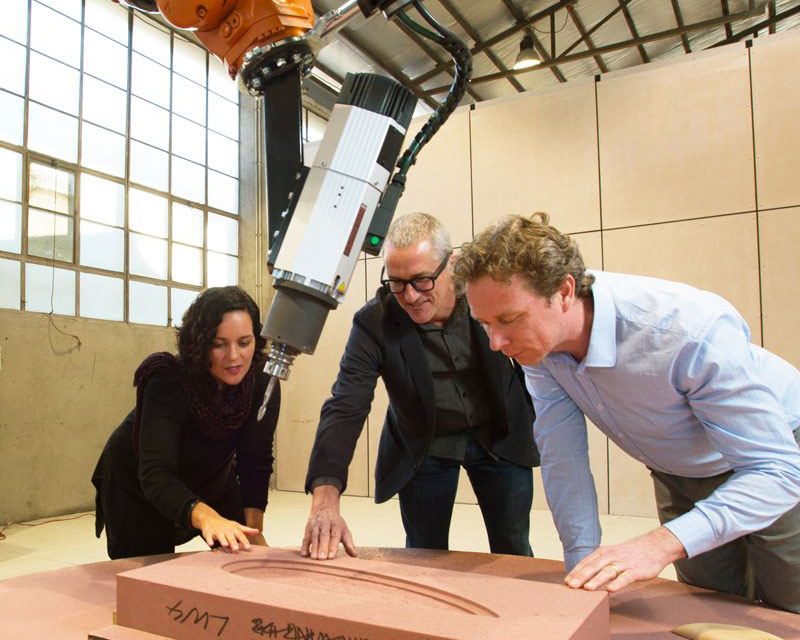
We bring together government, industry and community to create real-world solutions to built environment problems.

Business and law

Our research brings together world-leading academics with industry leaders, and we help current and future leaders to navigate a fast-emerging new world.

Creative industries, education and social justice

We are a world leader in creativity, teaching, and justice research.

Engineering

Ranked the leading research institution in Australia for the fifth year in a row.

Health

Our research improves patient treatment options and increases the world's knowledge of human health.

Science

Be part of scientific research that has real impact and discover the projects establishing our staff as international research leaders.

Real-world research

Research projects

Filter by research discipline:

Vision & Everyday Function

Our research group is dedicated to understanding how vision, eye conditions and ageing impact on activities of everyday living. Our research focus is on driver and pedestrian safety, falls and injury prevention, and children’s vision.

Cyberpsychology Lab

Led by Dr Stephanie Tobin, the Cyberpsychology Lab investigates how people use and are influenced by social media. Our lab uses experimental, correlational, and qualitative methods to understand the intra- and inter-personal processes that affect thoughts, feelings, and behaviours in online spaces.

Medical Radiation Sciences

Advancing clinical, professional, and health educational research among trainee and practising professionals in radiography, sonography, radiation therapy, and related fields in medical imaging and radiation sciences.

The Bridge Program

The Bridge Program aims to boost the commercial outputs of Australian pharmaceutical research, by improving the quality and quantity of commercial deals that arise from Australia’s pharmaceutical research sector. The Bridge Program includes face-to-face and online training in the scientific, legal, financial, clinical, regulatory and reimbursement disciplines that contribute to research translation and the commercialisation of medicines.

Timing Lab

QUT's Timing Lab investigates time in the brain, from a neural, cognitive, and behavioural perspective. We use computational methods and neuroimaging techniques, particularly multivariate EEG decoding, as well as psychophysical and behavioural approaches, to study how the brain works over time.

Australian Human Physiolome

The Australian Human Physiolome (AHuP) is a research project led by Professor Graham Kerr that aims to map how the human body responds to real-world physical and cognitive demands using integrated multimodal sensing. This project focuses on understanding cognitive load and fatigue during complex tasks, using a combination of brain activity, physiology, and biological markers.

Page 2 of 9

Indigenous research

QUT is helping develop and grow Indigenous Australian research excellence and innovation, by supporting Indigenous Australian researchers and building a world-class Indigenous Australian research environment.

Learn more about our Indigenous research

Want to get involved?

Take part in QUT research for real rewards

We're always looking for members of the public to participate in our research. Our researchers can use your opinion, perspective, statistics or data to build exciting real-world research developments.

Donate your time to join a research project and contribute to new knowledge. Take a survey, join a conversation, or get hands-on with our research projects.

Discover available projects

Real Focus

Discover articles about real-world business and law research, with analysis, commentary and news feature stories from our academics who are experts in their field.

Net gains: America’s World Cup test

9 June, 2026

Net gains: America’s World Cup test

9 June, 2026

The 2026 FIFA World Cup is an opportunity for the US to rebuild its global image. But it’s not just about the football, Dr Morgan Rees writes. It’s about politics. And for the US, domestic politics is about to go under the floodlights…

27% of Australian students now have an adjustment for disability at school. Why are we seeing this growth?

26 May, 2026

27% of Australian students now have an adjustment for disability at school. Why are we seeing this growth?

26 May, 2026

New data shows more than one quarter of Australian students receive a disability adjustment. Professor Linda Graham and Dr Callula Killingly from the QUT Centre for Inclusive Education unpack the findings.

Nearly everything we use online is owned by big tech. There’s a better way forward

21 May, 2026

Nearly everything we use online is owned by big tech. There’s a better way forward

21 May, 2026

Having digital autonomy is more important than ever, and the European Union is showing how it can be done, write Dr Ashwin Nagappa and Professor Daniel Angus.

We're making real progress

We're delivering solutions to the challenges of today and the future. Be part of research that has real impact, locally and on a global scale. See just some of the current projects that are establishing our researchers as international research leaders.

9 Jun 2026

Brushing your teeth daily could prevent hospital-acquired pneumonia

 A simple improvement in oral care for hospitalised patients reduced the risk of non-ventilator hospital-acquired pneumonia by 60 percent, a trial of 8870 patients in three Australian hospitals has found.  

8 Jun 2026

Building the nation’s future: universities dominate national awards

The academic community of Australia has strengthened its presence in this year’s King’s Birthday 2026 Honours List in a powerful reminder of the impact of higher education on Australia’s future. 

8 Jun 2026

Top 10 research gaps in child and adolescent cancer care identified in nationwide study 

Critical knowledge gaps in child and adolescent cancer care identified in a QUT-led nationwide study highlighted the need for research focussed on cancer treatment safety, toxicity and resistance alongside a need for personalised psychosocial support during treatment and survivorship.