
Skip to content
QUT
QUT - the university for the real world
  • Login
  • Contact QUTContact QUT
Study
Undergraduate
  • Architecture and built environment
  • Arts
  • Business
  • Communication
  • Creative arts
  • Design
  • Engineering
  • Diplomas and pathway programs
  • Health
  • Information technology and games
  • Justice
  • Languages
  • Law
  • Mathematics and data science
  • Science
  • Teaching
  • Mid-year entry
  • QUT College
  • New to QUT
  • Why choose QUT
  • Double degrees
  • Vertical degrees
  • Flexible study
  • Applying guide
  • Bridging programs
  • Fees, costs and scholarships
  • Relocating to Brisbane
  • Student life
  • Events
Postgraduate
  • Architecture
  • Business
  • Communication
  • Design
  • Education
  • Engineering
  • Health
  • Information technology and games
  • Justice
  • Languages
  • Law
  • Mathematics and data science
  • Project management
  • Science
  • Doctor of Philosophy
  • Master of Philosophy
  • Professional doctorate
  • Why choose QUT
  • Fast track to postgraduate
  • Scholarships
  • Applying guide
  • Flexible study options
  • Student life
  • Events
Online study

Our collection of courses are taught entirely online, giving you the flexibility to study anywhere, anytime.

  • Our online undergraduate degrees
  • Our online postgraduate degrees

Browse by study area

  • Business
  • Creative industries
  • Digital capability
  • Education
  • Engineering
  • Health
  • Justice
  • Languages
  • Law
  • Leadership
  • Science
  • Transformation

Based on your professional level and experience, combined with your individual needs and motivations, there are several different study formats for you to choose from to help you achieve your career goals.

  • Learner’s Guide
International
students
  • Architecture and built environment
  • Business
  • Communication
  • Creative arts
  • Design
  • Engineering
  • English language and pathway programs
  • Health
  • Information technology and games
  • Justice
  • Languages
  • Law
  • Mathematics and data science
  • Project management
  • Science
  • Teaching and education
  • Student life
  • Student support
  • QUT in your country
  • Why choose QUT
  • Living in Brisbane
  • Scholarships
  • QUT College
  • Applying guide
  • Study abroad
  • Events
  • Ask us a question
  • Agent resources
Short courses and professional education

Bringing together knowledge from across the whole university to help you or your organisation getfuture fit, fast.

  • More about us
  • Contact us

Improve your performance, advance your career or make a change with real world short courses.

  • Browse all courses

Take your development further with advanced learning and award pathways.

  • Pathways to Politics for Women
  • Public Sector Management
  • Enterprise Leadership

Achieve exceptional business outcomes with co-designed executive education.

  • Tailored executive education
  • Corporate Bundles
Match My Skills

Create a personalised guide to reaching your dream career by taking our Match My Skills quiz.

Research
Why QUT
  • Our research vision
  • Equity and diversity
  • Support for researchers
  • Meet our experts
  • Ethics and integrity
  • Research jobs at QUT
  • Bioinnovation Research Facility
  • Central Analytical Research Facility
  • Design and Fabrication Research Facility
  • Digital Observatory
  • eResearch
  • Medical Engineering Research Facility
  • Research Engineering Facility
  • Samford Ecological Research Facility
  • VISER
  • Advanced Robotics for Manufacturing Hub
  • Herston Imaging Research Facility
  • Translational Cell Imaging Queensland
  • Translational Research Institute
Our research
  • Architecture and built environment
  • Business and law
  • Creative industries, education and social justice
  • Engineering
  • Health
  • Science
  • Browse all our projects
  • Explore open research projects

    Get involved with research projects that tackle real-world challenges.

We're invested in research identified as priorities for the world, the nation and the state.

  • Our strengths
  • Indigenous research
  • Sustainability
  • Research initiatives

See the stories behind QUT research. Read in-depth features and commentary about innovations that are shaping the world.

  • Read Real Focus
Study with us
  • Doctor of Philosophy

    Make a significant contribution to new knowledge in your field.

  • Master of Philosophy

    An ideal stepping-stone to a PhD.

  • Professional doctorate

    Integrate a research degree into your professional goals.

  • Find a supervisor
  • Find a research topic
  • Scholarships (Australian and New Zealand students)
  • Scholarships (international students)
  • Tuition and study costs
  • Supporting your research journey
  • Applying guide
  • e-Grad School
Partner with us
  • Our experts

    Search for a research supervisor, industry expert or collaborator.

  • Research jobs at QUT

    Integrate a research degree into your professional goals.

  • Engage with our graduate researchers

    Work with graduate researchers to help solve your real-world problems.

  • Research initiatives

    Learn about QUT’s involvement in collaborative research initiatives.

  • Plant genomics
  • Australian Centre for Health Law Research
  • Biorefineries for profit
  • CARRS-Q
  • PRIME Futures
Join a research study

Help our researchers develop solutions for real-world challenges by participating in research.

Engage
Industry and partnerships
  • Employment and mentorship

    Find graduate and student talent to employ, or mentor our students.

  • Work placements

    Partner with us to offer work experience opportunities to our students.

  • Sponsor scholarships and events

    Make a difference to students and the university.

  • Queensland Rugby Union partnership

    Learn more about our role as the Queensland Reds Education Partner.

  • Olympic and Paralympic Games 2032

    A once-in-a-lifetime opportunity to showcase SEQ's strengths to the world.

  • Research partnerships

    Start a collaborative research partnership with our experts.

  • Expertise for industry

    We can help with more than research. See how we can support your business.

  • Customised executive education

    Customised professional development solutions for your team.

  • Short courses and professional development

    Study a short course for personal or professional development.

Giving
  • Ways to give

    Discover the different options to donate to QUT.

  • Donor impact

    Whether you've chosen to support students in need through a scholarship fund, want to help advance a vital research project, or give to build a stronger community program, your gift is making a real difference.

  • Support students

    Give the life-changing gift of education by contributing to a scholarship.

  • Support research

    Help shape a better world by giving to a research project.

  • Support community

    Elevate society by supporting community programs that foster meaningful connections.

Alumni
  • New graduates
  • Get involved
  • Grow your knowledge
  • Connect and engage at events
  • Industry-leading alumni
  • Indigenous Australian alumni
  • Alumni tools and FAQs
  • Discounts and offers
  • Alumni newsletter
Meet our outstanding alumni

See the diverse achievements and impact of alumni who are leaders in their professions and communities.

About QUT
Discover QUT
  • Our university

    Learn more about our history, campuses and facilities, leadership team, organisational structure, and governance and policies.

  • Faculties and schools

    Explore our faculties and schools and the real-world learning experiences and research they are engaged in.

  • Strategy

    Connections - the QUT Strategy 2023 to 2027sets out our shared purpose for the future of the university: to provide transformative education, student experiences and research relevant to our community

  • Indigenous Australians

    We're embedding Indigenous Australian cultures, knowledges and perspectives across everything we do.

  • Priorities

    We are working to improve our society and environment through our commitment to equity, diversity, inclusion, creativity, sustainability and improving health and wellbeing.

  • Achievements and recognition

    As one of Australia's leading universities, we are internationally recognised through rankings, and we are committed to celebrating staff and student successes.

  • Working at QUT

    Find job opportunities and learn more about working at QUT.

Campuses and
venues
  • Maps and getting here
  • Around campus
  • Libraries and learning spaces
  • Gym and sports facilities
  • Food and retail
  • Maps and getting here
  • Around campus
  • Libraries and learning spaces
  • Gym and sports facilities
  • Food and retail
  • QUT Art Museum
  • William Robinson Gallery
  • Science and Engineering Centre
  • The Cube
  • Old Government House
  • Gardens Theatre
  • Education Precinct
  • Creative Industries Precinct
  • Virtual tours
  • Science in 360°
  • Virtual reality projects
  • Street art on campus
News and events
  • All QUT news
  • Business
  • Creative industries
  • Education
  • Engineering
  • Health
  • Law
  • Science
  • Justice
  • Real Focus
  • Alumni
  • All QUT events
  • Alumni
  • Business
  • International
  • Staff profiles
  • Email: media@qut.edu.au
  • Phone: + 61 7 3138 2361
Take a tour

Explore the campus with 360⁰ videos and 3D tours of our facilities.

QUT Online
Match My Skills

Find your future with QUT's Match My Skills quiz. Create a personalised guide to reaching your dream career. It takes just 10 minutes.

Australia and NZ

The World’s Youth: An untapped potential for peace and security

  1. Home
  2. Study
  3. The World’s Youth: An untapped potential for peace and security
First published 11 February 2020

For the first time in human history, we have the largest population of young people, but they remain an untapped resource for peace building efforts both locally and globally. QUT world-first extensive study into youth-led peacebuilding will investigate the role youth play in building inclusive and durable peace.

“What can the largest generation on the planet deliver as positive change and how can we help make that happen?” – Dr Helen Berents

QUT Senior Lecturer Dr Helen Berents, is a recipient of the 2020 Australian Research Council (ARC) Discovery Early Career Researcher Award, otherwise known as DECRA. This award will fund a three-year study into youth-led peacebuilding in three post-conflict contexts. It will investigate the roles youth play in building inclusive and durable peace at local and international levels, providing insights into best practice for including youth in peace and security policies.
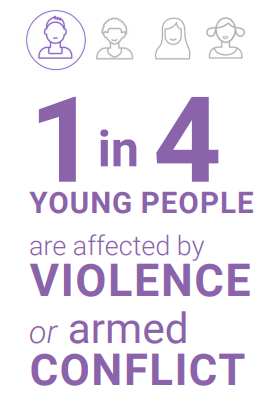
Infographic from the Independent Progress Study on Youth, Peace and Security

Youth are significantly affected by violence. The Independent Progress Study on Youth, Peace and Security estimates that 1 in 4 young people are affected by violence or armed conflict. But they are also leaders within their communities and champions for positive change after significant trauma.

“People talk about war like no one is in it, like no one is there afterwards trying to pick up the pieces. I want that conversation to change. When Syria is mentioned for example, we need to also think about what it’s like for young people to live day-to-day in Aleppo under siege. What could it be like for them after it is over?”

The United Nations Security Council Resolution 2250 announced in 2015 is considered ground-breaking and will play a key role in the UN Sustainable Development Goals 2030 Agenda. The resolution marks the first time the UN has recognised young people as positive contributors to peace. Member states and other parties must now meaningfully include young people in their responses to conflict and security plans.

Prior to the UN resolution, Helen says youth have traditionally been viewed as a problem or a risk and there was nothing in place to ensure youth representation at policy tables.  “We need to recognise the contributions youth are already making but give them the space and tools to step in, collaborate, and consult with our established institutions of power at all levels, local, national and international.”

Despite not ‘being given a seat at the table’ young peacekeepers have always been responding to issues within their own contexts, but Helen asks, “What does this new international attention mean for their future capacity to do their job? What opportunities for peace building are yet to be realised? That’s what I am going to find out.”

As part of her project, Helen will travel to Colombia, Philippines, and Sri Lanka spending five to six weeks in each country undertaking qualitative research with key youth leaders and organisations. “Getting to go and chat to the young people, hearing their vision and what they are doing to achieve that despite the barriers they face is energising. If I can play a role in helping them be heard, that would be very rewarding.”
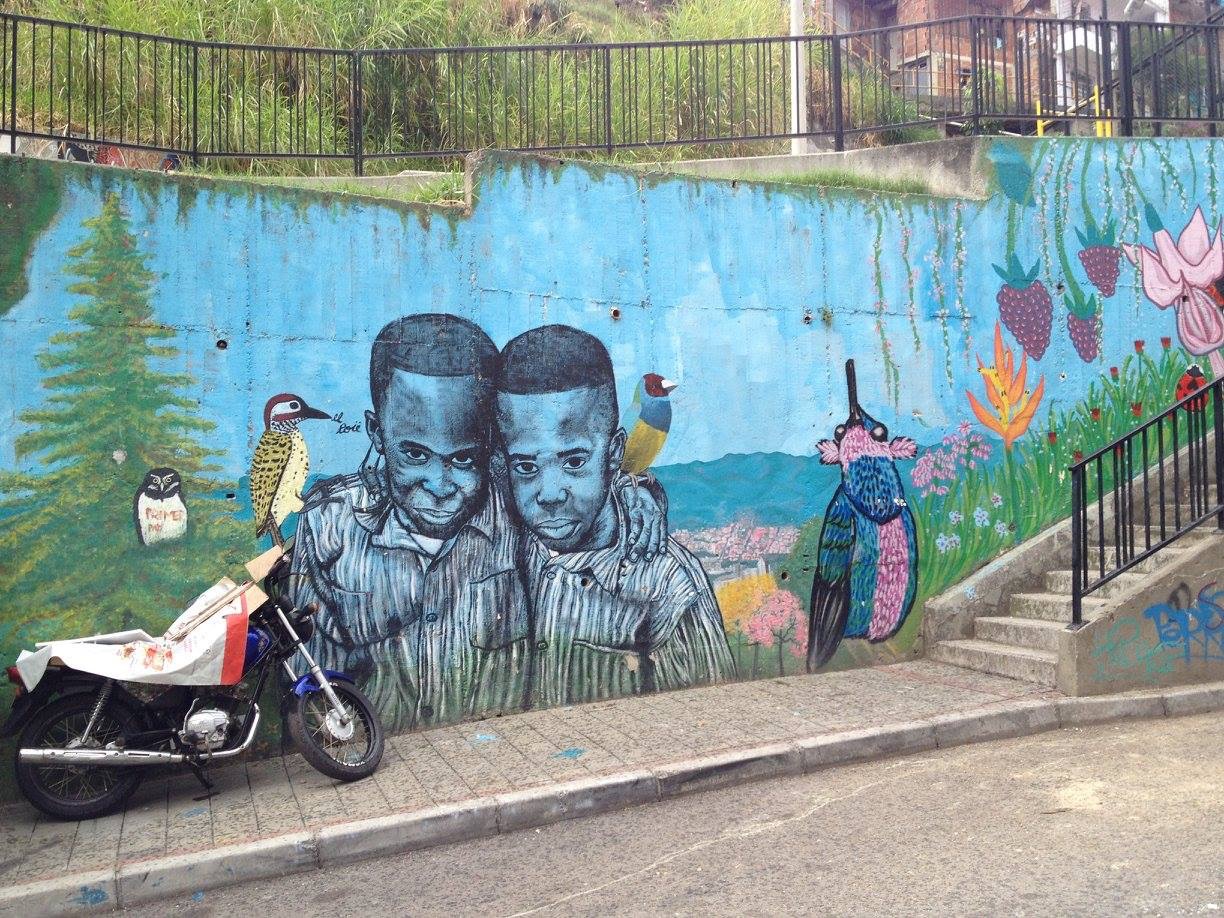
Street Art in Medellin, Colombia

All three countries have experienced major conflict and a peace agreement within the last decade. But just because there is a peace agreement in place, doesn’t mean everyone is at peace. Colombia, for example, has had one of the longest running conflicts in the western hemisphere that started in the 1960’s. In 2016 their government signed a peace agreement with the largest non-state group FARC to end the conflict, but it started this unique period where there isn’t peace or war, “everything is uncertain.”

As part of a recent research project, Helen spoke to a young peace-worker from West Africa who had been working for years to provide access to health services, advocating for education on human rights and reproductive health, particularly for young women. After many years of advocacy, he now has seats on local committees and places himself in those existing places of power. He said to her, “this paper [UN resolution 2250], means they have to listen to me, I get a foot in the door.”

So how we can better account for and include young people in peace building and peace and security policy? How can peace building be made more youth inclusive, how can they meaningfully become part of the conversation?

It’s about participation and partnership with youth, as opposed to creating things without consultation. Some countries do consult with youth with great results. Helen says that some European and Nordic countries already have a good history of youth partnership. Rwanda post-genocide made seats designated for both youth and women in parliament, “they needed to– 70% of the population was under the age of 25.”

When our mechanisms of power acknowledge and encourage contributions from youth, more effective solutions can be created. Whether that is a global conversation about climate justice or a group in a very specific context, like youth groups advocating for safe access to schools or lighting in communities to make places safer after dark.

“Young people aren’t defeatist, they are pragmatists. They understand the reality of the situation, but they aren’t afraid to hope. If we don’t have hope, what’s left?”
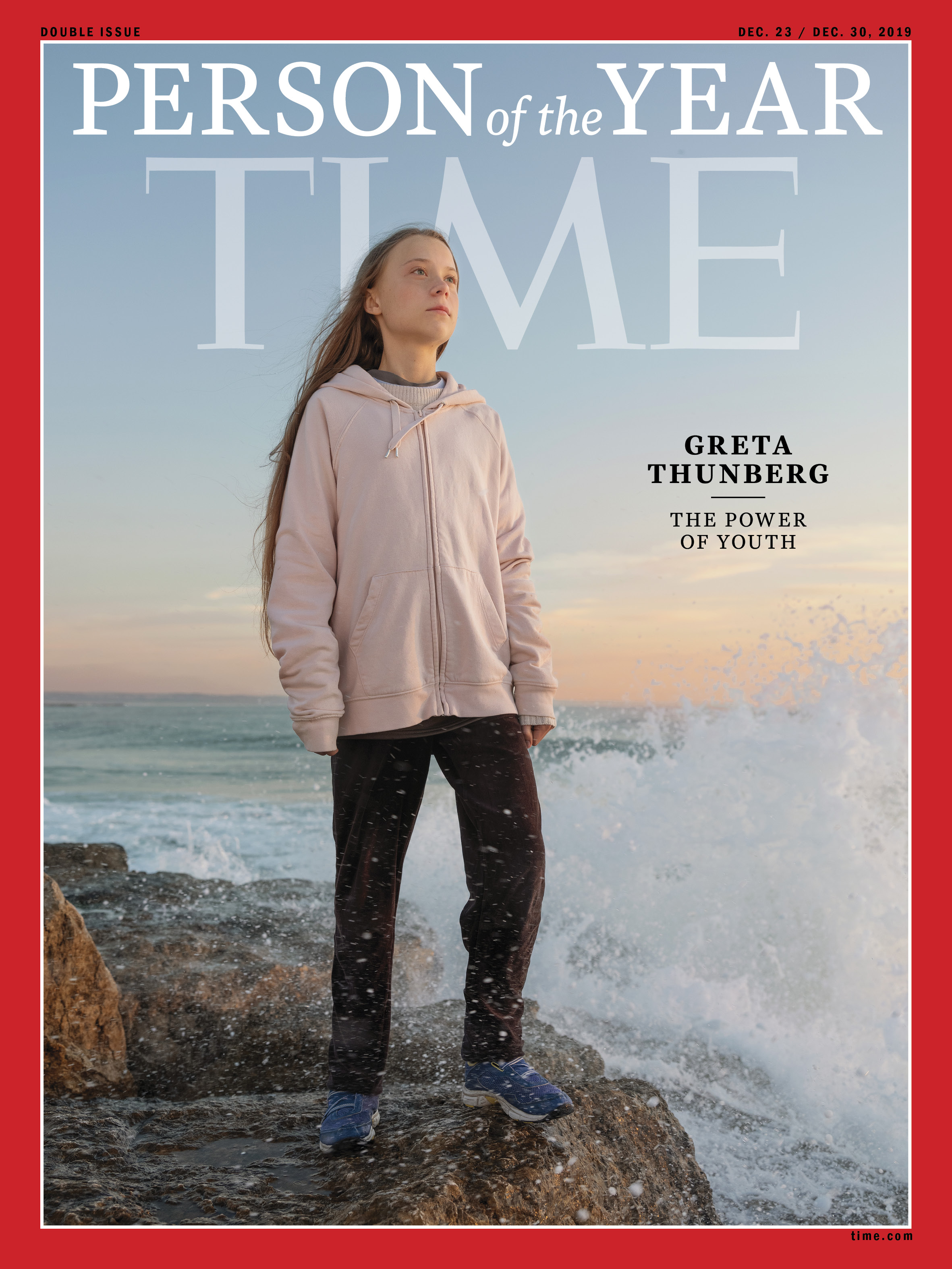
There are many concerns right now with different events happening around the world, but Helen says not to give up hope.

“Greta Thunberg being on the cover of TIME magazine as Person of the Year tells us that the conversation is shifting. There is a space being opened for young people. It’s important not to give up. But we need to make sure that the participation is meaningful and genuine rather than tokenistic.”

Helen’s interest in the field first started when her family moved to live in Venezuela as expats from when she was 10-14 years old. “It was the first time I’d really seen inequality. We were very well off as expats and the contrast was striking,” It prompted her to ask the questions, “What does it mean to live in a world with these kinds of differences? What does it mean for the children who were my age who didn’t have the opportunities I had? And most importantly, why does this inequality exist?”

Dr Helen Berents
Dr Helen Berents

At university Helen was able to complete independent research projects, “I read stories about young people surviving war. I realised that people weren’t talking about or taking seriously what young people were doing to help rebuild their communities, so I thought I might.”

Helen holds an undergraduate Arts degree in anthropology and peace and conflict studies. Her PhD in International Relations from University of Queensland received the University of Queensland Dean's Award for Research Higher Degree Excellence in 2013, an award that is given annually to no more than the top 10% of PhDs across the university.

Helen hopes that her research will allow for continued conversations with government, policymakers, and other organisations both youth-led and non-youth led. Her workshops that bring together academics with policymakers and civil society representatives have already been successful.

“If I can find mechanisms that push in particular ways that will open up spaces to enable recognition of young people's work that I know is going on but is so rarely recognised in policy spaces and government spaces, that’s what I’m going to do.”

You can stay up to date on Helen’s project by visiting her website.

Share on Facebook Share on X Email Share on Reddit Share on LinkedIn
Study Research Engage About QUT
  • Undergraduate study
  • Postgraduate study
  • PhDs and research degrees
  • Professional and executive education
  • International students
  • Study abroad and exchange
  • QUT College
  • Graduate success
  • Applying
  • Fees
  • Scholarships
  • Key dates
Whatever you want to study, our range of courses will give you the hands-on learning, industry connections and real-world perspective you’ll need to succeed.
Explore study at QUT
  • Why QUT?
  • Our research
  • Our experts
  • World-class facilities
  • Study with us
  • How to apply
  • Master of philosophy
  • PhD
  • Professional doctorate
  • Partner with us
  • Research jobs
Join us at the forefront of research and development. Access cutting-edge facilities and technology, work with world-renowned experts, and create real-world change.
Explore research at QUT
  • Industry and partnerships
  • Work with our students
  • Expertise for industry
  • Executive education
  • Give to QUT
  • Make a real impact
  • Ways to give
  • Alumni
  • Alumni benefits
  • Update alumni details
  • Alumni tools and resources
Connect with us and see how we can support you. We invite industry partners, alumni and our valued donors to join the vibrant, exciting QUT community.
Explore ways to engage with QUT
  • Our university
  • Our people
  • Achievements and recognition
  • Campuses and venues
  • News
  • Events
  • Jobs
  • Library
Learn what makes Queensland University of Technology (QUT) the university for the real world. Read about our goals for future growth, achievements and success, and the organisational structures that support us.
Explore QUT
QUT acknowledges the Traditional Owners of the lands where QUT now stands.
  • Login
  • Legal
  • Privacy
  • QUT on Facebook
  • QUT on Instagram
  • The QUTube
  • QUT on LinkedIn
  • QUT on TikTok
Our social media
Contact QUT
  • TEQSA Provider ID: PRV12079 (Australian University)
  • CRICOS No. 00213J
  • ABN: 83 791 724 622
  • Page updated: 11 April 2024