 Apply now
 How to apply
 Save course for later
 Send me a PDF copy
 I want more info
Endless possibilities
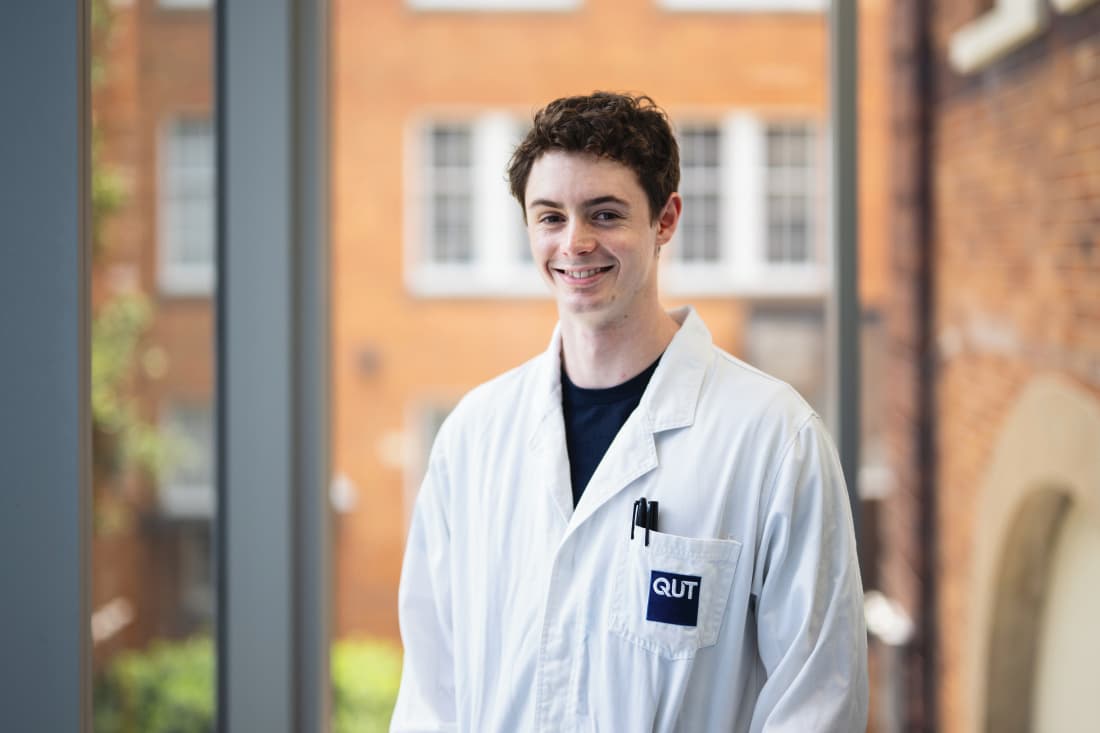
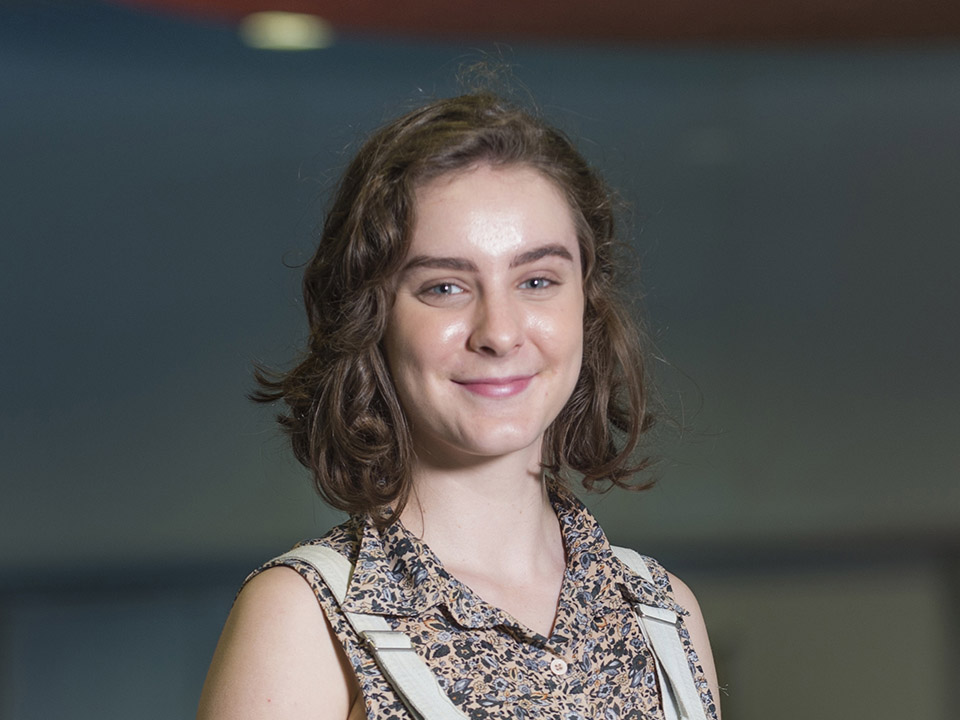
'I’ve had incredible opportunities to dive into real research through specialised units and projects at QUT. Thanks to the Dean's Scholars Program, I went from leadership workshops in Bangkok to AMSI-MATRIX Winter School exploring how mathematics can solve sustainability challenges. Those experiences opened my eyes to what’s possible, connected me with brilliant people, and shaped how I see my career.'
Bachelor of Science (Chemistry)/Bachelor of Mathematics (Applied and Computational)
Katrina's story
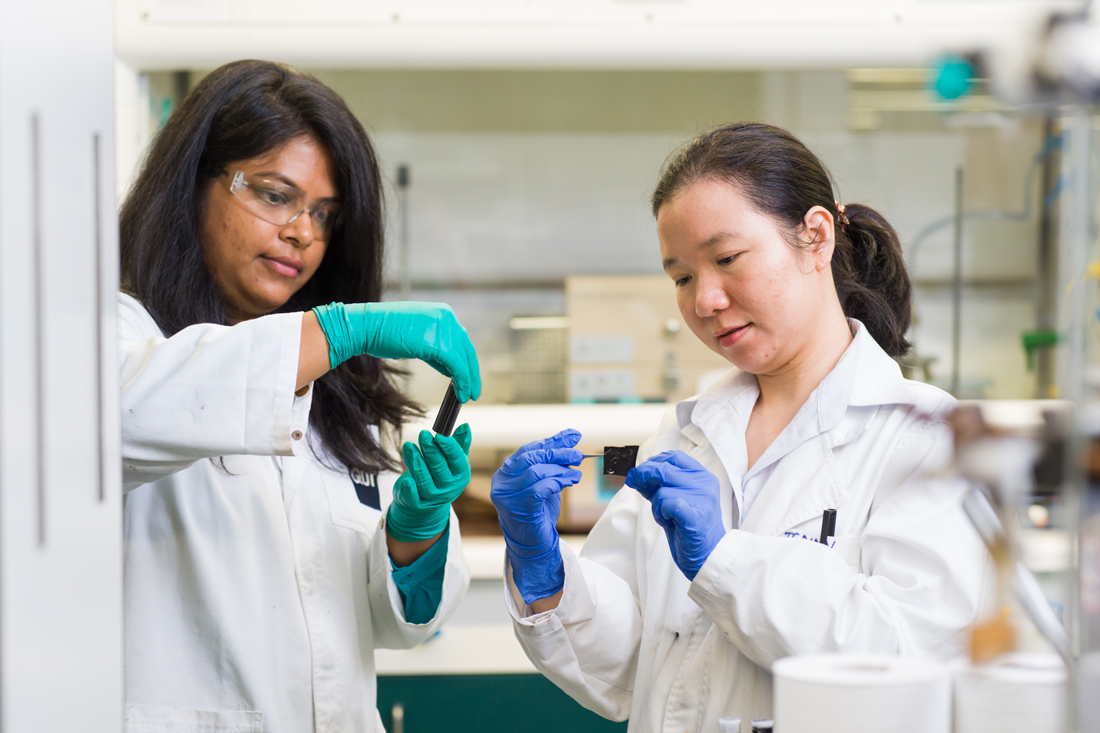
'My interest in chemistry blossomed after watching 'The Rock' where Nicholas Cage plays an FBI chemical weapons specialist who saves the world from total annihilation. Now, I use green chemistry to solve mining waste issues that might also save the Earth.'
Katrina is a proud Mabuigilaig and Goemulgal woman and the first member of her family to go to uni. She's been awarded for transforming the consumer goods sector by harnessing the power of green chemistry while inspiring others to step into STEM.
2025 Young Australian of the Year
Jodie's career outcome
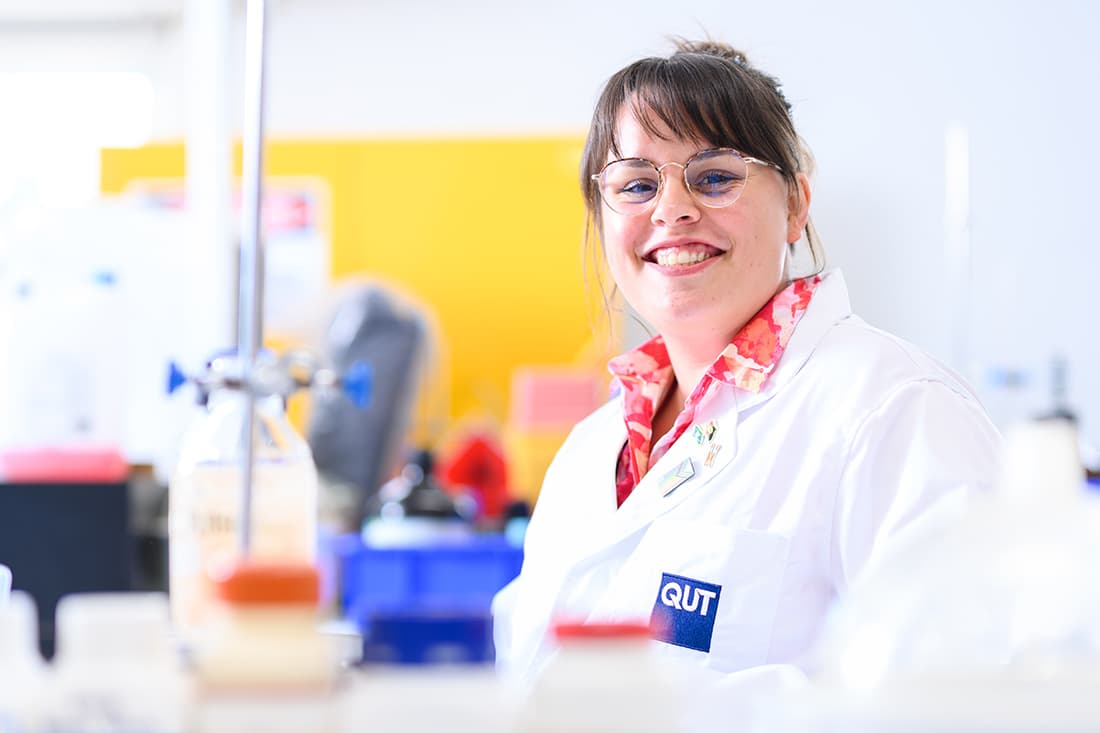
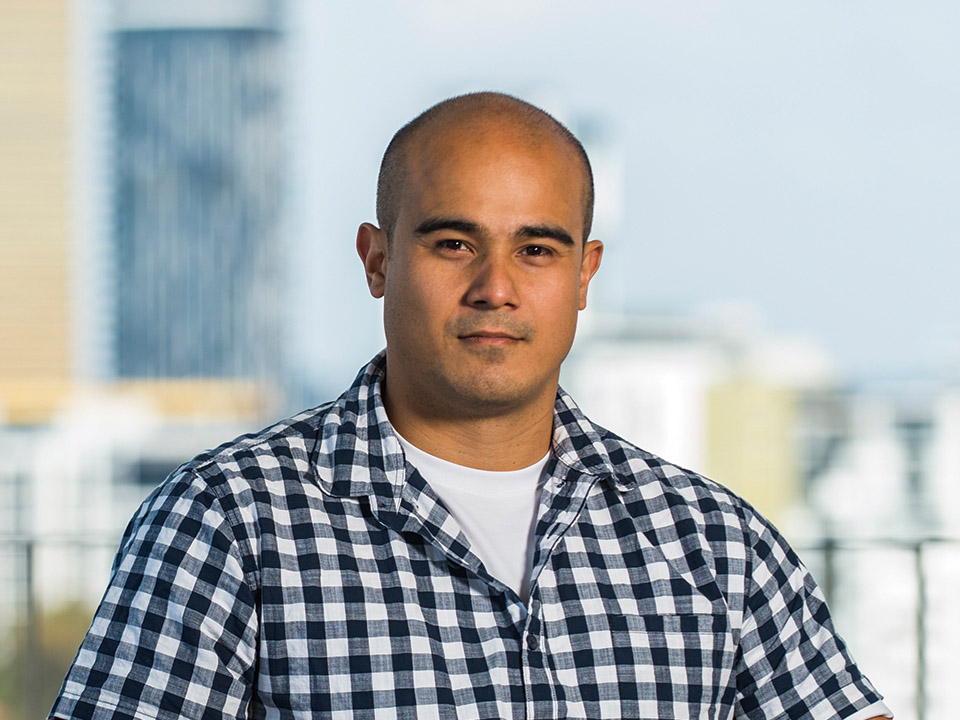
'I love that I get to work with so many cool instruments and that my work has tangible results. My team and I are the reason a lot of the state has assured clean drinking water, municipal swimming pools, creeks and streams.'
Analytical Chemist at ALS Life Sciences
Charlotte's practical experience
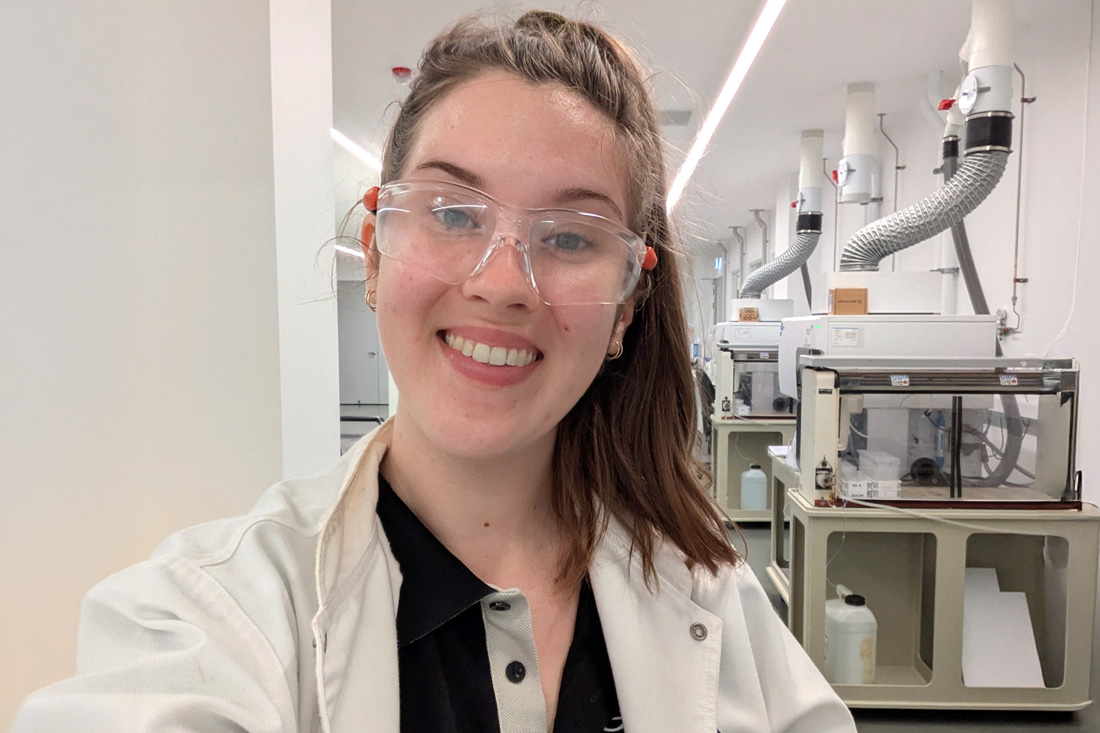
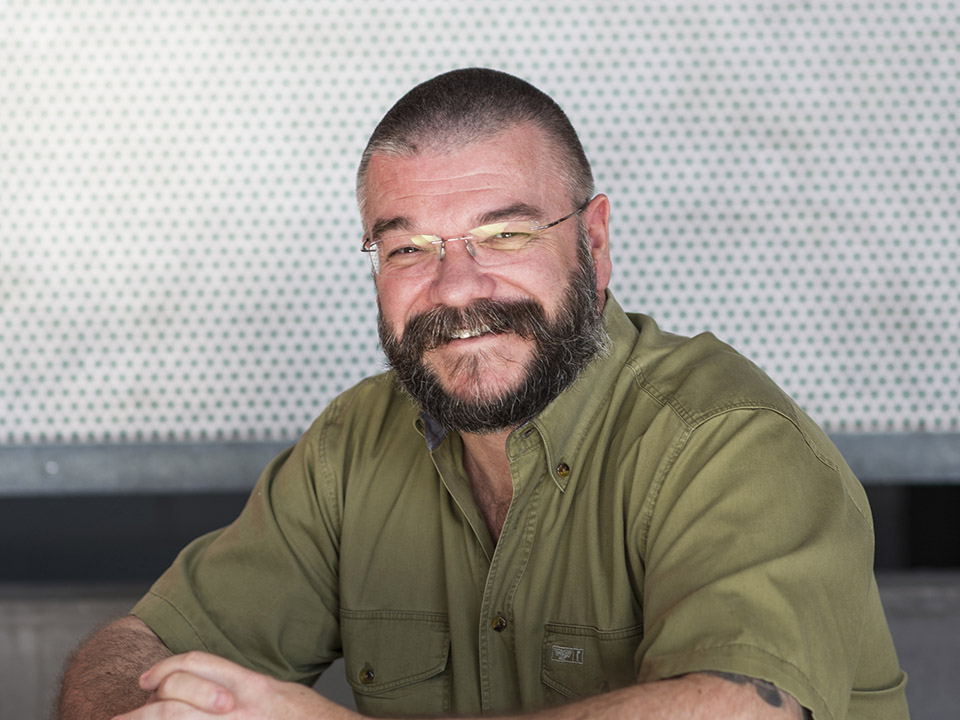
'I enjoyed the practical components of my degree. We were given a lot of freedom to plan and conduct experiments and I found this allowed me to appreciate the theory on a deeper level. All of my lecturers were more than willing to help connect students with potential internship and employment opportunities. In my third year, I completed an internship within the chemistry lab at Caltex; an opportunity I might not have considered had my lecturer not suggested it to me.'
Bachelor of Science (Chemistry) graduate
Student stories from the chemistry lab
Want to know what it's like to study chemistry at QUT? Hear from two QUT Bachelor of Science students who decided to major in chemistry.
Katrina's story
'My interest in chemistry blossomed after watching 'The Rock' where Nicholas Cage plays an FBI chemical weapons specialist who saves the world from total annihilation. Now, I use green chemistry to solve mining waste issues that might also save the Earth.'
Katrina is a proud Mabuigilaig and Goemulgal woman and the first member of her family to go to uni. She's been awarded for transforming the consumer goods sector by harnessing the power of green chemistry while inspiring others to step into STEM.
2025 Young Australian of the Year
Charlotte's practical experience
'I enjoyed the practical components of my degree. We were given a lot of freedom to plan and conduct experiments and I found this allowed me to appreciate the theory on a deeper level. All of my lecturers were more than willing to help connect students with potential internship and employment opportunities. In my third year, I completed an internship within the chemistry lab at Caltex; an opportunity I might not have considered had my lecturer not suggested it to me.'
Bachelor of Science (Chemistry) graduate

Highlights
- Learn the basics before developing a more detailed understanding of analytical, inorganic, organic, and physical chemistry.
- Complete a research project in your final year and take field trips to major industrial sites.
- Choose a degree employers recognise for its analytical chemistry component and focus on safe laboratory practices.
- Prepare for a career as an industrial chemist, materials scientist, environmental chemist, quality control analyst, laboratory supervisor, food chemist, or organic/inorganic chemist.
- Learn in our new multimillion-dollar research and teaching facilities,
- QUT is ranked eighth for chemistry in Australia (QS World University Rankings by Subject, 2024).
Highlights
- Learn the basics before developing a more detailed understanding of analytical, inorganic, organic, and physical chemistry.
- Complete a research project in your final year, and take field trips to major industrial sites.
- Choose a degree that's recognised by employers for its analytical chemistry component and focus on safe laboratory practices.
- Prepare for a career as an industrial chemist, materials scientist, environmental chemist, quality control analyst, laboratory supervisor, food chemist, or an organic/inorganic chemist.
- QUT equal #139 in the world for materials science (QS World University Rankings by Subject 2026)
- Learn in our new multimillion dollar research and teaching facilities.
Why choose this course?
The QUT chemistry degree is a qualification that is known and respected by employers. Many employers prefer QUT chemistry graduates, especially those with an extension minor in analytical chemistry, because of their advanced technical skills, their experience with modern instrumentation and their training in scientific communication. Our training in analytical chemistry throughout the chemistry degree is renowned nationally.
You will undertake comprehensive laboratory work including experiments using modern computer-based analytical instruments and gain knowledge and experience in the health and safety aspects of handling chemicals. You will be guided by highly respected lecturers, many actively involved in cutting-edge research.
Explore this course
Chemists are involved in most areas of science, technology, environment and industry; for example, medicinal drugs, nanotechnology, water and air quality and energy production. Manufacturing industries rely on chemists to ensure that quality and safety standards are maintained. The development of better and safer drugs depends heavily on the input of chemists.
Chemistry principles are fundamental to many other disciplines, including biotechnology, environmental science, geosciences, materials science and food science.
At QUT, you will study analytical, physical, organic and inorganic chemistry with an additional focus on modern applications such as nanotechnology, analytical chemistry and spectroscopy.
Customise your degree
Study a double degree to gain a broader skill set, enhanced career opportunities, and personal growth and satisfaction. Explore your double and vertical double-degree options.
Undergraduate double degrees
- Bachelor of Built Environment (Honours) (Landscape Architecture)/Bachelor of Science
- Bachelor of Built Environment (Honours) (Urban and Regional Planning)/Bachelor of Science
- Bachelor of Communication/Bachelor of Science
- Bachelor of Engineering (Honours)/Bachelor of Science
- Bachelor of Information Technology/Bachelor of Science
- Bachelor of Mathematics/Bachelor of Science
- Bachelor of Science/Bachelor of Busines
- Bachelor of Science/Bachelor of Laws (Honours)
- Bachelor of Science/Bachelor of Data Science
Vertical double degrees
Careers and outcomes
Employment opportunities are diverse and, you may become an industrial chemist, materials scientist, environmental chemist, quality control analyst, laboratory supervisor, food chemist or an organic/ inorganic chemist. Your interaction with QUT experts in drug development, clay and minerals chemistry, renewable energy sources, nanotechnology, environmental monitoring and applications of modern analytical instrumentation, may lead to careers in these areas.
QUT graduates are sought after by police and other forensics laboratories because of their extensive practical training using modern analytical instrumentation. You could consider undertaking a graduate-entry teacher education program after your degree to pursue a teaching career.
Possible careers
- Analytical chemist
- Biochemist
- Chemical technologist
- Chemist
- Environmental health officer
- Forensic chemist
- Industrial chemist
- Inventor
- Laboratory assistant
- Laboratory technician (chemistry)
- Policy officer
- Research and development chemist
To meet the course requirements of the Bachelor of Science, you must complete a total of 288 credit points, made up of:
- Core units - 60 credit points
- A Major – 120 credit points
- QUT You - 24 credit points
- Complementary studies - 84 credit points, made up of:
- a second major (84 credit points), or
- a minor (48 credit points) and elective units (36 credit points).
To meet the course requirements of the Bachelor of Science, you must complete a total of 288 credit points, made up of:
- Core units - 60 credit points
- A Major – 120 credit points
- QUT You - 24 credit points
- Complementary studies - 84 credit points, made up of:
- a second major (84 credit points), or
- a minor (48 credit points) and elective units (36 credit points).
- ATAR/selection rank threshold
- 70.00
These thresholds are the lowest adjusted scores to which QUT made an offer in Semester 1, 2026.
Don't have a ATAR/selection rank?
- Course code
- ST01
- QTAC code
- 418011
- CRICOS code
- 077696D
-
- Gardens Point
-
- Gardens Point
- 3 years full-time
- 6 years part-time
- 3 years full-time
- February and July
- February and July
Assumed knowledge
Before you start this course, we assume you have sound knowledge of the subject/s listed below. If you don't have the subject knowledge, you can still apply for the course but we strongly encourage you to undertake bridging studies to gain the knowledge:
- English, or Literature, or English and Literature Extension, or English as an Additional Language (Units 3 & 4, C)
- Mathematical Methods, or Specialist Mathematics (Units 3 & 4, C)
Year 12 early offer scheme
If you're a current Queensland Year 12 student, you may be eligible to receive an offer for this course on the last day of Queensland Year 12, before receiving your ATAR or selection rank.
Offer guarantee
If you achieve an ATAR or selection rank of 70.00 or higher (including any adjustments) and satisfy all other admission requirements, you are guaranteed an offer for this course in the Semester 1 offer rounds, up to the main offer round in mid-January.
VET guarantee
If you have completed an AQF certificate IV, diploma or higher, and satisfy all other admission requirements, you are guaranteed an offer for this course in the Semester 1 offer rounds.
Advanced standing
If you have prior studies or work experience, you may be eligible for advanced standing (credit). You can apply for advanced standing once you've been accepted to QUT. If you're in your first semester of study, you must apply for advanced standing within 10 days of receiving your offer.
Deferment
You can defer your offer and postpone the start of your course for one year.
More about deferring your offer
Adjustments to your ATAR/selection rank
Any adjustments you receive to your ATAR or selection rank will be applied to this course.
Find out if you’re eligible for an adjustment to your ATAR or selection rank
Offers we made to school leavers in Semester 1, 2025
The figures listed in the tables below reflect the offers that were made to recent ATAR students. The entry thresholds box at the top of this page shows the lowest adjusted ATAR/selection rank required to receive an offer for all applicants for the most recent January QTAC offer round.
| Excluding adjustments | Including adjustments | |
|---|---|---|
| Highest ATAR/selection rank to receive an offer |
Selection rank
98.15
|
Selection rank
99.95
|
| Median ATAR/selection rank to receive an offer |
Selection rank
78.15
|
Selection rank
79.95
|
| Lowest ATAR/selection rank to receive an offer |
Selection rank
62.90
|
Selection rank
70.15
|
You can find out more about your fellow students’ backgrounds with this course’s student profile.
Other admission options
If you are of Aboriginal or Torres Strait Islander descent, you may be eligible for admission through our Centralised Assessment Selection Process (CASP).
I completed my studies outside of Australia
Select the country where you completed your studies to see a guide to the grades you need to apply for this course.
If your country or qualification is not listed, you can still apply for this course and we will assess your eligibility.
Assumed knowledge
- Mathematical Methods, or Specialist Mathematics (Units 3 & 4, C)
You must have achieved this study at a level comparable to Australian Year 12 or in recognised post-secondary studies.
I completed secondary school in Australia
Assumed knowledge
Before you start this course we assume you have sound knowledge in these areas:
- Mathematical Methods, or Specialist Mathematics (Units 3 & 4, C)
- ATAR/selection rank
- 70.00
Offer guarantee
If you completed secondary school in Australia and achieve an ATAR/selection rank of 70.00 or higher (including any adjustments) and satisfy all other admission requirements, you are guaranteed an offer for this course.
VET guarantee
If you have completed an AQF certificate IV, diploma or higher, and satisfy all other admission requirements, you are guaranteed an offer for this course.
Minimum English language requirements
Select the country where you completed your studies to see a guide on meeting QUT’s English language requirements.
Your scores and prior qualifications in English-speaking countries are considered. Approved English-speaking countries are Australia, Canada, England, Ireland, New Zealand, Scotland, United States of America and Wales.
If your country or qualification is not listed, you can still apply for this course and we will assess your eligibility.
We accept English language proficiency scores from the following tests undertaken in a secure test centre. Tests must be taken no more than 2 years prior to the QUT course commencement.
| English Test | Overall | Listening | Reading | Writing | Speaking |
|---|---|---|---|---|---|
| IELTS Academic / One Skill Retake | 6.5 | 6 | 6 | 6 | 6 |
|
Cambridge C1 Advanced
You must share your results with QUT through the Candidate Results Online website. |
176 | 169 | 169 | 169 | 169 |
| PTE Academic | 58 | 50 | 50 | 50 | 50 |
| TOEFL iBT Australia Test (120 scale) | 79 | 16 | 16 | 21 | 18 |
Don't have the English language score you need? We can help!
We offer English language programs to improve your English and help you gain entry to this course.
When you apply for this course, we will recommend which English course you should enrol in.

Your actual fees may vary depending on which units you choose. We review fees annually, and they may be subject to increases.
2027 fees
2027: Fee available from October
2027 fees
2027: Fee available from July
2026 fees
2026: CSP $9,000 per year full-time (96 credit points)
2026 fees
2026: $46,500 per year full-time (96 credit points)
Student services and amenities fees
You may need to pay student services and amenities (SA) fees as part of your course costs.
HECS-HELP: loans to help you pay for your course fees
You may not have to pay anything upfront if you're eligible for a HECS-HELP loan.
You can apply for scholarships to help you with study and living costs.
QUT Excellence Scholarship (Academic)
QUT's premier offering for students with outstanding academic achievement.
- Scholarship eligibility
- Academic performance
Equity scholarships scheme
A scholarship for low-income students studying in any faculty.
- Scholarship eligibility
- Struggling financially
QUT Elite Sport Scholarship
QUT's premier offering for students with outstanding sporting achievement.
- Scholarship eligibility
- Sporting excellence
International Merit Scholarship
A high achievement scholarship for future international undergraduate and postgraduate students.
- Scholarship eligibility
- Academic performance
Oodgeroo Noonuccal Undergraduate & Postgraduate Scholarship
The Oodgeroo Scholarship Program promotes the pursuit of Indigenous Australian studies by supporting the education of Indigenous Australians.
- Scholarship eligibility
- Indigenous Australian
QUT Budding Entrepreneur Scholarship
A scholarship for innovative individuals who are engaged in their passion for entrepreneurial action.
- Scholarship eligibility
QUT Rising Sports Scholarship
QUT’s high performance offering for students with outstanding sporting achievement.
- Scholarship eligibility
- Sporting excellence
Faculty of Science Scholarship for Women and Non-Binary People
We are committed to supporting people who may face barriers due to their gender and building diverse and inclusive cohorts for careers in science, maths and IT.
- Scholarship eligibility
- Academic performance; Women; Non-binary
Faculty of Science Indigenous Australian Scholarship
We are committed to improving Aboriginal and Torres Strait Islander participation in science, maths and IT and ensuring students reach their full potential.
- Scholarship eligibility
- Indigenous Australian; Academic performance
International Talent Scholarship
A new scholarship for 2026 that covers tuition fees, with eligibility based on your prior academic achievements.
- Scholarship eligibility
- Academic performance
Keep up to date
Ready for your next step?
Finishing school?
Everything you need to know about choosing a uni straight from school.
How to apply
We'll break down the application process, from QTAC to accepting your offer.
Ready for your next step?
How to apply
We'll break down the process, from applying to accepting your offer.
Flexible study
Explore the options that could make postgraduate study work for you.
QUT courses for you
Like to save your courses?
Please enter your first name and email so we can save your courses for you