 Apply now
 How to apply
 Save course for later
 Send me a PDF copy
 I want more info
Practical experience
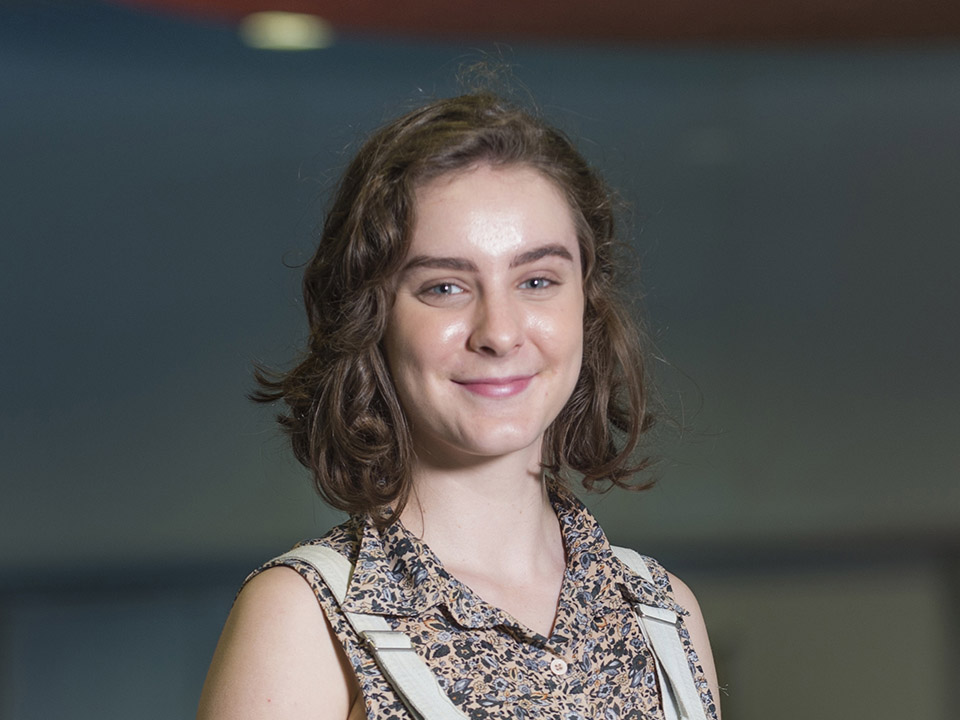
'In my journalism degree, I have created full radio bulletins, recorded television news, used an auto‑cue camera, interviewed real people, written real stories and gained amazing experience both in front of, and behind, the cameras. Whether it be print, audio, or visual news, I am well equipped to create them all. This has helped me create a portfolio of professional quality which I will use for job applications down the track.'
Bachelor of Communication (Journalism) graduate
Practical experience
'In my journalism degree, I have created full radio bulletins, recorded television news, used an auto‑cue camera, interviewed real people, written real stories and gained amazing experience both in front of, and behind, the cameras. Whether it be print, audio, or visual news, I am well equipped to create them all. This has helped me create a portfolio of professional quality which I will use for job applications down the track.'
Bachelor of Communication (Journalism) graduate
Grow your confidence
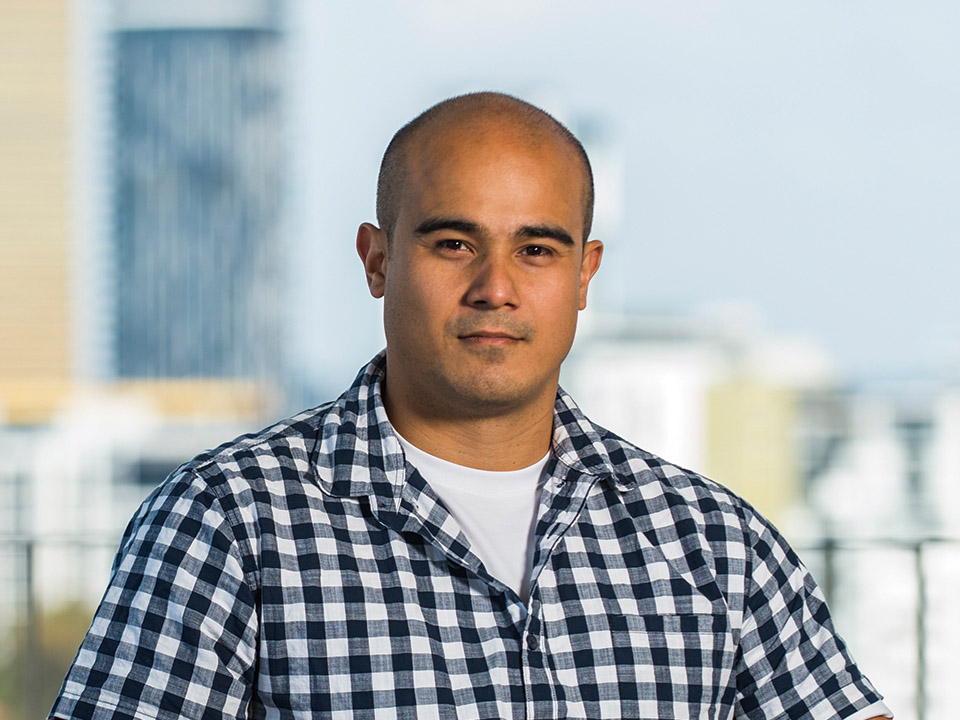
'One of the best things in my course is how we actually get into the journalism practice, like being in front of the camera and interviewing real people for a real story. This is done with such a great support from tutors that really care about your growth. Doing news stories from scratch really helped push me to build a contact list for journalism and grow confidence as a journalist.'
Bachelor of Communication (Journalism) and Bachelor of Science student


Highlights
- Join the best journalism degree in Queensland with a long-standing reputation for producing award-winning and media professionals, including alumni such as Leigh Sales, Peter Greste, Leila McKinnon, Conor Duffy, Karl Stefanovic and Supercar Blondie.
- Explore the evolving media landscape, from traditional newsrooms to digital platforms, and learn how technology is transforming storytelling.
- Develop practical skills in writing, reporting, and multimedia production to create compelling stories across print, broadcast, and online formats.
- Engage in real-world learning through internships, newsroom simulations, and contributions to live media projects that prepare you for industry demands.
- Learn from leading researchers and industry professionals at QUT, ranked #19 globally and #1 in Australia for media and communication studies (QS World University Rankings by Subject, 2026).
Highlights
- Join the best journalism degree in Queensland with a long-standing reputation for producing award-winning and media professionals, including alumni such as Leigh Sales, Peter Greste, Leila McKinnon, Conor Duffy, Karl Stefanovic and Supercar Blondie.
- Explore the evolving media landscape, from traditional newsrooms to digital platforms, and learn how technology is transforming storytelling.
- Develop practical skills in writing, reporting, and multimedia production to create compelling stories across print, broadcast, and online formats.
- Engage in real-world learning through internships, newsroom simulations, and contributions to live media projects that prepare you for industry demands.
- Learn from leading researchers and industry professionals at QUT, ranked #19 globally and #1 in Australia for media and communication studies (QS World University Rankings by Subject, 2026).
Why choose this course?
Journalism matters more now than it ever has. It is more than reporting just the facts. It’s telling stories that matter, holding power to account, and connecting communities. In this major, you’ll learn how to craft compelling narratives for print, broadcast, and digital platforms while understanding the social, cultural, and economic forces shaping the news industry.
You’ll explore how audiences engage with media, how technology transforms storytelling, and how ethical frameworks guide responsible reporting. From breaking news to investigative features, you’ll develop the skills to produce accurate, engaging, and impactful journalism in a world where trust and credibility are more important than ever.
Real-world learning
Real-world learning is embedded throughout the program. Many assessments involve collaborative projects that replicate the workflow of a professional newsroom, giving you experience in pitching ideas, editing stories, and managing production schedules. You will investigate and create long-form multimedia work on topics that interest you.
Beyond the campus, internships with leading media organisations provide authentic industry exposure and help you build networks before graduation.
In your final year you can choose to undertake an industry internship, major collaborative project or undertake an international study tour.
You’ll also learn from working professionals and internationally renowned experts of journalism and media studies. QUT journalism staff maintain close links with industry through their association with high-profile awards and organisations.
Visit the student and graduate blog to find out more about what it’s like to study communication and where a QUT degree can take you.
Real-world learning
Real-world learning is embedded throughout the program. Many assessments involve collaborative projects that replicate the workflow of a professional newsroom, giving you experience in pitching ideas, editing stories, and managing production schedules. You will investigate and create long-form multimedia work on topics that interest you.
Beyond the campus, internships with leading media organisations provide authentic industry exposure and help you build networks before graduation.
In your final year you can choose to undertake an industry internship, major collaborative project or undertake an international study tour.
You’ll also learn from working professionals and internationally renowned experts of journalism and media studies. QUT Journalism staff maintain close links with industry through their association with high-profile awards and organisations.
Explore this course
Your studies will begin with foundational communication and writing skills, ensuring you can craft clear, compelling stories. You’ll then explore the media world, including its industries, audiences and digital ecosystems, while developing expertise in ethical reporting and data-driven journalism.
As you progress, you’ll learn how to analyse audience behaviour, interpret data, and leverage digital platforms to reach diverse communities. By graduation, you’ll be equipped with advanced research, writing, and multimedia production skills, ready to thrive in a fast-paced, global media environment.
Finally, you’ll dive into the future of digital journalism. You’ll learn how online platforms and data analytics are transforming storytelling and develop the skills to produce content that thrives in a fast-paced, technology-driven environment. By graduation, you’ll be equipped to combine traditional reporting expertise with cutting-edge digital strategies, making you ready for the demands of modern newsrooms, or to be an independent content creator.
Flexible course options
Pairing journalism with a communication second major such as media and communication industries, screen industries, or promotional communication gives you a competitive edge. This combination broadens your skill set to include strategic storytelling, audience engagement, and media analysis.
Or you might like to add minors such as strategic communications, news and factual media, or social media strategy to specialise in areas that complement journalism. These options allow you to tailor your degree to your interests and career goals, opening pathways into content creation, and digital strategy.
The journalism major will provide you with the knowledge and tools you’ll need to stay up-to-date on the latest information, prepare reports and stories to fit the fast news cycle, and the professional contacts to get your career moving. From day one, you’ll be in the thick of the modern journalism industry.
You’ll be introduced to data-driven storytelling, where facts can both ensure your reporting is ethical and increase audience appeal. You’ll deep-dive into journalism law, and the ethics and social justice issues that challenge modern journalism. You’ll even be trained in the specific skills of both short-form, and long-form news production, so you’ll be ready for any work environment.
Your studies will be rounded by the choice of either a second major, which is a sequence of eight units from another study area, or minors and electives such as work integrated learning, internships or international study tours that allow you to graduate work ready through engagement with the industry.
Double degrees
Maximise your career opportunities by combining journalism with another degree and create your own specialist career niche.
Combine business and journalism for a journalism career with a specialty in finance, international affairs or politics, or work as a media executive, business analyst or researcher.
Combine journalism and law to work as a solicitor, barrister or in-house lawyer for a media organisation, or as a journalist covering law, politics, crime or foreign affairs.
Careers and outcomes
As the industry evolves, new opportunities are emerging in digital storytelling, data journalism, and social media reporting. These roles demand professionals who can combine traditional reporting skills with digital expertise and ethical judgment.
Professional recognition
Our journalism degree is recognised by the Australian Journalists' Association section of the Media, Entertainment and Arts Alliance.
Possible careers
- Communication specialist
- Crisis communications advisor
- Digital content designer
- Digital content producer
- Foreign correspondent
- Journalist
- Media and communications officer (government, NGOs, corporates)
- Media researcher
- Online advocacy / education roles
- Podcast host
- Political communications advisor
- Presenter
- Producer
- Public relations officer/consultant
- Reporter
In order to complete this course you must complete a total of 288 credit points comprising:
Six common units - 72 credit points
A Communication major - 96 credit points from one of the following disciplines:
- Media and Communication Industries
- Journalism
- Screen Industries
- Promotional Communication
Complementary studies - 96 credit points chosen from:
- one 96 credit point second major (Communication second major or Uni-wide second major); OR
- two 48 credit point minors (Communication minor or Uni-wide minor); OR
- one 48 credit point minor and 48 credit points chosen from unit options (electives) (Creative Industries Work Integrated Learning Unit Options or Uni-wide unit option unit); OR
- 96 credit points chosen from unit options (electives) (Creative Industries Work Integrated Learning Unit Options or Uni-wide unit option unit)
Four QUT You units - 24 credit points comprising 4 x 6 credit points units.
In order to complete this course you must complete a total of 288 credit points comprising:
Six common units - 72 credit points
A Communication major - 96 credit points from one of the following disciplines:
- Media and Communication Industries
- Journalism
- Screen Industries
- Promotional Communication
Complementary studies - 96 credit points chosen from:
- one 96 credit point second major (Communication second major or Uni-wide second major); OR
- two 48 credit point minors (Communication minor or Uni-wide minor); OR
- one 48 credit point minor and 48 credit points chosen from unit options (electives) (Creative Industries Work Integrated Learning Unit Options or Uni-wide unit option unit); OR
- 96 credit points chosen from unit options (electives) (Creative Industries Work Integrated Learning Unit Options or Uni-wide unit option unit)
Four QUT You units - 24 credit points comprising 4 x 6 credit points units
- ATAR/selection rank threshold
- 70.00
These thresholds are the lowest adjusted scores to which QUT made an offer in Semester 1, 2026.
Don't have a ATAR/selection rank?
- Course code
- KC40
- QTAC code
- 421351
- CRICOS code
- 096577J
-
- Kelvin Grove
-
- Kelvin Grove
- 3 years full-time
- 6 years part-time
- 3 years full-time
- February and July
- February and July
Assumed knowledge
Before you start this course, we assume you have sound knowledge of the subject/s listed below. If you don't have the subject knowledge, you can still apply for the course but we strongly encourage you to undertake bridging studies to gain the knowledge:
- English, or Literature, or English and Literature Extension, or English as an Additional Language (Units 3 & 4, C)
Year 12 early offer scheme
If you're a current Queensland Year 12 student, you may be eligible to receive an offer for this course on the last day of Queensland Year 12, before receiving your ATAR or selection rank.
Find out more about the QUT Year 12 Early Offer Scheme
Helping you to get into your course
If you don't think your ATAR or selection rank is high enough to get into this course, you can guarantee your entry with guaranteed advanced standing by upgrading through one the following programs which you can select as one of your QTAC preferences:
QUT College Diplomas
As a QUT College Diploma in Creative Industries graduate you will automatically receive an offer to start the Bachelor of Communication within one week after completion of the diploma. You will also automatically receive up to 1.0 year (96 credit points) credit transfer and be able to complete the degree in 2 years as a full-time student (or equivalent part-time).
Find out more about the QUT College Diploma in Creative Industries
Offer guarantee
If you achieve an ATAR or selection rank of 70.00 or higher (including any adjustments) and satisfy all other admission requirements, you are guaranteed an offer for this course in the Semester 1 offer rounds, up to the main offer round in mid-January.
VET guarantee
If you have completed an AQF certificate IV, diploma or higher, and satisfy all other admission requirements, you are guaranteed an offer for this course in the Semester 1 offer rounds, up to the main offer round in mid-January.
Advanced standing
If you have prior studies or work experience, you may be eligible for advanced standing (credit). You can apply for advanced standing once you've been accepted to QUT. If you're in your first semester of study, you must apply for advanced standing within 10 days of receiving your offer.
Deferment
You can defer your offer and postpone the start of your course for one year.
More about deferring your offer
Adjustments to your ATAR/selection rank
Any adjustments you receive to your ATAR or selection rank will be applied to this course.
Find out if you’re eligible for an adjustment to your ATAR or selection rank
Offers we made to school leavers in Semester 1, 2025
The figures listed in the tables below reflect the offers that were made to recent ATAR students. The entry thresholds box at the top of this page shows the lowest adjusted ATAR/selection rank required to receive an offer for all applicants for the most recent January QTAC offer round.
| Excluding adjustments | Including adjustments | |
|---|---|---|
| Highest ATAR/selection rank to receive an offer |
Selection rank
96.80
|
Selection rank
96.80
|
| Median ATAR/selection rank to receive an offer |
Selection rank
81.20
|
Selection rank
83.45
|
| Lowest ATAR/selection rank to receive an offer |
Selection rank
65.55
|
Selection rank
71.20
|
You can find out more about your fellow students’ backgrounds with this course’s student profile.
Other admission options
If you are of Aboriginal or Torres Strait Islander descent, you may be eligible for admission through our Centralised Assessment Selection Process (CASP).
Select the country where you completed your studies to see a guide to the grades you need to apply for this course.
If your country or qualification is not listed, you can still apply for this course and we will assess your eligibility.
I completed secondary school in Australia
- ATAR/selection rank
- 70.00
Offer guarantee
If you completed secondary school in Australia and achieve an ATAR/selection rank of 70.00 or higher (including any adjustments) and satisfy all other admission requirements, you are guaranteed an offer for this course.
VET guarantee
If you have completed an AQF certificate IV, diploma or higher, and satisfy all other admission requirements, you are guaranteed an offer for this course.
Minimum English language requirements
Select the country where you completed your studies to see a guide on meeting QUT’s English language requirements.
Your scores and prior qualifications in English-speaking countries are considered. Approved English-speaking countries are Australia, Canada, England, Ireland, New Zealand, Scotland, United States of America and Wales.
If your country or qualification is not listed, you can still apply for this course and we will assess your eligibility.
We accept English language proficiency scores from the following tests undertaken in a secure test centre. Tests must be taken no more than 2 years prior to the QUT course commencement.
| English Test | Overall | Listening | Reading | Writing | Speaking |
|---|---|---|---|---|---|
| IELTS Academic / One Skill Retake | 6.5 | 6 | 6 | 6 | 6 |
|
Cambridge C1 Advanced
You must share your results with QUT through the Candidate Results Online website. |
176 | 169 | 169 | 169 | 169 |
| PTE Academic | 58 | 50 | 50 | 50 | 50 |
| TOEFL iBT Australia Test (120 scale) | 79 | 16 | 16 | 21 | 18 |
Don't have the English language score you need? We can help!
We offer English language programs to improve your English and help you gain entry to this course.
When you apply for this course, we will recommend which English course you should enrol in.


Your actual fees may vary depending on which units you choose. We review fees annually, and they may be subject to increases.
2027 fees
2027: Fee available from October
2027 fees
2027: Fee available from July
2026 fees
2026: CSP $17,200 per year full-time (96 credit points)
2026 fees
2026: $40,000 per year full-time (96 credit points)
Student services and amenities fees
You may need to pay student services and amenities (SA) fees as part of your course costs.
HECS-HELP: loans to help you pay for your course fees
You may not have to pay anything upfront if you're eligible for a HECS-HELP loan.
You can apply for scholarships to help you with study and living costs.
QUT Excellence Scholarship (Academic)
QUT's premier offering for students with outstanding academic achievement.
- Scholarship eligibility
- Academic performance
Equity scholarships scheme
A scholarship for low-income students studying in any faculty.
- Scholarship eligibility
- Struggling financially
QUT Elite Sport Scholarship
QUT's premier offering for students with outstanding sporting achievement.
- Scholarship eligibility
- Sporting excellence
International Merit Scholarship
A high achievement scholarship for future international undergraduate and postgraduate students.
- Scholarship eligibility
- Academic performance
International Talent Scholarship
A new scholarship for 2026 that covers tuition fees, with eligibility based on your prior academic achievements.
- Scholarship eligibility
- Academic performance
Keep up to date
Ready for your next step?
Finishing school?
Everything you need to know about choosing a uni straight from school.
How to apply
We'll break down the application process, from QTAC to accepting your offer.
Ready for your next step?
How to apply
We'll break down the process, from applying to accepting your offer.
Flexible study
Explore the options that could make postgraduate study work for you.
QUT courses for you
Like to save your courses?
Please enter your first name and email so we can save your courses for you