 Apply now
 How to apply
 Save course for later
 Send me a PDF copy
 I want more info
Design, prototype, test
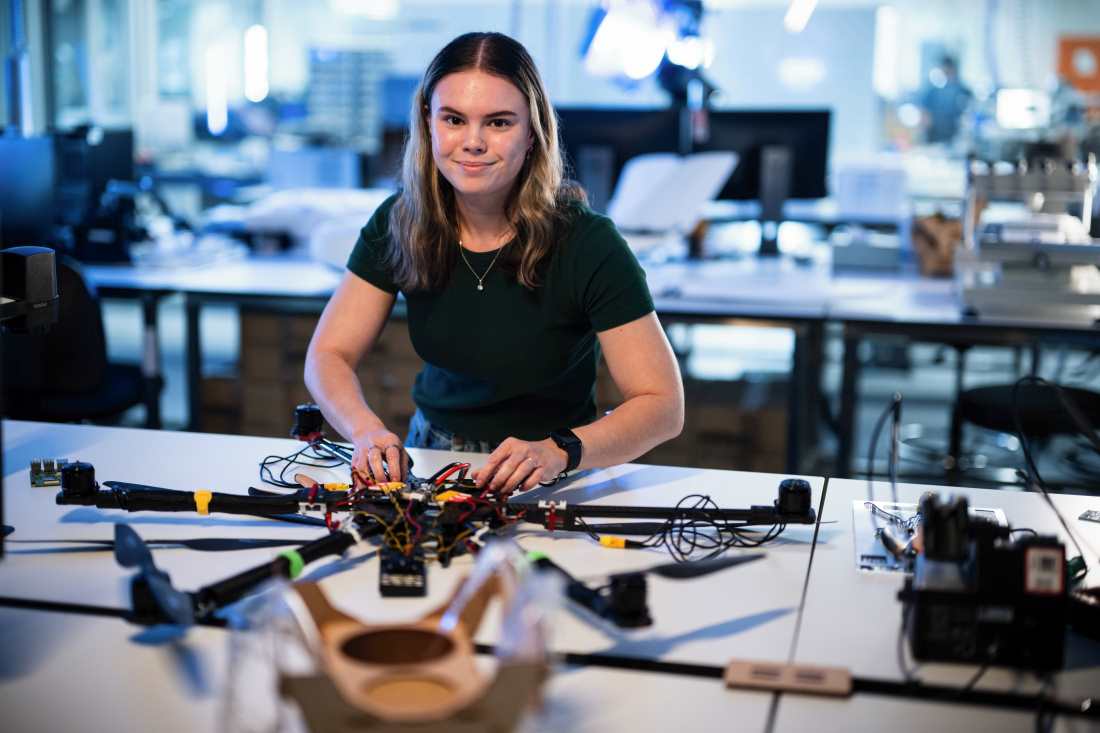
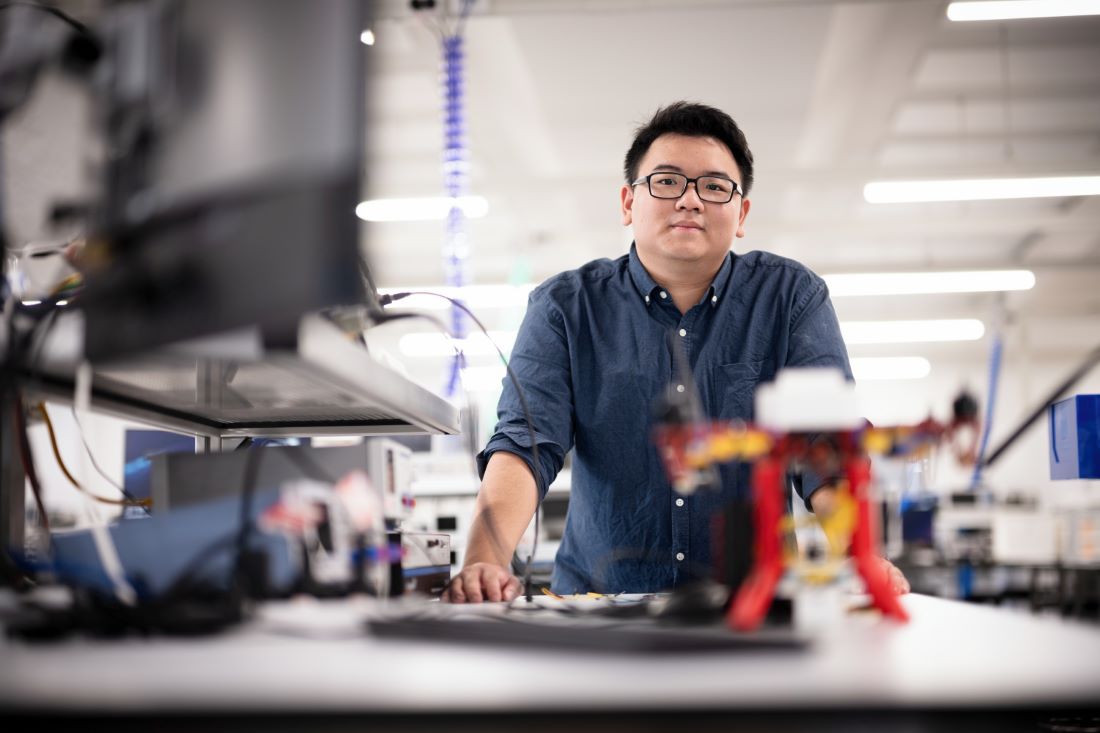
‘A standout project I completed was designing a two-tone siren circuit, similar to those used in ambulances or jets. I prototyped, tested, and had the design professionally printed before soldering the components. QUT’s electronics labs provide essential equipment like oscilloscopes and soldering stations, allowing me to apply theory in practice and deepen my understanding.’
Bachelor of Engineering (Honours) (Electrical and Aerospace)/Bachelor of Science (Physics)
Digital transformation in aviation
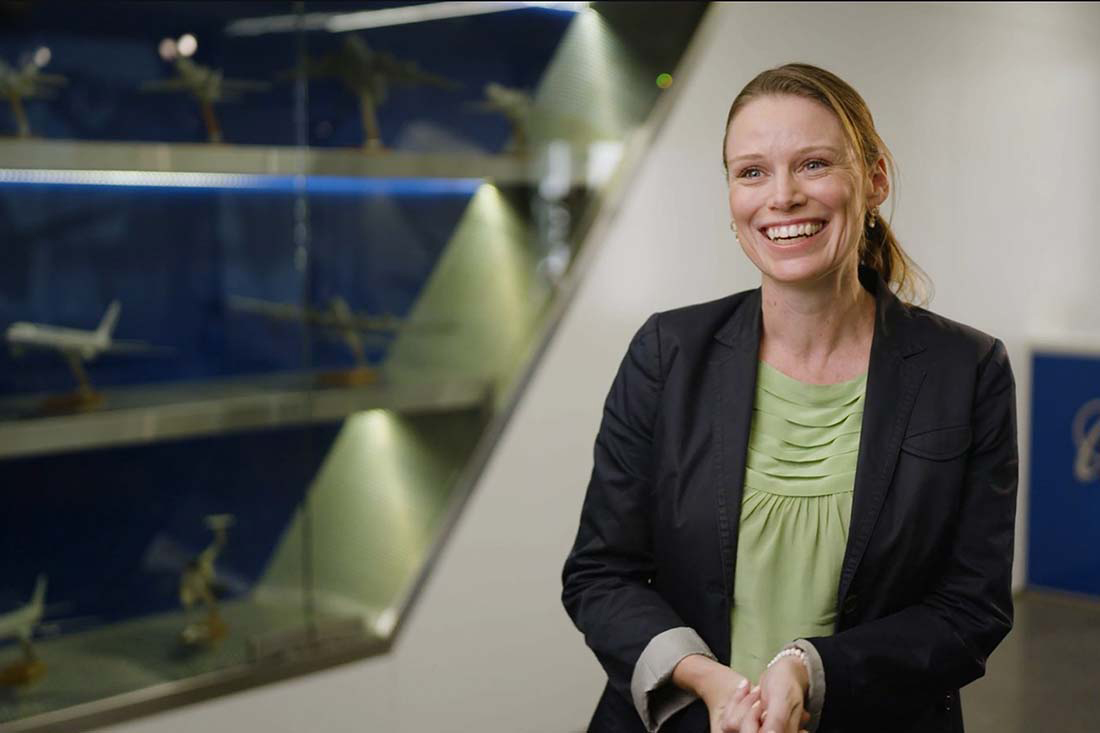
Linda Hapgood, Vice President of Digital Transformation at Boeing, is leading digital and sustainability projects which are transforming the aviation industry. Since joining Boeing as a QUT graduate, she’s worked on major projects including the 747 and the 787 programs. Now, she’s focused on what’s next for the future of flight, from virtual reality design to augmented reality manufacturing and training.
Vice President of Digital Transformation at Boeing
Aerospace experience
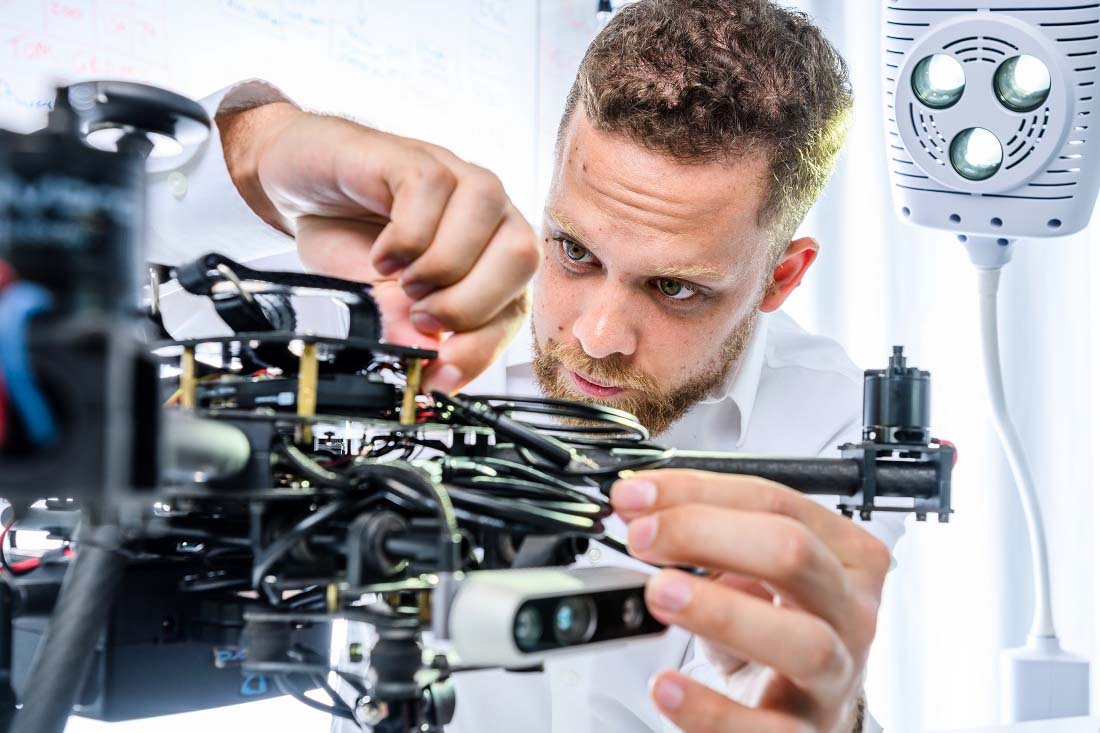
‘I have had the privilege of presenting to an industry panel with my team for the Advanced Unmanned Aircraft Systems unit. The panel consisted of representatives from various aerospace companies in Brisbane that were able to engage and ask questions about our final project. QUT's practical and industry-driven approach to learning has given me critical skills in preparation for my future career. The hands-on experience I’ve had building and testing UAVs and various robots has been invaluable.'
Bachelor of Engineering (Honours) (Electrical and Aerospace) (Mechatronics)
Industry experience in your degree
'QUT works above and beyond to ensure its students have the best opportunities to engage with industry partners. I currently intern at Boeing where I get to apply what I’ve learnt to the latest technologies and collaborate with experts on complex engineering projects.'
Bachelor of Engineering (Honours) (Electrical and Aerospace)
Aerospace for the real-world
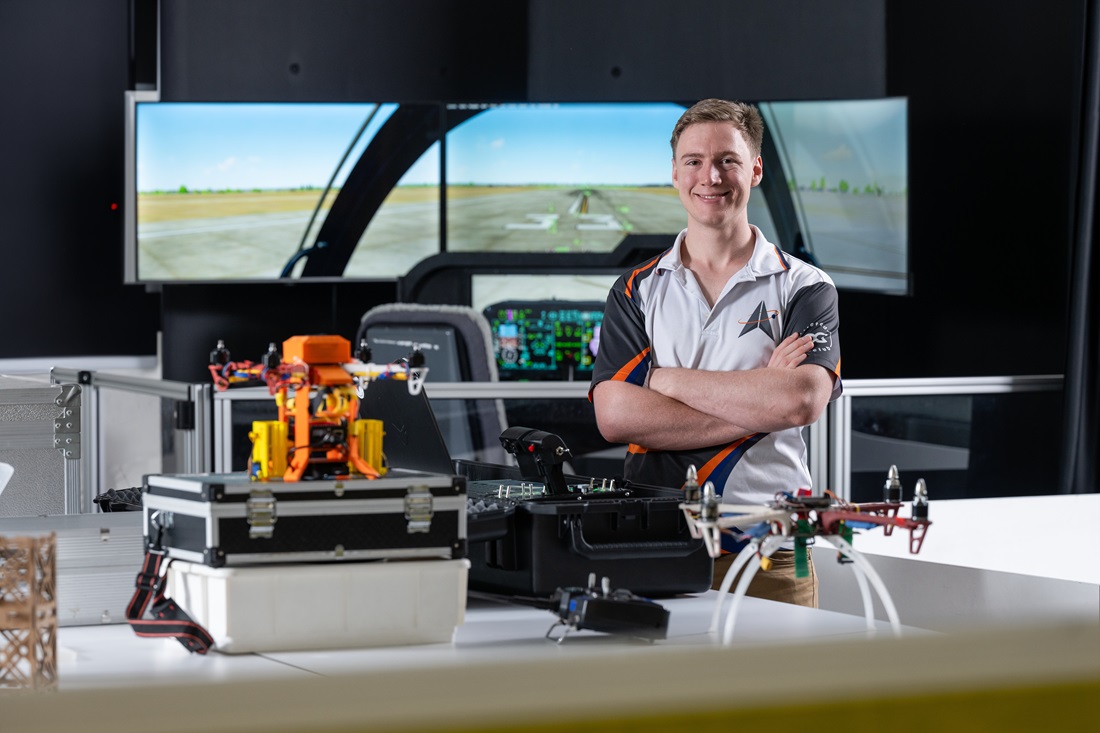
'I chose to study electrical and aerospace because of my passion for aerospace and because I saw the big potential in this industry, especially around autonomous systems in aircraft. Most of the units I study are related to coding, which is absolutely real world because big data is the future of the industry and engineers cannot solve the task by hand and will use simulation instead.'
Bachelor of Engineering (Honours) (Electrical and Aerospace) student
Aerospace experience
‘I have had the privilege of presenting to an industry panel with my team for the Advanced Unmanned Aircraft Systems unit. The panel consisted of representatives from various aerospace companies in Brisbane that were able to engage and ask questions about our final project. QUT's practical and industry-driven approach to learning has given me critical skills in preparation for my future career. The hands-on experience I’ve had building and testing UAVs and various robots has been invaluable.'
Bachelor of Engineering (Honours) (Electrical and Aerospace) (Mechatronics)
Industry experience in your degree
'QUT works above and beyond to ensure its students have the best opportunities to engage with industry partners. I currently intern at Boeing where I get to apply what I’ve learnt to the latest technologies and collaborate with experts on complex engineering projects.'
Bachelor of Engineering (Honours) (Electrical and Aerospace)
Career-launching classes
‘In my final year of study, I was accepted into the Boeing Internship program with Boeing Defence Australia, where I was placed in the Air-Power Teaming System Program. After graduating, I was offered a full-time position as a system engineer.’
Connections to industry
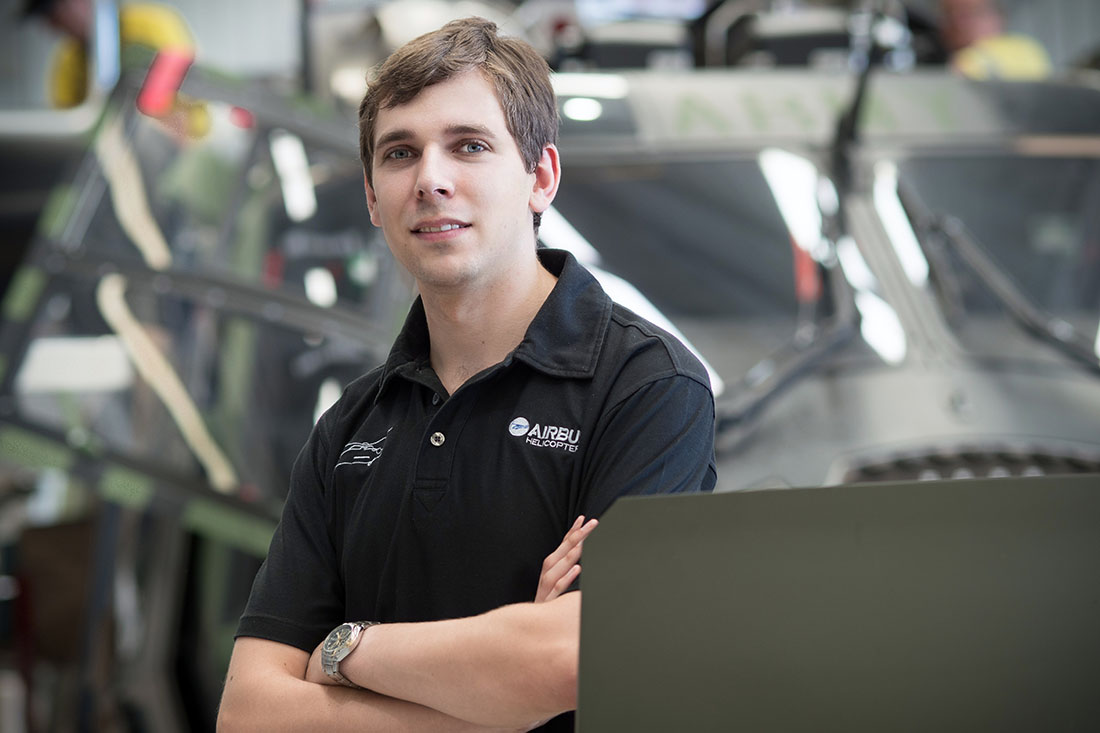
‘QUT’s focus on real work connections prepared me to enter the aerospace industry. I worked on unmanned aerial vehicles (UAVs) as part of a Vacation Research Experience Scheme project and while undertaking work experience at the Australian Research Centre for Aerospace Automation. As a graduate I have joined Airbus one of the largest, international aerospace companies.’
Highlights
- Explore the technologies behind modern aircraft and space systems, including avionics, navigation, communications, control systems, and satellites.
- Combine electrical engineering with aerospace systems developing a strong foundation for careers across aerospace, defence, and advanced technologies.
- Build practical skills through hands-on projects and industry-connected learning, applying your knowledge to real engineering challenges from day one.
- Gain experience through exclusive work placements and research projects with industry leaders such as Boeing, Airbus, Northrop Grumman Australia, Department of Defence, Universal Field Robots, and Gilmour Space Technologies.
- QUT is one of Australia’s leading universities in avionics research, giving you access to strong industry and government partnerships and opportunities to work alongside researchers shaping the future of aerospace systems.
- Recent projects have explored exciting innovations in fixed-wing UAV and rotorcraft, aerospace vision systems, and autopilot design.
- Go beyond the classroom by joining a student club, where you'll collaborate with like-minded students and put your skills to use on real-world engineering projects.
- Australia's space industry is rapidly growing, with initiatives to develop satellites, space exploration, and related technologies creating increased demand for aerospace expertise (Australian Space Agency).
Highlights
- Design and maintain the electrical systems of all types of aircraft – from aeroplanes to spacecraft, and everything in between.
- Learn everything there is to know about aerodynamics, aircraft control systems, avionics navigation and communications, and aircraft and satellite system design.
- Get hands-on experience through exclusive work placements and research projects with industry leaders such as Boeing and Airbus.
- Graduate with a highly specialised qualification that’s recognised in Australia and overseas.
- Choose a double degree and expand your employment opportunities.
Why choose this course?
Australia's space industry is rapidly growing, with initiatives to develop satellites, space exploration, and related technologies creating increased demand for aerospace expertise (Australian Space Agency).
You’ll be at the forefront of the technologies that are changing the aviation industry with our highly specialised electrical and aerospace engineering degree.
QUT is one of Australia’s leading universities in avionics research, and you’ll benefit from our strong partnerships with industry and government. Through field trips and training in our advanced engineering labs, you’ll get hands-on experience working with all types of aircraft, from aeroplanes and helicopters, to satellites, spacecraft and unmanned aircraft vehicles (UAVs).
You’ll then apply what you learn through exclusive work placements and research projects with industry leaders like Boeing, Airbus, Gilmour Space Technologies and the Department of Defence. Recent projects have explored exciting innovations in fixed-wing UAV and rotorcraft, aerospace vision systems, and autopilot design.
Why choose this course?
Design and maintain the electrical systems of all types of aircraft with our highly specialised electrical and aerospace engineering degree.
From faster and more fuel-efficient planes, to new ways to make flying cheaper and safer, you’ll be at the forefront of the technologies that are changing the aviation industry.
QUT is one of Australia’s leading universities in avionics research, and you’ll benefit from our strong partnerships with industry and government. Through field trips and training in our advanced engineering labs, you’ll get hands-on experience working with all types of aircraft, from aeroplanes and helicopters, to satellites, spacecraft and unmanned aircraft vehicles (UAVs).
You’ll then apply what you learn through exclusive work placements and research projects with industry leaders like Boeing and Airbus. Recent projects have explored exciting innovations in fixed-wing UAV and rotorcraft, aerospace vision systems, and autopilot design.
You’ll graduate with a highly specialised Honours qualification that’s recognised in Australia and overseas.
Choose a second major or a double degree and pursue your interests while maximising your career opportunities.
Explore this course
Electrical and aerospace engineering involves design, development, manufacture and maintenance work on the electronic systems of aeroplanes, helicopters, spacecraft, satellites and uninhabited aerial vehicles (UAVs). If you are interested in how things work, space and flight, technology, electronics and aircraft systems, an electrical and aerospace career could be for you.
Explore your options
Your engineering degree features common units in the first year that combine broad foundation principles with a wide range of major choices, giving you flexibility and options before you choose your career specialisation.
Work Integrated Learning
Work Integrated Learning (WIL) is embedded in the curriculum and it is a core component for all engineering students. WIL allows you to graduate with a portfolio of professional skills that provides evidence of your professional competencies.
You are required to complete 60 days (equivalent to 450 hours)of approved work experience in the engineering environment as part of your work integrated learning.
Careers and outcomes
As an electrical and aerospace engineer, you’ll use systems engineering methodology to design and maintain the electronic systems of all types of aircraft, from aeroplanes and helicopters, to satellites, spacecraft and unmanned aircraft vehicles (UAVs).
Aerospace and electrical engineers gain employment in a range of fields and industries including major electrical end aerospace companies and airlines, engineering and technology start-ups, air transport safety, management and regulation and defence. As your career progresses, you may then move into more senior engineering roles, management or into other sectors that actively seek engineering capabilities (including finance, health, transportation, construction and environment, public sector, consultancy).
Employment opportunities for electrical and aerospace engineering graduates include major electrical and aerospace companies and airlines, engineering and technology start-ups, and roles in air transport safety, management and regulation, and defence.
Professional recognition
This course has professional accreditation from Engineers Australia (EA). EA is a signatory to the Washington Accord, which permits graduates to work in various countries across the world. This course is recognised internationally in the engineering profession, giving our graduates more career opportunities overseas.
Possible careers
- Aerospace avionics engineer
- Control engineer
- Design engineer
- Electrical engineer
- Instrumentation engineer
- Robotics engineer
- Systems engineeer
Engineering (Honours)
Your QUT Bachelor of Engineering (Honours) degree consists of 32 units (384 credit points) arranged as follows:
(a) Core units (96 credit points) consisting of:
60 credit points of First Year units:
- Three core engineering units (36 credit points)
- An introductory unit in engineering mathematics (12 credit points), chosen from a list of two units depending on the student's mathematical preparedness
- Engineering Mathematics and Statistics (12 credit points)
And 36 credit points of Honours units:
- Research Methods (12 credit points)
- Project (24 credit points)
(b) A Major (216 credit points) consisting of:
- Eleven bachelor-level major units in the major (132 credit points)
- Five advanced Honours-level units in the major (60 credit points)
- Two Discipline Extension Units (24 credit points)
(c) Complementary Studies (48 credit points) consisting of:
- An Engineering Minor (a 4-unit sets of 48 credit points) from the options for your chosen Major
(d) Four QUT You units (24 credit points) of your choice
(e) One unit for the Work Placement Experience Report (0 credit points, no fee unit), mandatory for course completion
Engineering (Honours)
Your QUT Bachelor of Engineering (Honours) degree consists of 32 units (384 credit points) arranged as follows:
(a) Core units (96 credit points) consisting of:
60 credit points of First Year units:
- Three core engineering units (36 credit points)
- An introductory unit in engineering mathematics (12 credit points), chosen from a list of two units depending on the student's mathematical preparedness
- Engineering Mathematics and Statistics (12 credit points)
And 36 credit points of Honours units:
- Research Methods (12 credit points)
- Project (24 credit points)
(b) A Major (216 credit points) consisting of:
- Eleven bachelor-level major units in the major (132 credit points)
- Five advanced Honours-level units in the major (60 credit points)
- Two Discipline Extension Units (24 credit points)
(c) Complementary Studies (48 credit points) consisting of:
- An Engineering Minor (a 4-unit sets of 48 credit points) from the options for your chosen Major
(d) Four QUT You units (24 credit points) of your choice
(e) One unit for the Work Placement Experience Report (0 credit points, no fee unit), mandatory for course completion
- ATAR/selection rank threshold
- 84.00
These thresholds are the lowest adjusted scores to which QUT made an offer in Semester 1, 2026.
Don't have a ATAR/selection rank?
- Course code
- EN01
- QTAC code
- 412502
- CRICOS code
- 084921G
-
- Gardens Point
-
- Gardens Point
- 4 years full-time
- 8 years part-time
- 4 years full-time
- February and July
- February and July
Assumed knowledge
Before you start this course, we assume you have sound knowledge of the subject/s listed below. If you don't have the subject knowledge, you can still apply for the course but we strongly encourage you to undertake bridging studies to gain the knowledge:
- English, or Literature, or English and Literature Extension, or English as an Additional Language (Units 3 & 4, C)
- Mathematical Methods, or Specialist Mathematics (Units 3 & 4, C)
Year 12 early offer scheme
If you're a current Queensland Year 12 student, you may be eligible to receive an offer for this course on the last day of Queensland Year 12, before receiving your ATAR or selection rank.
QUT - Year 12 Early Offer Scheme
Helping you to get into your course
If you don't think your ATAR or selection rank is high enough to get into this course, you can guarantee your entry with guaranteed advanced standing by upgrading through one the following programs which you can select as one of your QTAC preferences:
QUT College Diploma in Engineering
QUT College Diploma in Engineering graduates will automatically receive an offer to start the Bachelor of Engineering (Honours) within three weeks after completion of the diploma. You will also automatically receive 1 year (96 credit points) credit transfer and be able to complete the degree in 3 years as a full-time student.
Offer guarantee
If you achieve an ATAR or selection rank of 87.00 or higher (including any adjustments) and satisfy all other admission requirements, you are guaranteed an offer for this course in the Semester 1 offer rounds, up to the main offer round in mid-January.
VET guarantee
If you have completed an AQF diploma or higher, and satisfy all other admission requirements, you are guaranteed an offer for this course in the Semester 1 offer rounds, up to the main offer round in mid-January.
Advanced standing
If you have prior studies or work experience, you may be eligible for advanced standing (credit). You can apply for advanced standing once you've been accepted to QUT. If you're in your first semester of study, you must apply for advanced standing within 10 days of receiving your offer.
Deferment
You can defer your offer and postpone the start of your course for one year.
More about deferring your offer
Adjustments to your ATAR/selection rank
Any adjustments you receive to your ATAR or selection rank will be applied to this course.
Find out if you’re eligible for an adjustment to your ATAR or selection rank
Offers we made to school leavers in Semester 1, 2026
The figures listed in the tables below reflect the offers that were made to recent ATAR students. The entry thresholds box at the top of this page shows the lowest adjusted ATAR/selection rank required to receive an offer for all applicants for the most recent January QTAC offer round.
| Excluding adjustments | Including adjustments | |
|---|---|---|
| Highest ATAR/selection rank to receive an offer |
Selection rank
99.65
|
Selection rank
99.95
|
| Median ATAR/selection rank to receive an offer |
Selection rank
88.45
|
Selection rank
91.60
|
| Lowest ATAR/selection rank to receive an offer |
Selection rank
74.50
|
Selection rank
84.05
|
You can find out more about your fellow students’ backgrounds with this course’s student profile.
Other admission options
If you are of Aboriginal or Torres Strait Islander descent, you may be eligible for admission through our Centralised Assessment Selection Process (CASP).
I completed my studies outside of Australia
Select the country where you completed your studies to see a guide to the grades you need to apply for this course.
If your country or qualification is not listed, you can still apply for this course and we will assess your eligibility.
Assumed knowledge
- Mathematical Methods, or Specialist Mathematics (Units 3 & 4, C)
You must have achieved this study at a level comparable to Australian Year 12 or in recognised post-secondary studies.
I completed secondary school in Australia
Assumed knowledge
Before you start this course we assume you have sound knowledge in these areas:
- Mathematical Methods, or Specialist Mathematics (Units 3 & 4, C)
- ATAR/selection rank
- 84.00
Offer guarantee
If you completed secondary school in Australia and achieve an ATAR/selection rank of 87.00 or higher (including any adjustments) and satisfy all other admission requirements, you are guaranteed an offer for this course.
VET guarantee
If you have completed an AQF diploma or higher, and satisfy all other admission requirements, you are guaranteed an offer for this course.
Minimum English language requirements
Select the country where you completed your studies to see a guide on meeting QUT’s English language requirements.
Your scores and prior qualifications in English-speaking countries are considered. Approved English-speaking countries are Australia, Canada, England, Ireland, New Zealand, Scotland, United States of America and Wales.
If your country or qualification is not listed, you can still apply for this course and we will assess your eligibility.
We accept English language proficiency scores from the following tests undertaken in a secure test centre. Tests must be taken no more than 2 years prior to the QUT course commencement.
| English Test | Overall | Listening | Reading | Writing | Speaking |
|---|---|---|---|---|---|
| IELTS Academic / One Skill Retake | 6.5 | 6 | 6 | 6 | 6 |
|
Cambridge C1 Advanced
You must share your results with QUT through the Candidate Results Online website. |
176 | 169 | 169 | 169 | 169 |
| LANGUAGECERT Academic (LCA) | 67 | 57 | 60 | 64 | 70 |
| Michigan English Test (MET) | 58 | 56 | 55 | 57 | 48 |
| PTE Academic | 59 | 50 | 50 | 51 | 54 |
| TOEFL iBT Australia Test (120 scale) | 79 | 16 | 16 | 19 | 19 |
Don't have the English language score you need? We can help!
We offer English language programs to improve your English and help you gain entry to this course.
When you apply for this course, we will recommend which English course you should enrol in.



Your actual fees may vary depending on which units you choose. We review fees annually, and they may be subject to increases.
2027 fees
2027: CSP $8,700 per year full-time (96 credit points)
2027 fees
2027: $50,200 per year full-time (96 credit points)
2026 fees
2026: CSP $8,400 per year full-time (96 credit points)
2026 fees
2026: $48,600 per year full-time (96 credit points)
Student services and amenities fees
You may need to pay student services and amenities (SA) fees as part of your course costs.
HECS-HELP: loans to help you pay for your course fees
You may not have to pay anything upfront if you're eligible for a HECS-HELP loan.
Student services and amenities fees
You may need to pay student services and amenities (SA) fees as part of your course costs.
You can apply for scholarships to help you with study and living costs.
QUT Excellence Scholarship (Academic)
QUT's premier offering for students with outstanding academic achievement.
- Scholarship eligibility
- Academic performance
Women in Engineering and Construction Scholarship
A scholarship for future female undergraduate students who want to study engineering and construction.
- Scholarship eligibility
- Women
Equity scholarships scheme
A scholarship for low-income students studying in any faculty.
- Scholarship eligibility
- Struggling financially
QUT Elite Sport Scholarship
Supports national-level athletes from recognised sporting pathways.
- Scholarship eligibility
- Sporting excellence
International Merit Scholarship
A high achievement scholarship for future international undergraduate and postgraduate students.
- Scholarship eligibility
- Academic performance
QUT Budding Entrepreneur Scholarship
A scholarship for innovative individuals who are engaged in their passion for entrepreneurial action.
- Scholarship eligibility
Keep up to date
Ready for your next step?
Finishing school?
Everything you need to know about choosing a uni straight from school.
How to apply
We'll break down the application process, from QTAC to accepting your offer.
Ready for your next step?
How to apply
We'll break down the process, from applying to accepting your offer.
Flexible study
Explore the options that could make postgraduate study work for you.
QUT courses for you
Like to save your courses?
Please enter your first name and email so we can save your courses for you