 Apply now
 How to apply
 Save course for later
 Send me a PDF copy
 I want more info
Be ready for your future
Our new Master of Digital Communication will future-proof your skills in the rapidly changing environment of digital communications. We're the top ranked university for communication and media studies in the country, and we'll give you cutting-edge skills to advance your career.
Gain in-depth knowledge
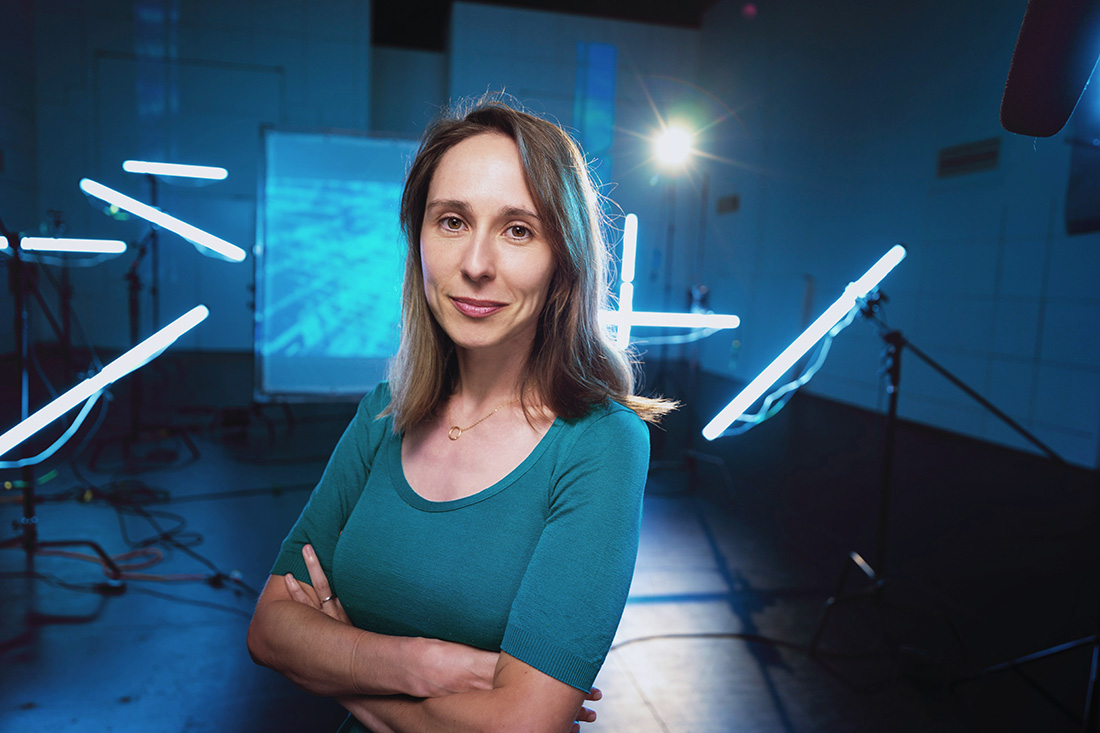
Dive deeper into the world of social media algorithms and its real-life implications with Professor Daniel Angus. Enhance your knowledge as a communication professional through the Master of Digital Communication.
Hands-on practical learning
‘I chose to study a Master of Digital Communication at QUT as the degree aligned with my interests and career path. With prior experience in digital marketing and a deep enthusiasm for effective communication, this course stood out for its comprehensive curriculum. Working with real-world clients stood out as the most beneficial aspect of my degree. These practical experiences allowed me to immerse myself in genuine, hands-on experiences and master the effective use of relevant programs.'
Master of Digital Communication graduate
Modern communication curriculum
'I was instantly drawn to QUT's Master of Digital Communication. Each unit was carefully designed for 21st-century communication professionals. From classical and modern digital communication theories to prime examples of successful marketing brands in Australia and around the world, I thoroughly enjoyed every class whilst being able to apply the knowledge throughout my assessments as well.'
Master of Digital Communication graduate



Highlights
- Study at Queensland's number 1 ranked university for communication and media studies (QS World Rankings, 2025).
- Analyse and create data-driven compelling stories via diverse social media platforms.
- Develop a deep understanding of the digital creative economy and how platforms and artificial intelligence are transforming the media and communication environment.
- Learn how to use and build tools to deliver advanced data visualisation and analysis of audience behaviour.
- Design, implement and evaluate a research project that integrates and applies the advanced knowledge and skills developed across the course with a scholarly academic or industry focus.
Highlights
- Study at Australia’s number 2 university for communication and media studies (QS World Rankings, 2025).
- Analyse and create data-driven compelling stories via diverse social media platforms.
- Develop a deep understanding of the digital creative economy and how platforms and artificial intelligence are transforming the media and communication environment.
- Learn how to use and build tools to deliver advanced data visualisation and analysis of audience behaviour.
- Design, implement and evaluate a research project that integrates and applies the advanced knowledge and skills developed across the course with a scholarly academic or industry focus.
Why choose this course?
Digital transformation is impacting global media and communication production, distribution and consumption at unprecedented levels. This data and automation driven disruption is increasingly delivering content across personal mobile devices, placing pressure on traditional institutions and giving rise to new and emerging forms of content production and distribution.
The Master of Digital Communication develops future-focused specialised skills and advanced knowledge in digital communication as well as an applied understanding of the digital creative economy and how digital platforms are transforming the global media environment.
Why choose this course?
Digital transformation is impacting global media and communication production, distribution and consumption at unprecedented levels. This data and automation driven disruption is increasingly delivering content across personal mobile devices, placing pressure on traditional institutions and giving rise to new and emerging forms of content production and distribution.
The Master of Digital Communication develops future-focused specialised skills and advanced knowledge in digital communication as well as an applied understanding of the digital creative economy and how digital platforms are transforming the global media environment.
Real-world learning
The course is organised with an emphasis on authentic real-world learning that prepares you to creatively and effectively address a range of global and international challenging communication scenarios. You will benefit from a direct alignment with world-leading digital media research from the QUT Digital Media Research Centre.
Real-world learning is embedded through elective options like internships, real-world or industry projects, study tours, or university-wide electives. Throughout the program you will be supported and encouraged to build a professional digital brand across multiple platforms.
Learn from the best
QUT is a world leader in digital communication, media and journalism. Its research and teaching is pushing boundaries and developing new ideas through transdisciplinary thinking in a fast-changing global creative economy.
The QUT School of Communication is ranked as Australia’s leading school for communication and media studies, and among the top schools in the world. QUT is ranked number 33 in the world and number 1 in Queensland for media and communications studies at university (QS World Rankings, 2025).
The Digital Media Research Centre (DMRC) conducts world-leading research for a creative, inclusive and fair digital media environment. The DMRC provides access to groundbreaking research infrastructure and capabilities in digital methods such as social media analytics, and a dynamic and supportive research training environment. QUT is also the only university in Australia that has received the top ranking for communication and media studies in every Excellence in Research Australia (ERA) round since 2010.
Explore this course
Today’s communication professional needs to have the skills and knowledge to operate in a new and disruptive digital media environment as the digital communication technologies of tomorrow may be different to those we use now.
Through this program, you will learn new skills including social media storytelling, data analytics for communication, artificial intelligence and data visualisation. This knowledge and critical thinking will take your career to the next level and prove invaluable to employers in industries that rely on digital communication.
Benefiting from a cross-disciplinary approach with collaboration across a range of fields you will deepen your expertise in areas such as data analytics, law and policy studies, management or marketing.
Careers and outcomes
Graduates from our courses have successful careers in government, industry and the community sector. The Master of Digital Communication opens up exciting and creative media and communication roles in a range of industry sectors with globally transferable skills enabling employment anywhere across the globe.
Your opportunities will be expanded through cross-disciplinary electives with opportunities to deepen your skills in an area such as data science, law, management or marketing.
Possible careers
- Branding specialist
- Digital communication specialist
- Digital content producer
- Digital marketing manager
- Digital media designer
- Digital media specialist
- Media producer
- Social media campaign adviser
- Social media entrepreneur
To meet the course requirements for the Master of Digital Communication, you must complete a total of 192 credit points, made up of:
- Core units (108 credit points)
- Project Pathway (84 credit points) or Advanced Project Pathway (84 credit points), made up of:
* Project Pathway, including one project preparation unit (12 credit points), one core project unit (24 credit points) and four electives (unit options) (48 credit points)
* Advanced Project Pathway, including one project preparation unit (12 credit points), two core project units (48 credit points) and two electives (unit options) (24 credit points)
If you have a relevant prior degree you may be able to complete the course in 1 or 1.5 years. See the Requirements tab for information about eligibility.
Many of the units in this course use intensive teaching periods. These intensive teaching periods are offered over shorter durations such as 6 weeks so you can focus your study on a smaller number of units. The intensive mode means that you will have increased flexibility in fitting study around your other commitments. Access more information about intensive teaching period dates (Flexible teaching periods).
What is the difference between the Project Pathway and the Advanced Project Pathway?
You might like to consider the Project Pathway if you want to undertake an appropriately scaled project that can be completed in 24 credit points which may take the form of a scholarly or industry report on a topic, issue or problem (approximately 6000-8000 words). This could include a suitable work-based project (subject to approval). The pathway also prepares you for further study in a Master of Philosophy. Completing a 24-credit-point project also provides flexibility for you to diversify your study by completing up to 48 credit points of elective units.
The Advanced Project Pathway will give you the opportunity to undertake a more ambitious and deeper research 48-credit-point project on a suitable topic, question or problem (approximately 12000-15000 words). This pathway also prepares you for further study in a Doctor of Philosophy. Typically the Advanced Project Pathway will involve a project twice the scope and time commitment of the Project Pathway. You can also diversify your study by completing up to 24 credit points of elective units.
To meet the course requirements for the Master of Digital Communication, you must complete a total of 192 credit points, made up of:
- Core units (108 credit points)
- Project Pathway (84 credit points) or Advanced Project Pathway (84 credit points), made up of:
* Project Pathway, including one project preparation unit (12 credit points), one core project unit (24 credit points) and four electives (unit options) (48 credit points)
* Advanced Project Pathway, including one project preparation unit (12 credit points), two core project units (48 credit points) and two electives (unit options) (24 credit points)
If you have a relevant prior degree you may be able to complete the course in 1 or 1.5 years. See the Requirements tab for information about eligibility.
Many of the units in this course use intensive teaching periods. These intensive teaching periods are offered over shorter durations such as 6 weeks so you can focus your study on a smaller number of units. The intensive mode means that you will have increased flexibility in fitting study around your other commitments. Access more information about intensive teaching period dates (Flexible teaching periods).
What is the difference between the Project Pathway and the Advanced Project Pathway?
You might like to consider the Project Pathway if you want to undertake an appropriately scaled project that can be completed in 24 credit points which may take the form of a scholarly or industry report on a topic, issue or problem (approximately 6000-8000 words). This could include a suitable work-based project (subject to approval). The pathway also prepares you for further study in a Master of Philosophy. Completing a 24-credit-point project also provides flexibility for you to diversify your study by completing up to 48 credit points of elective units.
The Advanced Project Pathway will give you the opportunity to undertake a more ambitious and deeper research 48-credit-point project on a suitable topic, question or problem (approximately 12000-15000 words). This pathway also prepares you for further study in a Doctor of Philosophy. Typically the Advanced Project Pathway will involve a project twice the scope and time commitment of the Project Pathway. You can also diversify your study by completing up to 24 credit points of elective units.
- Course code
- KC88
- CRICOS code
- 099302A
-
- Kelvin Grove
-
- Kelvin Grove
- 1.5 - 2 years full-time
- 3 - 4 years part-time
- 1.5 - 2 years full-time
- February and July
- February and July
Entry requirements
You must have one of the following:
2 year program
- A recognised bachelor degree (or higher) in any field.
1.5 year program - Project Pathway
- Completed the QUT Graduate Certificate in Digital Communication; or
- A recognised bachelor degree (or higher qualification) in a relevant discipline; or
- A recognised bachelor degree (or higher qualification) in any discipline followed by at least six months full-time (or equivalent) relevant professional experience.
1.5 year program - Advanced Project Pathway
- Completed the QUT Graduate Certificate in Digital Communication.
1 year program - Project Pathway
- Completed the QUT Graduate Diploma in Digital Communication; plus
- A recognised bachelor degree (or higher qualification) in a relevant discipline followed by at least six months full-time (or equivalent) relevant professional experience; or
- A recognised bachelor degree (or higher qualification) in a relevant discipline,
Relevant discipline/work experience
- Advertising
- Animation
- Communication
- Interaction design
- Journalism
- Marketing
- Media
- Public relations
Minimum academic requirements
Entry requirements
You must have one of the following:
2 year program
- A recognised bachelor degree (or higher) in any field.
1.5 year program - Project Pathway
- Completed the QUT Graduate Certificate in Digital Communication; or
- A recognised bachelor degree (or higher qualification) in a relevant discipline; or
- A recognised bachelor degree (or higher qualification) in any discipline followed by at least six months full-time (or equivalent) relevant professional experience.
1.5 year program - Advanced Project Pathway
- Completed the QUT Graduate Certificate in Digital Communication
1 year program - Project Pathway
- Completed the QUT Graduate Diploma in Digital Communication; plus
- A completed recognised bachelor degree (or higher qualification) in a relevant discipline followed by at least six months full-time (or equivalent) relevant professional experience; or
- A completed recognised bachelor degree (or higher qualification) in a relevant discipline.
Relevant discipline/work experience
- Advertising
- Animation
- Communication
- Interaction design
- Journalism
- Marketing
- Media
- Public relations
Minimum English language requirements
Select the country where you completed your studies to see a guide on meeting QUT’s English language requirements.
Your scores and prior qualifications in English-speaking countries are considered. Approved English-speaking countries are Australia, Canada, England, Ireland, New Zealand, Scotland, United States of America and Wales.
If your country or qualification is not listed, you can still apply for this course and we will assess your eligibility.
We accept English language proficiency scores from the following tests undertaken in a secure test centre. Tests must be taken no more than 2 years prior to the QUT course commencement.
| English Test | Overall | Listening | Reading | Writing | Speaking |
|---|---|---|---|---|---|
| IELTS Academic / One Skill Retake | 6.5 | 6 | 6 | 6 | 6 |
|
Cambridge C1 Advanced
You must share your results with QUT through the Candidate Results Online website. |
176 | 169 | 169 | 169 | 169 |
| PTE Academic | 58 | 50 | 50 | 50 | 50 |
| TOEFL iBT Australia Test (120 scale) | 79 | 16 | 16 | 21 | 18 |
Don't have the English language score you need? We can help!
We offer English language programs to improve your English and help you gain entry to this course.
When you apply for this course, we will recommend which English course you should enrol in.
Your actual fees may vary depending on which units you choose. We review fees annually, and they may be subject to increases.
2027 fees
2027: Fee available from July
2027 fees
2027: Fee available from July
2026 fees
2026: $27,800 per year full-time (96 credit points)
2026 fees
2026: $41,700 per year full-time (96 credit points)
Student services and amenities fees
You may need to pay student services and amenities (SA) fees as part of your course costs.
FEE-HELP: loans to help you pay for your course fees
You may not have to pay anything upfront if you're eligible for a FEE-HELP loan.
You can apply for scholarships to help you with study and living costs.
Equity scholarships scheme
A scholarship for low-income students studying in any faculty.
- Scholarship eligibility
- Struggling financially
International Merit Scholarship
A high achievement scholarship for future international undergraduate and postgraduate students.
- Scholarship eligibility
- Academic performance
International Talent Scholarship
A new scholarship for 2026 that covers tuition fees, with eligibility based on your prior academic achievements.
- Scholarship eligibility
- Academic performance
Keep up to date
Ready for your next step?
Finishing school?
Everything you need to know about choosing a uni straight from school.
How to apply
We'll break down the application process, from QTAC to accepting your offer.
Ready for your next step?
How to apply
We'll break down the process, from applying to accepting your offer.
Flexible study
Explore the options that could make postgraduate study work for you.
QUT courses for you
Like to save your courses?
Please enter your first name and email so we can save your courses for you