 Apply now
 How to apply
 Save course for later
 Send me a PDF copy
 I want more info
A career prescribing exercise
'The impact we can have on people's lives is profound. I've witnessed the transformative power of exercise on the mental and physical wellbeing of my patients. It is incredibly rewarding.'
Scaling the globe
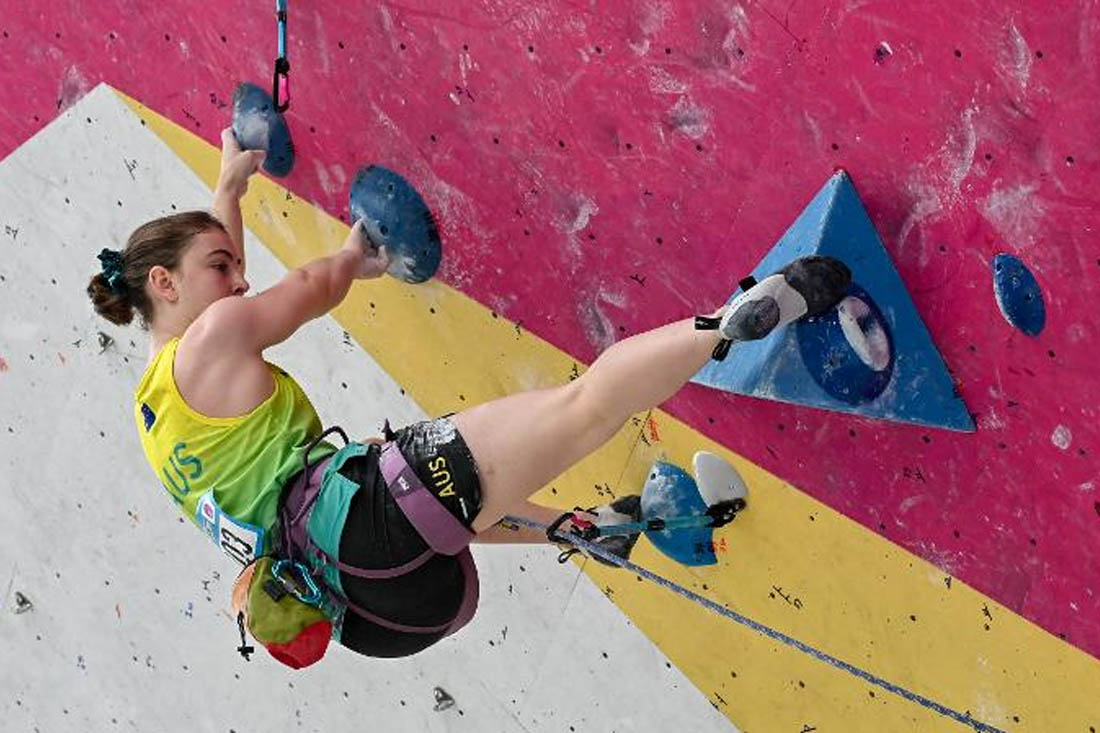
Sport climber and exercise physiology student Clea Hall is halfway through a summer sports adventure in the northern hemisphere where she’s competing in two major international championships.
Improve lives through exercise
'Being in a profession where I can work towards making the community a happier and healthier place is a dream, as I can help others improve their health through my passion for exercise. I enjoyed my third-year subjects where we developed our clinical skills. We got a taste of what working as an accredited exercise physiologist would be like, which was a very exciting change of pace.'
Studying clinical exercise physiology
'I've enjoyed studying subjects like biomechanics where we measure and analyse human movement and apply biomechanical principles to prescribe exercises. In functional anatomy laboratory tutorials, we built upon our knowledge of these principles.'
A rewarding and immersive course
'I have always been interested in sports, and this degree allows me to immerse myself in this area of expertise while having the opportunity to help others and share my knowledge to inspire those around me. My favourite parts of my study experience were the practical and hands-on learning opportunities. Work-integrated learning and practical assessments allowed me to gain invaluable experience in the sports field.'
Bachelor of Clinical Exercise Physiology student
A career prescribing exercise
'The impact we can have on people's lives is profound. I've witnessed the transformative power of exercise on the mental and physical wellbeing of my patients. It is incredibly rewarding.'
Improve lives through exercise
'Being in a profession where I can work towards making the community a happier and healthier place is a dream, as I can help others improve their health through my passion for exercise. I enjoyed my third-year subjects where we developed our clinical skills. We got a taste of what working as an accredited exercise physiologist would be like, which was a very exciting change of pace.'
Studying clinical exercise physiology
'I've enjoyed studying subjects like biomechanics where we measure and analyse human movement and apply biomechanical principles to prescribe exercises. In functional anatomy laboratory tutorials, we built upon our knowledge of these principles.'


Highlights
- Accredited Exercise Physiologists develop exercise interventions for the prevention, treatment, and rehabilitation of people across the health spectrum.
- They apply their knowledge and skills to healthy individuals and those with chronic conditions or disabilities.
- QUT is ranked 1st in Queensland, 3rd in Australia and 11th worldwide in the 2025 ShanghaiRanking Global Ranking of Sport Science Schools and Departments.
- Graduates work alongside other health professionals in hospitals and private practice, providing Medicare services in exercise therapy.
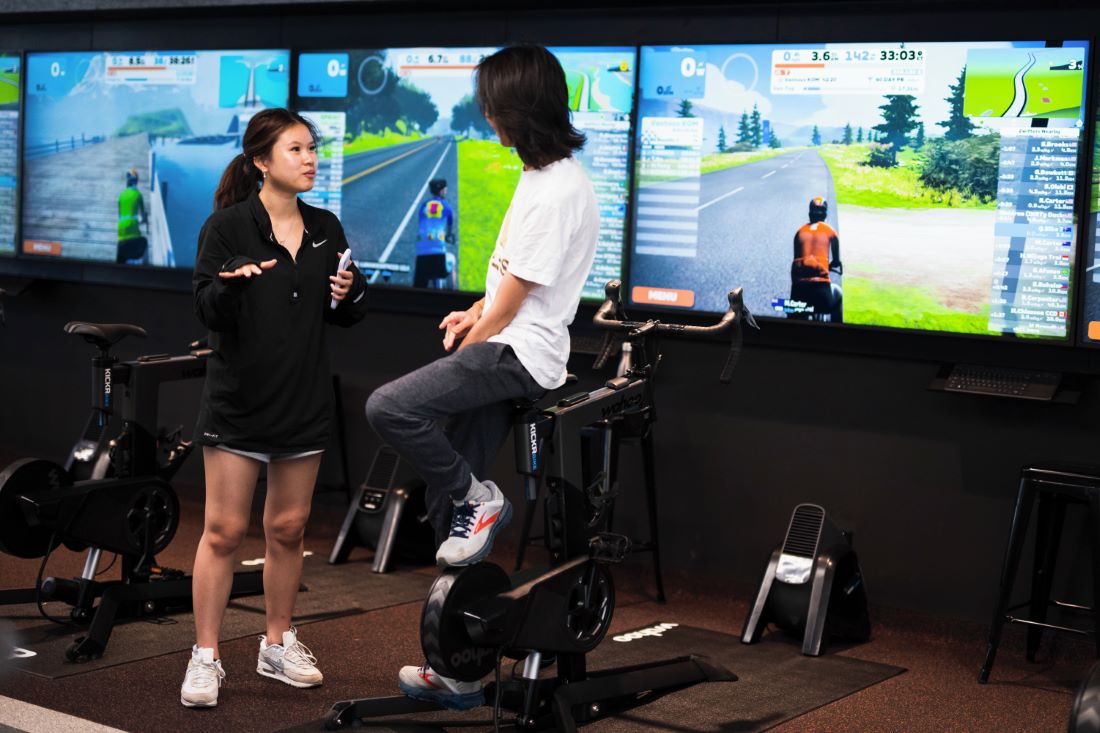
- As a student, you have access to the industry equipment in biomechanics, motor control, exercise physiology and strength conditioning laboratories, and in QUT Health Clinics.
- Complete more than 500 hours of clinical placement for valuable work experience that prepares you for the transition to employment.
Highlights
- Exercise physiologists develop programs for patients for the prevention, treatment, and rehabilitation of chronic medical conditions. They can also provide advanced injury prevention and exercise programming advice.
- QUT is ranked no. 11 globally in the 2025 ShanghaiRanking Global Ranking of Sport Science Schools and Departments.
- Graduates work alongside other health professionals in hospitals and private practice, providing Medicare services in exercise therapy.
- As a student, you have access to the latest industry equipment in biomechanics, motor control, exercise physiology and strength conditioning laboratories, and in QUT Health Clinics.
- Complete more than 500 hours of clinical placement for valuable work experience that prepares you for the transition to employment.
- This course is accredited with Exercise and Sports Science Australia (ESSA) and gives graduates professional recognition as an accredited exercise physiologist.
Why choose this course?
Find a rewarding career prescribing exercise.
Accredited Exercise Physiologists (AEPs) use expert knowledge and skills to assess and treat clients with exercise. They prescribe exercise programs for people living with acute, subacute and chronic conditions. They also work with people recovering from injuries or living with disabilities.
This degree will give you expert knowledge and skills of how to improve clients' quality of life through exercise.
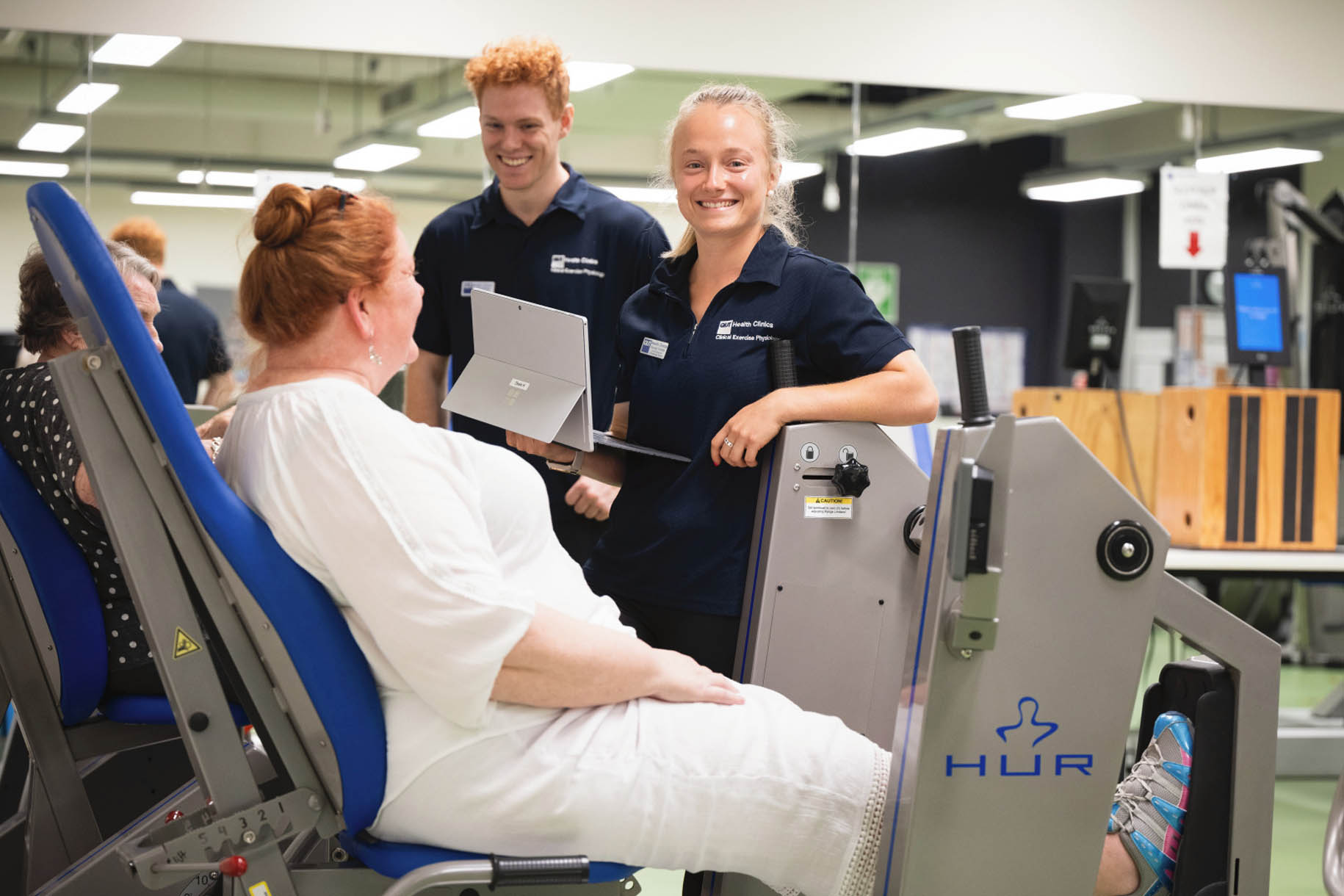
You'll apply this knowledge in industry standard facilities and clinics on campus. You'll work with real clients in the QUT Health Clinics. You'll also gain experience and industry contacts through professional clinical placements.
During your studies, you will learn from experts. They'll share industry experience that spans hospitals, private practice, and research.
You will access industry equipment in consultation rooms and laboratories designed for:
- biomechanics
- motor control
- exercise physiology
- strength and conditioning
- clinical skills.
Under the supervision of Accredited Exercise Physiologists, you will apply your knowledge and practise client care skills to deliver services in:
- exercise-based rehabilitation and advice for clients with an acute injury or after surgery
- exercise programs for those at risk of, or those with, existing chronic conditions and medical conditions
- personal exercise programs and fitness assessments for the local community.
Explore this course
Clinical exercise physiologists have expert knowledge about how exercise can improve health and fitness or reduce the onset of chronic disease and its related symptoms.
They develop rehabilitation programs for people with acute and chronic medical conditions such as diabetes, arthritis and cardiovascular disease.
With their extensive understanding about the effects of exercise on the body’s systems, they can also provide advanced injury prevention and exercise programming advice.
Medicare, NDIS, DVA , WorkCover and private health insurers recognise and cover services supplied by Accredited Exercise Physiologists.
Work Integrated Learning
You will complete 500 hours of professional placement during this course.
Work integrated learning takes place at QUT Health Clinics and external locations. Our external partners include hospitals, local government and private health providers.
QUT Health Clinics are at located at Kelvin Grove campus. The clinics provide professional health services to the community. Students deliver many of these services under the supervision of accredited professionals.
You will become familiar with equipment and techniques used by clinicians across industry. You will learn to use technology used to analyse and monitor performance.
Honours pathway
At the end of your second year you will have the option to apply for the Bachelor of Clinical Exercise Physiology (Honours).
Studying honours involves completing a research project of your choosing. It will extend your knowledge of the field and give you a competitive edge when applying for jobs.
Entry into the program is competitive and based on grade point average.
On entry to honours you will retain all successfully completed credits from the Bachelor of Clinical Exercise Physiology. The remaining bachelor units in your degree will be substituted with honours units. Honours is completed within the same course duration of 4 years full time, as the non-honours bachelor degree.
Careers and outcomes
Accredited exercise physiologists have skills that they can apply in a variety of clinical professions.
Many graduates work in hospitals and clinics for prevention and rehabilitation of patients with injuries and a range of cardiac, musculoskeletal, occupational, neurological and psychological disorders.
Graduates can also move into private practice and work as specialists in clinical diagnostics, exercise programming and health promotion.
Professional recognition
This course is accredited with Exercise and Sports Science Australia (ESSA) and gives graduates professional recognition as an Accredited Exercise Physiologist.
Possible careers
- Cardiac scientist
- Exercise physiologist
- Exercise scientist
- Rehabilitation professionals
- ATAR/selection rank threshold
- 76.00
These thresholds are the lowest adjusted scores to which QUT made an offer in Semester 1, 2026.
Don't have a ATAR/selection rank?
- Course code
- XN51
- QTAC code
- 425422
- CRICOS code
- 070085K
-
- Kelvin Grove
-
- Kelvin Grove
- 4 years full-time
- 8 years part-time
- 4 years full-time
- February
- February
Assumed knowledge
Before you start this course, we assume you have sound knowledge of the subject/s listed below. If you don't have the subject knowledge, you can still apply for the course but we strongly encourage you to undertake bridging studies to gain the knowledge:
- English, or Literature, or English and Literature Extension, or English as an Additional Language (Units 3 & 4, C)
- Mathematical Methods, or Specialist Mathematics (Units 3 & 4, C)
Plus one of Chemistry (Units 3 & 4, C), Physics (Units 3 & 4, C) or Biology (Units 3 & 4, C).
Overseas qualifications
QUT will consider equivalent overseas qualifications for admissions purposes. If you have tertiary qualifications from countries where English is not the standard language of instruction, you must provide evidence of English language proficiency.
English language proficiency
We require students to demonstrate they can speak, write, read and comprehend academic English to a specified standard.
Our English proficiency requirements for this course are:
- IELTS (Academic): 6.5 or better overall with no subscore below 6.0
- PTE: 58 or better overall with no subscore below 50
- TOEFL (IBT): 79 or better overall with listening and reading subscores of 16 or better, a writing subscore of 21 or better, and a speaking subscore of 18 or better
- Cambridge English Score: 176 or better overall with no subscore below 169
The test must have been completed within 2 years prior to the proposed course start month.
Offer guarantee
If you achieve an ATAR or selection rank of 80.00 or higher (including any adjustments) and satisfy all other admission requirements, you are guaranteed an offer for this course in the Semester 1 offer rounds, up to the main offer round in mid-January.
VET guarantee
If you have completed an AQF diploma or higher, and satisfy all other admission requirements, you are guaranteed an offer for this course in the Semester 1 offer rounds.
Advanced standing
If you have prior studies or work experience, you may be eligible for advanced standing (credit). You can apply for advanced standing once you've been accepted to QUT. If you're in your first semester of study, you must apply for advanced standing within 10 days of receiving your offer.
To ensure students meet accreditation requirements after successful completion of this degree, advanced standing will not be granted:
- for studies completed at Australian Qualification Framework (AQF) level 5 or lower. AQF levels can be confirmed at https://www.aqf.edu.au/aqf-levels
- for un-credentialed learning or work experience cannot be used for the purposes of receiving credit for units of study or meeting practicum requirements within the course.
Deferment
You can defer your offer and postpone the start of your course for one year.
More about deferring your offer
Adjustments to your ATAR/selection rank
Any adjustments you receive to your ATAR or selection rank will be applied to this course.
Find out if you’re eligible for an adjustment to your ATAR or selection rank
Offers we made to school leavers in Semester 1, 2025
The figures listed in the tables below reflect the offers that were made to recent ATAR students. The entry thresholds box at the top of this page shows the lowest adjusted ATAR/selection rank required to receive an offer for all applicants for the most recent January QTAC offer round.
| Excluding adjustments | Including adjustments | |
|---|---|---|
| Highest ATAR/selection rank to receive an offer |
Selection rank
98.40
|
Selection rank
99.95
|
| Median ATAR/selection rank to receive an offer |
Selection rank
79.30
|
Selection rank
81.30
|
| Lowest ATAR/selection rank to receive an offer |
Selection rank
70.70
|
Selection rank
72.55
|
You can find out more about your fellow students’ backgrounds with this course’s student profile.
Other admission options
If you are of Aboriginal or Torres Strait Islander descent, you may be eligible for admission through our Centralised Assessment Selection Process (CASP).
I completed my studies outside of Australia
Select the country where you completed your studies to see a guide to the grades you need to apply for this course.
If your country or qualification is not listed, you can still apply for this course and we will assess your eligibility.
Assumed knowledge
- Mathematical Methods, or Specialist Mathematics (Units 3 & 4, C)
Plus one of Chemistry (Units 3 & 4, C), Physics (Units 3 & 4, C) or Biology (Units 3 & 4, C).
I completed secondary school in Australia
Assumed knowledge
Plus one of Chemistry (Units 3 & 4, C), Physics (Units 3 & 4, C) or Biology (Units 3 & 4, C).
- Mathematical Methods, or Specialist Mathematics (Units 3 & 4, C)
- ATAR/selection rank
- 76.00
Offer guarantee
If you completed secondary school in Australia and achieve an ATAR/selection rank of 80.00 or higher (including any adjustments) and satisfy all other admission requirements, you are guaranteed an offer for this course.
VET guarantee
If you have completed an AQF diploma or higher, and satisfy all other admission requirements, you are guaranteed an offer for this course.
Minimum English language requirements
Select the country where you completed your studies to see a guide on meeting QUT’s English language requirements.
Your scores and prior qualifications in English-speaking countries are considered. Approved English-speaking countries are Australia, Canada, England, Ireland, New Zealand, Scotland, United States of America and Wales.
If your country or qualification is not listed, you can still apply for this course and we will assess your eligibility.
We accept English language proficiency scores from the following tests undertaken in a secure test centre. Tests must be taken no more than 2 years prior to the QUT course commencement.
| English Test | Overall | Listening | Reading | Writing | Speaking |
|---|---|---|---|---|---|
| IELTS Academic / One Skill Retake | 6.5 | 6 | 6 | 6 | 6 |
|
Cambridge C1 Advanced
You must share your results with QUT through the Candidate Results Online website. |
176 | 169 | 169 | 169 | 169 |
| PTE Academic | 58 | 50 | 50 | 50 | 50 |
| TOEFL iBT Australia Test (120 scale) | 79 | 16 | 16 | 21 | 18 |
Don't have the English language score you need? We can help!
We offer English language programs to improve your English and help you gain entry to this course.
When you apply for this course, we will recommend which English course you should enrol in.
Course requirements
There are requirements that you will need to meet as a student in this course. You will need to identify these requirements and ensure you allow sufficient time to meet them. Some of these requirements have associated costs.
Blue card: You must undergo a criminal history check for working with children and be issued with a suitability card (blue card) before commencing clinical placement/practicum in an organisation where they may work with children or young people.
The processing of your application may take several months so you must submit your blue card application to HiQ as early as possible to ensure you have your card before you begin any unit that requires contact with children. There is no charge for student blue cards. Students who already have a blue card must register it with QUT.
Information is available from the Additional course requirements and costs website.


Your actual fees may vary depending on which units you choose. We review fees annually, and they may be subject to increases.
2027 fees
2027: Fee available from October
Additional Costs
There are requirements that you will need to meet as a student in this course. Some of these requirements have associated costs. Information is available from the Additional course requirements and costs website.
2027 fees
2027: Fee available from July
Additional Costs
There are requirements that you will need to meet as a student in this course. Some of these requirements have associated costs. Information is available from the Additional course requirements and costs website.
2026 fees
2026: CSP $14,500 per year full-time (96 credit points)
Additional Costs
There are requirements that you will need to meet as a student in this course. Some of these requirements have associated costs. Information is available from the Additional course requirements and costs website.
2026 fees
2026: $40,300 per year full-time (96 credit points)
Additional Costs
There are requirements that you will need to meet as a student in this course. Some of these requirements have associated costs. Information is available from the Additional course requirements and costs website.
Student services and amenities fees
You may need to pay student services and amenities (SA) fees as part of your course costs.
HECS-HELP: loans to help you pay for your course fees
You may not have to pay anything upfront if you're eligible for a HECS-HELP loan.
You can apply for scholarships to help you with study and living costs.
QUT Excellence Scholarship (Academic)
QUT's premier offering for students with outstanding academic achievement.
- Scholarship eligibility
- Academic performance
Equity scholarships scheme
A scholarship for low-income students studying in any faculty.
- Scholarship eligibility
- Struggling financially
QUT Elite Sport Scholarship
QUT's premier offering for students with outstanding sporting achievement.
- Scholarship eligibility
- Sporting excellence
International Merit Scholarship
A high achievement scholarship for future international undergraduate and postgraduate students.
- Scholarship eligibility
- Academic performance
International Talent Scholarship
A new scholarship for 2026 that covers tuition fees, with eligibility based on your prior academic achievements.
- Scholarship eligibility
- Academic performance
Keep up to date
Ready for your next step?
Finishing school?
Everything you need to know about choosing a uni straight from school.
How to apply
We'll break down the application process, from QTAC to accepting your offer.
Ready for your next step?
How to apply
We'll break down the process, from applying to accepting your offer.
Flexible study
Explore the options that could make postgraduate study work for you.
QUT courses for you
Like to save your courses?
Please enter your first name and email so we can save your courses for you