 Apply now
 How to apply
 Save course for later
 Send me a PDF copy
 I want more info
Why study vision science?
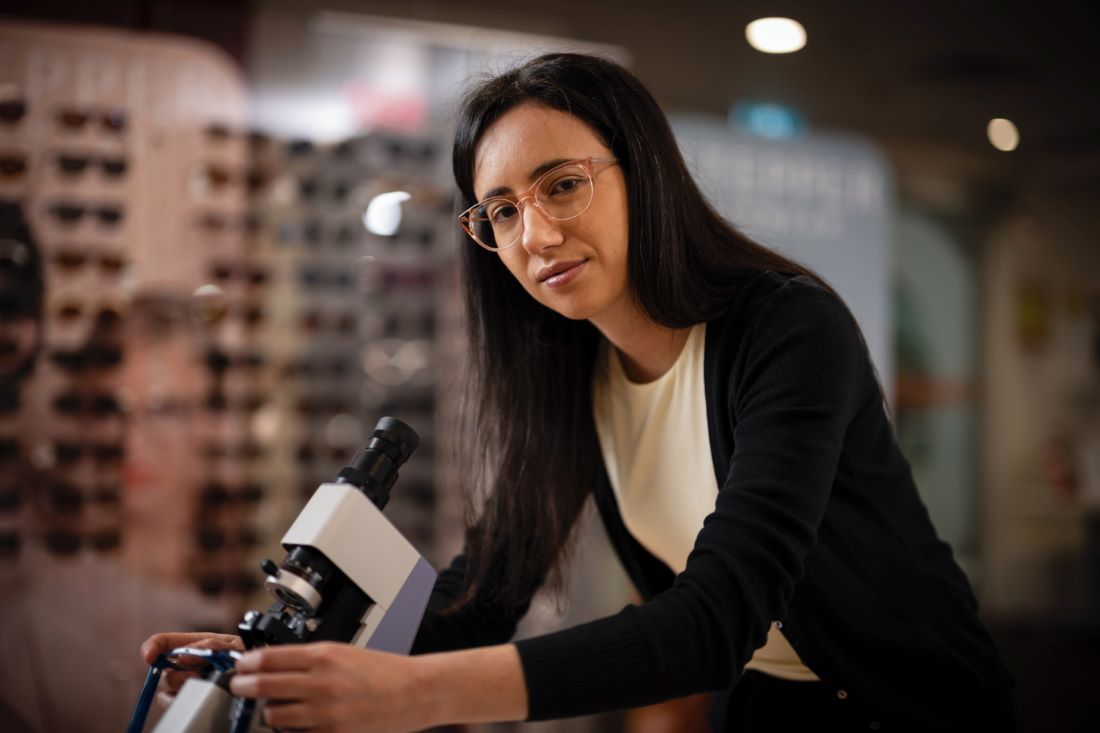
‘I chose vision science because I’m interested in maths and science, and passionate about helping others. I knew QUT would offer me a range of hands-on experiences and practical learning in conducting eye examinations and patient care.'
See things differently
QUT students travel to remote and regional communities to deliver optometry services. Hear how students gain experience while making an impact on the health outcomes of people living in those regions.
See the need
Find out how current QUT students and the QUT Optometry Clinic are making a difference to the lives of refugees living in Australia.
Share your success
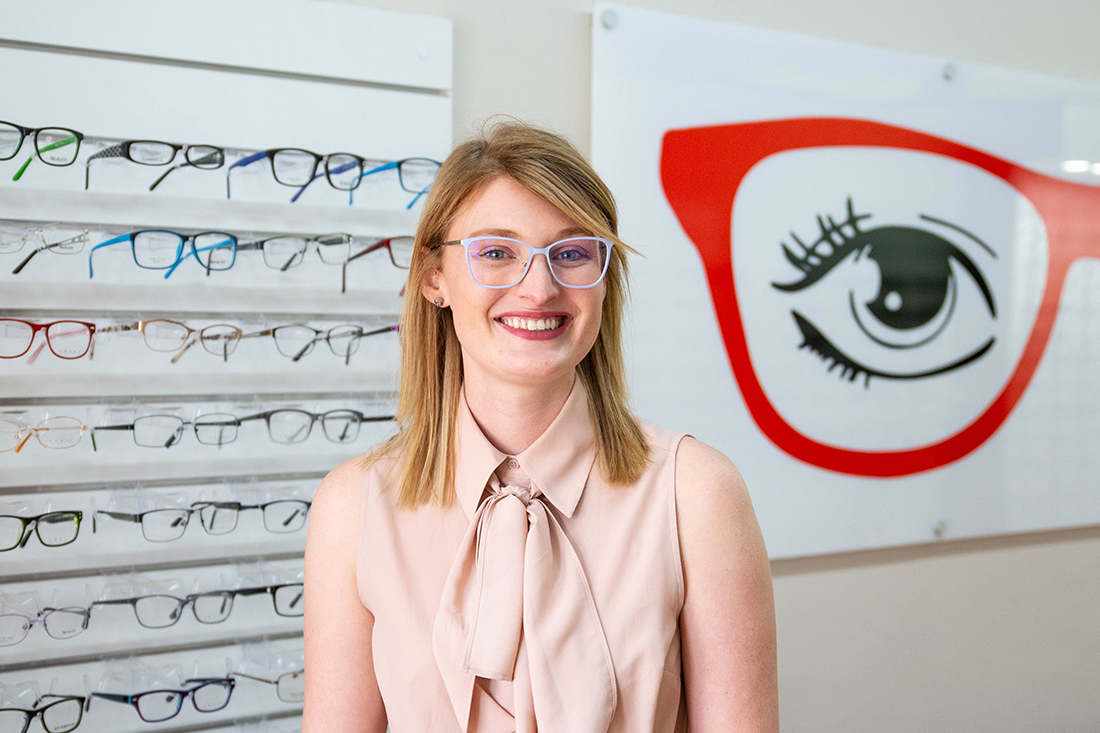
Growing up in rural NSW, I was always aware of the lack of services available to communities like mine. What ultimately led me to optometry was spending time with my childhood optometrist and watching what he did. At QUT, having lecturers that were also practising clinicians was amazing. They were able to provide real-world case studies and examples which was invaluable. I also loved seeing patients at the QUT Health Clinics, doing external placements, as well as volunteer work at schools, screening days, and events. I’m now an optometrist based in rural NSW, travelling around to practise and giving back to small communities.
Mentoring the next generation
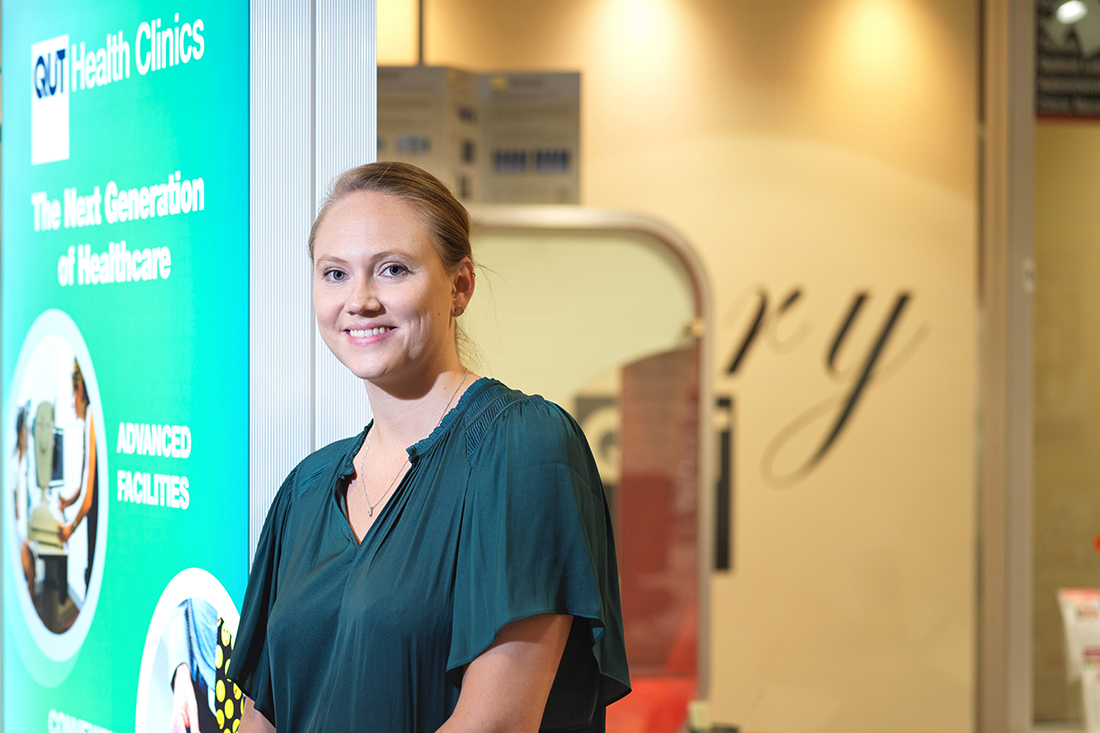
I am a clinical supervisor at the QUT optometry clinic, while also researching vision problems among Aboriginal and Torres Strait Islander children as part of my PhD. I am passionate about mentoring our future optometrists, guiding them towards a rewarding career, and challenging them to improve the standards of primary eye care in Australia. I enjoy training students on the use and interpretation of the optometry clinic’s advanced diagnostic equipment which allows our patients to receive the highest quality care.
Why study vision science?
‘I chose vision science because I’m interested in maths and science, and passionate about helping others. I knew QUT would offer me a range of hands-on experiences and practical learning in conducting eye examinations and patient care.'
Gain insight and experience
'QUT was the only university to offer the optometry program in Queensland and also had the best offer pathway, including a foundation and English program for international students before starting the bachelor degree. I have undertaken some work experience in an optometry shop which I found very interesting. It's a good experience while you study to have an idea about your future job and what it can involve.'
Bachelor of Vision Science student
See things differently
QUT students travel to remote and regional communities to deliver optometry services. Hear how students gain experience while making an impact on the health outcomes of people living in those regions.
See the need
Find out how current QUT students and the QUT Optometry Clinic are making a difference to the lives of refugees living in Australia.
Share your success
Growing up in rural NSW, I was always aware of the lack of services available to communities like mine. What ultimately led me to optometry was spending time with my childhood optometrist and watching what he did. At QUT, having lecturers that were also practising clinicians was amazing. They were able to provide real-world case studies and examples which was invaluable. I also loved seeing patients at the QUT Health Clinics, doing external placements, as well as volunteer work at schools, screening days, and events. I’m now an optometrist based in rural NSW, travelling around to practise and giving back to small communities.
Mentoring the next generation
I am a clinical supervisor at the QUT optometry clinic, while also researching vision problems among Aboriginal and Torres Strait Islander children as part of my PhD. I am passionate about mentoring our future optometrists, guiding them towards a rewarding career, and challenging them to improve the standards of primary eye care in Australia. I enjoy training students on the use and interpretation of the optometry clinic’s advanced diagnostic equipment which allows our patients to receive the highest quality care.


Highlights
- After completion of Bachelor of Vision Science and then Master of Optometry, graduates are able to practise as an optometrist and register with the Optometry Board of Australia.
- Prepare for a career in private practice and specialise in fields like contact lens practice, paediatric vision, occupational health vision or low vision care.
- Practise clinical skills under the supervision of registered optometrists at the on-campus QUT Health Clinics.
- Choose to travel and complete clinical training in rural and remote Australia, or overseas.
Highlights
- After completion of Bachelor of Vision Science and then Master of Optometry, graduates are able to practise as an optometrist and register with the Optometry Board of Australia.
- Prepare for a career in private practice and specialise in fields like contact lens practice, paediatric vision, occupational health vision or low vision care.
- Practise clinical skills under the supervision of registered optometrists at the on-campus QUT Health Clinics.
- Choose to travel and complete clinical training in rural and remote Australia, or overseas.
Why choose this course?
QUT offers the only optometry training in Queensland. The optometry program includes a three-year Bachelor of Vision Science followed by a two-year Master of Optometry.
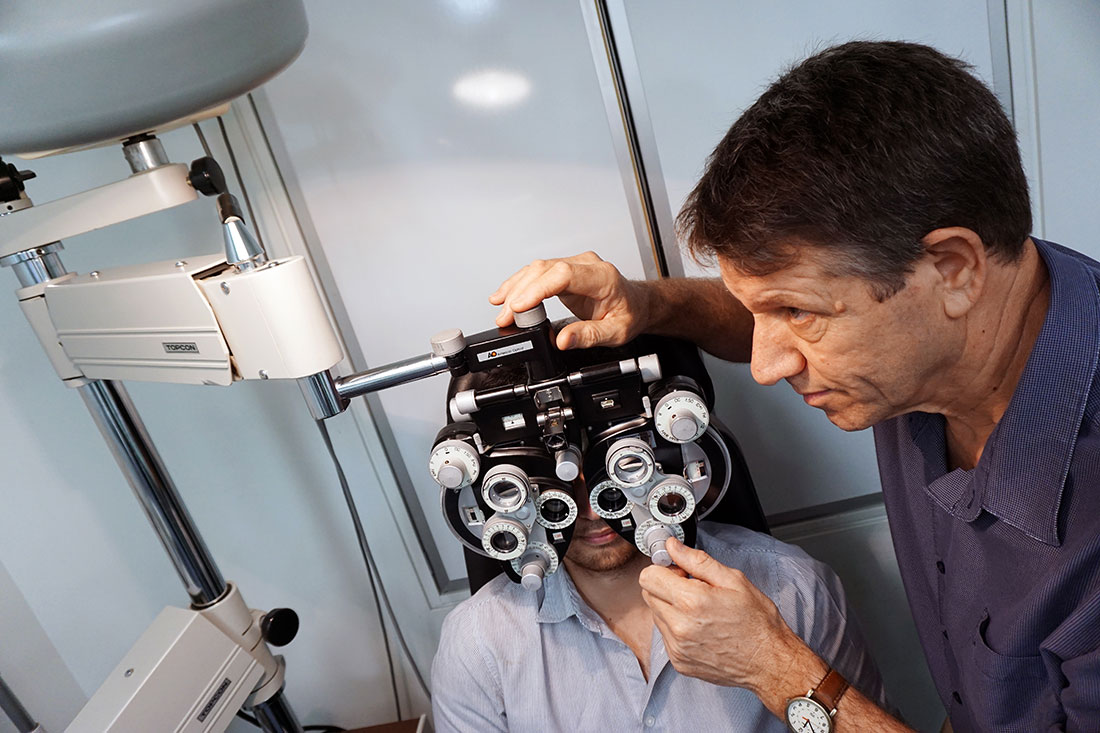
Our course is embedded with clinical experience that prepares you to treat patients from a variety of social and cultural groups, a wide range of ages, and a diversity of eye conditions. You will work with a range of complex instruments and learn to use clinical judgement to treat patients.
At our on-campus optometry clinic you will practise clinical skills under the supervision of registered optometrists. You will treat patients and provide specialist services in ophthalmic lenses, contact lenses, children’s vision, dry eye, glaucoma, and other eye diseases and chronic conditions with ocular effects, such as diabetes. This experience is extended with opportunities to participate in off-campus activities that focus on prevention and treatment within the wider community, and clinical placements in optometric practices, ophthalmology practices and other healthcare settings. You may also choose to travel and complete clinical training in rural and remote Australia, or overseas. In recent years our students have travelled to the UK, Mexico, India, Japan, Vanuatu, and Singapore.
You will receive individual attention from experienced lecturers and clinicians. All of our staff conduct vision research and our clinical supervisors are experienced optometrists. Our staff maintain relationships with the profession, and our guest lecturers are optometrists from private practice and other health disciplines such as the medical and pharmacy professions.
Explore this course
Optometrists are primary eye care practitioners and are often the first point of contact for people seeking advice about their eyes and vision. They provide regular, preventative care through the early detection of eye disease and conditions that impact vision. They also provide treatment and advice about eye disease and vision problems and use ocular drugs to assist in the detection and therapeutic management of eye conditions.
Information for overseas trained optometrists
Overseas trained optometrists seeking to gain registration in Australia should contact the Optometry Council of Australia and New Zealand for details concerning eligibility for registration through the assessment process before considering further study.
Optometrists are primary eye care practitioners and are often the first point of contact for people seeking advice about their eyes and vision. They provide regular, preventative care through the early detection of eye disease and conditions that impact vision. They also provide treatment and advice about eye disease and vision problems and use ocular drugs to assist in the detection and therapeutic management of eye conditions.
Course requirements
There are requirements that you will need to meet as a student in this course. You will need to identify these requirements and ensure you allow sufficient time to meet them. Some of these requirements have associated costs.
Blue card: You must undergo a criminal history check for working with children and be issued with a suitability card (blue card) before commencing clinical placement/practicum in an organisation where you may work with children or young people.
The processing of your application may take several months so you must submit your blue card application to HiQ as early as possible to ensure you have your card before you begin any unit that requires contact with children. There is no charge for student blue cards. Students who already have a blue card must register it with QUT.
Information is available from the Additional course requirements and costs website.
Course requirements
There are requirements that you will need to meet as a student in this course. You will need to identify these requirements and ensure you allow sufficient time to meet them. Some of these requirements have associated costs.
Blue card: You must undergo a criminal history check for working with children and be issued with a suitability card (blue card) before commencing clinical placement/practicum in an organisation where you may work with children or young people.
The processing of your application may take several months so you must submit your blue card application to HiQ as early as possible to ensure you have your card before you begin any unit that requires contact with children. There is no charge for student blue cards. Students who already have a blue card must register it with QUT.
Information is available from the Additional course requirements and costs website.
Careers and outcomes
Graduates may work in clinical practice in a range of optometric settings, or in teaching and research positions in Australia and internationally. Many graduates enter private practice with a view to future partnership or the establishment of their own practice. An increasing number of graduates are working alongside other health professionals in medical ophthalmology clinics.
Graduates of the dual award program (Bachelor of Vision Science/Master of Optometry) are employed in areas that include contact lens practice, paediatric vision, occupational/public health vision or low vision.
Students may choose not to complete the Master of Optometry, exiting with a three-year Bachelor of Vision Science, to pursue a research career (following completion of an honours year) or find employment in the optical industry.
Professional recognition
The Bachelor of Vision Science and Master of Optometry are accredited by the Optometry Council of Australia and New Zealand. On completion of both programs you are eligible for registration as an optometrist with the Optometry Board of Australia.
Student registration
QUT automatically registers students enrolled in this course with the Optometry Board of Australia in accordance with the Health Practitioner Regulation National Law Act 2009. Details about student registration are available from the Australian Health Practitioner Regulation Agency.
Possible careers
- Optometrist
- ATAR/selection rank threshold
- 97.00
These thresholds are the lowest adjusted scores to which QUT made an offer in Semester 1, 2026.
Don't have a ATAR/selection rank?
- Course code
- OP45
- QTAC code
- 425312
- CRICOS code
- 065380A
-
- Kelvin Grove
-
- Kelvin Grove
- 3 years full-time
- 3 years full-time
- February
- February
Assumed knowledge
Before you start this course, we assume you have sound knowledge of the subject/s listed below. If you don't have the subject knowledge, you can still apply for the course but we strongly encourage you to undertake bridging studies to gain the knowledge:
- Chemistry (Units 3 & 4, C)
- English, or Literature, or English and Literature Extension, or English as an Additional Language (Units 3 & 4, C)
- Mathematical Methods, or Specialist Mathematics (Units 3 & 4, C)
- Physics (Units 3 & 4, C)
Adjustments to your ATAR/selection rank
The Year 12 Subject Scheme adjustments do not apply to this course.
Any other adjustment you receive to your ATAR or selection rank will be applied to this course.
Find out if you're eligible for an adjustment to your ATAR or selection rank
Overseas qualifications
QUT will consider equivalent overseas qualifications for admissions purposes. If you have tertiary qualifications from countries where English is not the standard language of instruction, you must provide evidence of English language proficiency.
English language proficiency
We require students to demonstrate they can speak, write, read and comprehend academic English to a specified standard.
Our English proficiency requirements for this course are:
- IELTS Academic / One Skill Retake: 7.0 or better overall with no subscore below 6.5
- PTE Academic: 66 or better overall with a writing subscore of 60 or better and no other subscore below 58
- TOEFL iBT Australia Test (120 scale): 98 or better overall with a writing subscore of 24 or better, and no other subscore below 20
- Cambridge C1 Advanced: 185 or better overall with reading and writing subscores of 182 or better and no other subscore below 176
The test must have been completed within 2 years prior to the proposed course start month.
Advanced standing
If you have prior studies or work experience, you may be eligible for advanced standing (credit). You can apply for advanced standing once you've been accepted to QUT. If you're in your first semester of study, you must apply for advanced standing within 10 days of receiving your offer.
Deferment
You can defer your offer and postpone the start of your course for one year.
More about deferring your offer
Offers we made to school leavers in Semester 1, 2026
The figures listed in the tables below reflect the offers that were made to recent ATAR students. The entry thresholds box at the top of this page shows the lowest adjusted ATAR/selection rank required to receive an offer for all applicants for the most recent January QTAC offer round.
| Excluding adjustments | Including adjustments | |
|---|---|---|
| Highest ATAR/selection rank to receive an offer |
Selection rank
99.60
|
Selection rank
99.95
|
| Median ATAR/selection rank to receive an offer |
Selection rank
97.70
|
Selection rank
98.45
|
| Lowest ATAR/selection rank to receive an offer |
Selection rank
90.45
|
Selection rank
97.00
|
You can find out more about your fellow students’ backgrounds with this course’s student profile.
Other admission options
If you are of Aboriginal or Torres Strait Islander descent, you may be eligible for admission through our Centralised Assessment Selection Process (CASP).
I completed my studies outside of Australia
Select the country where you completed your studies to see a guide to the grades you need to apply for this course.
If your country or qualification is not listed, you can still apply for this course and we will assess your eligibility.
Assumed knowledge
- Chemistry (Units 3 & 4, C)
- Mathematical Methods, or Specialist Mathematics (Units 3 & 4, C)
- Physics (Units 3 & 4, C)
You must have achieved this study at a level comparable to Australian Year 12 or in recognised post-secondary studies.
I completed secondary school in Australia
Assumed knowledge
Before you start this course we assume you have sound knowledge in these areas:
- Chemistry (Units 3 & 4, C)
- Mathematical Methods, or Specialist Mathematics (Units 3 & 4, C)
- Physics (Units 3 & 4, C)
- ATAR/selection rank
- 97.00
Minimum English language requirements
Select the country where you completed your studies to see a guide on meeting QUT’s English language requirements.
Your scores and prior qualifications in English-speaking countries are considered. Approved English-speaking countries are Australia, Canada, England, Ireland, New Zealand, Scotland, United States of America and Wales.
If your country or qualification is not listed, you can still apply for this course and we will assess your eligibility.
We accept English language proficiency scores from the following tests undertaken in a secure test centre. Tests must be taken no more than 2 years prior to the QUT course commencement.
| English Test | Overall | Listening | Reading | Writing | Speaking |
|---|---|---|---|---|---|
| IELTS Academic / One Skill Retake | 7 | 6.5 | 6.5 | 6.5 | 6.5 |
|
Cambridge C1 Advanced
You must share your results with QUT through the Candidate Results Online website. |
185 | 176 | 182 | 176 | 176 |
| PTE Academic | 66 | 58 | 58 | 60 | 58 |
| TOEFL iBT Australia Test (120 scale) | 98 | 20 | 20 | 24 | 20 |
Don't have the English language score you need? We can help!
We offer English language programs to improve your English and help you gain entry to this course.
When you apply for this course, we will recommend which English course you should enrol in.

Your actual fees may vary depending on which units you choose. We review fees annually, and they may be subject to increases.
2027 fees
2027: CSP $10,900 per year full-time (96 credit points)
Additional Costs
There are requirements that you will need to meet as a student in this course. Some of these requirements have associated costs. Information is available from the Additional course requirements and costs website.
2027 fees
2027: $49,200 per year full-time (96 credit points)
Additional Costs
There are requirements that you will need to meet as a student in this course. Some of these requirements have associated costs. Information is available from the Additional course requirements and costs website.
2026 fees
2026: CSP $9,900 per year full-time (96 credit points)
Additional Costs
There are requirements that you will need to meet as a student in this course. Some of these requirements have associated costs. Information is available from the Additional course requirements and costs website.
2026 fees
2026: $48,900 per year full-time (96 credit points)
Additional Costs
There are requirements that you will need to meet as a student in this course. Some of these requirements have associated costs. Information is available from the Additional course requirements and costs website.
Student services and amenities fees
You may need to pay student services and amenities (SA) fees as part of your course costs.
HECS-HELP: loans to help you pay for your course fees
You may not have to pay anything upfront if you're eligible for a HECS-HELP loan.
Student services and amenities fees
You may need to pay student services and amenities (SA) fees as part of your course costs.
You can apply for scholarships to help you with study and living costs.
QUT Excellence Scholarship (Academic)
QUT's premier offering for students with outstanding academic achievement.
- Scholarship eligibility
- Academic performance
Equity scholarships scheme
A scholarship for low-income students studying in any faculty.
- Scholarship eligibility
- Struggling financially
QUT Elite Sport Scholarship
Supports national-level athletes from recognised sporting pathways.
- Scholarship eligibility
- Sporting excellence
International Merit Scholarship
A high achievement scholarship for future international undergraduate and postgraduate students.
- Scholarship eligibility
- Academic performance
Keep up to date
Ready for your next step?
Finishing school?
Everything you need to know about choosing a uni straight from school.
How to apply
We'll break down the application process, from QTAC to accepting your offer.
Ready for your next step?
How to apply
We'll break down the process, from applying to accepting your offer.
Flexible study
Explore the options that could make postgraduate study work for you.
QUT courses for you
Like to save your courses?
Please enter your first name and email so we can save your courses for you