 Apply now
 How to apply
 Save course for later
 Send me a PDF copy
 I want more info
Celebrating 20 years of paramedics at QUT
QUT marks a significant milestone, celebrating Queensland’s first paramedic degree.
London Ambulance Service placement
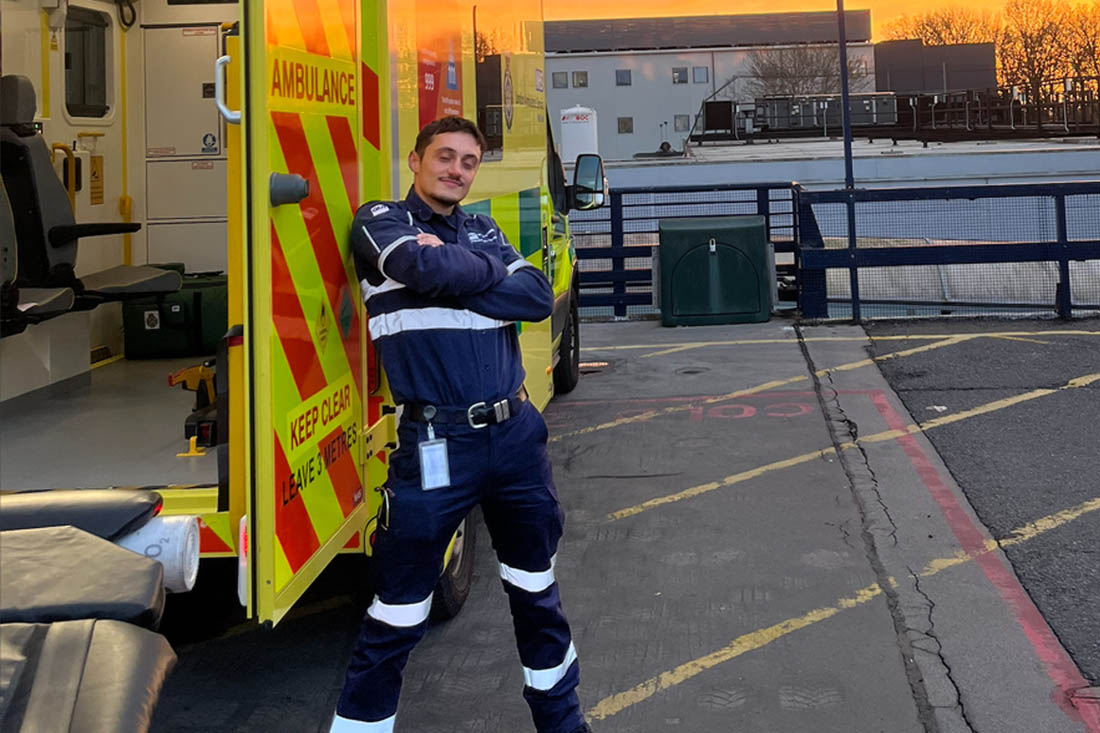
'A placement in London feels like you're living in a movie. The iconic ambulance sirens and interesting mixture of jobs across a very different socioeconomic background is something that made me a far better and more confident medic. London is a massive city, with a great ambulance service. It rewards outgoing, confident people who have a deep passion for emergency healthcare. Be enthusiastic and take a hands on approach and you will have the best placement of your life.’
A career helping people
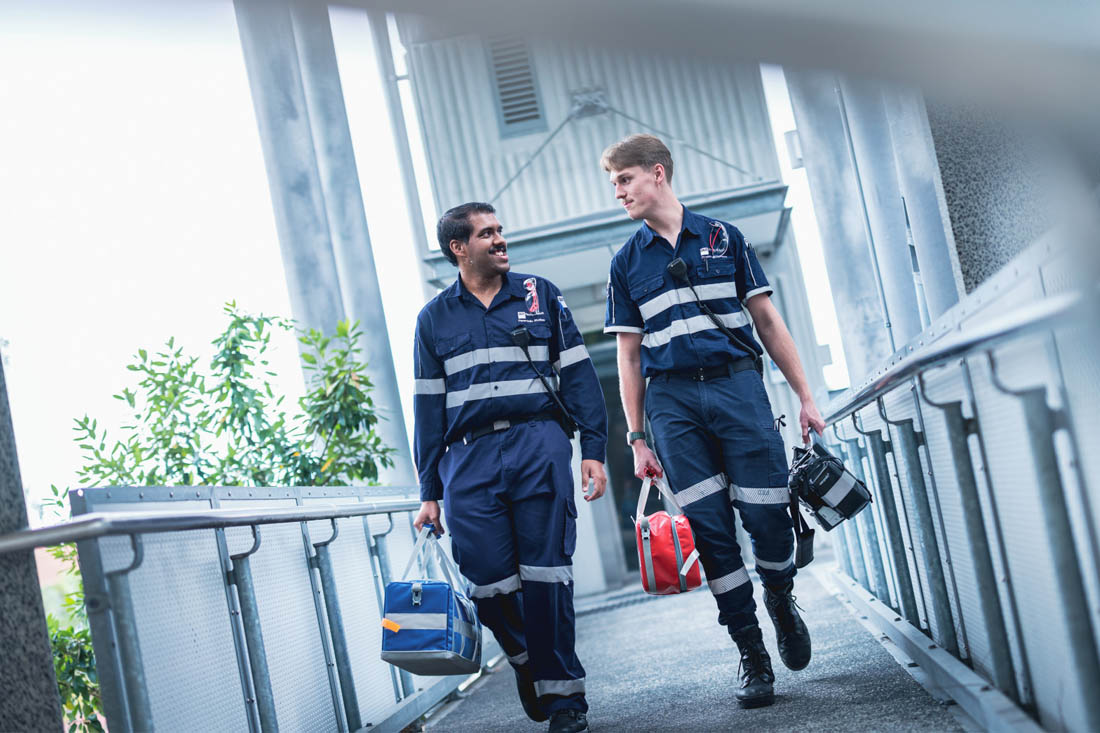
‘Paramedic science is great choice for people who thrive in fast-paced and unpredictable environments. On placement I worked alongside the High Acuity Response Unit, which are the Queensland Ambulance Service’s elite paramedics who go to major traumas. They were using ultrasounds on a patient and explaining it to me. It’s exciting to see the level of diagnostic abilities that can be brought to pre-hospital care.’
World-class training facilities
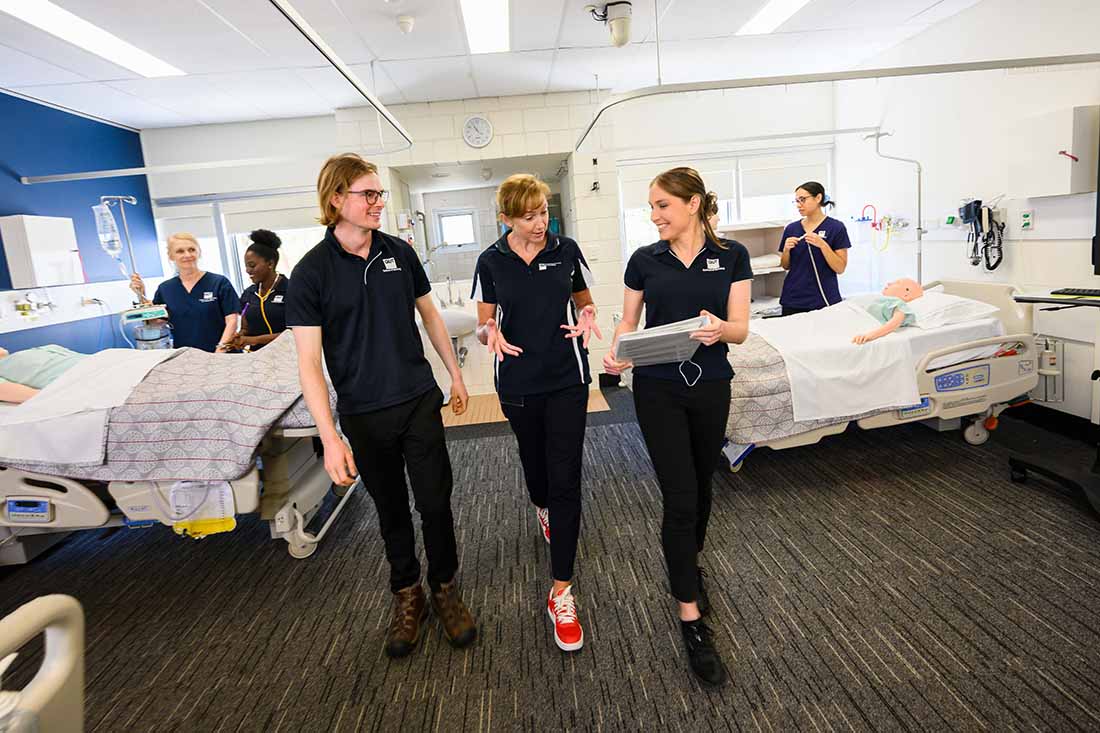
The Clinical Simulation Centre is home to advanced simulation equipment that mirrors real workplace scenarios. Located at the Kelvin Grove campus, the centre is equipped with hospital wards and high-tech mannequins that mimic human responses such as sweating or yelling out when in pain.
Placements make the best practice
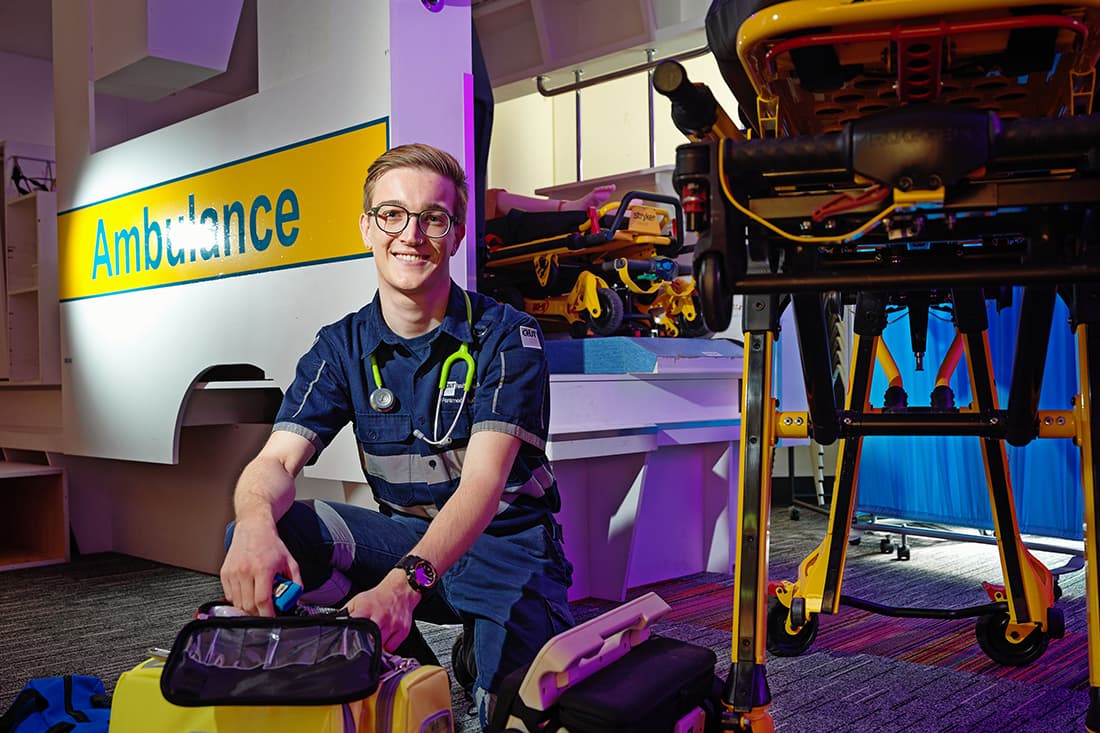
'Paramedic science offers multiple six-week placements and the option to travel overseas in your third year. Domestic placements serve as long job interviews and help you to build industry connections while working as part of an ambulance crew. I gained experience with pre-hospital births, high-velocity trauma, and multi-system medical cases. I also travelled to the USA for a three-week placement and experienced ride-alongs with ambulance and fire services and even helicopter and fixed-wing flight care services.'
Real-world training
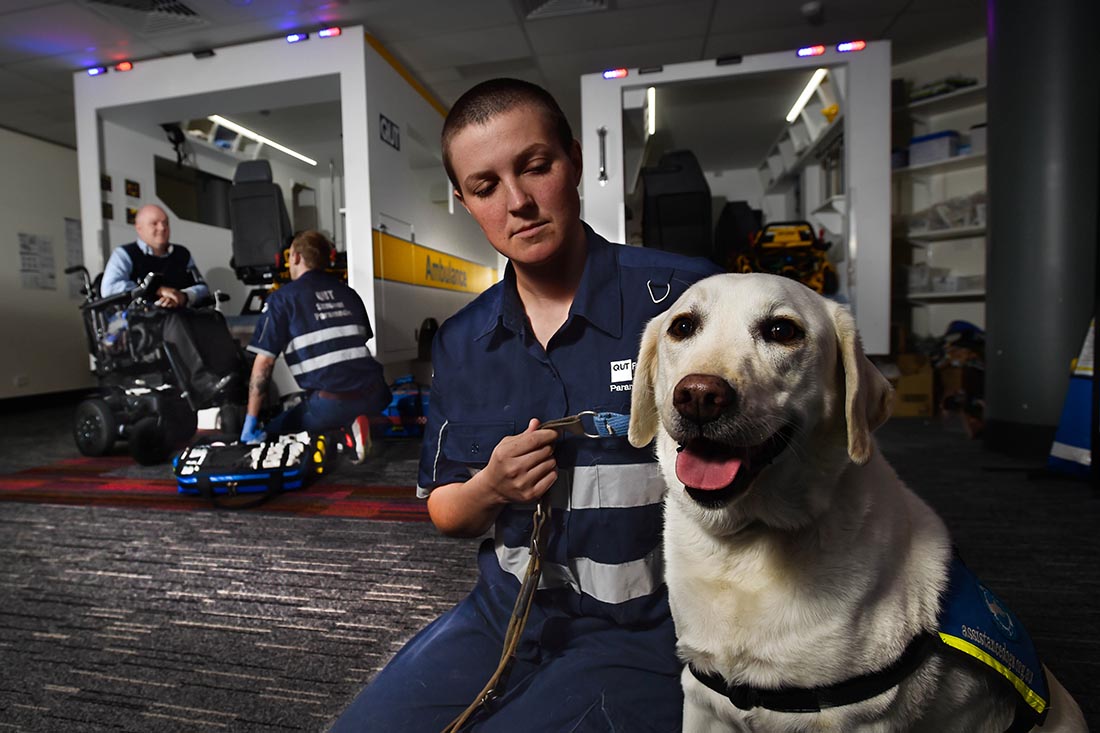
Paramedics work in diverse settings and often have to make quick decisions about patient care. If the owner of an assistance dog requires emergency help, a paramedic needs to understand the relationship between the dog and its owner. Representatives from Assistance Dogs Australia and Smart Pups visited QUT with their dogs so students could learn how to handle this complex situation.
A career helping people
‘Paramedic science is great choice for people who thrive in fast-paced and unpredictable environments. On placement I worked alongside the High Acuity Response Unit, which are the Queensland Ambulance Service’s elite paramedics who go to major traumas. They were using ultrasounds on a patient and explaining it to me. It’s exciting to see the level of diagnostic abilities that can be brought to pre-hospital care.’
Placements make the best practice
'Paramedic science offers multiple six-week placements and the option to travel overseas in your third year. Domestic placements serve as long job interviews and help you to build industry connections while working as part of an ambulance crew. I gained experience with pre-hospital births, high-velocity trauma, and multi-system medical cases. I also travelled to the USA for a three-week placement and experienced ride-alongs with ambulance and fire services and even helicopter and fixed-wing flight care services.'
Real-world training
Paramedics work in diverse settings and often have to make quick decisions about patient care. If the owner of an assistance dog requires emergency help, a paramedic needs to understand the relationship between the dog and its owner. Representatives from Assistance Dogs Australia and Smart Pups visited QUT with their dogs so students could learn how to handle this complex situation.
Real experience working alongside professionals
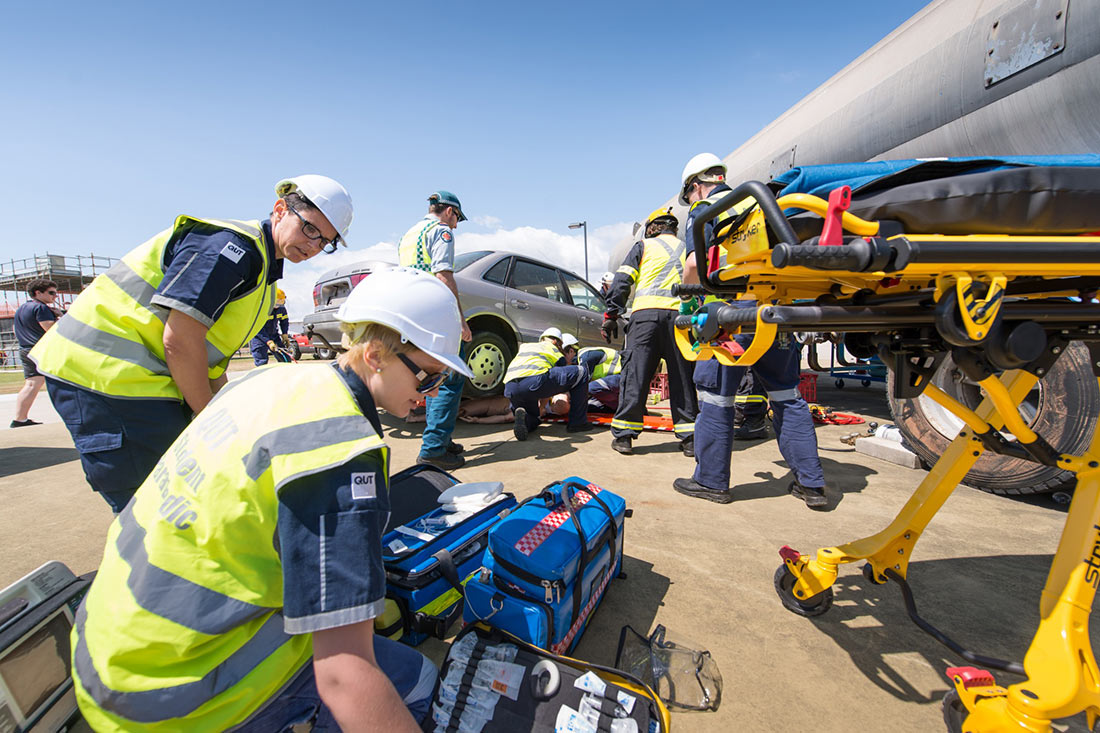
As well as clinical placement on the road, paramedic students get first-hand experience working alongside other emergency service providers to treat casualties in simulated trauma scenarios.
Experience science in 360 degrees
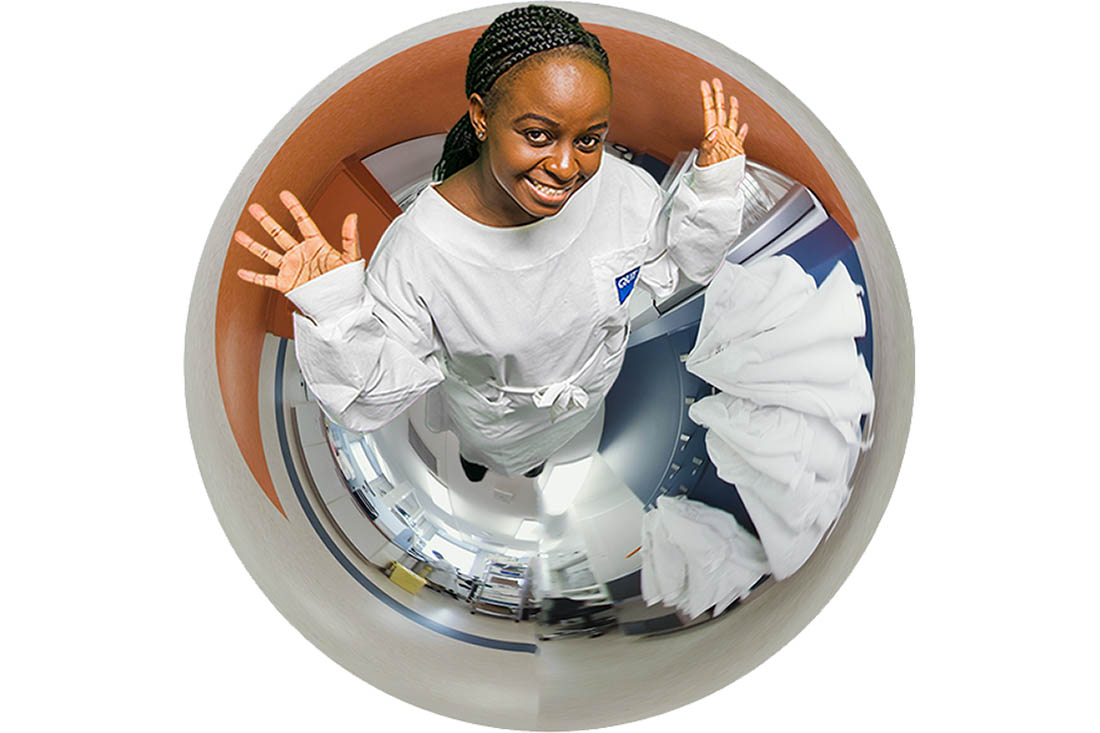
When you study with us, you’ll be working in real clinical settings and simulation environments from your first year. Explore our 360° environments and see what real-world health sciences can mean for you.

Highlights
- Gain extensive experience with Queensland Ambulance Service – first placement begins in first year.
- Study anatomy and physiology of the human body, pathology, pathophysiology, pharmacology and clinical practice.
- Participate in scenario-based training alongside other emergency service providers.
- For health graduates: consider the Bachelor of Paramedic Science – Graduate Entry.
Highlights
- Gain extensive experience with Queensland Ambulance Service – first placement begins in first year.
- Study anatomy and physiology of the human body, pathology, pathophysiology, pharmacology and clinical practice.
- Participate in scenario-based training alongside other emergency service providers.
- For health graduates: consider the Bachelor of Paramedic Science – Graduate Entry.
Why choose this course?
This course was Queensland’s first degree in paramedic science and our established partnerships ensure you will complete extensive placements with the Queensland Ambulance Service (QAS).
Our staff are experienced paramedics and allied health professionals and will give you first-hand knowledge of the profession through case studies and personal experiences.
On campus, you will learn in facilities that feature life-sized ambulance simulators, human patient simulators, and multi-casualty sites that imitate a building collapse, car accident or explosion. You will develop an appreciation of anatomical variability, pathology and effective medical communication with the opportunity to work with human donor material.
Real-world learning
Your first clinical placement begins at the end of your first year of study. We offer placements in metropolitan and regional centres throughout Queensland, as well as opportunities to travel overseas and work on shift with paramedics in other ambulance services. In recent years our students have travelled to China, the United Kingdom, Vanuatu and the United States.
Our students develop leadership skills and learn how to manage critical situations under pressure with scenario-based training alongside other emergency service providers, including the Queensland Fire and Emergency Service and the Australian Army.
Explore this course
Paramedics provide rapid, emergency medical response and specialised transportation to the community. Each day a paramedic may respond to a number of call outs— not all of which will be emergencies. A paramedic’s work also consists of non-life threatening cases, transporting elderly patients and patients who have scheduled hospital treatments.
Careers and outcomes
Graduates may be employed as an ambulance paramedic with the QAS, and national and international agencies. They may complete further study for a career as a critical care paramedic or for careers in health service management, public health, or emergency and disaster management.
Professional recognition
This course is currently approved by the Paramedicine Board of Australia. Graduates are eligible to apply for registration with the Paramedicine Board of Australia and for membership with Australasian College of Paramedicine. Find out more about registration with the Paramedicine Board of Australia. Requirements for professional registration may change from time to time, students and prospective students should contact Ahpra to confirm registration requirements.
Possible careers
- Paramedic
- ATAR/selection rank threshold
- 87.10
These thresholds are the lowest adjusted scores to which QUT made an offer in Semester 1, 2026.
Don't have a ATAR/selection rank?
- Course code
- CS43
- QTAC code
- 425592
- CRICOS code
- 0101676
-
- Kelvin Grove
- 3 years full-time
- 6 years part-time
- February
Assumed knowledge
Before you start this course, we assume you have sound knowledge of the subject/s listed below. If you don't have the subject knowledge, you can still apply for the course but we strongly encourage you to undertake bridging studies to gain the knowledge:
- English, or Literature, or English and Literature Extension, or English as an Additional Language (Units 3 & 4, C)
Offer guarantee
If you achieve an ATAR or selection rank of 95.00 or higher (including any adjustments) and satisfy all other admission requirements, you are guaranteed an offer for this course in the Semester 1 offer rounds, up to the main offer round in mid-January.
Advanced standing
If you have prior studies or work experience, you may be eligible for advanced standing (credit). You can apply for advanced standing once you've been accepted to QUT. If you're in your first semester of study, you must apply for advanced standing within 10 days of receiving your offer.
Deferment
You can defer your offer and postpone the start of your course for one year.
More about deferring your offer
Adjustments to your ATAR/selection rank
Any adjustments you receive to your ATAR or selection rank will be applied to this course.
Find out if you’re eligible for an adjustment to your ATAR or selection rank
Offers we made to school leavers in Semester 1, 2026
The figures listed in the tables below reflect the offers that were made to recent ATAR students. The entry thresholds box at the top of this page shows the lowest adjusted ATAR/selection rank required to receive an offer for all applicants for the most recent January QTAC offer round.
| Excluding adjustments | Including adjustments | |
|---|---|---|
| Highest ATAR/selection rank to receive an offer |
Selection rank
99.25
|
Selection rank
99.95
|
| Median ATAR/selection rank to receive an offer |
Selection rank
90.15
|
Selection rank
92.60
|
| Lowest ATAR/selection rank to receive an offer |
Selection rank
80.90
|
Selection rank
87.10
|
You can find out more about your fellow students’ backgrounds with this course’s student profile.
Other admission options
If you are of Aboriginal or Torres Strait Islander descent, you may be eligible for admission through our Centralised Assessment Selection Process (CASP).
I completed secondary school in Australia
- ATAR/selection rank
- 87.10
Offer guarantee
If you completed secondary school in Australia and achieve an ATAR/selection rank of 95.00 or higher (including any adjustments) and satisfy all other admission requirements, you are guaranteed an offer for this course.
Minimum English language requirements
Don't have the English language score you need? We can help!
We offer English language programs to improve your English and help you gain entry to this course.
When you apply for this course, we will recommend which English course you should enrol in.
Course requirements
There are extra costs and requirements for this course including a blue card, vaccinations and placement uniforms. There are also standards regarding behavioural stability as well as mandatory requirements (medical, physical fitness and mental health fitness assessment) that are inherent expectations for clinical placement and to complete this degree. Find out more about QUT’s additional course costs.
Blue card: You must undergo a criminal history check for working with children and be issued with a suitability card (blue card) before commencing clinical placement/practicum in an organisation where they may work with children or young people.
The processing of your application may take several months so you must submit your blue card application to HiQ as early as possible to ensure you have your card before you begin any unit that requires contact with children. There is no charge for student blue cards. Students who already have a blue card must register it with QUT.
Information is available from the Additional course requirements and costs website.
International student entry
This course is not available for entry to international students.




Your actual fees may vary depending on which units you choose. We review fees annually, and they may be subject to increases.
2027 fees
2027: Fee available from October
Additional Costs
There are requirements that you will need to meet as a student in this course. Some of these requirements have associated costs. Information is available from the Additional course requirements and costs website.
2027 fees
Additional Costs
There are requirements that you will need to meet as a student in this course. Some of these requirements have associated costs. Information is available from the Additional course requirements and costs website.
2026 fees
2026: CSP $9,500 per year full-time (96 credit points)
Additional Costs
There are requirements that you will need to meet as a student in this course. Some of these requirements have associated costs. Information is available from the Additional course requirements and costs website.
2026 fees
2026: $44,500 per year full-time (96 credit points)
Additional Costs
There are requirements that you will need to meet as a student in this course. Some of these requirements have associated costs. Information is available from the Additional course requirements and costs website.
Student services and amenities fees
You may need to pay student services and amenities (SA) fees as part of your course costs.
HECS-HELP: loans to help you pay for your course fees
You may not have to pay anything upfront if you're eligible for a HECS-HELP loan.
Student services and amenities fees
You may need to pay student services and amenities (SA) fees as part of your course costs.
You can apply for scholarships to help you with study and living costs.
QUT Excellence Scholarship (Academic)
QUT's premier offering for students with outstanding academic achievement.
- Scholarship eligibility
- Academic performance
Equity scholarships scheme
A scholarship for low-income students studying in any faculty.
- Scholarship eligibility
- Struggling financially
QUT Elite Sport Scholarship
QUT's premier offering for students with outstanding sporting achievement.
- Scholarship eligibility
- Sporting excellence
Keep up to date
Ready for your next step?
Finishing school?
Everything you need to know about choosing a uni straight from school.
How to apply
We'll break down the application process, from QTAC to accepting your offer.
Ready for your next step?
How to apply
We'll break down the process, from applying to accepting your offer.
Flexible study
Explore the options that could make postgraduate study work for you.
QUT courses for you
Like to save your courses?
Please enter your first name and email so we can save your courses for you