 Apply now
 How to apply
 Save course for later
 Send me a PDF copy
 I want more info
Change your career
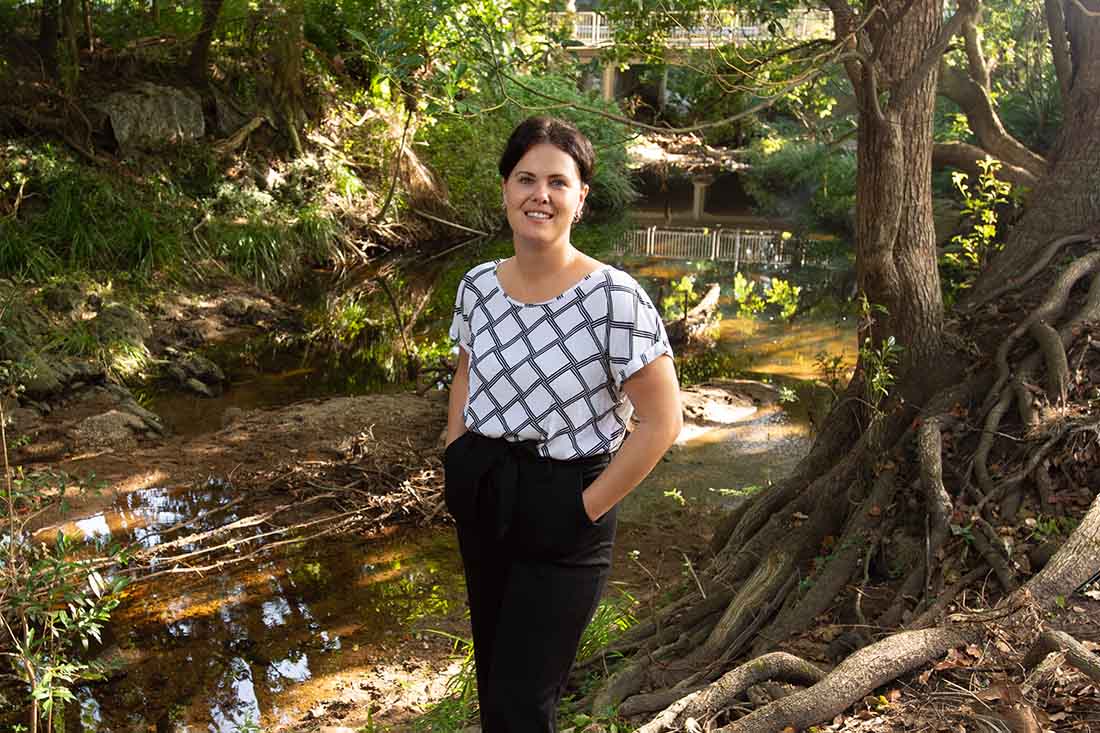
'After only one year of study I have been able to enter a completely new industry. During the course I made valuable friendships with classmates who are now my colleagues. I received tailored support and advice from my course coordinator that helped me make the best decisions for my professional growth and development. Through the invaluable industry experiences I had, and connections I made, I was able to have a full-time employment contract signed before I even completed my final exams.'
Public health vs environmental health
If you're considering switching to a career in health you might be weighing up public health or environmental health as possible options. If you’re not sure of the difference between the two areas take a look at our deep dive into the differences.
Real graduate
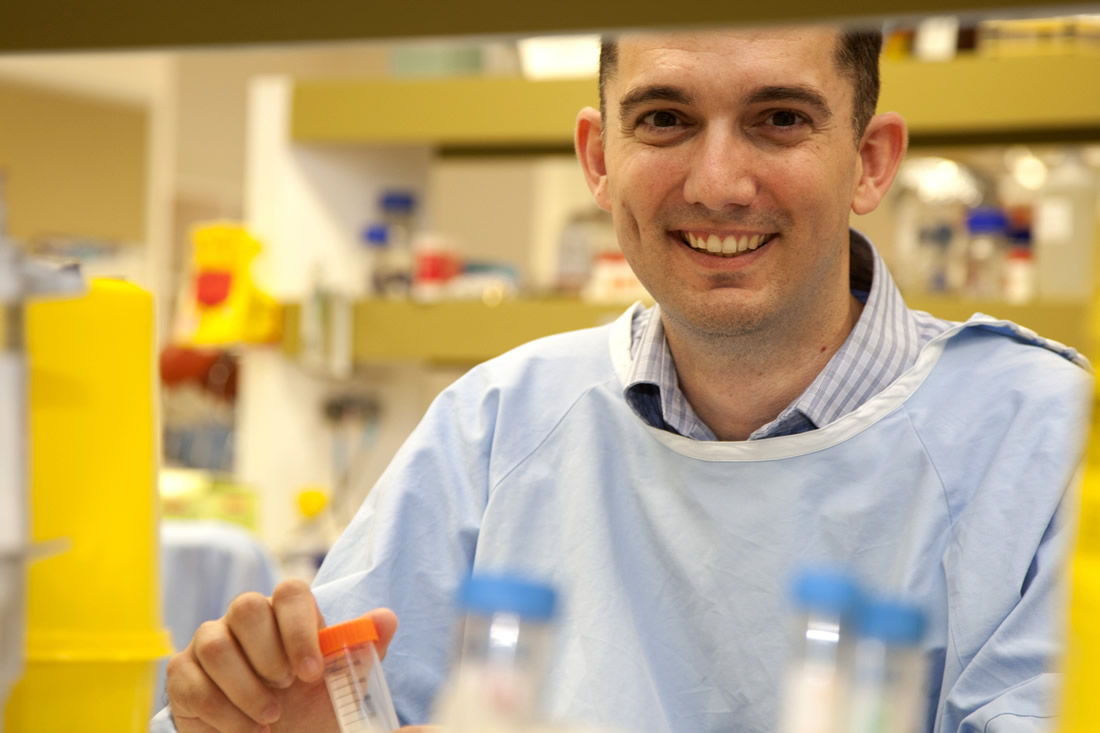
'The classmates and professors that I've met have all been very helpful and encouraging. It's nice to know that if I do encounter a problem, or come across a challenge I've never seen before, that I have people I can go to for advice who can help me find a solution.'

Highlights
- Pathway into professional practice as an Environmental Health Officer, accredited by Environmental Health Australia.
- Study local and global environmental challenges, including climate change, pollution, communicable diseases, Indigenous health and food safety.
- Complete in 2 semesters full time or 4 semesters part time with the option to start mid year.
- QUT offers Commonwealth Supported Places (CSP) to all domestic students enrolled in this course, which means a reduction in the fees you pay.
- Opportunity to progress to the Master of Health, Safety and Environment.
Highlights
- Pathway into professional practice as an Environmental Health Officer, accredited by Environmental Health Australia.
- Study local and global environmental challenges, including climate change, pollution, communicable diseases and Indigenous health.
- Opportunity to progress to the Master of Health, Safety and Environment
Why choose this course?
Change your career in one year. This course is designed to produce competent and confident leaders in environmental health who are multi-skilled, flexible and can innovate to address local and global challenges.
Environmental Health Officers are in high demand across Queensland and the role is currently on the skills shortage list. Many graduates find employment with local councils or state government departments.
Opportunities are also available in the private sector, particularly in environmental management and food safety auditing/management. There are also employment opportunities in other countries, such as the UK, USA, Canada, and developing countries.
There will be an opportunity for students already working in an Environmental Health role to apply knowledge through work-based activities in some assessments. You may also complete this and gain practical experience by finding a placement at a host organisation or workplace.
Explore this course
The Graduate Diploma in Environmental Health provides an entry pathway into environmental health professional practice. Students are highly skilled to assess environmental health risks and combat a range of environmental challenges including climate change, pollution, and communicable diseases.
QUT’s programs are developed in collaboration with leading industry professionals. They provide insight into emerging trends and are regular guest lecturers and presenters in many of the environmental health subject areas.
Flexible study options are available for all core units, so you can manage your study around your other commitments. Some units do incorporate alternate study modes, such as intensive on-campus workshops which all students are required to attend to benefit from interactive learning. Alternatively you will be supported to obtain work experience. QUT’s assessments are authentic and replicate the work you will undertake in your future career.
You’ll graduate work ready with an understanding of environmental health principles and their application in the workplace. You’ll develop theoretical knowledge supplemented with hands-on practical skills and demonstrate transferable skills, such as risk assessment and management, evaluation, and decision-making skills, so you can adapt to future challenges.
The Graduate Diploma in Environmental Health provides an entry pathway into environmental health professional practice. Students are highly skilled to assess environmental health risks and combat a range of environmental challenges including climate change, pollution, and communicable diseases.
Practitioners working in the field of environmental health are involved in promoting healthy environments and managing environmental factors that affect human health. These may include: environmental degradation, climate change, contaminated food and water, waste management, disaster management, dangerous goods and chemicals, and drug safety management.
Leading industry professionals are contributors to the development and ongoing sustainment of our programs. They provide insight into emerging trends and are regular guest lecturers and presenters in many of the environmental health subject areas.
Careers and outcomes
Many graduates find employment as an environmental health officer (EHO). Their role may include: auditing of food safety and standards, environmental (e.g. air, water, noise) monitoring, investigations of environmental health complaints/issues, investigation of infectious disease outbreaks (e.g. food borne illness, Legionnaires disease, lead poisoning, Q fever, meningococcal disease), infection control auditing, mosquito and vector control, implementing tobacco control initiatives, working with Indigenous communities, policy development, health promotion, and prosecutions for breaches of health and environmental legislation.
Graduates of this program have an opportunity to gain employment with local councils or state government departments, with positions also available with Commonwealth Government agencies, including the Australian Defence Force. There are an increasing number of private sector positions being created particularly in the areas of environmental and food safety auditing and management. There are also employment opportunities in other countries, such as the UK, USA and Canada, as well as in developing countries. Graduates are well prepared to compete for, and effectively perform, in a wide range of roles and responsibilities.
Careers and outcomes
Practitioners working in the field of environmental health are involved in promoting healthy environments and managing environmental factors that affect human health. These may include: environmental degradation, climate change, contaminated food and water, waste management, disaster management, dangerous goods and chemicals, and drug safety management.
Leading industry professionals are contributors to the development and ongoing sustainment of our programs. They provide insight into emerging trends and are regular guest lecturers and presenters in many of the environmental health subject areas.
Many graduates find employment as an environmental health officer (EHO). Their role may include: auditing of food safety and standards, environmental (e.g. air, water, noise) monitoring, investigations of environmental health complaints/issues, investigation of infectious disease outbreaks (e.g. food borne illness, Legionnaires disease, lead poisoning, Q fever, meningococcal disease), infection control auditing, mosquito and vector control, implementing tobacco control initiatives, working with Indigenous communities, policy development, health promotion, and prosecutions for breaches of health and environmental legislation.
Graduates of this program gain employment with local councils or state government departments, with positions also available with Commonwealth Government agencies, including the Australian Defence Force. There are an increasing number of private sector positions being created particularly in the areas of environmental and food safety auditing/management. There are also employment opportunities in other countries, such as the UK, USA and Canada, as well as in developing countries. Graduates are well prepared to compete for, and effectively perform, in a wide range of roles and responsibilities.
Professional recognition
This course was the first postgraduate course to be accredited with Environmental Health Australia and graduates are eligible to practice as environmental health officers.
Course articulation
The Graduate Diploma in Environmental Health articulates into the Master of Health, Safety and Environment.
Possible careers
- Environmental health officer
- Government officer
- Policy officer
- Public health officer
Note: Online students are also encouraged to attend timetabled on-campus workshops, scheduled for internal students in certain units. The workshops focus on developing practical skills required for the course accreditation with Environmental Health Australia (EHA). If you are an online student and are unable to attend the on-campus workshops, please contact the Course Coordinators, who can help you arrange an alternative activity within the State/Territory where you are located.
- Course code
- PU67
- CRICOS code
- 061302C
-
- Online
- Kelvin Grove
-
- Kelvin Grove
- 1 years full-time
- 2 years part-time
- If you start in February you can choose to enrol full-time and complete in 1 year.
- 1 years full-time
- February and July
- February
Entry requirement
You must have a recognised bachelor degree (or higher qualification) in any discipline.
Additional entry requirements
You must have the following:
- A minimum of 48 credit points (equivalent of one semester full time study) of recognised basic science units successfully completed in a recognised bachelor degree^ and must include:
- 12 credit points (one subject) of foundation chemistry; and
- 36 credit points (three subjects) in other science areas (e.g. microbiology, physics, anatomy and physiology, life science, environmental science).
^ The basic science units can come from any incomplete or completed degree or four year honours degree studies you have undertaken. Basic science units undertaken at any other level are not acceptable.
Minimum academic requirements
Entry requirements
You must have a recognised bachelor degree (or higher qualification) in any discipline.
Additional entry requirements
You must have the following:
- A minimum of 48 credit points (equivalent of one semester full time study) of recognised basic science units successfully completed in a recognised bachelor degree^ and must include:
- 12 credit points (one subject) of foundation chemistry; and
- 36 credit points (three subjects) in other science areas (e.g. microbiology, physics, anatomy and physiology, life science, environmental science).
^ The basic science units can from any incomplete or completed degree studies you have undertaken. Basic science units undertaken any other level are not acceptable.
Minimum English language requirements
Select the country where you completed your studies to see a guide on meeting QUT’s English language requirements.
Your scores and prior qualifications in English-speaking countries are considered. Approved English-speaking countries are Australia, Canada, England, Ireland, New Zealand, Scotland, United States of America and Wales.
If your country or qualification is not listed, you can still apply for this course and we will assess your eligibility.
We accept English language proficiency scores from the following tests undertaken in a secure test centre. Tests must be taken no more than 2 years prior to the QUT course commencement.
| English Test | Overall | Listening | Reading | Writing | Speaking |
|---|---|---|---|---|---|
| IELTS Academic / One Skill Retake | 6.5 | 6 | 6 | 6 | 6 |
|
Cambridge C1 Advanced
You must share your results with QUT through the Candidate Results Online website. |
176 | 169 | 169 | 169 | 169 |
| PTE Academic | 58 | 50 | 50 | 50 | 50 |
| TOEFL iBT Australia Test (120 scale) | 79 | 16 | 16 | 21 | 18 |
Don't have the English language score you need? We can help!
We offer English language programs to improve your English and help you gain entry to this course.
When you apply for this course, we will recommend which English course you should enrol in.
Your actual fees may vary depending on which units you choose. We review fees annually, and they may be subject to increases.
2027 fees
2027: CSP $9,800 per year full-time (96 credit points)
2027 fees
2027: $42,000 per year full-time (96 credit points)
2026 fees
2026: CSP $9,500 per year full-time (96 credit points)
2026 fees
2026: $40,300 per year full-time (96 credit points)
Student services and amenities fees
You may need to pay student services and amenities (SA) fees as part of your course costs.
HECS-HELP: loans to help you pay for your course fees
You may not have to pay anything upfront if you're eligible for a HECS-HELP loan.
Student services and amenities fees
You may need to pay student services and amenities (SA) fees as part of your course costs.
You can apply for scholarships to help you with study and living costs.
Equity scholarships scheme
A scholarship for low-income students studying in any faculty.
- Scholarship eligibility
- Struggling financially
International Merit Scholarship
A high achievement scholarship for future international undergraduate and postgraduate students.
- Scholarship eligibility
- Academic performance
International Talent Scholarship
A new scholarship for 2026 that covers tuition fees, with eligibility based on your prior academic achievements.
- Scholarship eligibility
- Academic performance
Keep up to date
Ready for your next step?
Finishing school?
Everything you need to know about choosing a uni straight from school.
How to apply
We'll break down the application process, from QTAC to accepting your offer.
Ready for your next step?
How to apply
We'll break down the process, from applying to accepting your offer.
Flexible study
Explore the options that could make postgraduate study work for you.
QUT courses for you
Like to save your courses?
Please enter your first name and email so we can save your courses for you