By QUT Health Marketing, 18 June, 2025
If you’re eyeing a career in health and wondering whether to dive into the Master of Public Health or the Graduate Diploma in Environmental Health, read on.
TL;DR
🏥 Consider going into public health if you’re all about improving the health of communities, tackling health inequalities, and shaping health policies.
🌳 Look into environmental health if you’re passionate about the environment and its direct impact on human health. This includes the effects of climate change, pollution, and infectious outbreaks.
Public health


What is public health?
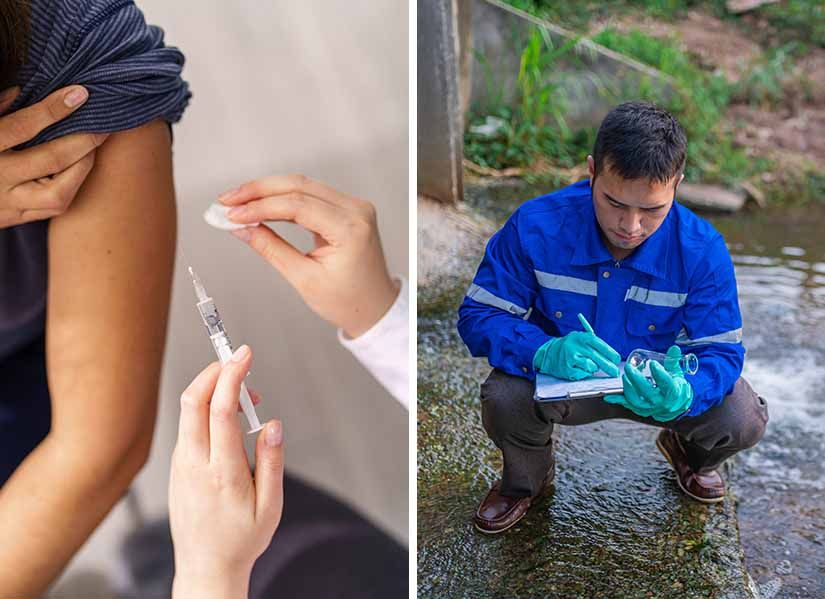
Public health is all about the big picture. It’s the art (and science) of preventing illness, promoting health, and creating safer, healthier communities. It spans everything from education campaigns and policy development, to emergency planning and disease tracking. If clinical health is 1 on 1 care, public health is 1 on >1000.
The Master of Public Health could be perfect if you are:
- looking to change your career and make a meaningful impact
- a clinician wanting to broaden your expertise
- a mid-career professional aiming to level up.
The Master of Public Health is more than just a degree. It’s a way to shift gears in your career, build on your existing expertise, or kick-start a meaningful journey into improving lives through better health systems and smarter policies.
In the course you will learn:
- Epidemiology and biostatistics
- Research methods, if you would like to pursue a research pathway
- Emergency and disaster management
- Health services management
- Health promotion - perhaps you'll be inspired to create the next 'Slip slop slap' campaign!
Video credit: Cancer Council Victoria
Career pathways in public health
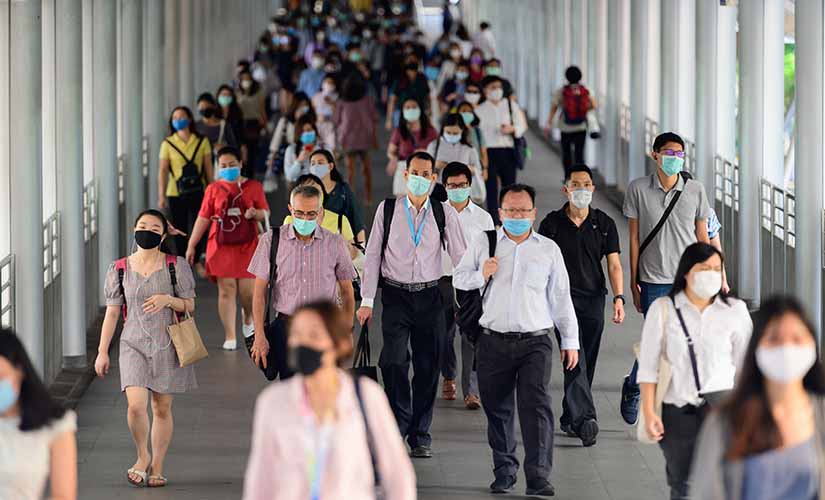
Jobs that improve community health and wellbeing are in demand, and graduates will be equipped to work in a whole range of sectors. This includes government, non-government organisations, research institutions, and the private sector both in Australia and overseas.
With a master’s in public health, you could work in:
- Public health policy and planning – contribute to the development and implementation of public health policies and programs at local, state, or national levels.
- Health promotion and education – implement education campaigns to promote healthy behaviours and lifestyles.
- Epidemiology and research – combine your passion for data analysis to study disease patterns and health trends to inform public health interventions.
- Emergency and disaster management – plan and coordinate responses to public health emergencies that include natural disasters and pandemics.
- Global health – engage in international public health initiatives to address global health issues such as infectious diseases and strengthening health systems.
- Nonprofit and international organisations – graduates have worked with organisations like the World Health Organization (WHO) or the United Nations to focus on health advocacy, program implementation and policy development.
- Private sector – become a health consultant, a corporate wellness coordinator, or health communication specialists to advise organisations on health-related issues.
Will I like public health?

If you’re curious, care about people, and want to make an impact on a bigger level then yes, this could be the change you've been looking for. International student Manvi came from a clinical background, but found her passion in public health.
You’re more likely to enjoy public health if you enjoy:
- working with people and communities
- stats, strategy, and policy
- variety in your work day.
Why public health at QUT?
Flexibility is a big part of the course, which is extra important if you are already a working professional. This is how your studies could work around your existing commitments:
- Flexible delivery – study full time (2 years) or part-time (4 years)
- Reduce the course duration to 1.5 years with an eligible bachelor’s degree in health
- Study online wherever you are, or join us at Kelvin Grove campus
- Start when it suits you in February or July
- Graduate with an internationally recognised qualification
- Get involved in real-world projects to gain practical experience and make industry connections.
Public health is booming, and the world needs more people with the skills to lead, plan, and act. If you want to specialise in epidemiology, champion better health systems, or plan responses to emergencies, this pathway could set you up for success.
Environmental health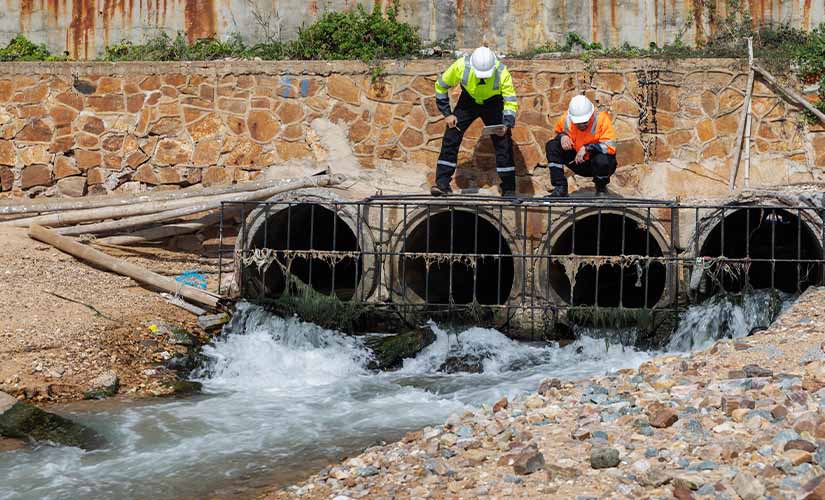
Have you ever walked past a stormwater drain and wonder where it leads? Or noticed how pollution is adding more soot to your home? Or maybe you’ve seen food safety issues at a restaurant and thought, “Someone should do something about that.”
Well, that someone could be you.
The Graduate Diploma in Environmental Health is a launchpad for a career change, accredited by Environmental Health Australia (EHA).
With a blend of science, policy, and public health, it sets you up to be the person that keeps your community safe and healthy, while tackling some of the biggest environmental challenges of our time.
So what exactly is environmental health?
Environmental health is the science of how our surroundings (air, water, food, housing, waste, and climate) affect our health.
What job do I get after studying environmental health?

Most graduates aspire to become environmental health officers (EHO), who are on the front line of public safety. As an EHO, you’ll be:
- tracking infectious outbreaks
- managing pollution risks
- enforcing food safety
- addressing housing conditions
- battling the impacts of climate change.
Think of EHOs as the community’s detective-meets-guardian angel, but equipped with more hand sanitiser and data.
If you love the course and want to take your studies further, you can look into the Master of Health, Safety and Environment, or delve into research with a Doctor of Philosophy.
Where can I work?
Accredited by Environmental Health Australia, you’ll be equipped to work in:
- Local and state government
- Australian Defence Force
- Environmental protection agencies
- Public health teams
- Disaster response teams
- Consulting or private sector roles.
Wherever you decide to work, you’ll be able to sleep at night knowing you’ve literally made the world a safer place.
Will I like environmental health?
If you’re into science, problem-solving, and making a real difference in communities, this might be your calling.
Students can come from all sorts of backgrounds like Charlotte, who decided she wanted a change from her office job. What unites people is typically a drive to protect the community by managing environmental risks.
Bonus points if:
- You’re into sustainability and health
- You like meeting people from all walks of life
- You enjoy the investigative process and educating
- You’ve got a good poker face (for inspecting dodgy kitchens).
Why QUT?
Aside from being the first postgraduate course to be accredited by EHA, here are some points you’ll love:
- 1 year full-time or 2 years part-time delivery
- Fully online option, or join in person at our Kelvin Grove campus
- Start when you’re ready in February or July
- Reduced fees for domestic students via Commonwealth Supported Places
- Support to obtain work experience.
Climate, housing, and health are colliding and environmental health professionals are in demand. QUT graduates are not only getting jobs in Australia, but also overseas.
Conclusion
Hopefully you have a better insight into which area you’re more interested in. Whichever path you choose, both public health and environmental health offer unique opportunities to make a real difference in the world.
Want to learn more? Check out the links below.