 Apply now
 How to apply
 Save course for later
 Send me a PDF copy
 I want more info
Funding your research degree
If you’re an outstanding graduate and aspiring researcher, you may be eligible to apply for a scholarship in one of our scholarship rounds.
Real student
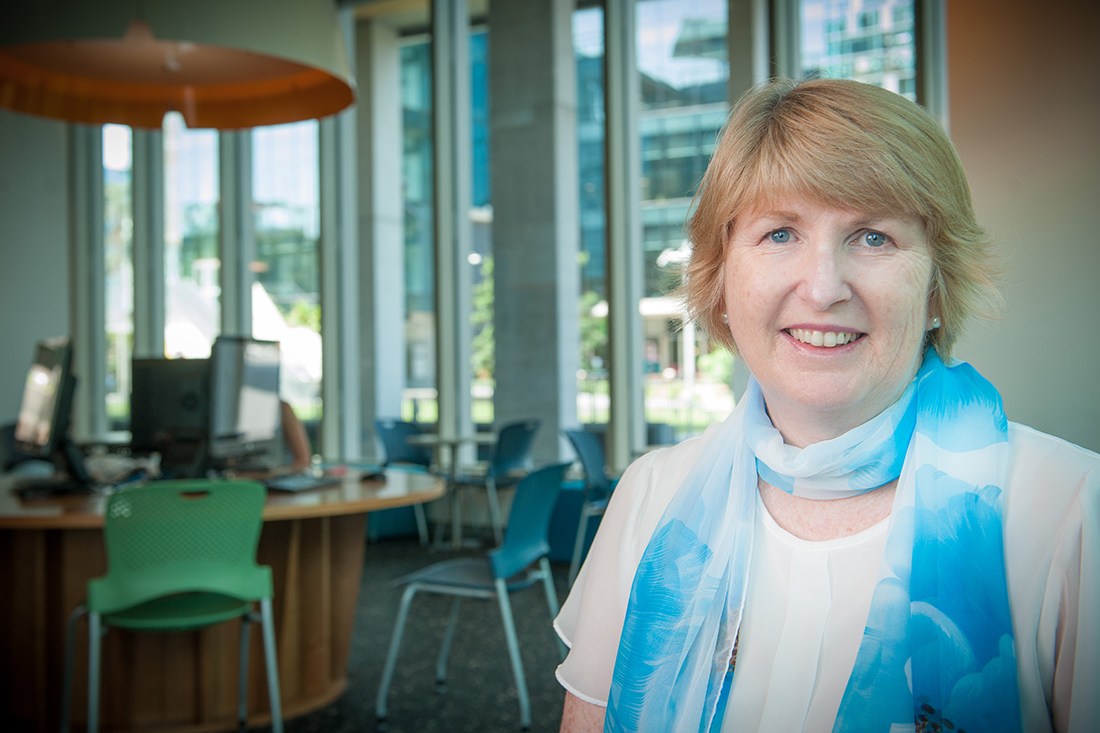
'My research relates to my job coordinating a STEM school outreach program for students from low socioeconomic status backgrounds. The research looks at the impact on the professional identity of the university students who deliver the workshops and presentations. I have developed an interest in issues such as student success, graduate attributes and employability and am acquiring the research, personal and practical skills required to make a difference in this growing area.'
Real graduate
'My job involves helping teachers to manage students who demonstrate serious, disruptive behaviour. The research at QUT has led to a transformation of practices, and my team is now working more effectively with teachers and principals in their quest to achieve sustainable, improved outcomes for troubled students in schools.'
Funding your research degree
If you’re an outstanding graduate and aspiring researcher, you may be eligible to apply for a scholarship in one of our scholarship rounds.
Real-world STEM research
‘My Doctor of Education research, focusing on the novice-to-expert transition of STEM learners, is relevant to my role as a STEM teacher in the Philippines. This research journey is a testament to my commitment to actively contribute to my country's ongoing evolution of STEM education. I was pleasantly surprised by the remarkable array of perspectives that both my classmates and the supervisory team contributed to our discussions. This diversity not only elevates the overall learning experience but also equips us to navigate the intricate challenges of the education landscape.'
Doctor of Education
Real graduate
'My job involves helping teachers to manage students who demonstrate serious, disruptive behaviour. The research at QUT has led to a transformation of practices, and my team is now working more effectively with teachers and principals in their quest to achieve sustainable, improved outcomes for troubled students in schools.'



Highlights
- Focus on applied investigation and problem solving, and make a contribution to research in the field of education.
- Be supported by study workshops to refine the methodology and design of your thesis.
- Complete an initial coursework component followed by a thesis.
Highlights
- Focus on applied investigation and problem solving, and make a contribution to research in the field of education.
- Be supported by study workshops to refine the methodology and design of your thesis.
- Complete an initial coursework component followed by a thesis.
Explore this course
The Doctor of Education (EdD) focuses on applied investigation and problem solving rather than on a contribution to pure research or to theoretical knowledge. This professional doctorate, comprising coursework units and a thesis, is oriented towards enhancing professional practice and focuses on the professional development of practitioners involved in some aspect of education.
The degree consists of 288 credit points:
- 18 of the credit points are earned through completion of a coursework unit of research training (EUN705: Conducting Research in Education);
- 6 credit points are earned through completion of a unit of training in advanced information skills for research (EUN006 AIRS: Advanced Information Research Skills);
- 3 credit points are earned through completion of a coursework of unit training (EUN706, Proposing Research in Education); and
- the remaining 261 credit points are earned by conduct of a research project and completion of a thesis for external examination.
The 18 credit point unit of training in Conducting Research in Education (EUN705) includes:
- a three-day study school delivered in January of Year 1 of the course;
- a four-day study school delivered in June-July of Year 1 of the course;
- online flipped classroom tutorial activities for all students during Semester I;
- two assessments -- one written and one presentation that involves physical classroom or online options; and
- work with the supervisory team to develop the EdD project and assessment pieces.
The 3 credit point unit of training in Proposing Research in Education (EUN706) includes:
- a four-day study school in January of Year 2 of the course;
- presentations during the study school on topics that include but are not limited to Human Research Ethics, education research methods, education theories, and advanced literature review.
- one assessment piece -- an oral presentation with ppt or other presentation software.
To ensure that all course inclusions are well integrated, students work with a supervisory team from the outset of their candidature, and are actively encouraged to invite input from their supervisors on their EUN705, EUN706, and IFN006 activities.
The degree consists of 288 credit points:
- 18 of the credit points are earned through completion of a coursework unit of research training (EUN705: Conducting Research in Education);
- 6 credit points are earned through completion of a unit of training in advanced information skills for research (EUN006 AIRS: Advanced Information Research Skills);
- 3 credit points are earned through completion of a coursework of unit training (EUN706, Proposing Research in Education); and
- the remaining 261 credit points are earned by conduct of a research project and completion of a thesis for external examination.
The 18 credit point unit of training in Conducting Research in Education (EUN705) includes:
- a three-day study school delivered in January of Year 1 of the course;
- a four-day study school delivered in June-July of Year 1 of the course;
- online flipped classroom tutorial activities for all students during Semester I;
- two assessments -- one written and one presentation that involves physical classroom or online options; and
- work with the supervisory team to develop the EdD project and assessment pieces.
The 3 credit point unit of training in Proposing Research in Education (EUN706) includes:
- a four-day study school in January of Year 2 of the course;
- presentations during the study school on topics that include but are not limited to Human Research Ethics, education research methods, education theories, and advanced literature review.
- one assessment piece -- an oral presentation with ppt or other presentation software.
To ensure that all course inclusions are well integrated, students work with a supervisory team from the outset of their candidature, and are actively encouraged to invite input from their supervisors on their EUN705, EUN706, and IFN006 activities.
- Course code
- ED11
- CRICOS code
- 015023C
-
- Kelvin Grove
-
- Kelvin Grove
- 3 years full-time
- 6 years part-time
-
International applicants are encouraged to contact the course coordinator before submitting their application.
- 3 years full-time
- The CRICOS registered course duration is four years however the course may be completed full-time in three to four years.
-
International applicants are encouraged to contact the course coordinator before submitting their application.
- January
- January
Academic entry requirements
- A completed recognised four-year honours Class IIA degree in education; or
- A masters degree in education or in a field relevant to the professional doctorate in education with a minimum GPA of 5.00 on QUT's 7 point scale; and
- Two years' practice in a position of professional responsibility in education or a closely related field.
Minimum academic requirements
Academic entry requirements
- A completed recognised four-year honours Class IIA degree in education; or
- A masters degree in education or in a field relevant to the professional doctorate in education with a minimum GPA of 5.00 on QUT's 7 point scale; and
- Two years' practice in a position of professional responsibility in education or a closely related field.
Minimum English language requirements
Select the country where you completed your studies to see a guide on meeting QUT’s English language requirements.
Your scores and prior qualifications in English-speaking countries are considered. Approved English-speaking countries are Australia, Canada, England, Ireland, New Zealand, Scotland, United States of America and Wales.
If your country or qualification is not listed, you can still apply for this course and we will assess your eligibility.
We accept English language proficiency scores from the following tests undertaken in a secure test centre. Tests must be taken no more than 2 years prior to the QUT course commencement.
| English Test | Overall | Listening | Reading | Writing | Speaking |
|---|---|---|---|---|---|
| IELTS Academic / One Skill Retake | 6.5 | 6 | 6 | 6 | 6 |
|
Cambridge C1 Advanced
You must share your results with QUT through the Candidate Results Online website. |
176 | 169 | 169 | 169 | 169 |
| PTE Academic | 58 | 50 | 50 | 50 | 50 |
| TOEFL iBT | 79 | 16 | 16 | 21 | 18 |
Don't have the English language score you need? We can help!
We offer English language programs to improve your English and help you gain entry to this course.
When you apply for this course, we will recommend which English course you should enrol in.
Your actual fees may vary depending on which units you choose. We review fees annually, and they may be subject to increases.
2027 fees
2027: Fee available from July
2027 fees
2027: Fee available from July
2026 fees
2026: $35,200 - $43,700 per year full-time if you exceed the maximum time under RTP
2026 fees
2026: $37,600 - $45,600 per year full-time if you exceed the maximum time under RTP
If you're an Australian citizen or permanent visa holder, or a New Zealand citizen, your tuition fees are normally covered by the Australian Government Research Training Program (RTP) Fees Offset (Domestic), as long as you complete your degree within the program's set timeframes. You'll have to pay tuition fees if you exceed the time limits under the RTP.
FEE-HELP: loans to help you pay for your course fees
You may not have to pay anything upfront if you're eligible for a FEE-HELP loan.
You can apply for scholarships to help you with study and living costs.
QUT Postgraduate Research Award (QUTPRA)
A scholarship for current and future postgraduate research students.
- Scholarship eligibility
Equity scholarships scheme
A scholarship for low-income students studying in any faculty.
- Scholarship eligibility
- Struggling financially
Research Training Program (RTP) Stipend Scholarship
A scholarship for future postgraduate research students in any faculty.
- Scholarship eligibility
Indigenous Postgraduate Research Award (IPRA)
A scholarship for future and current postgraduate research students.
- Scholarship eligibility
- Indigenous Australian
Keep up to date
Ready for your next step?
Finishing school?
Everything you need to know about choosing a uni straight from school.
How to apply
We'll break down the application process, from QTAC to accepting your offer.
Ready for your next step?
How to apply
We'll break down the process, from applying to accepting your offer.
Flexible study
Explore the options that could make postgraduate study work for you.
QUT courses for you
Like to save your courses?
Please enter your first name and email so we can save your courses for you