 Apply now
 How to apply
 Save course for later
 Send me a PDF copy
 I want more info
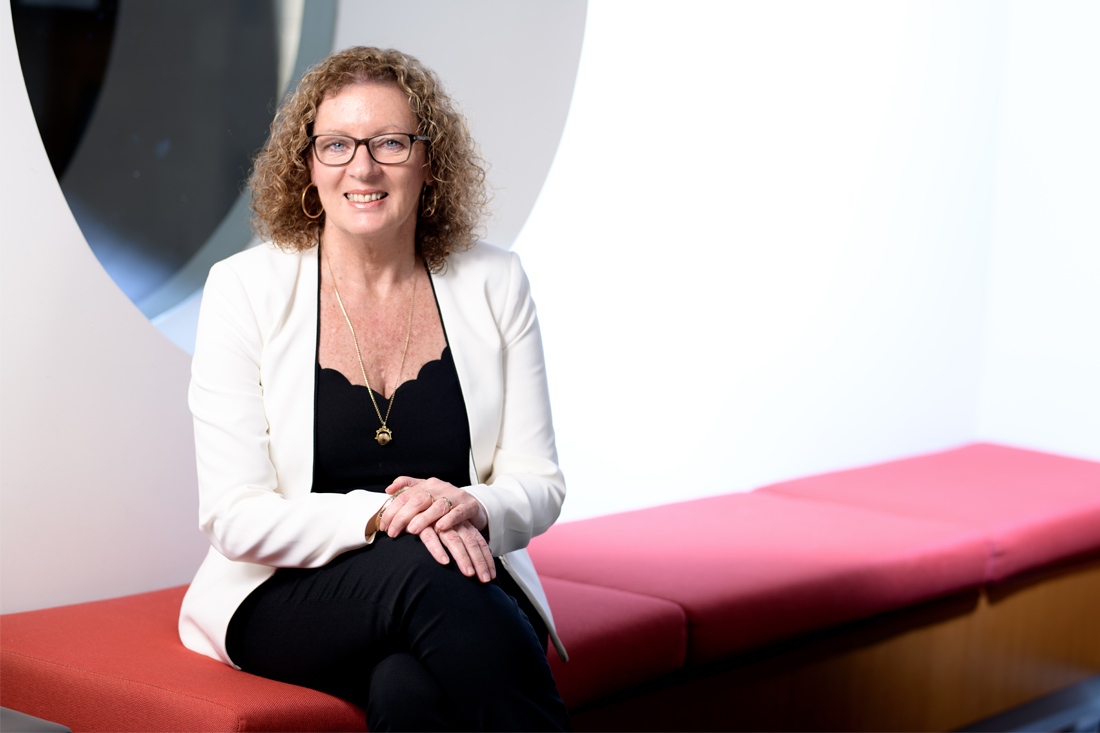
Real expert
I came to QUT having previously worked as a primary teacher, school guidance officer, behaviour support specialist, and in a role overseeing state policy development and school practice regarding student behaviour. My research expertise and focus is on trauma-aware schooling and I am proud to lead a passionate and informed teaching team to deliver this course.
Make positive change
'We're talking about our most vulnerable kids when we're talking about complex trauma and when we can see schools and teachers as having this power where we can intervene and we can help - not only do we help them access learning, but for their entire life, we can really make a positive impact on where they end up in the future.'
Trauma-aware graduate
Real strategies, real impact
'Trauma-aware education was incredibly practical and relevant to real-world classroom scenarios. We explored the impact of trauma, how to recognise its signs, and strategies to support students effectively. Each unit offered insights directly applicable to everyday teaching. It gave me the tools to better understand and respond to students' needs.'
Trauma-aware graduate
Real expert
I came to QUT having previously worked as a primary teacher, school guidance officer, behaviour support specialist, and in a role overseeing state policy development and school practice regarding student behaviour. My research expertise and focus is on trauma-aware schooling and I am proud to lead a passionate and informed teaching team to deliver this course.
Make positive change
'We're talking about our most vulnerable kids when we're talking about complex trauma and when we can see schools and teachers as having this power where we can intervene and we can help - not only do we help them access learning, but for their entire life, we can really make a positive impact on where they end up in the future.'
Trauma-aware graduate
Real strategies, real impact
'Trauma-aware education was incredibly practical and relevant to real-world classroom scenarios. We explored the impact of trauma, how to recognise its signs, and strategies to support students effectively. Each unit offered insights directly applicable to everyday teaching. It gave me the tools to better understand and respond to students' needs.'
Trauma-aware graduate

Highlights
- Build your capability to support learners who are living with the outcomes of complex trauma.
- Ideal for teachers in schools or early childhood education and care services, or other professionals.
- Equips graduates to lead a trauma-aware response in a range of workplace settings.
- Qualified teachers can fast-track their career by completing this course in just one year, provided they meet our entry requirements.
Highlights
- Build your capability to support learners who are living with the outcomes of complex trauma.
- Ideal for teachers in schools or early childhood education and care services, or other professionals.
- Equips graduates to lead a trauma-aware response in a range of workplace settings.
- Qualified teachers can fast-track their career by completing this course in just one year, provided they meet our entry requirements.
Why choose this course?
The Graduate Certificate in Education (Trauma-Aware Education) equips graduates to support learners in schools and early childhood settings who are living with the outcomes of complex developmental trauma. This major is the first of its kind in Australia and is designed to align with a growing national and global movement in trauma-aware education.
If you are a school or early childhood educator, or other professional, you can deepen your knowledge and skills in trauma-aware education and your capacity to lead a trauma-aware response in a range of work settings.
Be inspired by postgraduate students putting their learnings into action. Read their stories on our Education insights blog.
Learn more about trauma-aware education and explore our courses in this area.
Subsidised fees available
This course is one of many Commonwealth Supported Places that QUT has secured to make postgraduate study more affordable and accessible.
Find out more here.
Why choose this course?
The Graduate Certificate in Education (Trauma-Aware Education) equips graduates to support learners in schools and early childhood settings who are living with the outcomes of complex developmental trauma. This major is the first of its kind in Australia and is designed to align with a growing national and global movement in trauma-aware education.
If you are a school or early childhood educator, or other professional, you can deepen your knowledge and skills in trauma-aware education and your capacity to lead a trauma-aware response in a range of work settings.
Be inspired by postgraduate students putting their learnings into action. Read their stories on our Education insights blog.
Learn from the best
Renowned expert and national leader in trauma-aware education, Dr Judith Howard, will lead a passionate and informed teaching team to deliver the course.
Our lecturers have experience working in education settings, policy roles, and in leadership roles in schools. You’ll benefit from the real-world experience they are able to share. The course is backed by QUT’s evidence-based research programs working to develop solutions to current and emerging issues in education.
Explore this course
The Trauma-aware Education major will equip you to:
- develop deep understandings of the impact of complex developmental trauma on child and adolescent development and the learner’s experience of education.
- understand the impact of complex development trauma on types or groups of learners, and what can be done to address this impact.
- build a toolkit of ideas, resources and capacities to support your leadership in trauma-aware education in your current or future work context.
- learn foundational trauma-aware education theories and research through peer collaboration to enhance educational policies and practices.
- explore the impact of Adverse Childhood Experiences (ACEs) on various life outcomes, examining key research from the CDC and Kaiser Permanente ACE Study.
- delve into the biology and neurobiology of child and adolescent development, the effects of complex trauma, and its intergenerational transmission, applying these insights to educational contexts.
- learn to lead and advocate for trauma-aware practices in educational settings, aligning with systemic frameworks to improve learner outcomes and staff well-being, while also developing skills for designing and delivering professional learning with peers.
Alternatively, you can study a fully customisable Graduate Certificate in Education by choosing units tailored to your interests and needs.
Flexible delivery
You may study the course full-time or part-time. You can study on campus, online or select a blended approach to suit you. QUT provides a variety of online learning environments to enable you to participate fully, receive expert guidance and support, and be in regular contact with expert teaching staff. Gain specialist knowledge, while being able to work, with our flexible course options.
Flexible delivery
You may study this course part time. If you choose a selection of option units you can choose to study full-time or part-time.
You can study on campus, online or select a blended approach to suit you. QUT provides a variety of online learning environments to enable you to participate fully, receive expert guidance and support, and be in regular contact with expert teaching staff.
Careers and outcomes
Graduates of the Graduate Certificate in Education with a Trauma-Aware Education major will be qualified be able to put their capabilities into practice in many ways, including:
- school or early childhood practitioners can develop their capacities to lead a trauma-aware education response at their sites.
- education leaders in districts, regions, dioceses, or other entities can develop their capacities to lead a systemic response in trauma-aware education.
- other practitioners from support organisations or government agencies can develop their capacity to work from a trauma-aware focus with schools, early childhood services and education systems.
Course articulation
You have the option to keep learning and build towards a Master of Education.
Professional recognition
The Graduate Certificate in Education does not lead to teacher registration. If you are seeking a teaching qualification, the Bachelor of Education, or Master of Teaching may be suitable for you. Explore course options here.
Course articulation
You have the option to keep learning and build towards a Master of Education.
To graduate with the Graduate Certificate in Education (Trauma-Aware Education) you will need to complete all units in the Trauma-Aware Education major. You may only study the Trauma-Aware Education major part time.
The Graduate Certificate in Education (Trauma-Aware Education) is only available to non-student visa holders. This course is available 1 year part-time. To graduate with the Graduate Certificate in Education (Trauma-Aware Education) you will need to complete all units in the Trauma-Aware Education major.
International students studying on a student visa may only study full time. If that's you, you will need to refer to Graduate Certificate in Education - Choice of Units to create a full-time course structure.
- Course code
- EU60
-
- Online
- Kelvin Grove
-
- Online
- 1 years part-time
- 1 years part-time
- February and July
- February and July
Entry requirements
You must have one of the following:
- A recognised bachelor degree (or higher qualification) in any discipline; or
- A recognised diploma in any discipline followed by at least four years full-time (or equivalent) professional work experience involving learning, training, teaching or tutoring, or in an educational setting, Education department or related statutory authority; or
- Seven years full-time (or equivalent) professional work experience involving learning, training, teaching or tutoring, or in an educational setting, Education department or related statutory authority
Relevant work experience examples
- Childcare group leader, director etc
- Dance, music, etc teacher
- Educational administration
- Educational psychologist
- Education department and related statutory authorities
- Health care or social work professional working in an educational setting
- School, college, university administrator
- School chaplain, police officer
- Teacher
- TESOL, TEFL teacher
- Tutor
- University or TAFE lecturer
Minimum academic requirements
Entry requirement
You must have a completed recognised bachelor degree (or higher qualification) in any discipline.
Minimum English language requirements
Select the country where you completed your studies to see a guide on meeting QUT’s English language requirements.
Your scores and prior qualifications in English-speaking countries are considered. Approved English-speaking countries are Australia, Canada, England, Ireland, New Zealand, Scotland, United States of America and Wales.
If your country or qualification is not listed, you can still apply for this course and we will assess your eligibility.
We accept English language proficiency scores from the following tests undertaken in a secure test centre. Tests must be taken no more than 2 years prior to the QUT course commencement.
| English Test | Overall | Listening | Reading | Writing | Speaking |
|---|---|---|---|---|---|
| IELTS Academic / One Skill Retake | 6.5 | 6 | 6 | 6 | 6 |
|
Cambridge C1 Advanced
You must share your results with QUT through the Candidate Results Online website. |
176 | 169 | 169 | 169 | 169 |
| LANGUAGECERT Academic (LCA) | 67 | 57 | 60 | 64 | 70 |
| Michigan English Test (MET) | 58 | 56 | 55 | 57 | 48 |
| PTE Academic | 59 | 50 | 50 | 51 | 54 |
| TOEFL iBT Australia Test (120 scale) | 79 | 16 | 16 | 19 | 19 |
Don't have the English language score you need? We can help!
We offer English language programs to improve your English and help you gain entry to this course.
When you apply for this course, we will recommend which English course you should enrol in.
Your actual fees may vary depending on which units you choose. We review fees annually, and they may be subject to increases.
2027 fees
2027: CSP $2,400 per year part-time (48 credit points)
2027 fees
2027: $19,800 per year part-time (48 credit points)
2026 fees
2026: CSP $2,400 per year part-time (48 credit points)
2026 fees
2026: $18,900 per year part-time (48 credit points)
Student services and amenities fees
You may need to pay student services and amenities (SA) fees as part of your course costs.
HECS-HELP: loans to help you pay for your course fees
You may not have to pay anything upfront if you're eligible for a HECS-HELP loan.
Student services and amenities fees
You may need to pay student services and amenities (SA) fees as part of your course costs.
You can apply for scholarships to help you with study and living costs.
International Merit Scholarship
A high achievement scholarship for future international undergraduate and postgraduate students.
- Scholarship eligibility
- Academic performance
International Talent Scholarship
A new scholarship for 2026 that covers tuition fees, with eligibility based on your prior academic achievements.
- Scholarship eligibility
- Academic performance
Keep up to date
Ready for your next step?
Finishing school?
Everything you need to know about choosing a uni straight from school.
How to apply
We'll break down the application process, from QTAC to accepting your offer.
Ready for your next step?
How to apply
We'll break down the process, from applying to accepting your offer.
Flexible study
Explore the options that could make postgraduate study work for you.
QUT courses for you
Like to save your courses?
Please enter your first name and email so we can save your courses for you