In this course you will
- Be introduced to the ideas of game development entrepreneurship from your first year of studies.
- Gain knowledge and skills related to succeeding as an independent game developer.
- Participate in a final-year industry experience, where you'll work as part of a team on real client projects to develop and publish your own game.
- Present your industry project at the end‑of‑year capstone showcase.
- Develop expertise in one of our three majors: game design, animation or software technologies.
- Join a passionate community with solid links to local games industries and other industry partners in game-based technology.
- Be a part of Queensland’s leading video game industry, responsible for titles such as 'Fruit Ninja' by Half Brick Studios, 'The Legend of Spyro: A New Beginning', 'TY the Tasmanian Tiger', and 'Star Wars: The Force Unleashed' by Krome Studios, and 'The Oregon Trail' by Gameloft.
In this course you will
- Create immersive and engaging digital experiences through real-world projects guided by industry experts.
- Cover both the technical and creative aspects of game development.
- Develop expertise in one of our three majors: game design, animation or software technologies.
- Prepare for a career in game design, animation, special effects, or mobile entertainment development.
- Join a passionate community with solid links to local games industries and other industry partners in game-based technology.
- Be a part of Queensland’s leading video game industry, responsible for titles such as 'Fruit Ninja' by Half Brick Studios, 'The Legend of Spyro: A New Beginning', 'TY the Tasmanian Tiger', and 'Star Wars: The Force Unleashed' by Krome Studios, and 'The Oregon Trail' by Gameloft.
As part of this course you must choose a major:
Course pathway options
Graduates of the course/s listed below will be automatically offered a place in the Bachelor of Games and Interactive Environments.
Why QUT

Hands-on learning
Gain skills and confidence for your career with a curriculum that prioritises hands-on learning and real industry projects.

Build your network
Connect with motivated professionals and learn from award-winning lecturers who are experts in their field.

Industry experience
Gain experience with leading organisations through our work-integrated learning program.
Work with industry
'For my final project, I’m part of a team working in partnership with MAXART, a Brisbane-based games studio. It's been incredibly exciting to develop something in close partnership with experienced industry members, and I’m so grateful for the mentorship that they continue to provide. I cannot wait for our game to be available to the public!'
Bachelor of Games and Interactive Environments (Animation)
Graduate showcase
The capstone showcase offers an exciting opportunity for QUT students to proudly present their final year projects while making valuable connections with industry professionals. In 2024, an inspiring group of 217 students collaborated with 48 industry partners on 56 innovative team projects.
Industry-tested projects
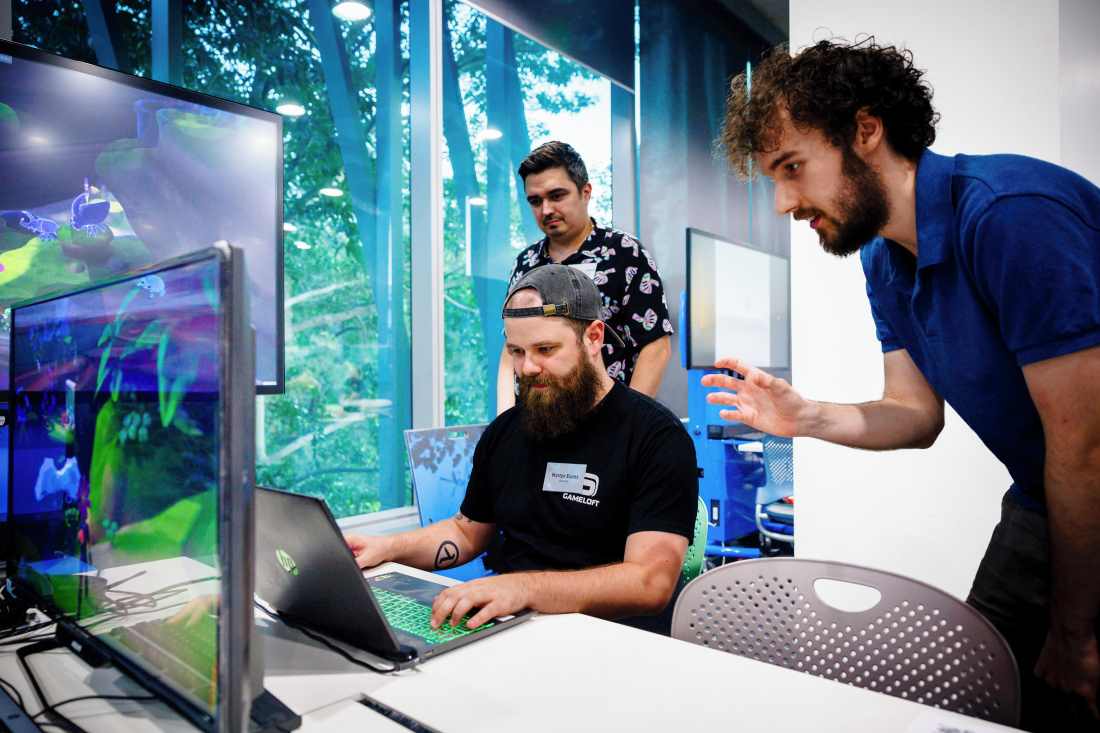
The IT and Games Capstone Showcase is an opportunity for students to showcase their final-year projects and build connections with industry professionals. Hear from our industry partners as they share their experiences working with QUT students.
Games student projects
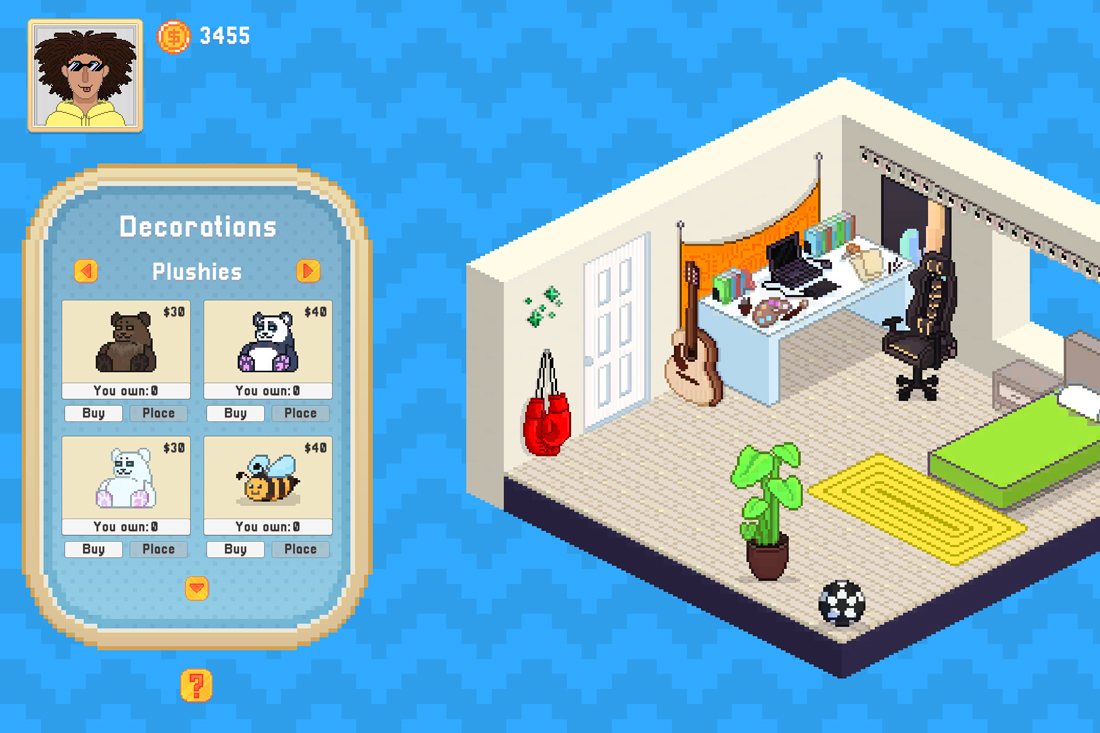
Explore some of our second-year student projects and witness the creative prowess of our students as they bring their game design visions to life!
Can gaming improve our mental health?
Tune into this episode of Ready STEM Go to hear from Prof Daniel Johnson, a leader in games research and interaction design at QUT. Discover how video games offer a sense of fulfilment, freedom, and connection, and learn about the misconceptions surrounding their impact.
Intriguing and practical projects
'I chose this course because I recognised the numerous benefits that gaming offers to human life, including enhanced communication, decision-making abilities, and cognitive skills. The projects are both intriguing and practical. They mirror real-world workplace scenarios, allowing us to engage in projects in a manner that closely aligns with professional practices. I strongly recommend QUT to others due to its effective teaching methods that are highly relevant. The welcoming nature of the tutors adds to the positive learning experience.'
Bachelor of Games and Interactive Environments (Animation)
Graduate showcase
The capstone showcase offers an exciting opportunity for QUT students to proudly present their final year projects while making valuable connections with industry professionals. In 2024, an inspiring group of 217 students collaborated with 48 industry partners on 56 innovative team projects.
Industry-tested projects
The IT and Games Capstone Showcase is an opportunity for students to showcase their final-year projects and build connections with industry professionals. Hear from our industry partners as they share their experiences working with QUT students.
Games student projects
Explore some of our second-year student projects and witness the creative prowess of our students as they bring their game design visions to life!


Keep up to date
Ready for your next step?
Finishing school?
Everything you need to know about choosing a uni straight from school.
How to apply
We'll break down the application process, from QTAC to accepting your offer.
Ready for your next step?
How to apply
We'll break down the process, from applying to accepting your offer.
Flexible study
Explore the options that could make postgraduate study work for you.
QUT courses for you
Like to save your courses?
Please enter your first name and email so we can save your courses for you