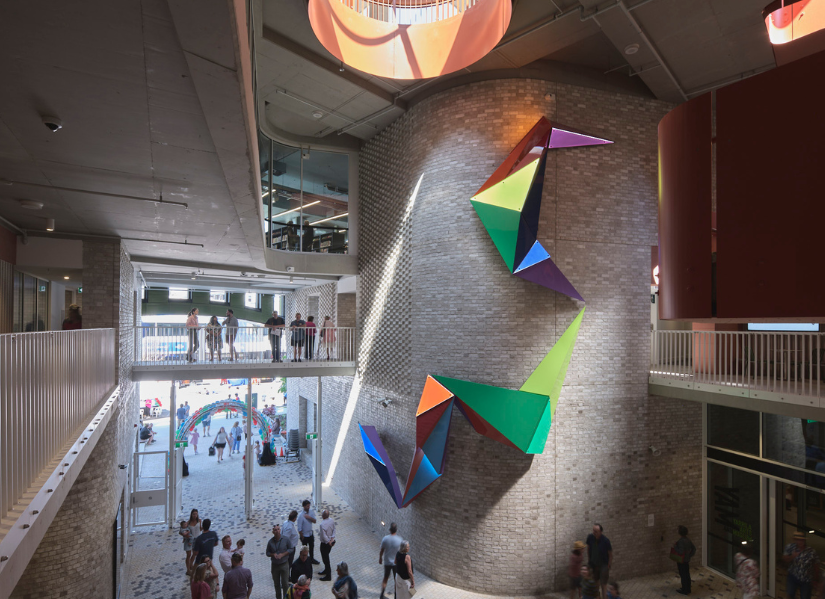
'Let them feel the light' Yarilla Place, NSW by Emma Coulter. Photo by Martin Siegner.
Public art does more than fill space, it shapes how we experience, understand and connect with the places we inhabit. From railway platforms and historic gaols to city streets emerging from lockdown, it has the power to bring hidden stories to the surface, challenge perspectives and foster a shared sense of belonging. For artists working in the public realm, every site offers an opportunity to translate history, culture and identity into something both deeply local and widely resonant.
For QUT alumni working across Brisbane and beyond, this practice is not only about aesthetics, it’s about meaning. Whether layering sound and memory into the walls of Fortitude Valley Station, projecting forgotten histories onto the architecture of Boggo Road Gaol, tracing migrant experiences across continents, or responding to collective resilience in a post-pandemic city, their work reveals how public art can turn everyday environments into powerful sites of encounter. These projects remind us that the stories embedded in our communities, sometimes overlooked, sometimes uncomfortable, are essential to understanding who we are.
At its best, public art invites participation and reflection. It disrupts the familiar, sparks curiosity and creates shared moments that cut across differences in age, background and experience. It can draw people together, encourage dialogue and even reshape how we move through and value public spaces. In a time when connection can feel increasingly fragmented, these works demonstrate that art in the public realm remains one of the most accessible and unifying cultural forces we have.
Through the perspectives of QUT alumni Jennifer Marchant, Georgie Pinn, Sam Cranstoun and Emma Coulter, this article explores how public art not only reflects community but actively builds it.
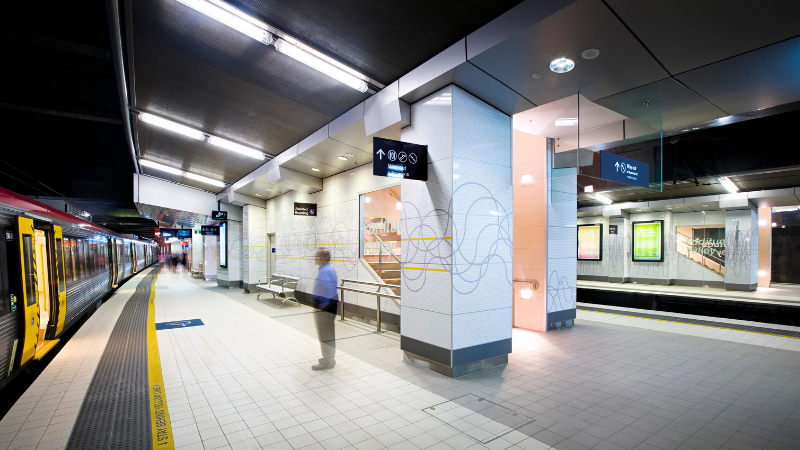
Jennifer Marchant
Public artworks often become part of people’s everyday routines rather than destinations in themselves. How do you design for works that are encountered repeatedly over time?
A robust idea should underpin the work. Having a variety of viewpoints also helps. And utilising the changing daily light and shadow contribute to making the work appreciated over time. Landlines, the artwork at 53 Albert Street, is one example of an idea that stands the test of time as it democratises the view of a high rise building allowing the pedestrian to appreciate a wider view. Its large scale representation of Cunningham’s Gap, the discovery of which allowed the establishment of Brisbane, also enhances the daily experience.
You regularly collaborate with architects, engineers and fabricators. How does collaboration expand or challenge your original ideas?
A respect for all these specialties is essential. A good relationship requires this to be reciprocal too. Listening and assessing the information that is shared. My task is to ensure that my idea is feasible. Discussion with experts and collaborators guides the process of material selection, fabrication and installation, making sure the artwork meets regulations, budget and maintenance. The key thing within this process is for me to advocate for the work to retain its integrity.
Read Jennifer Marchant's full Alumni Spotlight article.
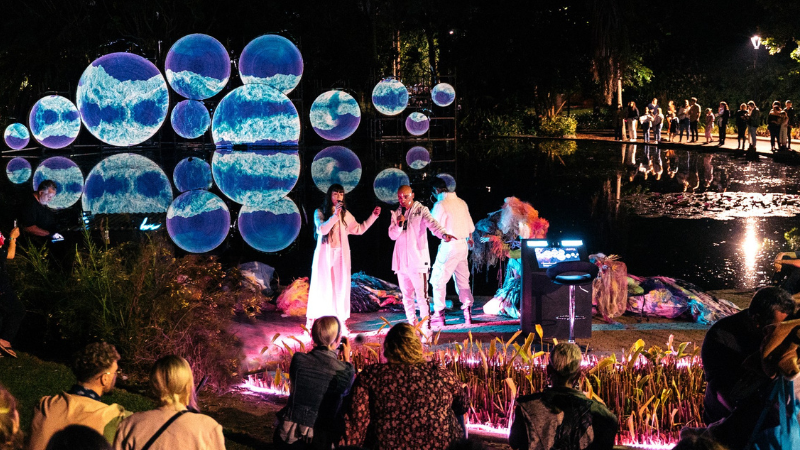
Georgie Pinn
How do site, architecture, and existing cultural context influence your storytelling approach in public space projects?
For me, the site is always the first source of inspiration. Long before immersive technology became a common language, I was making site-responsive installations in places like Boggo Road Gaol, beneath Centenary Pool, and in warehouse spaces in Fortitude Valley. Architecture holds memory, its history, people, tensions and atmosphere often provide the script. My role is to listen to that context and create an experience that honours it, while allowing audiences to discover meaning on their own terms and at their own pace.
What advice would you give graduates aiming to build sustainable careers in immersive experience design and creative technology today?
Start with the idea, not the technology. Technology changes constantly, but a strong human idea, something people can feel, understand and participate in, will carry across platforms. Test early, even if the first version is only an animated visual, a sound piece, a paper prototype or a simple interaction with friends. If the world you are building makes you want to play, explore or feel something, that is usually a good sign it is ready to be opened up to others.
Read Georgie Pinn's full Alumni Spotlight article.
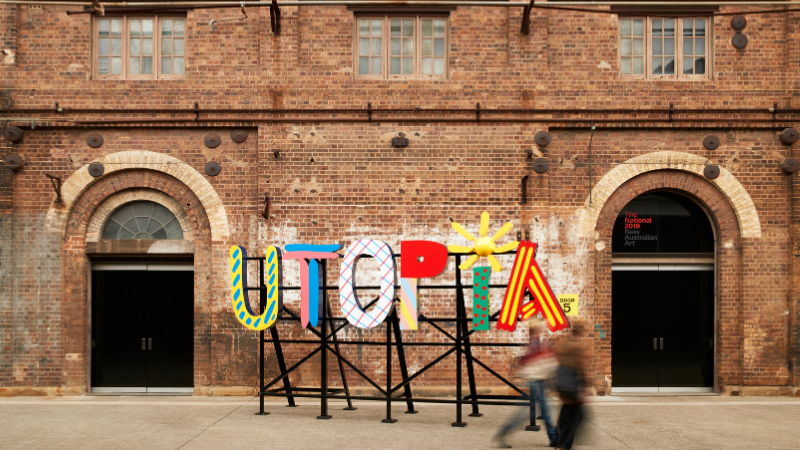
Sam Cranstoun
How do you balance conceptual rigor with accessibility when working in public-facing contexts?
This balance is something that I find so important in any artwork, especially those in public, high-visibility arenas. I have never liked art that feels exclusive or exclusionary. It is far more interesting to me to make a work that can be appreciated by a number of different people on a number of different levels. When making work in these contexts, my goal is to make something that is visually engaging, that may bring some joy or wonder or simply break up the urban monotony for a passerby, but ideally I hope that initial aesthetic hook leads some people to dig further, find out more - and in a perfect world, that conceptual context grows or deepens their appreciation of the work.
You’ve produced large-scale public works, including the Cultural Centre Busway ceiling artwork. What excites you about working in spaces people move through every day?
Walking is the best time for me to think about my work, to problem solve, refine ideas and imagine bold new projects. Regardless of whether I’m walking the dog, walking to work, or locating myself within a new city, I’m constantly looking and absorbing and exploring. When I think about developing works for a public context, I try to picture myself as a stranger seeing it for the first time, imagining whether my fleeting attention would be grabbed by the work, whether it would prompt my curiosity and lead me to find out more, and most importantly, whether it would bring joy or excitement.
Read Sam Cranstoun's full Alumni Spotlight article.
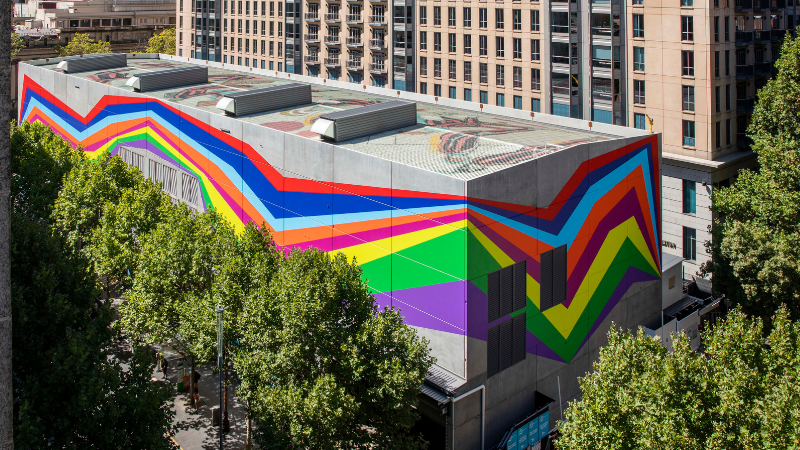
Emma Coulter
Public artworks often become part of people’s everyday lives. How do you navigate the responsibility of making work that must coexist with community, infrastructure and time?
Through my art practice I am interested in taking art out of its usual institutional or commercial context, and placing it into every day space; acting both as a democratic statement, and to enliven the placemaking potential of shared public space for everyone.
Public art carries a unique responsibility because it exists within shared civic space and becomes part of people’s daily routines and memories. I try to create work that is visually engaging but also generous, work that can be encountered in multiple ways over time. This involves balancing artistic ambition with careful consideration of site, accessibility, longevity and the social and cultural contexts in which the work will exist.
How do you see public art contributing to community connection, inclusion, and a shared sense of place?
I truly believe that public art has the power to transform everyday environments into spaces of encounter, reflection and shared experience. It can create moments of recognition and connection across diverse communities by contributing to the emotional and cultural identity of a place. I think public art is most successful when it encourages openness and participation, when people feel a sense of ownership, curiosity or belonging in relation to the work and the spaces it inhabits.
Read Emma Coulter's full Alumni Spotlight article.
Author

Jenni is an innovative communications, marketing and engagement specialist with fifteen years of industry experience. She is also a proud QUT alumnus with a Bachelor of Creative Industries (Interdisciplinary).