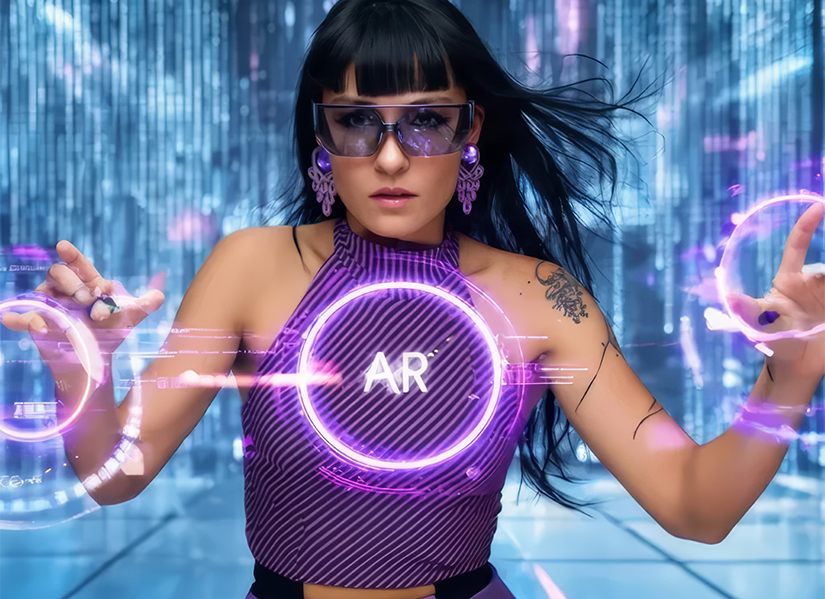
Public art has the power to make people feel seen, connected, and at home in their city — and few understand that better than Georgie Pinn. The QUT alumnus and Founder of immersive experience studio Interactor has spent her career designing large-scale interactive works that put communities at the centre, from First Nations-led collaborations to the Brisbane 2032 Olympic Vision launch.
What early creative or technical experiences set you on the path to immersive and interactive design?
I’ve always been fascinated by user-driven experiences and the human condition, how people respond when they are invited to become part of a story rather than simply watch it. One of my earliest interactive public projects was Electric Puppet, commissioned by Fed Square in Melbourne, where children created their own robot characters from collage parts and then brought them to life through body movement. That project showed me how powerful personalisation and play can be, especially when used for education, creativity and public engagement.
What is your job, and what does a typical day look for you?
I’m the Founder and Director of Interactor, an immersive experience studio creating audience-responsive public artworks, cultural tourism experiences and large-scale interactive installations. We work across projection, spatial sound, real-time systems, motion capture and emerging technologies, but always with the human experience at the centre. A typical day might move between concept development, experience design, content creation, client conversations, team direction and problem-solving the many practical realities of bringing ambitious public works to life.
What aspects of immersive experience design do you find most challenging—and most rewarding—at a professional level?
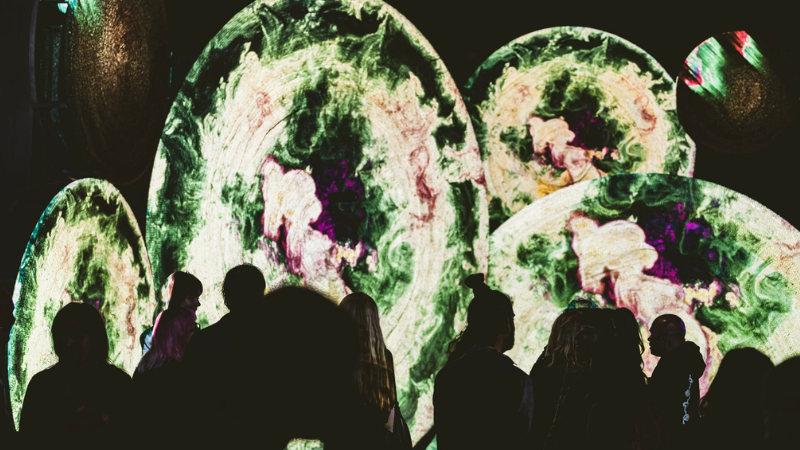
The most challenging part is often the practical reality of delivering large-scale interactive technology in public space. Safety, engineering, access, approvals, weather, install times and audience flow all shape what is possible, especially with temporary works. The most rewarding part is seeing a diverse public step into the work emotionally, when people cross that threshold from spectator into participant, and you can see them enter a kind of flow state where they feel creative, connected and present.
How has founding and leading Interactor changed the way you think about creativity versus responsibility as a practitioner?
Founding Interactor has taught me that creativity and responsibility are completely intertwined. As an artist, you might begin with instinct, emotion and imagination, but as a director you also have to think about budgets, safety, teams, stakeholders, timelines and long-term sustainability. It has made me more disciplined and more aware of how much care sits behind meaningful public experiences. The challenge is protecting the creative spark while building the structure needed to deliver it well.
How do site, architecture, and existing cultural context influence your storytelling approach in public space projects?
For me, the site is always the first source of inspiration. Long before immersive technology became a common language, I was making site-responsive installations in places like Boggo Road Gaol, beneath Centenary Pool, and in warehouse spaces in Fortitude Valley. Architecture holds memory, its history, people, tensions and atmosphere often provide the script. My role is to listen to that context and create an experience that honours it, while allowing audiences to discover meaning on their own terms and at their own pace.
Looking back, which project most clearly marked a shift in your confidence, scale, or ambition as a creative director?
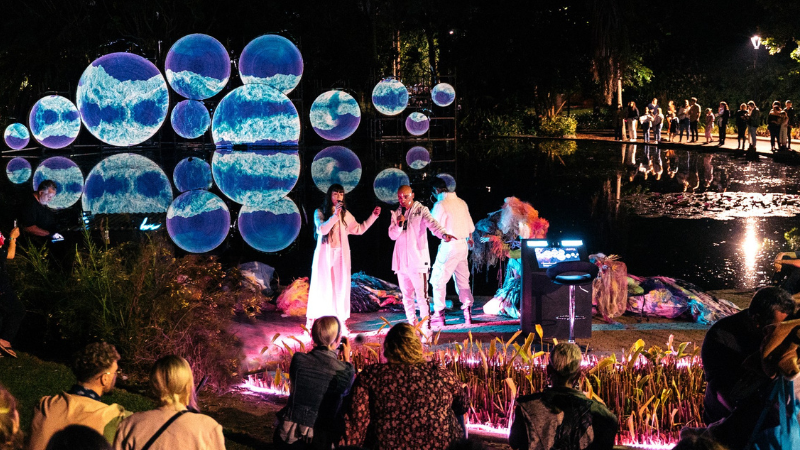
A major shift was delivering a large-scale interactive floor work for an outdoor light festival in Qatar, directed by Kendyl Rossi. The audience could create their own responsive firework and music experience simply by stepping across the floor, so it operated as both a playful public artwork and a large-scale spectacle. The scale, technical complexity and international production environment raised the bar for me. It gave me confidence that my work could translate across cultures, languages and major public-event contexts.
What advice would you give graduates aiming to build sustainable careers in immersive experience design and creative technology today?
Start with the idea, not the technology. Technology changes constantly, but a strong human idea, something people can feel, understand and participate in, will carry across platforms. Test early, even if the first version is only an animated visual, a sound piece, a paper prototype or a simple interaction with friends. If the world you are building makes you want to play, explore or feel something, that is usually a good sign it is ready to be opened up to others.
What is one skill that you couldn’t live without and why?
Empathic design is the skill I couldn’t live without. You need to be able to read people, imagine how they will move through a space, and understand what might make them feel safe, curious, seen or transformed. Sound design and music are also essential to my practice, because sound anchors the emotional tone of an experience before the audience has even understood it visually. It is often the first gateway to connection.
Can you share a project where your work reflected local history, culture, or identity—and why that mattered?
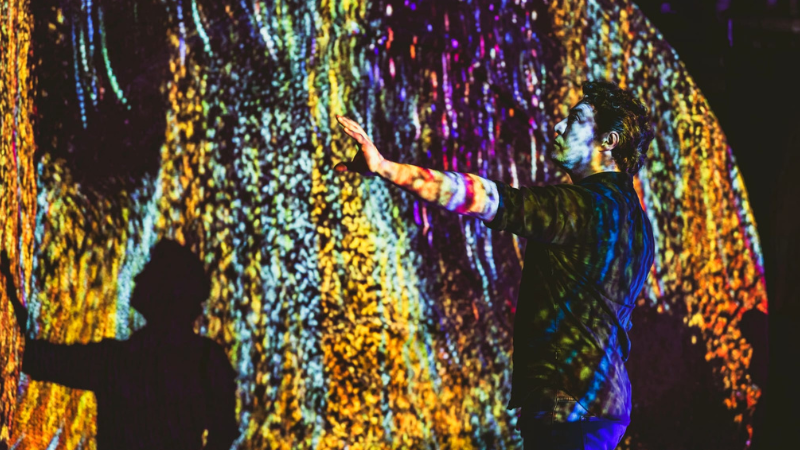
While studying postgraduate visual arts at QUT, I also worked in the AV department and had access to projection technology. A modest arts grant allowed me to create an installation at Boggo Road Gaol using prisoner archives to tell stories of people who had been incarcerated for being different or not fitting within social norms. Their faces were projected at large scale back onto the architecture, alongside performance, documentary, theatre and installation elements throughout the site. It mattered because the work connected local history to a broader question: how do people become imprisoned by identity, judgement or the body itself?
How do you see public art contributing to community connection, inclusion, and a shared sense of place?
Public art can create shared moments that cut across age, background, language and culture. In my work, the audience is often invited to become a co-creator, so the experience is not just something placed in a community, but something shaped by the people moving through it. That can help people feel more connected to themselves, to each other and to the places they inhabit. It also has real value for the night-time economy, because meaningful public artworks can draw people into spaces, extend dwell time and create dynamic memorable cultural experiences that belong to a city.
You can connect with Georgie on LinkedIn or via her website.
Author

Victoria believes that every alumnus has a story worth telling. Naturally curious, she asks the thoughtful questions others often don't — creating stories that connect, inspire and reflect the depth of the QUT Alumni community.