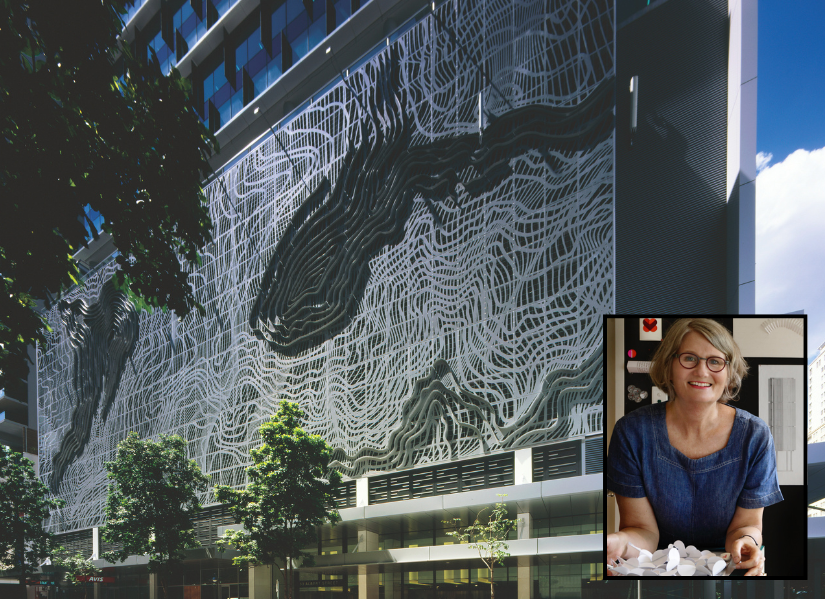
Public artwork by Jennifer Marchant titled 'Landlines' at 53 Albert Street, Brisbane. Photo by Scott Burrows.
Jennifer Marchant’s work sits at a compelling intersection of art, design and architecture, transforming everyday spaces into layered and engaging experiences. A QUT Interior Design graduate, Jennifer has forged a distinctive path beyond traditional commercial practice, using the discipline as a foundation to pursue integrated artwork for the built environment.
Drawing on foundations in visual communication and a deep curiosity about place, her process is grounded in research, curiosity and a passion for translating the histories and rhythms of a place into enduring, site-responsive works.
Working collaboratively with architects, engineers and fabricators, she balances creative vision with technical expertise to deliver projects that retain their integrity while meeting practical demands. The result is a body of work that enriches public spaces, embeds local narratives and contributes meaningfully to a shared sense of place.
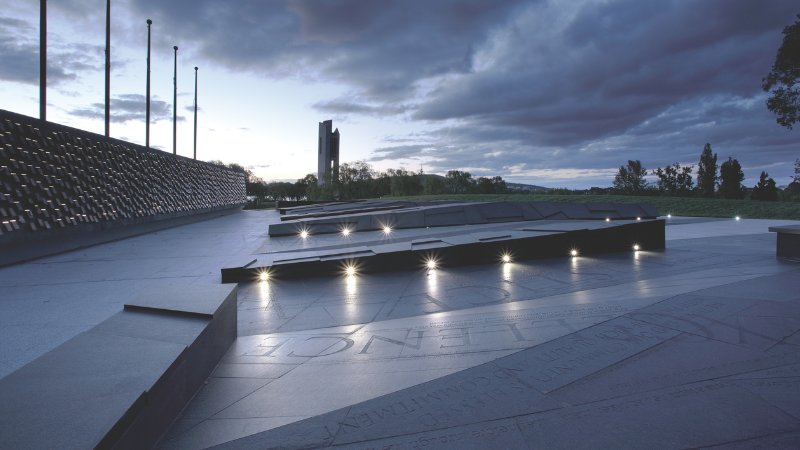
Can you tell us about your career journey since graduating from QUT?
I graduated from Interior Design with a confidence that my existing skills established through an earlier degree in Visual Communication enabled me to follow my preoccupation for three dimensional design. I was not interested in the usual path of commercial interior design careers but the freedom it gave me to communicate my ideas for 3D projects that could become part of the built environment. The interior design degree has successfully allowed me to follow this path.
Many of your projects are deeply site-responsive, shaped by history, context and daily human movement. How do you begin translating research about a place into visual form?
Research leads the way. It triggers the imagination. My curiosity is satisfied with each project’s research and the people I meet and their knowledge. Out of that comes clarity. Something reveals itself that I want to pursue further as to how it can become central to an idea. That’s when drawing and rough model making become integral to my process.
Light and shadow play a significant role in your work. How do these shifting elements influence the way you design for the built environment?
Light and shadow are the moving third element. They create the differing experience which is particularly important when the work is essentially static when integrated into a built form, either a building or a landscape.
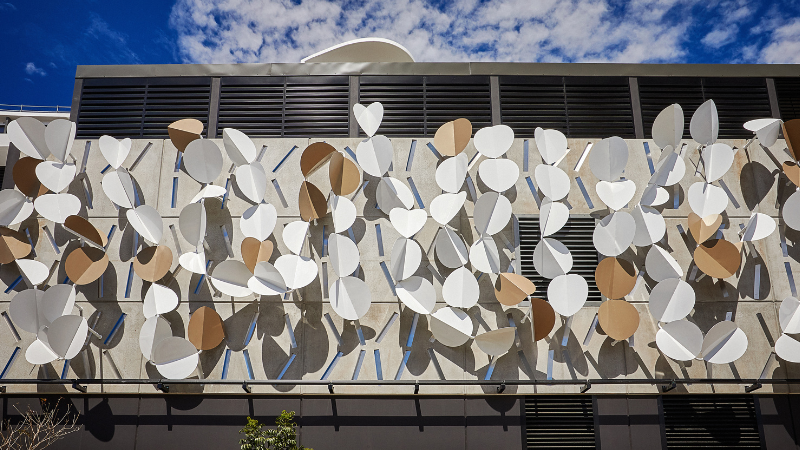
Public artworks often become part of people’s everyday routines rather than destinations in themselves. How do you design for works that are encountered repeatedly over time?
A robust idea should underpin the work. Having a variety of viewpoints also helps. And utilising the changing daily light and shadow contribute to making the work appreciated over time. Landlines, the artwork at 53 Albert Street, is one example of an idea that stands the test of time as it democratises the view of a high rise building allowing the pedestrian to appreciate a wider view. It’s large scale representation of Cunningham’s Gap, the discovery of which allowed the establishment of Brisbane, also enhances the daily experience.
You regularly collaborate with architects, engineers and fabricators. How does collaboration expand or challenge your original ideas?
A respect for all these specialties is essential. A good relationship requires this to be reciprocal too. Listening and assessing the information that is shared. My task is to ensure that my idea is feasible. Discussion with experts and collaborators guides the process of material selection, fabrication and installation, making sure the artwork meets regulations, budget and maintenance. The key thing within this process is for me to advocate for the work to retain it’s integrity.
Can you share a project where your work reflected local history, culture, or identity—and why that mattered?
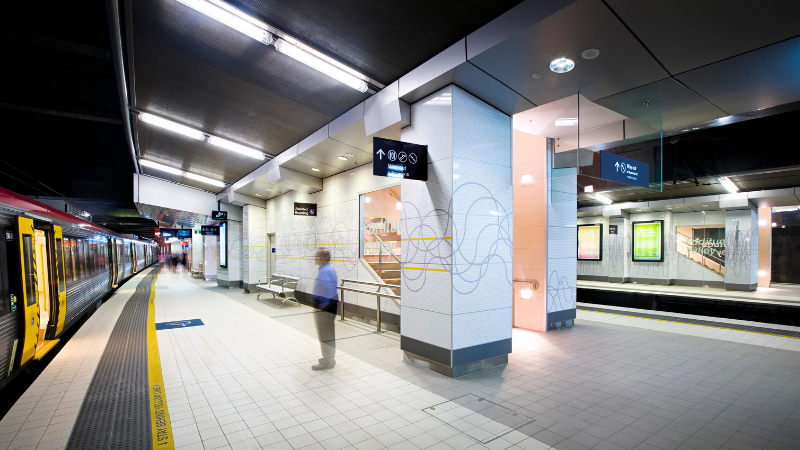
Fortitude Valley Railway Station. This location has been central to a long and highly revered contribution to the Australian music industry. It is where numerous bands rehearsed and played to audiences at a time when anarchy and difference were demonised. It is extremely culturally significant to Brisbane. Text from Andrew Stafford’s book Pig City (UQP) is integrated into the artwork which covers the walls of four platforms, the words giving commuters an insight into a world they might not know or a reminder of a familiar time. The layered imagery visualises sound, loud and quiet, high and low, but always different.
Thought Leadership article question
How do you see public art contributing to community connection, inclusion, and a shared sense of place?
Artwork in the public realm can be many things for different people. If it changes the experience of a space it has made a contribution and added value. The point is that it has enriched a space and perhaps said something worth hearing, visually.
What advice would you offer emerging practitioners interested in working at the intersection of art, design and architecture?
There needs to be an existing passion for ideas, materials, working at scale and an understanding that others greatly assist and are essential in your projects becoming a reality. There is also a great responsibility that knowing your work is going to be long-lasting and effect the experience of others, often on a daily basis.
What is one skill that you couldn’t live without and why?
Model making – hands on, using paper, card, balsa, ply or anything that is going to embody the vision I have. It is the only way to understand the three dimensional effect of work. Drawing is an essential means of recording an idea but model making tests its success or failure – and sometimes elevates an idea by seeing the unexpected. It’s a very satisfying process.
Author

Jenni is an innovative communications, marketing and engagement specialist with fifteen years of industry experience. She is also a proud QUT alumnus with a Bachelor of Creative Industries (Interdisciplinary).