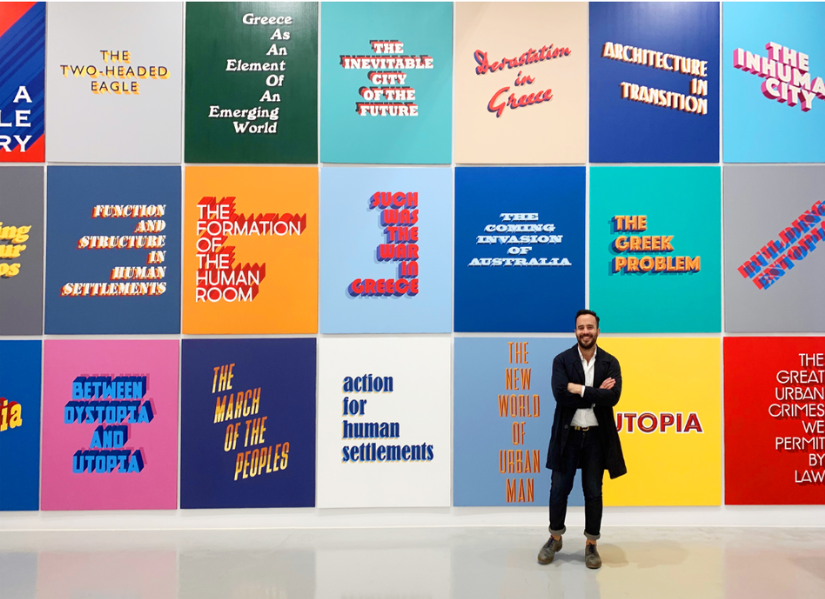
Since graduating from QUT, Sam Cranstoun he has built a nationally recognised career as a full-time artist, exhibiting widely and creating works that move fluidly between studio, gallery and public space. Grounded in themes of landscape and imagined environments, his practice is as much about research and lived experience as it is about visual form, often drawing out overlooked histories and giving voice to communities that sit just outside the frame.
Whether developing large-scale installations or works encountered in the flow of everyday life, Cranstoun is motivated by the idea that art should be both conceptually rich and widely accessible—something that sparks immediate curiosity while rewarding deeper engagement over time. His projects invite audiences to pause, reflect and reimagine the spaces they move through, transforming the ordinary into something layered with meaning. As his work continues to gain recognition, including as a finalist in major national prizes, Cranstoun remains committed to making art that connects—creating moments of joy, reflection and shared understanding in an increasingly complex world.
Can you tell us about your career journey since graduating from QUT?
Since graduating, I have exhibited widely, participating in group shows and mounting a number of solo shows across Australia, and I lectured in visual arts for a number of years as well. To be able to call myself a full time artist feels like such a huge achievement to me, so I relish every opportunity to make and exhibit.
Themes of landscape, place, and imagined environments recur in your work, including your contribution to The National at Carriageworks. How do these ideas evolve from site to site?
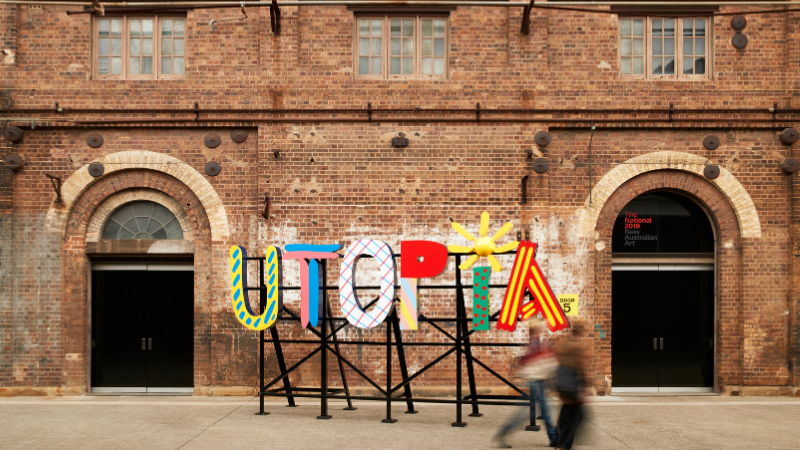
When undertaking a large scale work or body of work, I really want to address the themes and ideas that have been occupying my studio work as well as the context of the site or space I’m exhibiting in. For the work UTOPIA, exhibited at Carriageworks for The National, I was interested in foregrounding voices that were often silenced, thinking about migrant groups and working class communities that miss out on representation. The UTOPIA work was part of a much bigger research project, but I was glad that it could also speak to the decades of silent labour that took place in that space.
How do you balance conceptual rigor with accessibility when working in public-facing contexts?
This balance is something that I find so important in any artwork, especially those in public, high-visibility arenas. I have never liked art that feels exclusive or exclusionary. It is far more interesting to me to make a work that can be appreciated by a number of different people on a number of different levels. When making work in these contexts, my goal is to make something that is visually engaging, that may bring some joy or wonder or simply break up the urban monotony for a passerby, but ideally I hope that initial aesthetic hook leads some people to dig further, find out more - and in a perfect world, that conceptual context grows or deepens their appreciation of the work.
You’ve produced large-scale public works, including the Cultural Centre Busway ceiling artwork. What excites you about working in spaces people move through every day?
Walking is the best time for me to think about my work, to problem solve, refine ideas and imagine bold new projects. Regardless of whether I’m walking the dog, walking to work, or locating myself within a new city, I’m constantly looking and absorbing and exploring. When I think about developing works for a public context, I try to picture myself as a stranger seeing it for the first time, imagining whether my fleeting attention would be grabbed by the work, whether it would prompt my curiosity and lead me to find out more, and most importantly, whether it would bring joy or excitement.
Can you share a project where your work reflected local history, culture, or identity—and why that mattered?
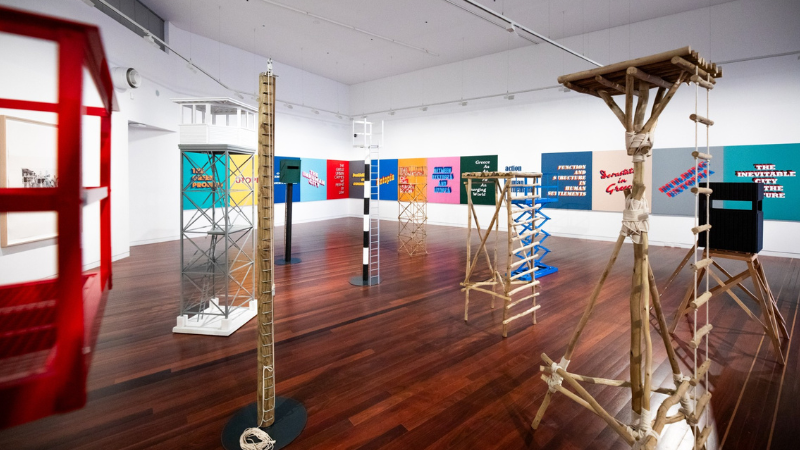
In 2019 and 2020, I presented two exhibitions that were all about the life of a Greek migrant who moved to Brisbane in the 1950s. He wasn’t able to attain the career success he was striving for in Australia, and eventually moved back to Greece becoming an incredibly accomplished and world-renowned architect and town planner. This project, in the lead up, felt so dangerously narrow - I was so worried that no one would respond to something so specific. But what I realised was his story was a conduit for the countless stories people lived with every day, about their experience, or that of their family. I put a lot out there in those works, but what really amazed me was how much I got back.
How do you see public art contributing to community connection, inclusion, and a shared sense of place?
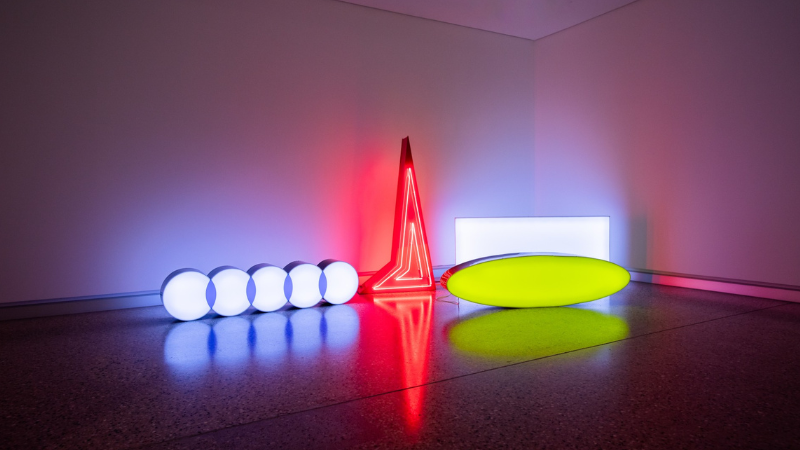
The way we occupy and think about space has changed so much in recent years. With the growing unaffordability of housing and the way we were all made acutely aware of the space we lived in, worked in and moved through during the pandemic, I see public art as having a unique opportunity to provide sanctuary, respite and joy. Art education is something that is valued less and less in an increasingly volatile and unstable world, so public spaces need to be where people can think, use their imagination, and engage with the more fantastical side of the world we live in.
Your work is held in the QUT Art Collection alongside several major public collections. What does it mean to you to have your work live on in these institutional contexts?
I often think about an artwork having two lives. The first one is for me, the development of the work, the trial and error, the meditative process of making it or refining it. The second life is the one that starts when it leaves the studio or enters the public realm. I am so lucky to have that first life all to myself - but in many ways I’m the only person not entitled to that second life. I can’t control how people see the works, how they respond to them, what meaning they take from them. At first that lack of control was something I struggled with, but now it thrills me. I love the idea of a work being seen, being lived with, being scrutinised, being revisited, being joked about. I love it all. That second life might not be something I fully grasp, but it’s something I am exceptionally grateful for.
Congratulations on being announced as a finalist in the Wynne Prize. What does this moment represent for you personally and professionally?
Thank you! These prizes, more than anything, are so much fun. They are easily the most commercial and high profile and mainstream event on the art calendar, which can make you queasy at times… but at the end of the day they are all about the artists. It is so nice to have an opportunity to catch up with friends, meet new artists, talk to people who have been a finalist countless times, and those who are finalists for the first time. It was nearly 20 years ago that I first showed in these prizes, so there’s a nostalgia this time around that I quite enjoyed. And one of my former students was also included in this year’s prize, which was a great feeling as well.
You were also the youngest finalist in the Archibald Prize in both 2007 and 2009 respectively. Looking back, how did that early recognition shape your confidence, expectations, or trajectory as an artist?
It was the best thing and the worst thing in some ways! The first time I got in, I hadn’t even started my degree - so things felt slightly out of order. For a while I thought it was the most important thing in the art world, and then I did a hard swing back to thinking it was something I wanted nothing to do with. But I have a much healthier attitude towards it now. I don’t take it too seriously, but I enjoy it. And I understand that I wouldn’t have the career I have now without that experience.
What advice would you give to current QUT Visual Arts students aspiring to work at a national or public-art scale?
There are so many things that are key to a career in a national context and within public art - ambition, resilience, grace, resourcefulness - but I’m not sure which one I would single out as the most important. Like any industry, art relies on so many people, working in so many areas and specialised zones. It is so important to come up with the bravest and most exciting work you can think of, but it is also vital to listen to, work with, and be respectful of those around you, especially when their job feels like it’s reining in an idea. In a public art context specifically, it is easy to see every engineering concern, every public safety requirement, every material limitation as a challenge to the creative process, but what really matters is how you respond to them with creativity and generosity - and with a thick skin if you can manage!
You can follow Sam Cranstoun on Instagram
Author

Jenni is an innovative communications, marketing and engagement specialist with fifteen years of industry experience. She is also a proud QUT alumnus with a Bachelor of Creative Industries (Interdisciplinary).