By Amanda Maslin, 14 July, 2025
Future-Proofing Careers: What AI, Cyber and Quantum mean for the next generation of tech talent
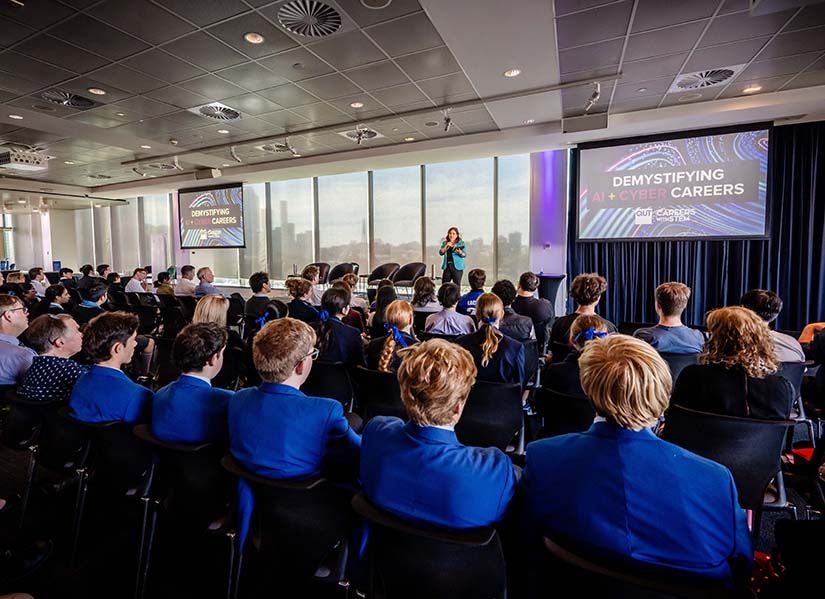
As artificial intelligence, cyber security, and quantum computing reshape the tech landscape, we sat down with IT experts across industry and academia to explore what these changes mean for the future workforce, and how students can prepare today for jobs that didn’t exist a decade ago.
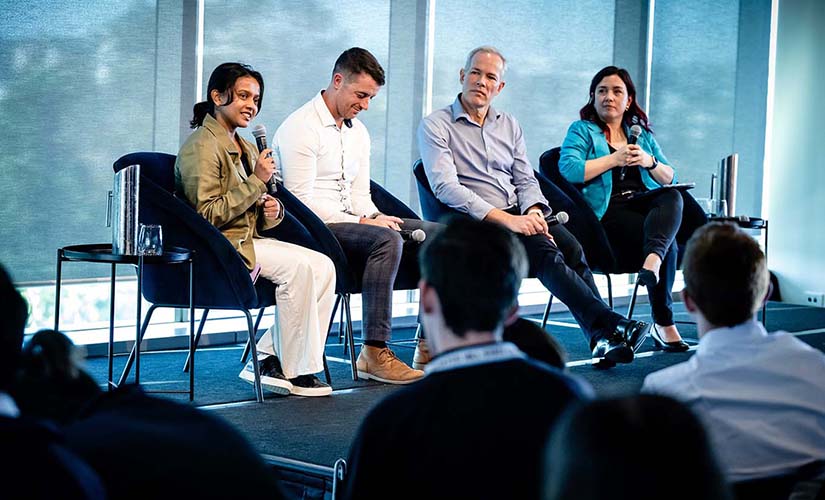
Meet the panel members:
- Professor Craig Costello (QUT cryptography researcher; 10 years of experience at Microsoft in Seattle)
- Jon Gooding (APAC Business Data Cloud Solutions Advisory at SAP)
- Bemali Wickramanayake (Senior Data Scientist, Flight Centre Travel Group; PhD Candidate at QUT)
AI is transforming every field
Dr. Craig Costello, cryptologist and cyber security expert at QUT, set the tone: ‘A breakthrough in AI doesn’t just influence one area. It transforms the whole field of human innovation.’
He noted that AI’s influence extends far beyond computer science, touching fields like biology, chemistry, and environmental science. The focus now is not only on creating AI specialists, but on equipping all graduates with the skills to use AI meaningfully in their chosen field.
Quantum and cyber security: The next frontier
Costello also highlighted the looming challenge of quantum computing: ‘The day a large-scale quantum computer is built, all of the cryptography we currently use is broken.’
This possibility has driven years of research into quantum-resistant algorithms. And for today’s students, it opens up both exciting and urgent career opportunities in cyber security and cryptographic engineering.
AI in industry: Complementing, not replacing
Jon Gooding, Data Specialist at SAP, spoke about the shift already underway across sectors: ‘AI is complementing current roles and creating entirely new ones. From mining to healthcare, businesses are forming AI specialist teams to innovate from the ground up.’
He shared how mining companies are using AI to interpret huge volumes of asset data—work that once required manual sorting by technicians. AI now accelerates that process, freeing up professionals to focus on strategy and decision-making.
Designing better workdays with AI
PhD student and Senior Data Scientist at Flight Centre Travel Group, Bemali Wickramanayake offered an insider view of AI in action: ‘I use AI to optimise processes, especially the parts of work people don’t enjoy. It’s not about replacing people, it’s about making their jobs better.’
In one case, her work helped a colleague transition from a repetitive, 7-day-a-week task into a new role with greater job satisfaction.
But the panel didn’t shy away from AI’s risks. Wickramanayake stressed the need for strong governance: ‘We are in a place where there are a lot of ethical dilemmas. Regulation is essential.’
She raised concerns about environmental impacts, copyright issues in training data, and the phenomenon of ‘hallucination:’ when AI tools generate plausible-sounding but incorrect information.
Watch the panel recording:
Will AI take my job? Or help me get one?
The question on many minds: will AI replace workers? Our panel’s consensus: AI will reshape jobs, not erase them.
‘AI will change your job, but it won’t eliminate the need for humans,’ said Gooding. ‘Think of it as an accelerator. It enhances what you do, especially if you know how to use it.’
Wickramanayake added: ‘Most jobs have a part we love and a part we hate. Why not let AI take the part we hate?’
Costello summed it up simply: ‘If you’re willing to learn AI and use it, you’ll be better at your job. If you ignore it, that’s when it might come for your role.’
Skills that matter most
If you’re eyeing a career in IT, Costello emphasised problem-solving over perfection: ‘You don’t need to be a maths whiz. Good communicators and people who enjoy breaking and fixing systems are thriving in cyber security.’
Whether it’s ethical hacking, AI ethics, data privacy, or LLM development, the demand is growing for professionals with a combination of technical skills, curiosity, and ethical awareness.
Study IT at QUT
Whether you're training to be a cyber security expert, a data scientist, or a creative innovator, QUT has the tools and training you need.
Our new Bachelor of IT degree has been co-designed with industry and prepares you for the high-impact roles shaping the future. Choose from one of seven new, industry-informed majors available for study from 2026, each designed to prepare you for the challenges of tomorrow's tech landscape:
Explore IT careers
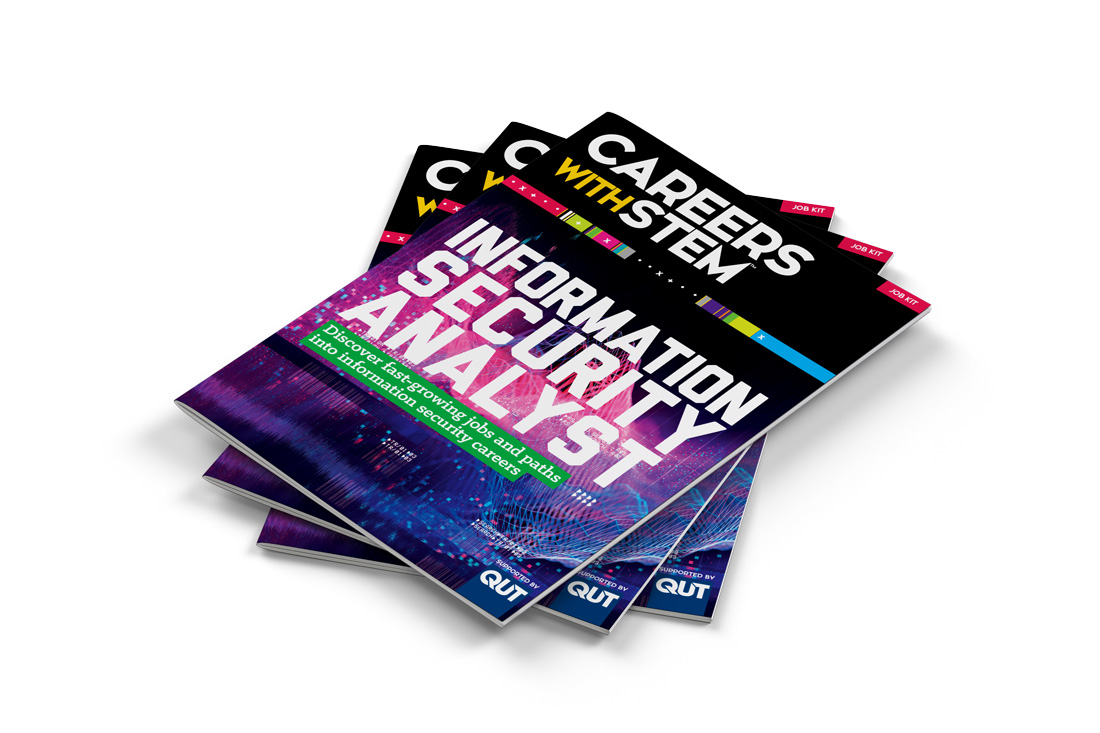
Explore what a job in IT is all about, read about real people working in the field and find out what you can do right now to set your career on the right path. Download our Careers with STEM job kits.
Download the digital transformation specialist job kit (PDF file, 2.8 MB)