Aerospace students fly high with global space community
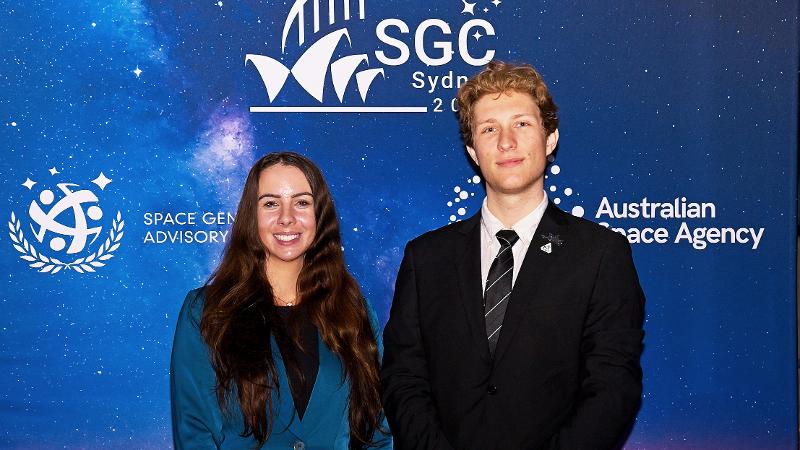
They’ve been named two of Australia’s outstanding young space leaders – and now QUT aerospace engineering students Tekkiya Larkins and Luc Fichera are mixing it with the world’s best at the International Astronautical Congress and Space Generation Congress this week.
Tekkiya and Luc are among seven young people who this month received 2025 Young Australian Space Leaders awards from the Australian Youth Aerospace Association (AYAA).
The awards include a full scholarship to the International Astronautical Congress (IAC), which this year is being hosted in Australia by Sydney.
This prestigious congress brings together the world’s space community, with a guest speaker list that includes astronauts and space agency directors.
Both Luc and Tekkiya began their engineering studies at QUT by doing a one-year Diploma in Engineering as a pathway program to the Bachelor of Engineering (Honours), majoring in electrical and aerospace engineering. They study at the School of Electrical Engineering and Robotics, within the QUT Faculty of Engineering.
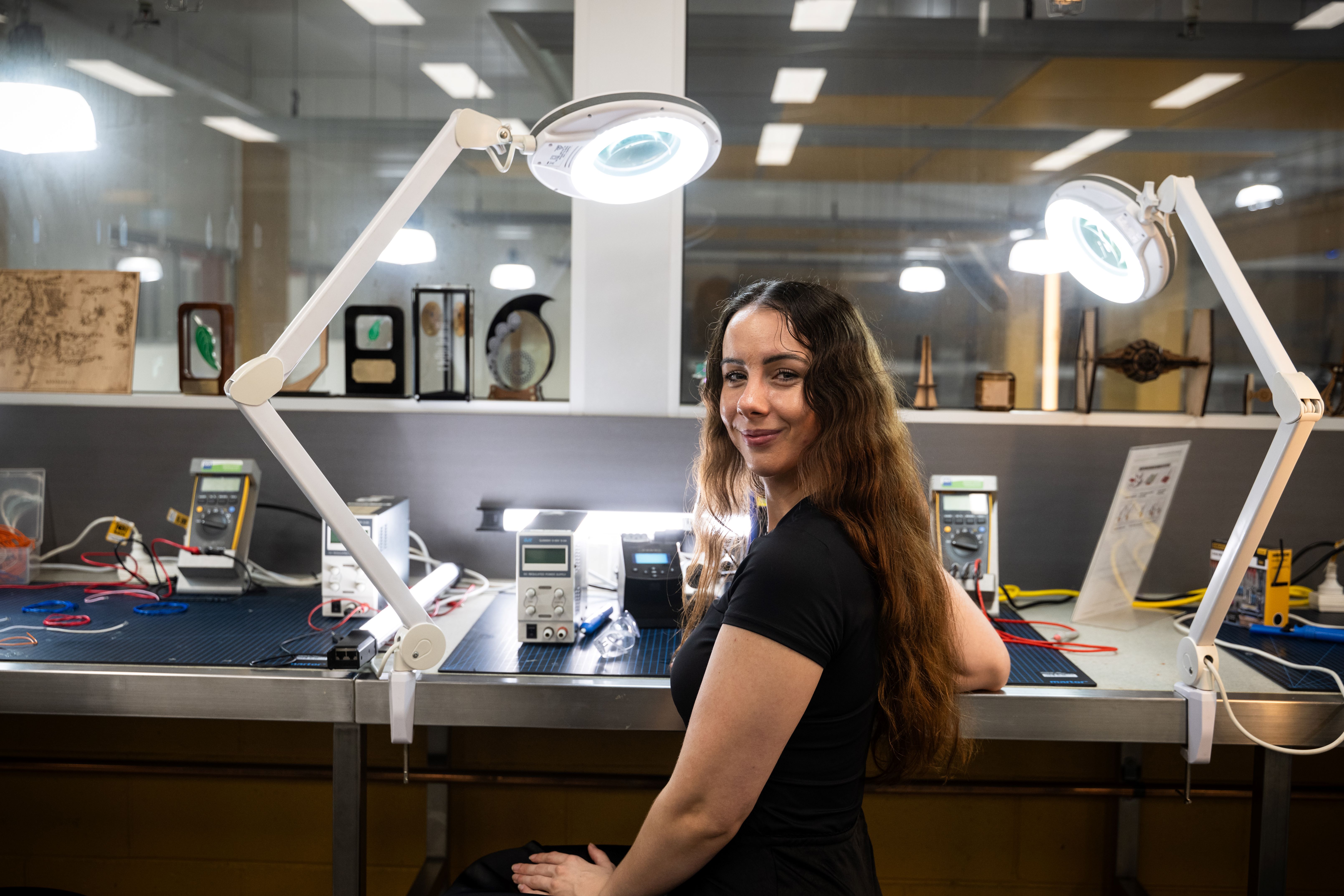
For Tekkiya, the congress will be an opportunity to present her own work to an international gathering.
She has had a paper accepted by congress organisers and is one of the speakers on Thursday’s program.
“My ultimate goal is to start my own space company and integrate renewable energy into space travel,” she said.
“At the congress, I will be speaking on renewable power in space missions – specifically, the potential of Vanadium-based batteries in future missions.”
Tekkiya said she was fascinated with aerospace engineering because it combined her love for space with real-world change.
“Australia is at a turning point in the space sector, and I want to be part of shaping its future and driving innovation from the ground up,” she said.
“After I graduate, I’d love to start out working in the space industry with companies like Gilmour Space, BlackSky, or Rocket Lab.”
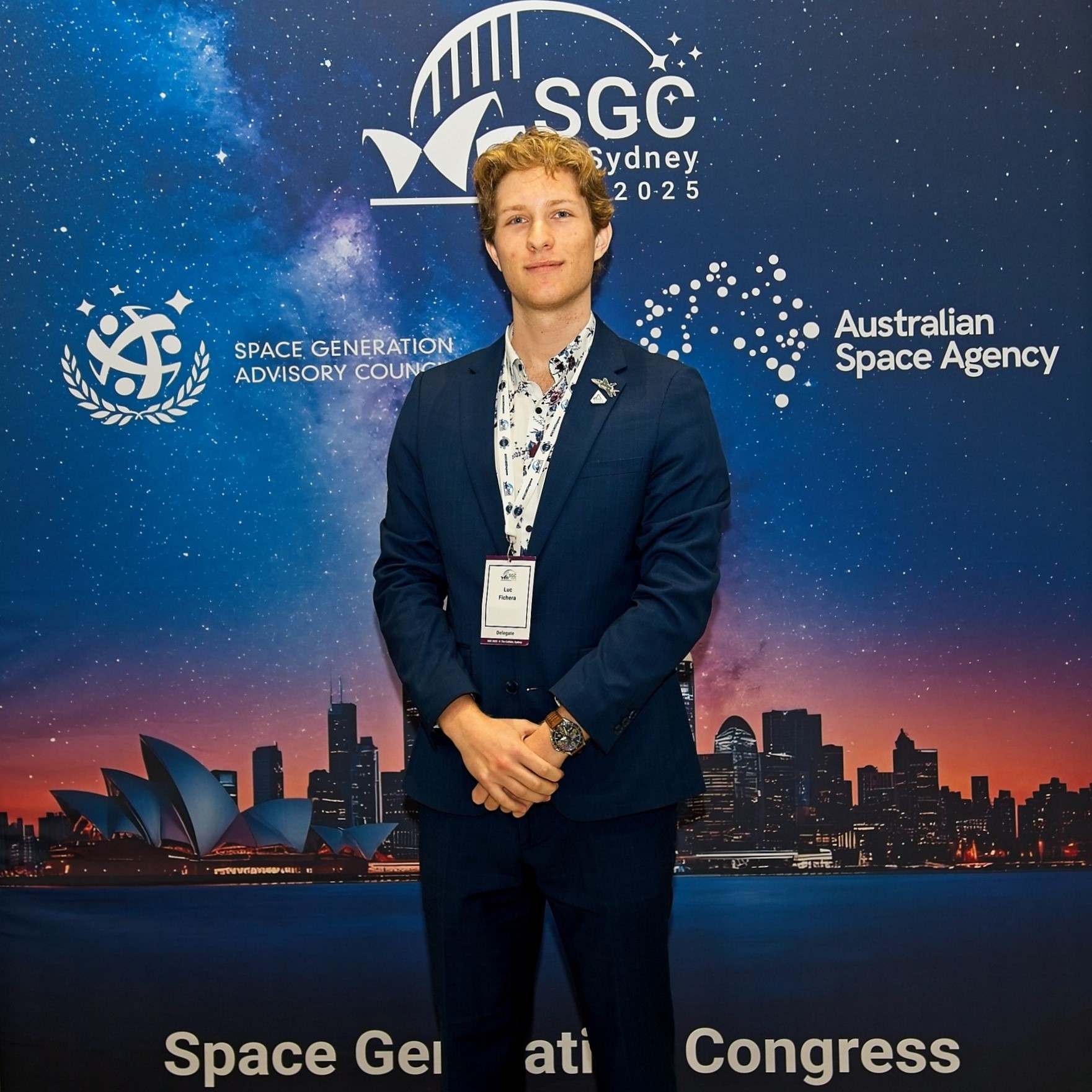
Luc is already getting plenty of real-world experience while a university student, including his leadership role with the QUT Aerospace Society (QUTAS) and a student satellite project.
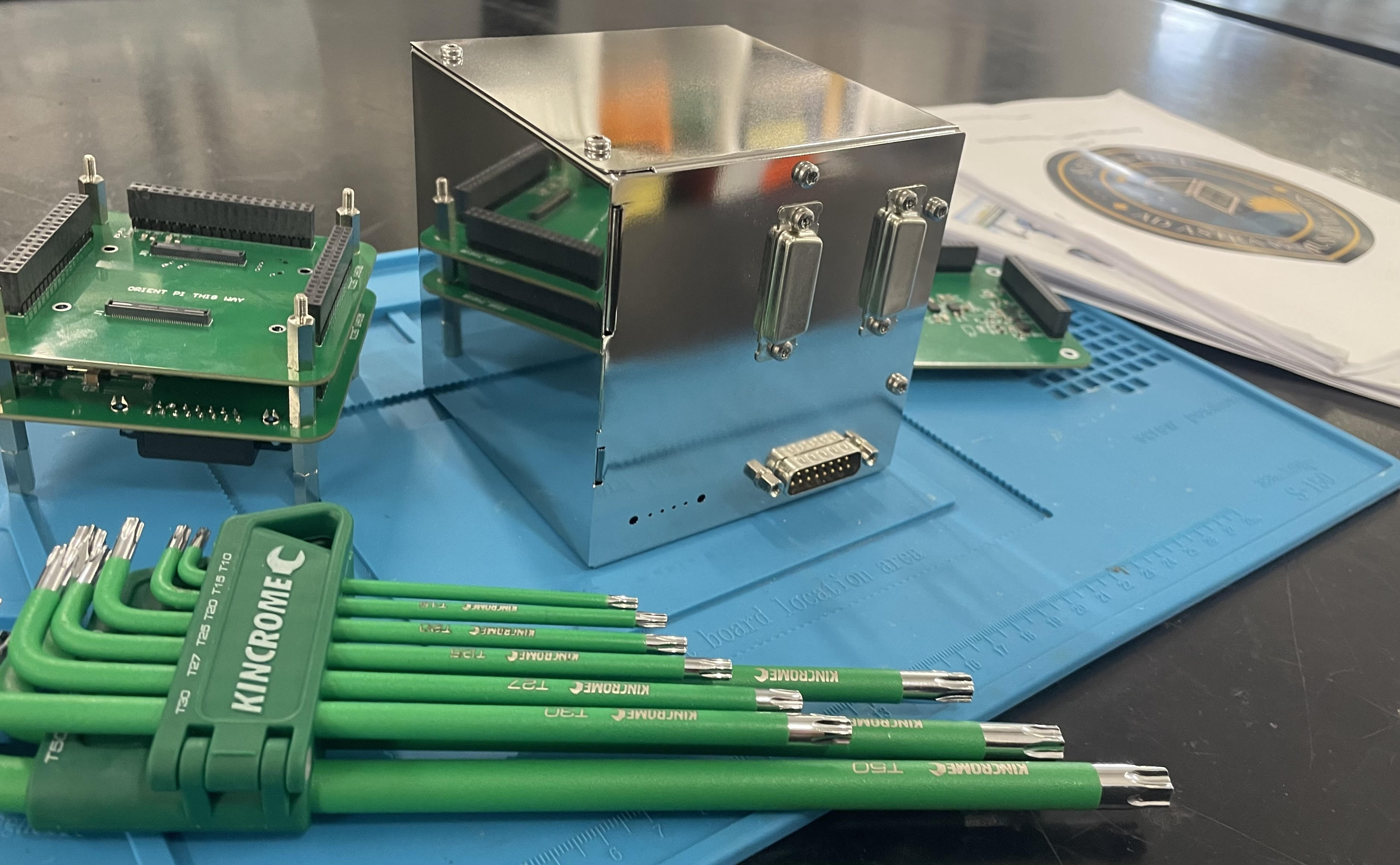
He leads the society’s Space Infrastructure Systems (SIS) program – a team that is building a shoebox-size, fully student-designed CubeSat satellite called SATypus-ONE.
The satellite will be sent into space on board a suborbital rocket scheduled to be launched next April by a private space company, the Swedish Space Corporation (SSC).
“SATypus-ONE represents the incredible potential of young Australian students and has opened an opportunity to redefine how custom payloads for industry can be launched, at a significantly reduced cost and timeline.” Luc said.
“It will collect a wide range of scientific data despite its small size. Onboard instruments will gather launch data using custom student-designed software and hardware, as well as conduct research on solar radiation.
“The flight is expected to be 15 minutes total, with seven of those minutes in micro gravity conditions.”
Luc said the student society project was an incredible educational platform.
“It gives students hands-on experience in a way that university studies alone simply can’t,” he said.
“Working on the project has provided direct communication with industry partners and allowed us to develop critical teamwork, communication, and problem-solving skills – skills that are valuable not only in engineering but across many fields.”
Luc said attending the IAC in Sydney was an opportunity to hear about humanity’s most recent aerospace and astronomical achievements – and learn from and network with people from leading international organisations such as NASA, ESA, and JAXA.
“During my time in Sydney, I will not only be attending the IAC but also the Space Generation Congress (SGC),” he said.
“I’m absolutely thrilled to do what I love most, talk all things space!
“I’ve always been fascinated by space, but I didn’t realise it could be a real career path until quite late in high school.
“Like many students, my grades in high school weren’t anything to write home about, so aerospace engineering initially didn’t feel like an option.
“That changed when I discovered QUT’s Diploma of Engineering, which provided an incredible pathway and transition into university life, and ultimately opened the door to pursuing my passion for aerospace.”
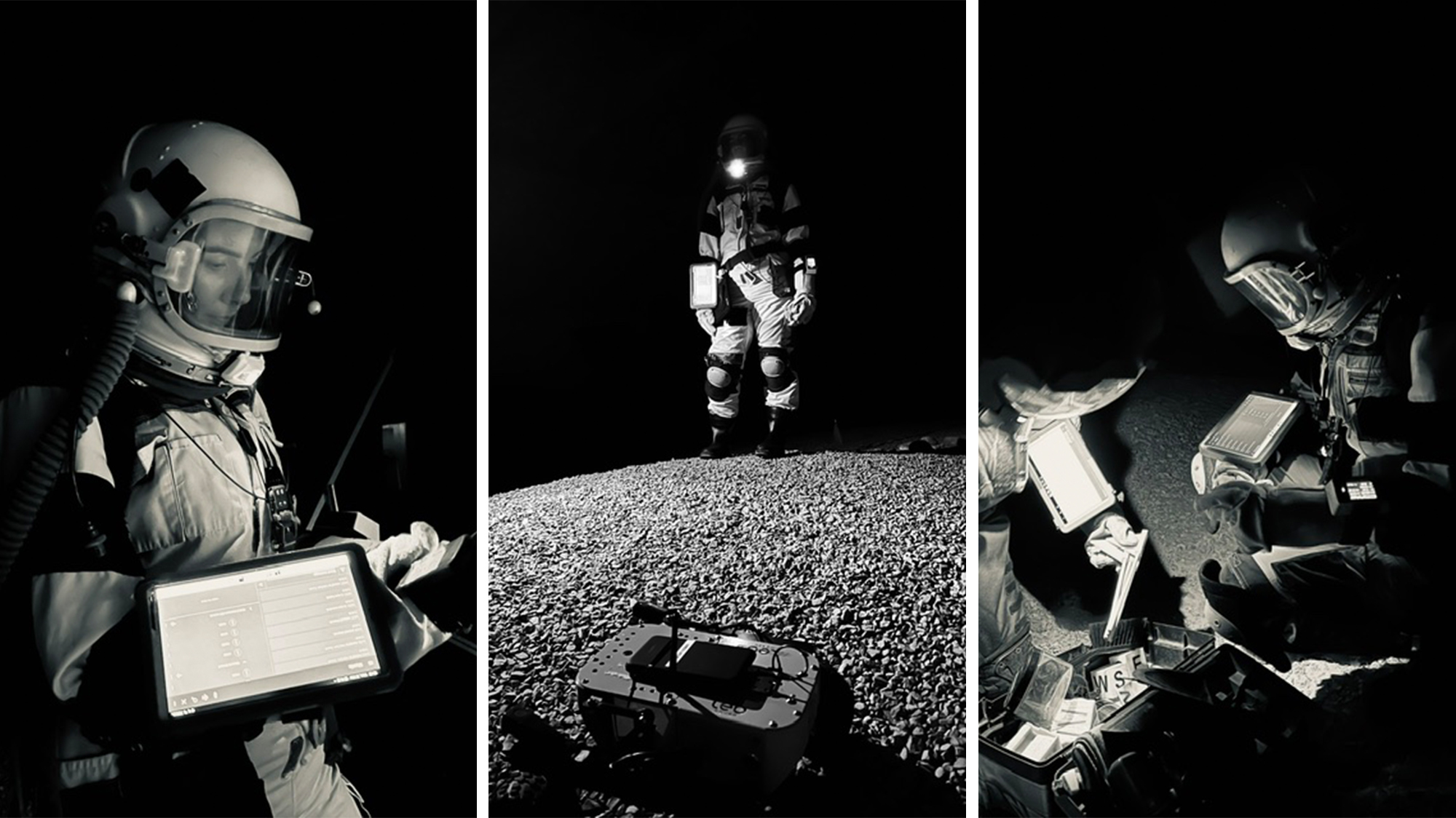
This year has been a huge year for Tekkiya, with her achievements also including being selected for a two-week analogue astronaut mission at the LunAres Research Station in Poland (pictured above).
“An analog astronaut is someone who takes part in simulations here on Earth that mimic space missions,” Tekkiya said.
“It’s as close to space as you can get without leaving the planet.
“The missions are designed to test human performance, team dynamics, and equipment in controlled, isolated environments. They play a huge role in preparing for future Moon and Mars missions.
“My role was executive officer which meant I was essentially second-in-command and responsible for managing the daily operations of the mission.”
Pictured at top of page: Tekkiya Larkins and Luc Fichera at the Space Generation Congress in Sydney on the weekend.
QUT Media contacts:
- Mechelle McMahon, media@qut.edu.au
- After hours, 0407 585 901 or media@qut.edu.au


