
Study level
- PhD
- Master of Philosophy

Faculty/School
Faculty of Science

Topic status
We're looking for students to study this topic.

Supervisors

- Position
- Professor
- Division / Faculty
- Faculty of CI, Education & Social Justice
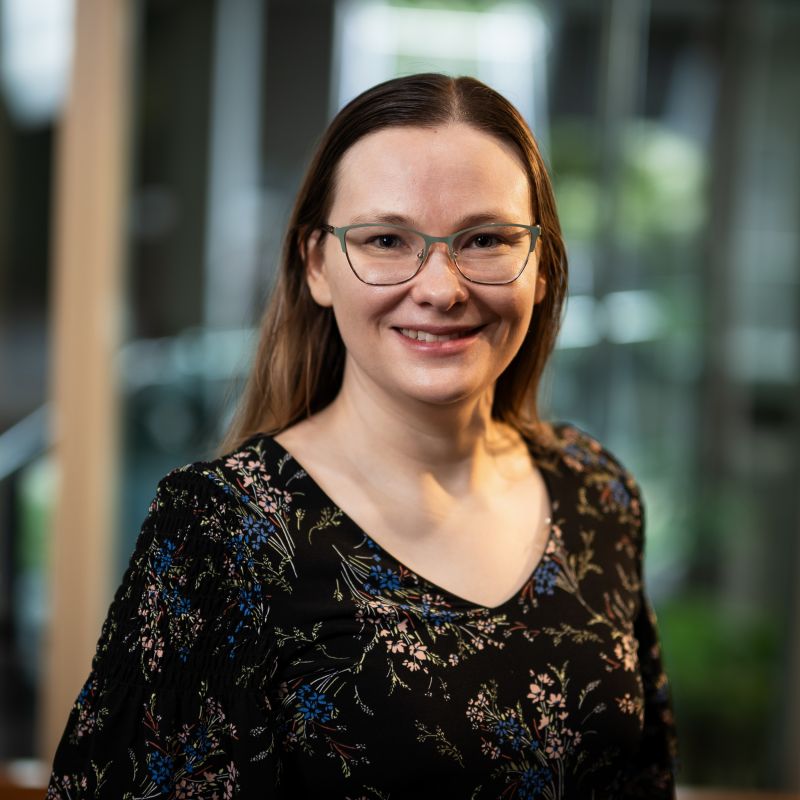
- Position
- Senior Lecturer in Computer Science (Software Development)
- Division / Faculty
- Faculty of Science
Overview
Vision-based technologies offer new possibilities to assist individuals with cognitive disabilities to live independently. Ambient assistive technologies, such as smart mirrors and social robots, enable new ways to interact at home with AI technologies that can see.
How can we design respectful ambient interactions that balance assistance and privacy?
Students in this project will develop a method and theory of interactive intent for people with cognitive disabilities. The theory will be established through an exploration of the new types of interactions made possible by VLMs and discussions with a diverse range of stakeholders. The theory will integrate control of ambient support, key to maintaining dignity. As part of the Supporting Independent Living with 'Seeing' Technologies team, they will compile guidelines for ambient technology that detects when technology can intervene, and how users can choose to engage (or not). The theory will be informed by the gestural and embodied knowledge of stakeholders elicited through a co-design approach across a range of interaction methods, including verbal, gestural and signed, tangible and visual.
Research activities
- Literature review.
- Participatory design research.
- Prototype development.
Outcomes
- Student thesis.
- Co-authored publications.
Skills and experience
Students applying for this topic should have:
- experience and/or interest in working with people with disabilities
- experience with participatory design and/or prototyping approaches.
A background in human-computer interaction (or similar) is preferred.
Students with relevant lived experience are strongly encouraged to apply.
Scholarships
You may be eligible to apply for a research scholarship.
Explore our research scholarships
Keywords
- participatory design
- AI
- accessibility
- assistive technology
- cognitive disability
- vision language model
- VLM
- seeing technologies
- robots
- human-robot interaction
- HRI
- HCI
- human-computer interaction
- participatory AI
Contact
For more information contact Laurianne Sitbon via email l.sitbon@qut.edu.au or phone +61 7 3138 8079, or contact the supervisor for more information.