By Charlie McMahon, 9 March, 2026
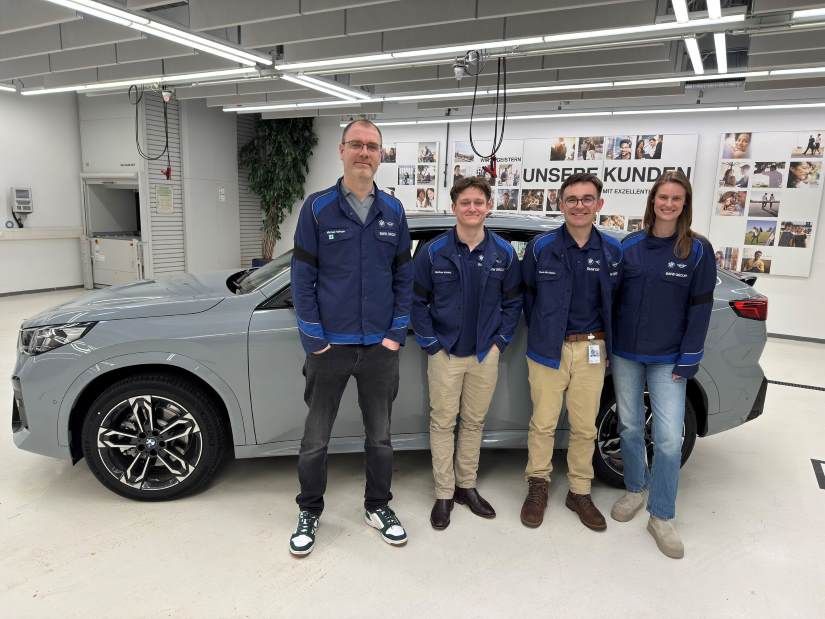
For the last six months, I had the pleasure of working as an Innovation & Digitalisation Intern at BMW Group in Regensburg, Germany.
I had the chance to meet Volker Richter, the Head of Quality and Total Vehicle Technology at BMW Group Plant Regensburg, for a coffee catchup right on campus. Our conversation about the intersection of technology and automotive manufacturing was so engaging that I applied for the internship that evening.
A few months later, I heard back that my application had progressed to the next round, and I eventually found out that I had been selected as one of two QUT students in that intake to join the team in Germany.
From Brisbane to Bavaria
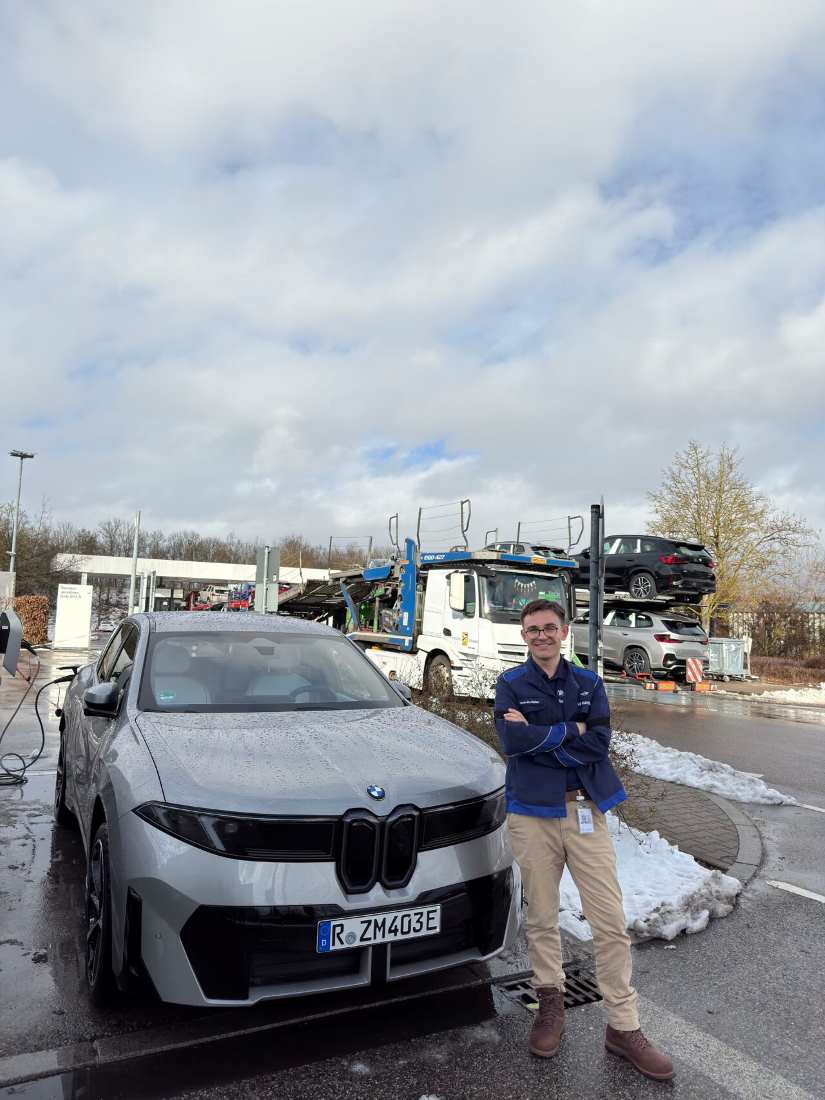
 Moving from Brisbane to Bavaria was a significant leap for me, personally and professionally, but one that placed me right at the centre of large-scale digital transformation within a global automotive leader.
I grew up on the Sunshine Coast before moving to Brisbane for university, so the transition to life in Germany was a major shift. The preparation alone was a massive undertaking. I had to fly to Sydney just to apply for my visa and then handle the mountain of paperwork required for finding a place to live, setting up a German bank account, getting a local phone number, and navigating tax and legal documents, all of which were fully in German. (I thought I had some confidence after a few months on Duolingo, but it turns out it’s a little harder to learn a language than I first thought…)
Walking into the Regensburg plant on my first day was an experience I won't forget. The sheer scale of the operation is immense. Plant Regensburg focuses on the BMW X1 and X2 series, and it was fascinating to see these vehicles manufactured from start to finish – literally from a sheet of metal to a finished product. One of the most impressive sights was watching the cars actually drive themselves directly off the production line when they were finished, which was a very cool example of the innovation I was there to support and expand!
My role: Innovation and Digitalisation at BMW
Over my internship, I’ve been deeply involved in building and deploying advanced AI-driven solutions used by teams across international sites, which is exactly what my degree at QUT has prepared me for so far.
My work focused on developing agentic AI and RAG-based systems, contributing to enterprise data applications, and building full-stack tools deployed to employees globally.
Most of my projects were relevant to the ‘Quality Management’ space, which was really interesting to get stuck into (as the Quality Management domain has full scope over all the production processes and individual vehicle testing and conformity in the plant).
A standout project
One specific project that I had the opportunity to create was an internal agentic AI application that helped automate complex internal data retrieval tasks for our quality and production teams.
By building a custom web UI from scratch and integrating it with our internal APIs securely, I created a platform that allowed staff to chat with technical documentation in natural language while having several AI agents autonomously debate with each other and problem solve in the background.
Instead of skilled quality specialists spending a large amount of their valuable time researching and looking for documents, they now have fast, easy access to the exact information they need, freeing up more of their time to be spent on critical problem solving.
- Some of the technologies I worked with daily included:
- LLMs (OpenAI, Anthropic), LangChain, Palantir Foundry, Oracle (APEX, SQL Server)
- AWS (Bedrock, Lambda, Athena, QuickSight), Azure
- Python, React, TypeScript, Next.js, Node.js, GitHub (GHE, Copilot, Actions, Pages)
- Microsoft Power Platform and the Atlassian suite (Confluence, Jira)
Inside the plants: MINI Oxford and Rolls-Royce Goodwood
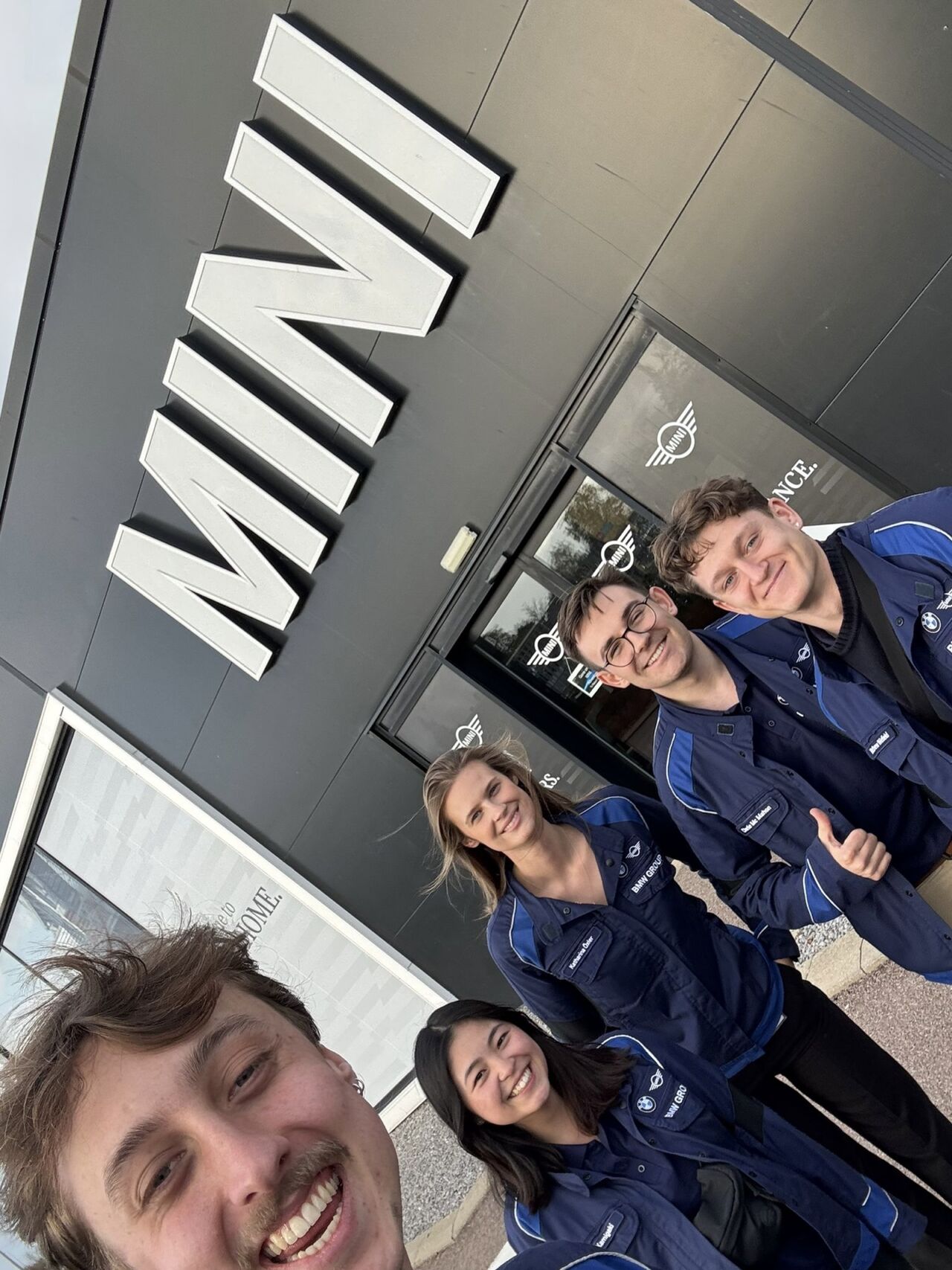
Two particularly memorable moments of my internship were site visits to our MINI Plant in Oxford (UK), and our Rolls-Royce Plant in Goodwood (UK). Seeing innovation operate across cultures and different production environments gave me a much deeper perspective on what digital transformation looks like in practice.
The contrast between the two sites was particularly interesting. The MINI plant is highly automated, with a fast-paced rhythm driven by advanced robotics. In comparison, the Rolls-Royce plant is a much more manual environment that prioritises bespoke craftsmanship and attention to detail. Observing how digitalisation initiatives are implemented in such different settings showed me that digital transformation isn't a one size fits all approach, but something that must be tailored to the specific needs of the product and the people making it.
What comes next
As I finish my double degree in IT (Information Systems) and Business (Finance) at QUT, I’ve arrived back home from Germany with a sharper technical toolkit, a stronger understanding of enterprise innovation, and a much broader international perspective. I have about two or three semesters left before I graduate, and I am excited to apply everything I have learned to my next role.
I will shortly return to a position in Digital Innovation at Bidfood Australia. I plan to harness my further developed skills in AI and full-stack development to drive meaningful change across the Australian foodservice industry, supporting thousands of employees nationally.
For any other students considering an overseas internship, my advice is to absolutely go for it. Even though the logistics of moving to a foreign country can be daunting, the professional and personal growth, and the chance to work at the forefront of your field, is well worth the effort.
I’m incredibly thankful to have had this life-changing opportunity, and I don’t doubt that it has transformed my career and life for the better.

IT can take you anywhere
Germany. Global tech teams. Cutting‑edge AI. imagine what your IT career could look like. Discover where an IT degree could take you.
Read more student stories
Author

Bachelor of Information Technology (Information Systems)/Bachelor of Business (Finance)