
Faculty/School
Faculty of Engineering

Topic status
We're looking for students to study this topic.

Primary Supervisor
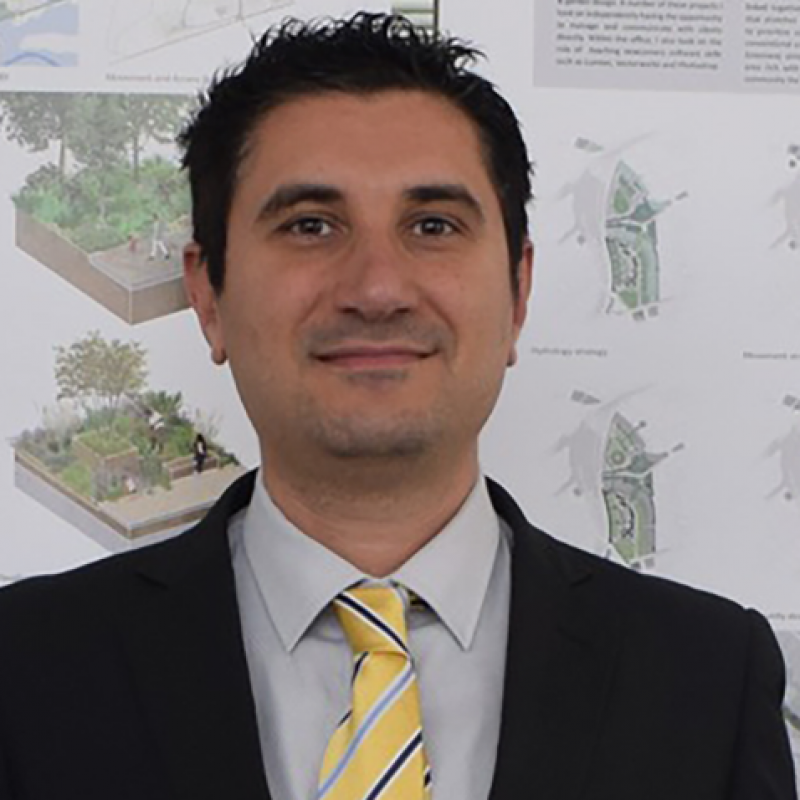
- Position
- Associate Professor
- Division / Faculty
- Faculty of Engineering
Other QUT supervisors

- Position
- Lecturer in Built Environment
- Division / Faculty
- Faculty of Engineering
Overview
Cities are increasingly important places for responding to biodiversity loss, climate change, urban heat, public health challenges and social inequality. The concept of Nature-Positive Cities refers to urban approaches that go beyond reducing environmental harm and seek to actively restore, regenerate and enhance biodiversity, ecosystem functions and the benefits that nature provides to people.
However, the benefits of urban nature are not always equally distributed. Some communities have better access to high-quality parks, urban forests and green infrastructure, while others experience limited access, poor environmental quality, heat exposure or displacement pressures linked to urban greening. At the same time, many urban environments are becoming novel ecosystems shaped by urbanisation, altered soils, climate change, introduced species, fragmented habitats, spontaneous vegetation and new forms of human management.
This VRES project will undertake a systematic review of academic and selected policy literature to examine how biodiversity benefits and equity are discussed in relation to Nature-Positive Cities and novel urban ecosystems. The project will explore what kinds of benefits are associated with urban biodiversity, who has access to these benefits, who may be excluded, and what trade-offs or risks are identified in the literature.
The project is interdisciplinary and relevant to landscape architecture, urban planning, urban ecology, biodiversity conservation, green infrastructure, nature-based solutions, public health, climate adaptation and environmental justice. It is a desk-based review project and does not involve fieldwork, laboratory work or human participants.
Research engagement
This project is a desk-based systematic review on Nature-Positive Cities, biodiversity benefits, equity and novel urban ecosystems.
The student will mainly engage with:
literature review;
systematic/scoping review methods;
evidence mapping;
research synthesis;
development of a literature review matrix;
preparation of a conceptual framework;
preparation of a final VRES poster and short research summary.
There will be no laboratory work, fieldwork, survey design or human participant research.
Research activities
The student will work with A/Prof Alessio Russo and Dr Umberto Baresi in the School of Architecture and Built Environment.
The project will examine how current research discusses the benefits of biodiversity in cities, who has access to these benefits, and what social, ecological, planning and governance issues arise when cities aim to become more nature-positive.
The student will undertake activities such as:
- developing search terms for a systematic or scoping review;
- searching academic databases such as Scopus, Web of Science and Google Scholar;
- identifying relevant literature on Nature-Positive Cities, urban biodiversity, novel urban ecosystems, green infrastructure and nature-based solutions;
- screening titles, abstracts and selected full texts using agreed inclusion and exclusion criteria;
- recording review decisions in a clear and transparent way;
- creating a literature review matrix in Excel or similar software;
- extracting information on key concepts, definitions, indicators and findings;
- identifying themes related to biodiversity benefits, ecosystem services, climate adaptation, health and wellbeing, environmental justice, green gentrification and access to green space;
- summarising findings through short written synthesis, tables and diagrams;
- contributing to the development of a visual conceptual framework;
- preparing a final VRES poster and short presentation.
Research skills
Through this project, the student will gain practical experience in:
- systematic and/or scoping review methods;
- academic database searching;
- evidence screening and synthesis;
- critical reading of interdisciplinary research;
- organising research data using review matrices;
- identifying and coding key themes in academic literature;
- understanding relationships between biodiversity, urban planning, landscape architecture and social equity;
- analysing environmental justice issues in urban greening;
- developing diagrams and conceptual frameworks;
- communicating research findings through writing, posters and presentations.
The project will also help the student understand how a research idea can be developed into a structured evidence review that may inform future research, policy, planning and design practice.
Outcomes
The aim of the project is to review how existing research addresses biodiversity benefits and equity in Nature-Positive Cities and novel urban ecosystems.
The specific aims are to:
- Identify how Nature-Positive Cities and novel urban ecosystems are defined in the literature.
- Review the types of biodiversity benefits associated with urban nature, including ecological, climatic, social, cultural, health and economic benefits.
- Examine how these benefits are distributed across different communities, neighbourhoods and generations.
- Identify potential trade-offs and risks linked to nature-positive urban transformation, such as unequal access to green space, green gentrification, invasive species, maintenance challenges and uneven climate adaptation benefits.
- Review the indicators and methods used to assess biodiversity benefits and equity.
- Identify inclusive, collaborative and investment-oriented pathways that support fairer nature-positive urban change.
- Develop a preliminary conceptual framework linking biodiversity, equity, novel ecosystems and urban transformation.
Expected outcomes include:
- a structured literature review database;
- a summary of key concepts and definitions;
- a typology of biodiversity benefits, costs and trade-offs;
- a synthesis of equity and environmental justice themes;
- a map of indicators used to assess nature-positive urban outcomes;
- a visual conceptual framework;
- a final VRES poster and short research summary.
The review may also provide the foundation for a future journal article or research proposal.
Skills and experience
This project would suit a student interested in one or more of the following areas:
- landscape architecture;
- urban planning;
- environmental design;
- urban ecology;
- biodiversity conservation;
- green infrastructure;
- nature-based solutions;
- climate adaptation;
- environmental justice;
- healthy cities;
- sustainable urban development.
The ideal candidate will be curious, organised and comfortable reading academic literature. Previous experience with systematic reviews is not required, but attention to detail and an interest in sustainability, cities and biodiversity would be highly desirable.
Start date
2 November, 2026End date
19 February, 2027Location
Additional information
The student will receive regular guidance and support from A/Prof Alessio Russo and Dr Umberto Baresi throughout the project. The project is designed with the aim of producing a publishable systematic review article for submission to a peer-reviewed journal in the fields of urban planning, landscape architecture, urban sustainability, green infrastructure or environmental studies.
Keywords
- Nature-positive cities
- Urban biodiversity
- Environmental justice
- Nature-based solutions
- Urban greening
- Biodiversity benefits
- Green space
- Equity
Contact
Alessio Russo
0410735668
alessio.russo@qut.edu.au