
Faculty/School
Faculty of Engineering

Topic status
We're looking for students to study this topic.

Primary Supervisor
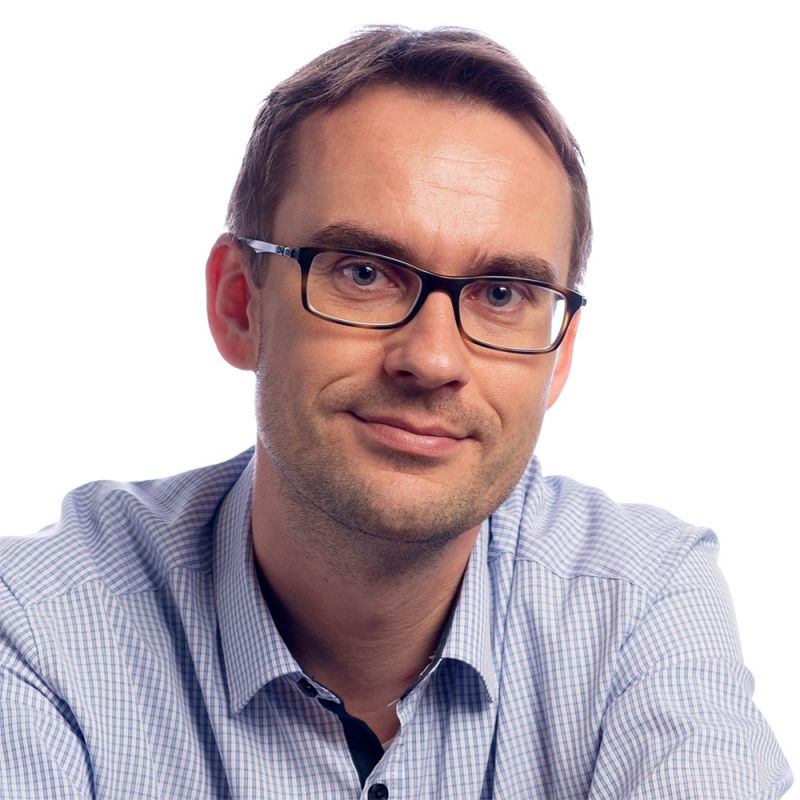
- Position
- Professor
- Division / Faculty
- Faculty of Engineering
Other QUT supervisors
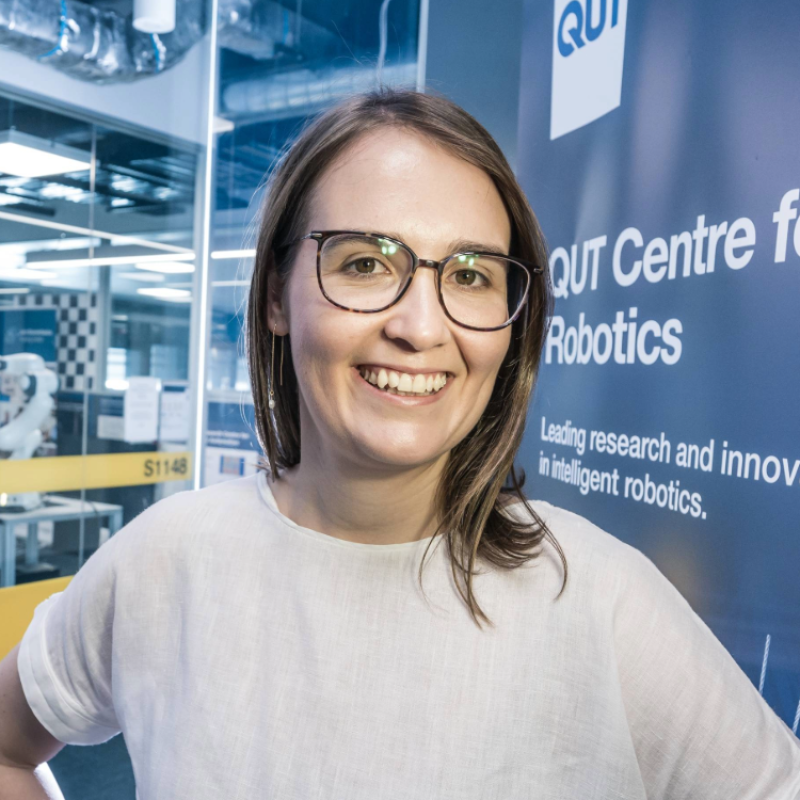
- Position
- Senior Lecturer
- Division / Faculty
- Faculty of Engineering
Overview
Autonomous systems, such as robots or autonomous vehicles, need to understand when the world around them has changed. A road may be blocked, a construction site may have new obstacles, infrastructure may have deteriorated, or objects in a robot workspace may have moved. Detecting these changes reliably is an important problem for real-world computer vision and robotics.
This project will investigate how modern 3D scene representations can be used to detect changes across time. In particular, the project will explore the use of 3D Gaussian Splatting, a recent approach for building realistic 3D representations of scenes from images, together with existing change-detection algorithms developed by the research team at the QUT Centre for Robotics.
The project will evaluate how well these methods work across different real-world domains, potentially including autonomous driving scenes, robot infrastructure inspection, and other image-based 3D mapping scenarios. The project is connected to broader research on reliable perception, 3D scene understanding, and robotics.
Research engagement
You will engage with applied research in 3D computer vision and robotic perception. This will include hands-on experimentation with existing 3D Gaussian Splatting pipelines, evaluation of change-detection algorithms, and analysis of how performance varies across different environments and application domains.
Research activities
You will work with a supervisory team consisting of a postdoctoral researcher and two academics from the QUT Centre for Robotics. Activities may include:
- Learning how image sequences can be used to build 3D scene representations.
- Running existing 3D Gaussian Splatting and change-detection code on selected datasets.
- Preparing or organising real-world image data for evaluation.
- Testing existing algorithms across different domains and scene types.
- Comparing detected changes against visual inspection or available ground truth.
- Analysing when the system succeeds, when it fails, and what kinds of changes are easiest or hardest to detect.
- Creating visualisations of 3D scenes and detected changes.
- Preparing a short final presentation and demonstration of the results.
Research skills
You will gain experience in 3D computer vision, robotic perception, Python-based research workflows, working with image and 3D scene data, and evaluating algorithms on real-world datasets. You will also develop skills in visualisation, experimental analysis, critical evaluation of model failures, and communicating technical results clearly.
Outcomes
Expected outcomes include an evaluation of existing change-detection algorithms across one or more application domains, visual examples of detected changes, an analysis of strengths and failure modes, and recommendations for improving or adapting the approach for different real-world settings. Depending on progress, the project may also contribute cleaned datasets, evaluation scripts, or improvements to the existing research codebase.
Skills and experience
You should have some programming experience, preferably in Python. Some familiarity with computer vision, robotics, or machine learning would be helpful, but the project can be scoped to match your background. The project is suitable for students interested in 3D vision, robotics, autonomous systems, or applied AI.
Start date
2 November, 2026End date
19 February, 2027Location
QUT Gardens Point or Online
Additional information
You will receive regular supervision and support from a postdoctoral researcher and two academics in the QUT Centre for Robotics. You will have access to existing algorithms, example code, 3D Gaussian Splatting pipelines, real-world image datasets, computing resources, and guidance with experimental design and evaluation.
Keywords
- computer vision
- 3D computer vision
- gaussian splatting
- 3d representations
- robotics
- scene understanding
- artificial intelligence
- AI
Contact
Niko Suenderhauf
N/A
niko.suenderhauf@qut.edu.au