
Study level
- PhD

Faculty/School
Faculty of Engineering

Topic status
We're looking for students to study this topic.

Supervisors
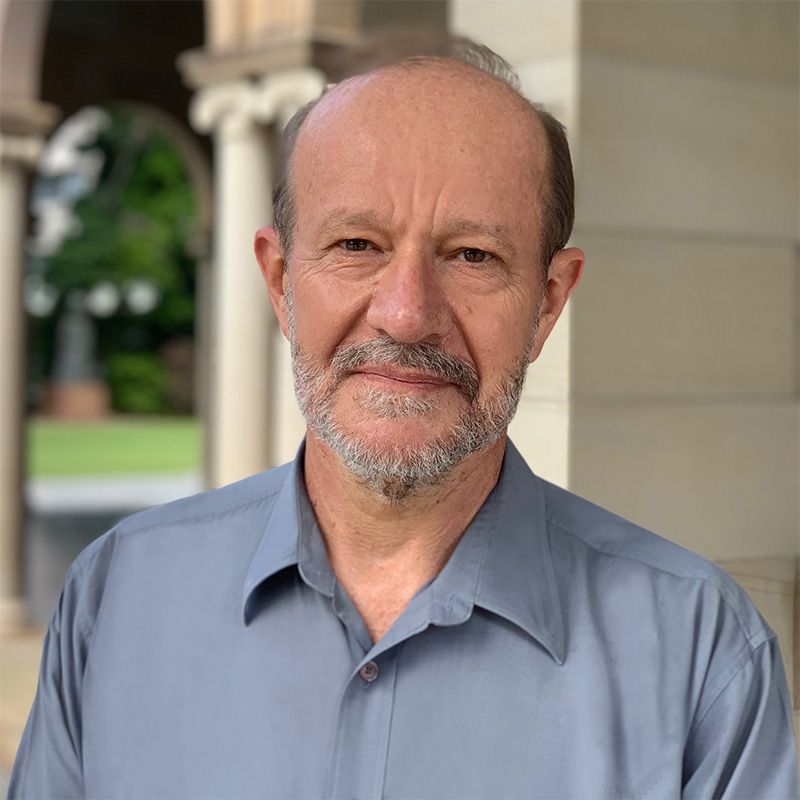
- Position
- Professor of Virtual Design and Construction
- Division / Faculty
- Faculty of Engineering

- Position
- Senior Lecturer
- Division / Faculty
- Faculty of Engineering

- Position
- Associate Professor
- Division / Faculty
- Faculty of Engineering

- Position
- Professor in Power Engineering
- Division / Faculty
- Faculty of Engineering
Overview
Two full PhD scholarships are available at Queensland University of Technology (QUT), Brisbane, Australia, focusing on machine learning for power quality analysis in low-voltage distribution networks.
These PhD projects are part of an Industrial Transformation Training Centre (ITTC), providing students with access to a strong interdisciplinary research environment and collaboration opportunities with leading academic researchers and industry partners.
The projects will investigate how solar inverters and electric vehicle (EV) chargers affect harmonic distortion, impedance, and resonance behaviour in the 2–9 kHz range. The research will develop data-driven models using high-frequency voltage/current measurements, harmonic features, impedance characteristics, and network operating conditions. The projects will involve applying and developing deep learning methods for time-series modelling, dynamic behaviour prediction, graph-based modelling, and anomaly detection, with an emphasis on robustness, generalisation, and data efficiency.
Project areas
Project 1: Predicting harmonic impact of EV chargers and solar inverters
This project develops machine-learning models to predict the harmonic impact of EV chargers and solar inverters on low-voltage distribution networks. The research focuses on long-term harmonic emissions, frequency-dependent behaviour, varying loading conditions, and the influence of harmonic distortion on power quality and grid stability.
Project 2: Modelling distribution impedance and resonance dynamics
This project develops data-driven models for analysing frequency-dependent impedance and resonance behaviour in low-voltage distribution networks with high penetration of power-electronics-based devices. The research focuses on impedance variation, resonance identification, multi-point voltage and current analysis at points of common coupling, and harmonic interactions under different loading and network configurations.
Scholarship
The scholarship provides $AUD 41,555 (AUD) per year for three years, with the possibility of a 6-month extension. Open to domestic and international applicants.
Please refer to QUT'’'s PhD admission requirements and scholarship application procedures before applying.
Skills and experience
We are seeking highly motivated candidates with:
- A strong background in electrical engineering, power electronics, computer science, signal processing, control systems, or a related field.
- Demonstrated expertise in data-driven modelling and machine learning.
- Additional experience in power quality assessment, impedance analysis, harmonic analysis, or resonance studies will be considered an advantage.
Scholarships
You may be eligible to apply for a research scholarship.
Explore our research scholarships
Contact
Contact the supervisors for more information.