
Study level
- PhD

Faculty/School
Faculty of Science

Topic status
We're looking for students to study this topic.

Supervisors
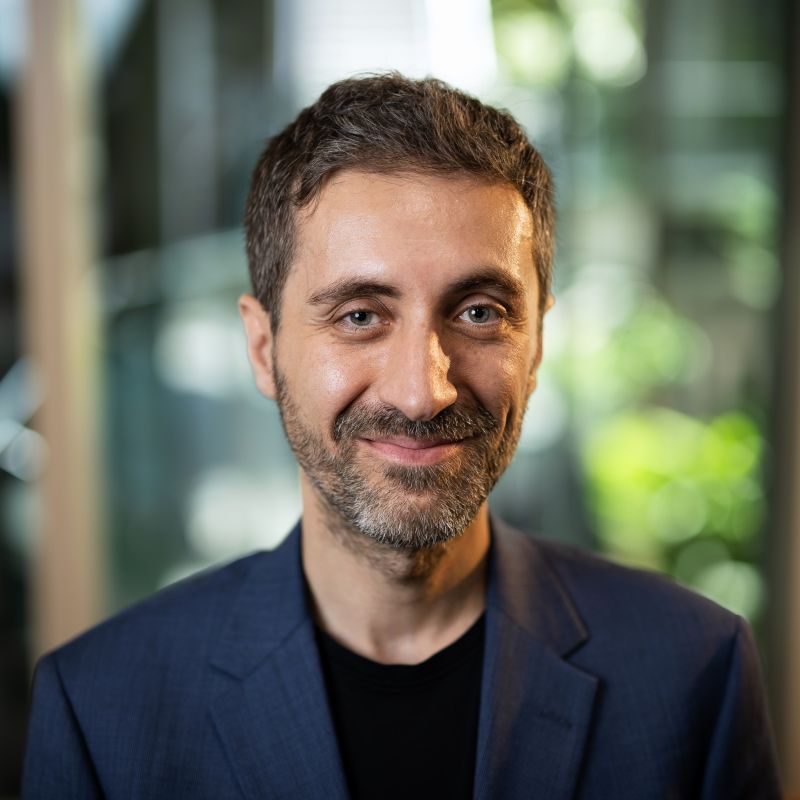
- Position
- Course Coordinator
- Division / Faculty
- Faculty of Science
External supervisors
- Professor Jan vom Brocke, University of Münster / ERCIS
- Dr Armin Stein, University of Münster / ERCIS
- Dr Katrin Bergener, University of Münster / ERCIS
- Professor Simon Lux, Fraunhofer FFB
Overview
https://research.qut.edu.au/energytransition/https://research.qut.edu.au/energytransition/Queensland is a global leader in residential solar photovoltaic adoption, yet battery energy storage uptake is comparatively low, constraining the full potential of decentralised battery energy storage systems (BESS). Similarly, in Germany, battery storage adoption remains limited and regionally concentrated, despite strong national policy support and technological advances in battery manufacturing.
This project investigates the behavioural and systemic barriers to BESS adoption and explores how digital solutions can influence energy decisions. It forms part of a broader international collaboration between QUT, the University of Münster, and Fraunhofer FFB.
The consortium
This PhD project is part of a unique international research consortium that brings together leading institutions in behavioural energy research, information systems, and battery innovation. Together, the consortium offers PhD candidates an exceptional opportunity to engage in collaborative research, benefit from cross-site supervision, and contribute to the global energy transition.
QUT: Behavioural Energy Analytics & Modelling (BEAM)
The BEAM Group pioneers interdisciplinary research at the intersection of system-level energy dynamics and user behaviour, focusing on human-centred design for energy technologies. Located within QUT’s School of Information Systems, BEAM is actively shaping policy and practice through its engagement with government and industry on digital energy services and industrial and residential behaviour.
- Dr Kenan Degirmenci (BEAM group lead) via email kenan.degirmenci@qut.edu.au
University of Münster: European Research Center for Information Systems (ERCIS)
ERCIS contributes leading expertise in digital transformation, process management, and socio-technical system design, enabling behavioural and organisational change. With a vast academic network across Europe and beyond, ERCIS facilitates interdisciplinary collaborations that address complex societal challenges through information systems research.
- Professor Jan vom Brocke (ERCIS academic director) via email jan.vom.brocke@uni-muenster.de
- Dr Armin Stein (ERCIS managing director) via email armin.stein@uni-muenster.de
- Dr Katrin Bergener (ERCIS managing director) via email katrin.bergener@ercis.uni-muenster.de
Fraunhofer FFB (research institution for battery cell production)
Fraunhofer FFB complements this expertise with cutting-edge knowledge of battery technologies and industrial energy systems. As part of the renowned Fraunhofer Society, FFB offers state-of-the-art facilities and applied research pathways focused on accelerating battery innovation, scalability, and integration into smart grids.
- Professor Simon Lux (Fraunhofer FFB executive board member) via email simon.lux@ffb.fraunhofer.de
Joint PhD opportunity
This PhD project is eligible to be pursued as a joint PhD (cotutelle) between QUT and the University of Münster (official partner institution), where ERCIS is located. Joint PhD programs offer candidates the opportunity to undertake research at two institutions that are both accredited to award PhDs and have strong research track records.
Key features of QUT’s joint PhD program include:
- dual enrolment at QUT and the University of Münster, with entry requirements met at both
- a minimum of one third of the candidature spent at each institution
- two supervisory teams – one at each institution – guiding the candidate
- access to two research environments of international calibre
- a single thesis that meets the academic standards of both institutions and is examined independently by each
- on completion, the candidate is awarded a joint degree, with two award certificates/testamurs recognising the collaborative nature of the program.
The University of Münster actively supports internationalisation and welcomes collaborative PhD training as part of its strategic focus on interdisciplinary, global research.
Funding opportunity
You can apply via the QUT Annual Scholarship Round:
- International applicants: Apply by 31 July 2025
- Domestic applicants: Apply by 31 August 2025
Research activities
- Conduct computational modelling of battery adoption.
- Design and analyse semi-structured interviews and large-scale surveys with energy consumers, policymakers, and energy providers.
- Develop digital tools informed by behavioural insights.
- Collaborate with QUT, University of Münster, and Fraunhofer FFB.
- Contribute to joint publications and workshops across the consortium.
Outcomes
- Identify behavioural and systemic drivers for battery adoption.
- Develop digital tools that support engagement with BESS.
- Generate policy-relevant insights for smart grid integration.
- Contribute to theory-building in behavioural energy informatics.
Skills and experience
- A master degree (or equivalent) in information systems, computer science, or related fields.
- Experience in qualitative, quantitative, or mixed-methods research.
- Programming/simulation skills (e.g. Python, R, Vensim) are a plus.
- Strong English communication skills (IELTS 6.5+ for international applicants).
- Demonstrated interest in computational methods, behavioural research, or energy systems.
Scholarships
You may be eligible to apply for a research scholarship.
Explore our research scholarships
Keywords
- digital innovation
- energy informatics
- battery storage
- smart grid
- energy behaviour
- system modelling
- data analytics
- simulation
Contact
If you are interested in applying for this joint PhD project, contact Dr Kenan Degirmenci via email kenan.degirmenci@qut.edu.au.
Your expression of interest should include your CV, academic transcripts, copies of theses or publications (if applicable), and a brief motivational statement outlining your interest in the project and its alignment with your academic background and career goals.