
Study level
- Master of Philosophy
- Honours

Faculty/School
Faculty of Science

Topic status
We're looking for students to study this topic.

Supervisors
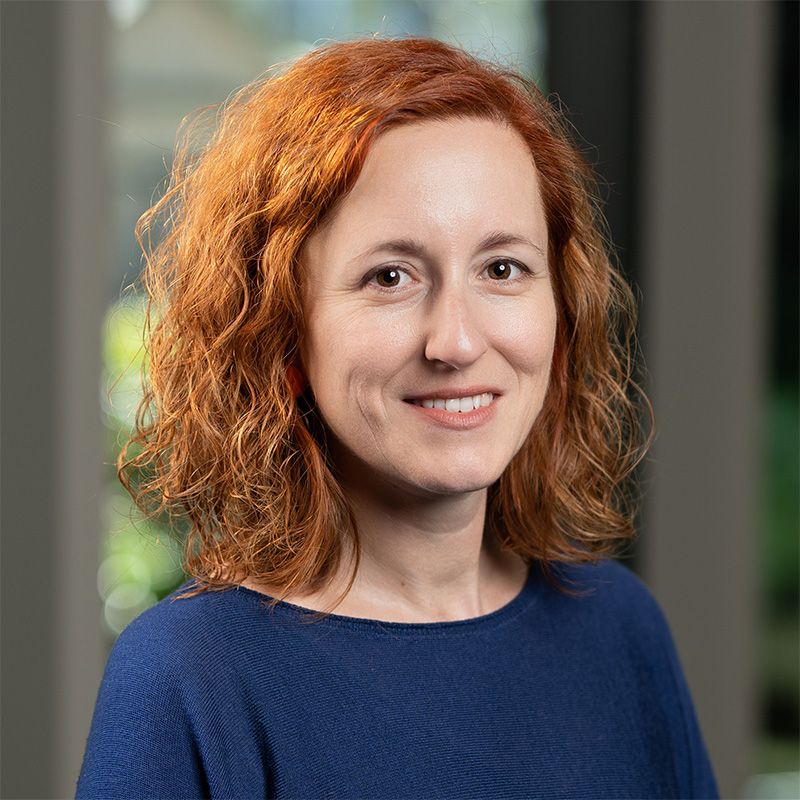
- Position
- Associate Professor
- Division / Faculty
- Faculty of Science
Overview
Are you curious about how the Earth's most remote oceans shape our climate? Passionate about data science, scientific discovery, and the polar atmosphere?
Join a unique research project that takes you straight into the heart of cutting-edge Antarctic atmospheric science.
The Southern Ocean and Antarctic regions are among the fastest-changing and least-understood parts of the planet. Climate models consistently struggle to simulate clouds there and one big reason is aerosols which are microscopic particles that act as seeds for cloud formation and affect Earth’s radiative balance. Understanding them is crucial for untangling biosphere-atmosphere processes and predicting future climate change.
This is a chance to contribute to understanding the atmospheric processes in one of the most pristine yet vulnerable regions on the planet, all the while building valuable data science and research skills in a supportive research environment.
Help untangle one of the biggest mysteries in atmospheric science by participating in this project.
Research activities
Drawing on data from the recent Denman Marine Voyage, which captured rare aerosol and meteorological measurements from the most southern parts of the Southern Ocean atmosphere, students will:
- analyze real expedition data to uncover geospatial patterns and relate them to atmospheric processes
- investigate how aerosols link to cloud formation, and weather systems
- build hands-on skills in Python, R, or MATLAB for environmental data analysis
- work closely with polar atmospheric scientists, data scientists, and climate experts.
Outcomes
- Geospatial patterns of aerosol microphysical properties.
- Environment drivers of aerosols.
- Relationships between air mass history.
- Cloud condensation nuclei activity.
Skills and experience
- Experience with programming (Python, R, or MATLAB).
- Background in atmospheric, environmental, or data science.
- Passionate about understanding the interconnectedness of the Earth system and climate.
Keywords
Contact
Express your interest by sending your CV and a short description of why you are interested in this project to Dr. Jakob Boyd Pernov via email jakob.pernov@qut.edu.au and to Associate Professor Branka Miljevic via email b.miljevic@qut.edu.au. We look forward to hearing from you as we’re happy to hear from students with diverse backgrounds and levels of experience.