


Supervisors
- Position
- Associate Professor
- Division / Faculty
- Faculty of CI, Education & Social Justice

- Position
- Professor
- Division / Faculty
- Faculty of Health
External supervisors
- Gjoko Muratovski (Adjunct Prof, QUT School of Design & Chief Innovation Officer, ICONA Design Group)
- Antonio Islas Munoz (Uni of Montreal)
Overview
This PhD project explores innovative mobility concepts and strategic frameworks to support inclusive, safe, efficient, fun and sustainable transport for the Brisbane 2032 Olympic and Paralympic Games. With the games as a catalyst, the research investigates how major events can accelerate long-term mobility transformation, focusing on accessibility, active and public transport, integrated infrastructure, and emerging technologies. It will critically evaluate current transport planning in South East Queensland, benchmark international mega-event mobility strategies, and engage with diverse stakeholders including government agencies, industry leaders, and community groups.
By developing scalable and adaptable models, the project aims to create a blueprint for future mega-events, ensuring transport legacies that benefit the host city well beyond 2032. The research contributes to academic discourse in urban mobility, design strategy, and event planning, while offering practical insights for policymakers and planners tasked with delivering inclusive, future-ready transport systems for global events and everyday use.
Research activities
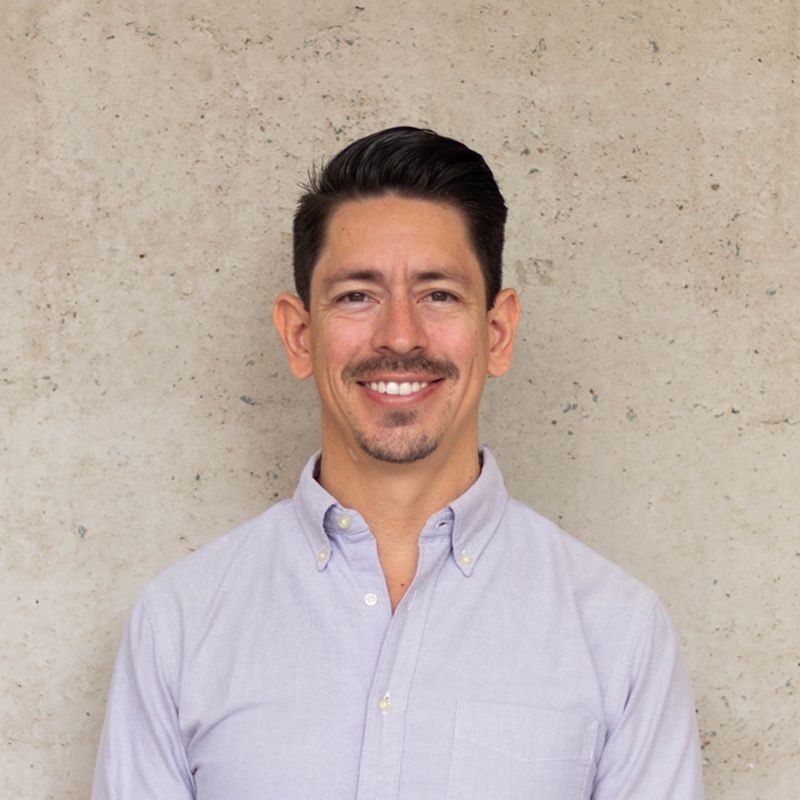
The research team includes Associate Professor Rafael Gomez (founder and head of the BMW Group + QUT Design Academy), Dr Gjoko Muratovski (chief innovation officer, ICONA Design), and Juan Antonio Islas Muñoz (Montreal University).
The projects will explore innovative mobility concepts for the Brisbane 2032 Olympic and Paralympic Games and develop a strategic framework that may inform future mega-events.
Some of the activities conducted throughout the research might include:
- stakeholder engagement: collaborate with government, transport authorities, technical experts, event planners, and end-users to identify mobility goals, challenges, and regulatory frameworks
- literature review: critically analyse global mobility concepts and strategies from past Olympic and Paralympic Games and mega-events to identify best practices and transferable innovations
- design benchmarking: benchmark relevant existing mobility concepts that may inform current and future mega-events such as the Olympic and Paralympic Games
- scenario planning: develop and visualise potential future mobility scenarios using systems thinking, considering accessibility, sustainability, and emerging technologies
- user-centred design research: conduct interviews, workshops, and surveys with diverse user groups (e.g. locals, tourists, people with disabilities) to identify needs and co-design inclusive transport solutions
- framework and concept development: design conceptual mobility solutions (e.g. transit hubs, active travel networks), simulate or prototype them, and evaluate their feasibility, accessibility, and applicability for Brisbane 2032 and beyond. Based on this concept generate a conceptual framework that might serve as a transferable model for future mega-events.
Outcomes
The study will provide theoretical and practical insights. Theoretical insights include principles and frameworks for mega-events, and strategic design tools. Practical outcomes include policy recommendations, and visionary innovative mobility concepts tailored for Brisbane 2032, with potential application to future Olympic and Paralympic Games and mega-events.
Objectives include:
- developing inclusive and future-oriented mobility concepts tailored for the Brisbane 2032 Olympic and Paralympic Games
- analysing global best practices in mega-event transport strategy to inform locally relevant, scalable solutions
- designing a strategic framework for integrating mobility innovation into long-term urban transport legacies.
Skills and experience
Ideally you may have expertise in automotive design, transport design, or industrial design (undergraduate degree in either field). It is expected you will have an interest in design, user-centred design, and inclusive design. Further, it is anticipated that the candidate will have very strong visualisation (sketching and CAD), aesthetics sensitivities and automotive design skills.
Scholarships
You may be eligible to apply for a research scholarship.
Explore our research scholarships
Keywords
Contact
Contact the supervisor Associate Professor Rafael Gomez via email r.gomez@qut.edu.au.