Endowment fund supporting life-saving health project in Cameroon
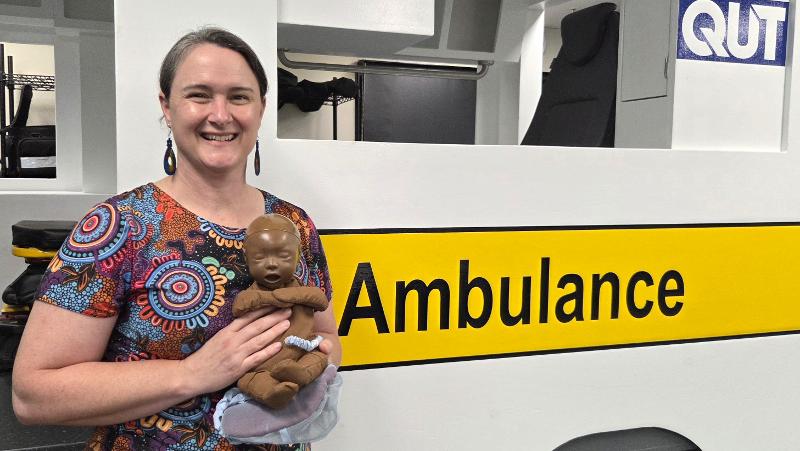
A QUT-led health collaboration is on a mission to save the lives of newborns and mothers in central Africa, empowered by QUT philanthropy and clinical expertise.
QUT Paramedicine lecturer and midwife Rachel Bennett leads the With Women Project, Cameroon, training and equipping midwives to help address significant maternal and newborn health challenges in the country.
Established in 2023, the team’s initial aim is to reduce high maternal and neonatal (newborn) mortality in the southwest district of Limbe – a region whose people are battling civil crisis, disrupted health services and reduced access to skilled care.
“We're trying to improve the standard of care in local health facilities, plus engage with traditional birth attendants in Cameroon to help them refer women in a timely way,” Rachel said.
“There are many complex challenges for women accessing care involving poverty and government – for example, roads are terrible and when it rains, they become impassable.”
In Cameroon, the maternal mortality rate is as high as 250 deaths per 100,000, with neonatal mortality rates of about 25 per 1000 live births - and maternal mortalty can be significantly higher in rural villages.
The country has a critical shortage of skilled midwives and doctors, exacerbated by limited hospital and health facilities with dated equipment. While Cameroon has a similar population to Australia (about 30m), it has much higher birth and mortality rates.
But in the three years that With Women Project has been working in the Limbe District, maternal mortality rates have almost halved.
For Rachel’s latest trip to Cameroon - her third since the With Women Project began - a $10,000 gift from QUT’s Mary and Carl Leonard International endowment fund enabled the purchase of vital training equipment, including birth simulators, and a subscription to allow remote assessment.
"Simulation-based and hands-on learning is a big revolution for them"
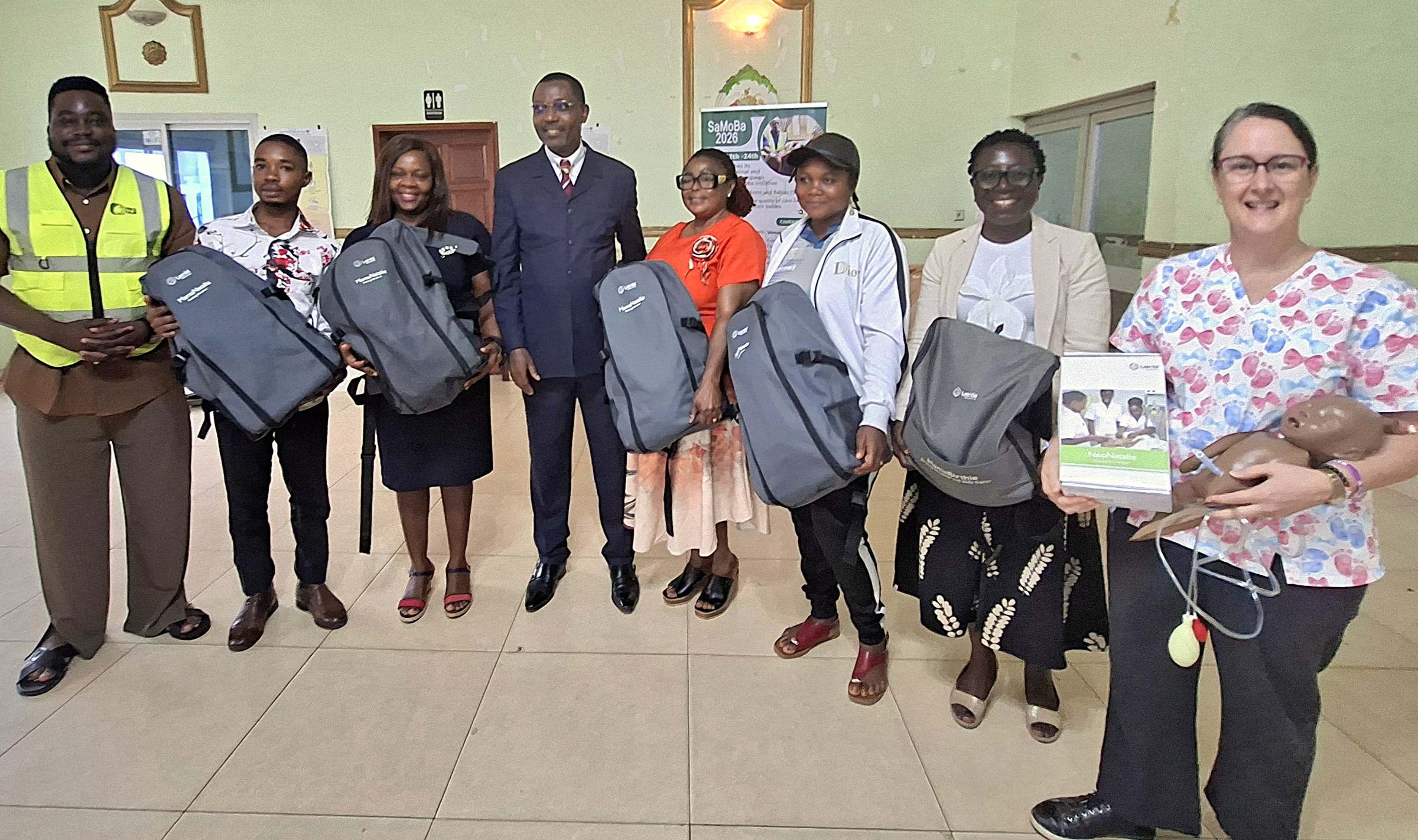
Training workshops were held, focusing on eight priority districts where maternal mortality is the highest. Laerdal Global Health birthing simulators and equipment sets were given to four local universities, which will loan them to local health facilities to further support skills training.
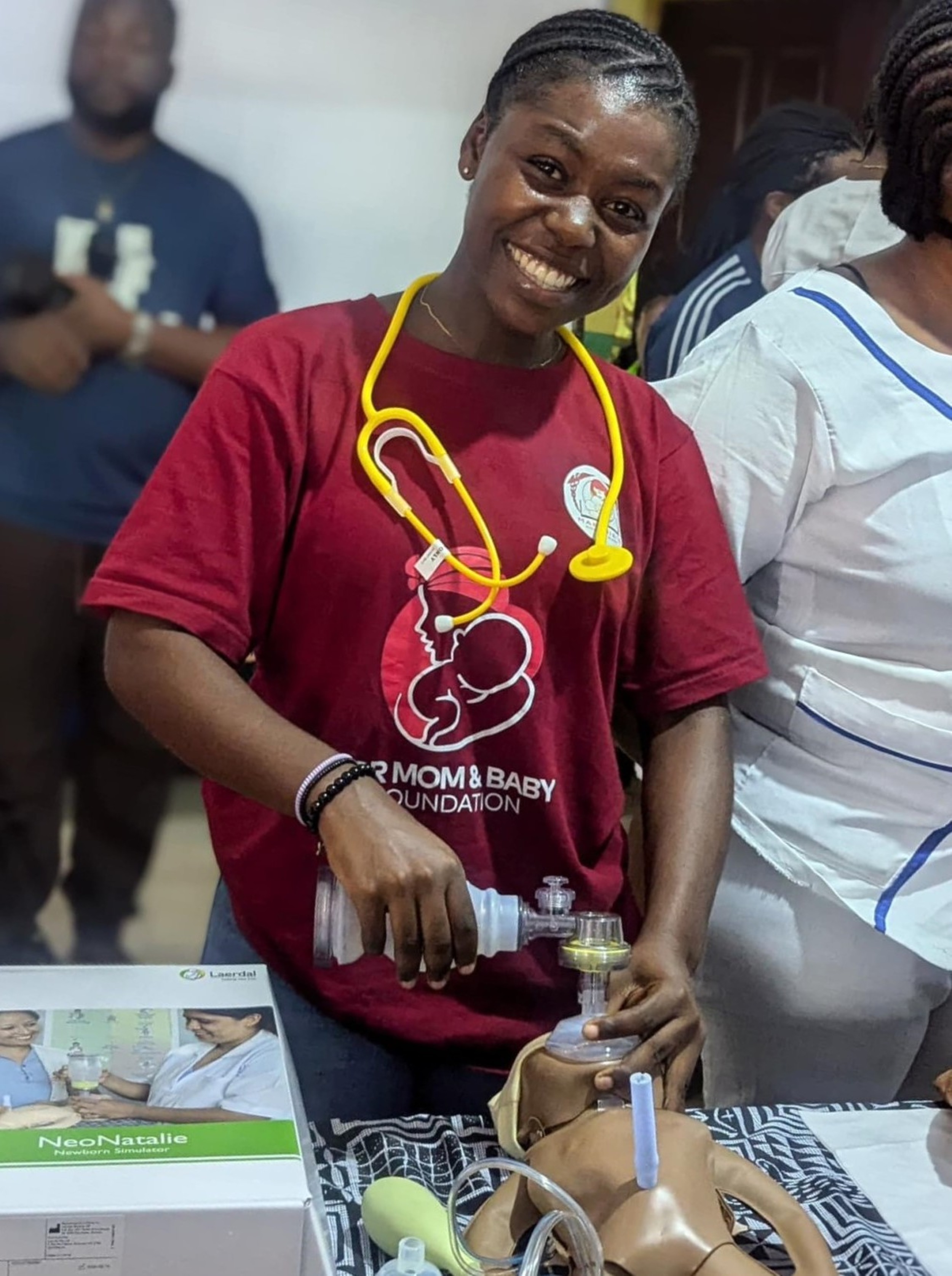
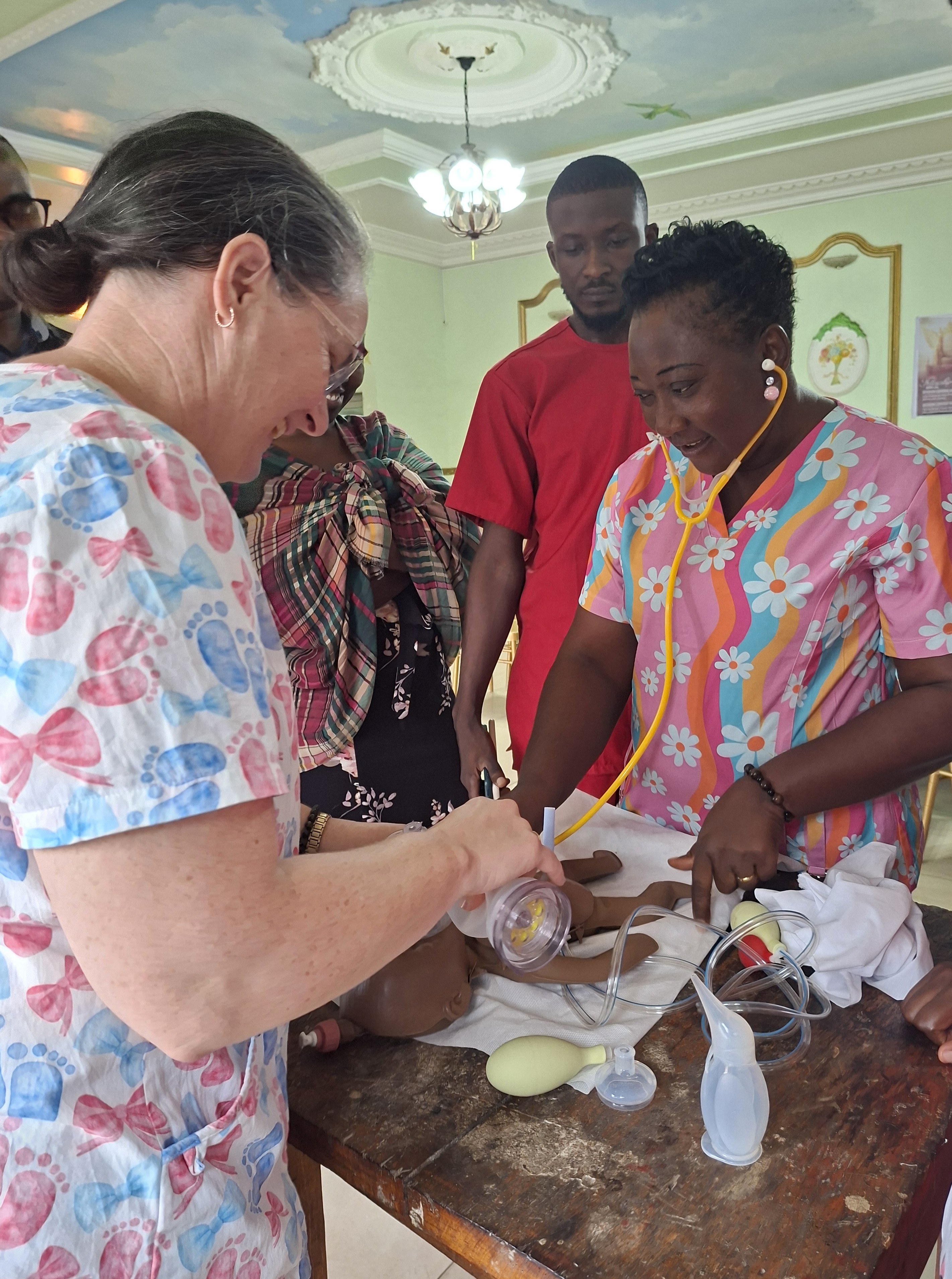 The simulators elevated the quality of education for midwives and health professionals.
“Simulation-based and hands-on learning, which we do all the time (here at QUT), is a big revolution for them,” Rachel said.
“Currently the majority of their learning is didactic - they sit there and take notes from what they're told, they don't do hands-on learning.”
The subscription to Laerdal's online evaluation and assessment program enables the team to track the impact of their training – and there has already been a dramatic improvement in clinical knowledge (a 40% increase in newborn resuscitation scores).
“We assessed and trained students and nurses on neonatal resuscitation and postpartum haemorrhage specifically, because those are the two main reasons why babies and mums die.
“We taught them the content, plus taught them how to in turn teach other people in their districts.”
Rachel said the trip could be a catalyst, with an exponential effect.
“I got a message last week from one of the midwives who came to our training - she's gone back and taught others already, and they have since had two neonatal (newborn) resuscitations and a postpartum haemorrhage that were (all) well managed.
“So already we've saved three lives, just from that one trained midwife.”
QUT sessional academic Lorie Olds, along with Cairns midwife Felicia Byrne, UQ student midwife Ellie Strimaitis and Sydney nurse Jessyn Cross, joined the latest trip to Cameroon. A partnership with Clean Birth Kits (from Birthing Kit Foundation) has also enabled 5000 basic kits to be shipped to further complement skills training.
The With Women Project team, with Global Development Group as facilitator, partners with Empower Women Foundation, a small local organisation that conduct a health clinic in Limbe along with outreaches to rural villages.
Working closely alongside Rachel are Cameroon’s Dr Cliff (Mbianke Livancliff), nurse Madam Judith Lainsi (founder of the Empower Women Foundation) and Cynthia (Empower Women Foundation lead midwife), plus advisor Dr Sabi Kaphle from CQUniversity.
Following a request for training assistance from Dr Livancliff in Cameroon, Rachel took the first steps towards the project with a Zoom workshop covering maternity emergencies.
At the end of 2023, she then made her first trip to the southwest region to “get a sense” of the area and who she was working with.
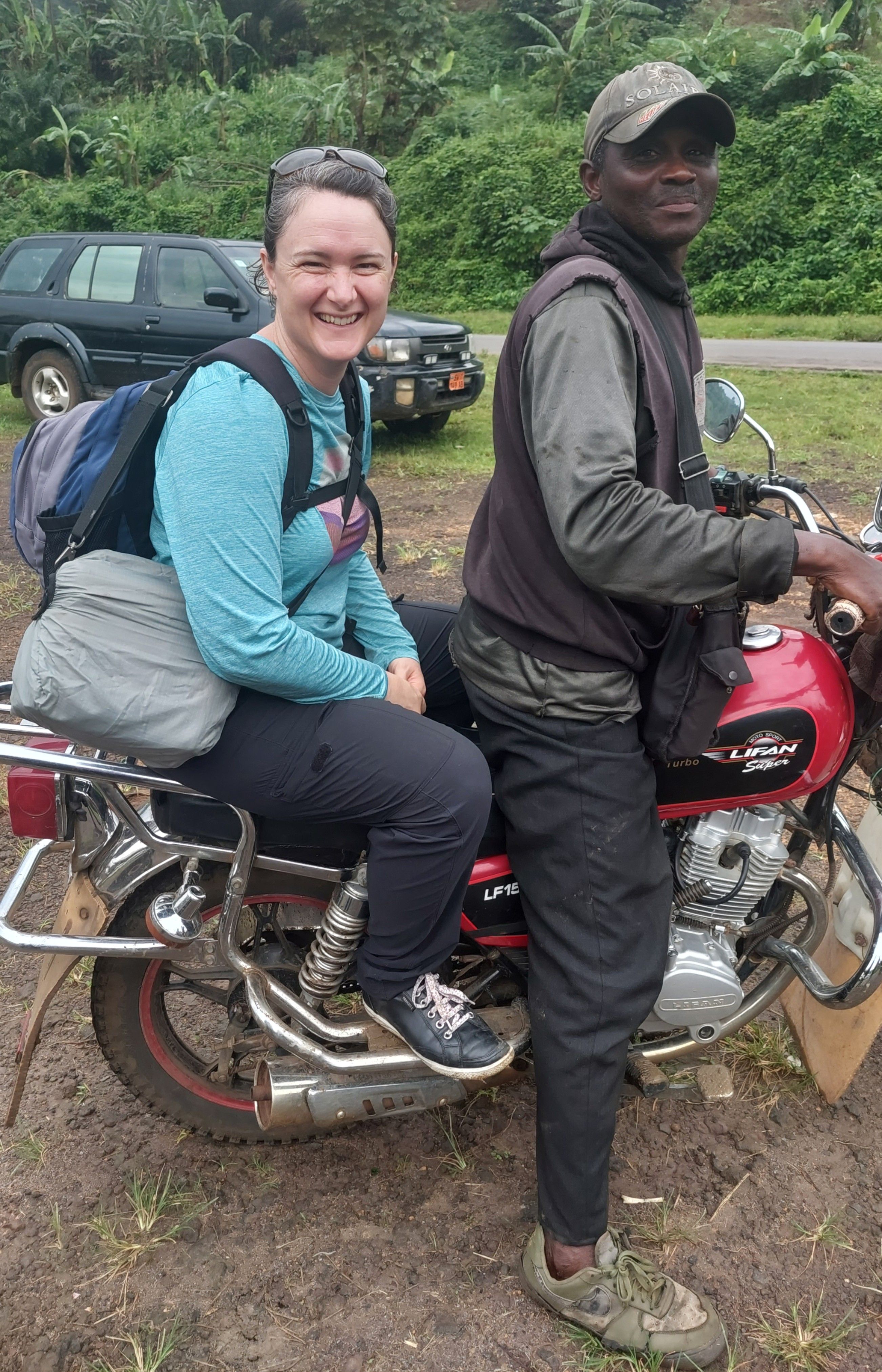
“I went to the fishing village of Mabeta - via the back of a motorbike, then a boat, then trudging through village to get to health centre. In that village, one in four women died in 2020 giving birth.
“We've reduced the maternal mortality to basically one in two years; through training (we have put a trained midwife in the village), giving them clean birth kits and an ongoing relationship to help the community own their health problems.”
In 2024, Rachel and a small team of midwives made another trip, taking simulators purchased through Direct Aid funding from the Australian High Commission to use for localised training.
Rachel said travelling to a country such as Cameroon was a dramatic reminder of how projects such as this make a real-world difference.
“We complain here but we are so well resourced - in Cameroon, you go to a classroom in a university and it's wooden desks fixed to the floor in rows,” she said.
“Some have simulation spaces but a lot of it is broken donated equipment.
“It does make you just appreciate the resources that we do have, how blessed we are.
“There is also a responsibility in that - not an obligation, but a responsibility - we're so blessed and so resourced, why can't we share it with other people to help improve the quality of learning?”
- Established in 2010, the Mary and Carl Leonard International Relations Award assists QUT students and early-career researchers make a difference through community work internationally, particularly in developing countries.
- Learn more about making a real-world difference through philanthropy at: Giving to QUT