By Amanda Maslin, 6 May, 2026
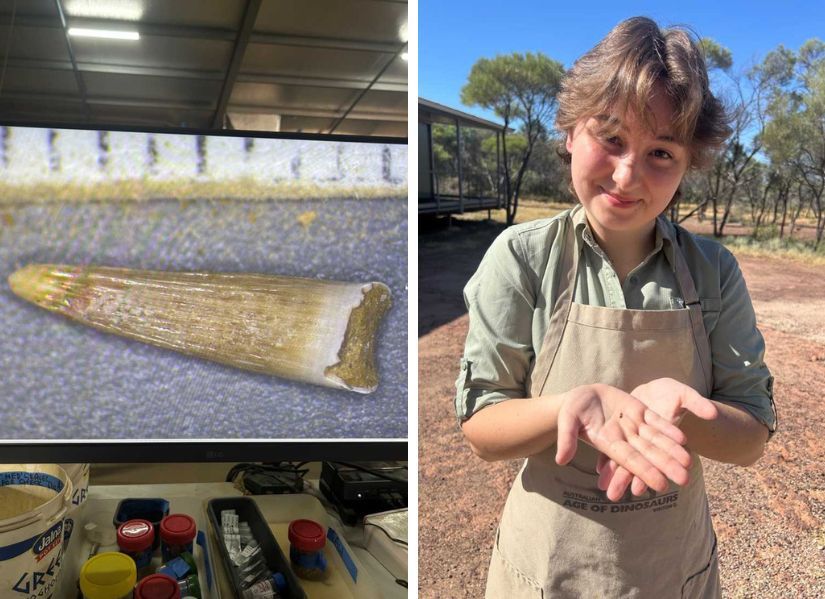
When QUT Environmental Science student Haylee Catania sifted through a tray of sediment on a dig site in outback Queensland, she wasn’t expecting much more than clay and rock fragments. But within half an hour, a tiny 9‑millimetre shard caught her eye. Once cleaned and examined under a microscope, the serrated edges revealed she had uncovered a prehistoric crocodile tooth.
'It was a surreal moment,' Haylee says. 'Realising that something so small could tell part of a much bigger story about Australia’s prehistoric environments was incredible.'
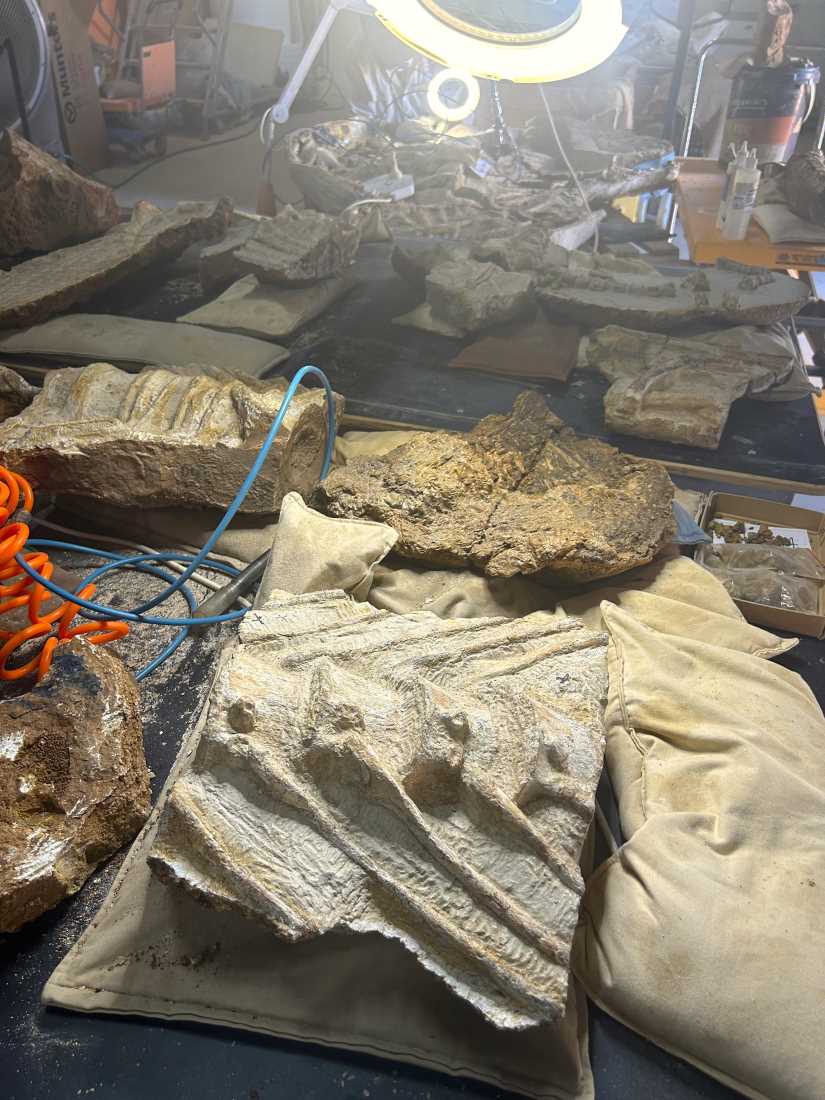 That discovery was just one highlight of her recent internship with the Australian Age of Dinosaurs Museum of Natural History, where she spent time learning fossil preparation techniques, sorting collections, and sieving sediment to ensure even the smallest fossils weren’t overlooked.
From theory to ancient landscapes
Haylee says her Bachelor of Environmental Science at QUT gave her the foundation she needed to make sense of what she was uncovering.
'In environmental science, we focus a lot on current ecosystems and conservation challenges,' she explains. 'Working with fossils added this whole new dimension. Seeing how environments and species have changed over millions of years made concepts like climate change and extinction feel much more real.'
Her studies in biodiversity, ecosystems, and environmental processes helped her understand the broader significance of each fossil fragment. Instead of simply identifying objects, she could interpret them within the context of long‑term environmental change.
Life and learning in rural Queensland
The internship also took Haylee far from the coast and deep into the landscapes of western Queensland — a 20‑hour bus ride that underscored just how vast and varied Australia’s environments can be.
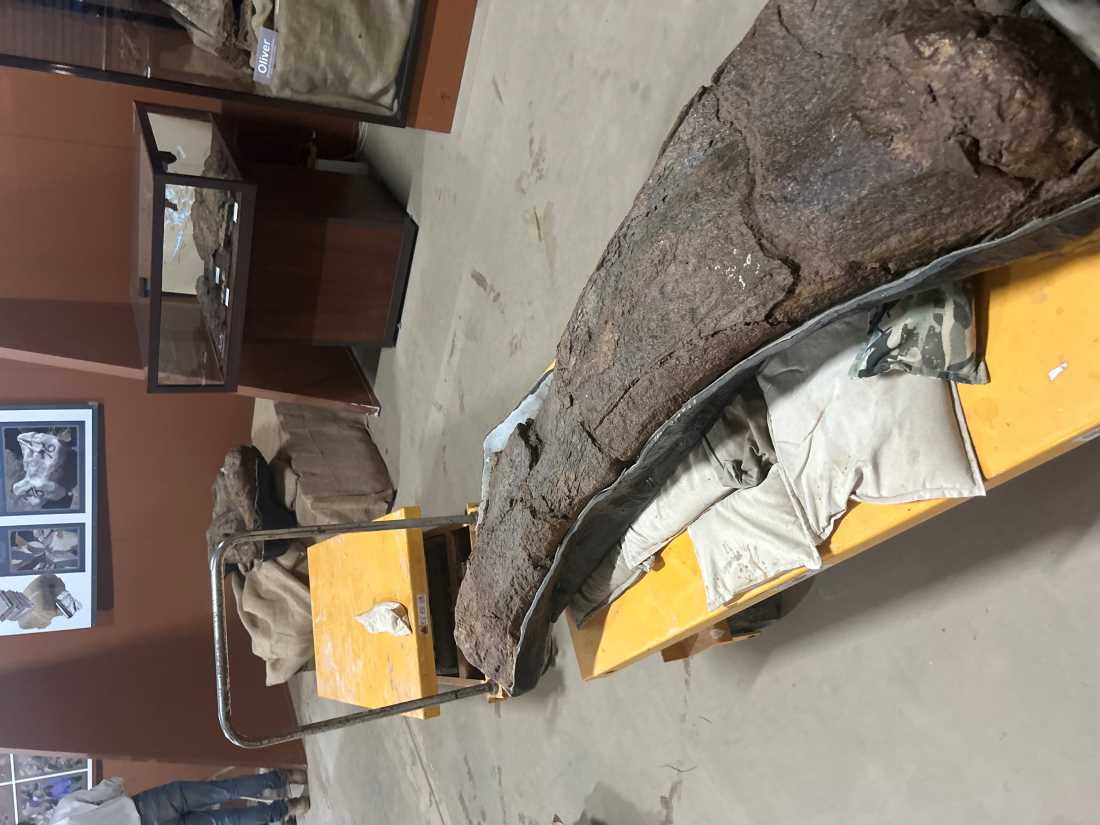 'The jump‑ups were incredible, and the views across the landscape were some of the best I’ve ever seen. Seeing how wildlife adapts to those harsher conditions really broadened my understanding of Australia’s ecosystems.'
Patience, precision, and the reality of discovery
One of the biggest surprises was the sheer patience required in paleontological work. Hours of careful drilling, carving, and sieving often precede a single find.
'It’s not like the movies where you uncover a giant bone straight away,' Haylee laughs. 'But when you do find something — even a tiny tooth — it’s incredibly rewarding.'
The experience has opened new possibilities for Haylee’s career. Conversations with researchers and field experts sparked ideas she hadn’t previously considered.
'It made me more interested in field‑based work and showed me different paths I could take,' she says. 'Talking to people who were so passionate about their work was really inspiring.'

Explore your future in environmental science
Inspired by Haylee’s story? Start building your own pathway into conservation, fieldwork and environmental discovery with QUT’s Bachelor of Science, featuring seven exciting majors.