By Lauren Hirst, 28 January, 2026
Recently I visited Cairns for a hands-on reef restoration experience. Spending time on the Great Barrier Reef and learning directly from people who work every day to protect it gave me a whole new appreciation for the science, teamwork and dedication behind reef recovery.
Day 1: Getting started
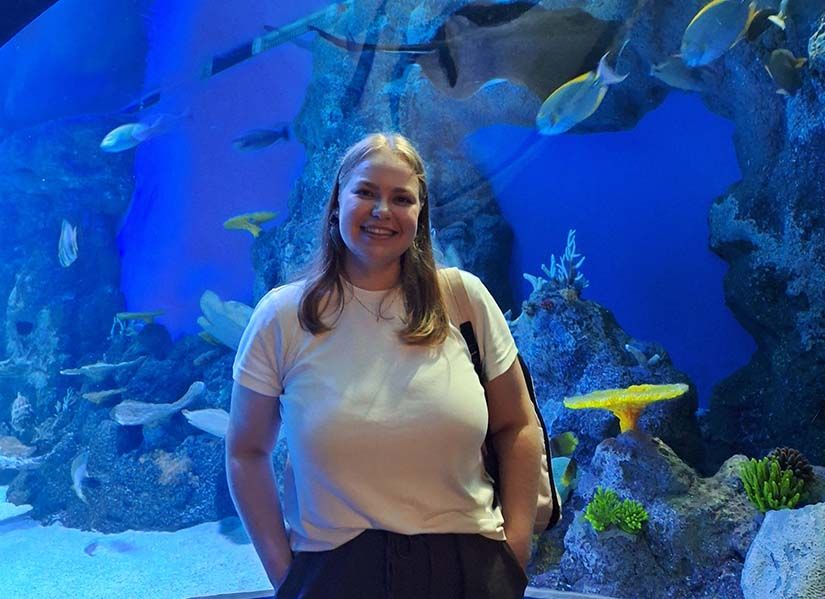
I started the trip at the Cairns Aquarium, which was a great chance to learn more about the marine life found across tropical Australia and the Great Barrier Reef. In the afternoon, I visited the MARS Reef Star Factory and learned how Reef Stars are made. We coated the steel structures twice in resin and crushed limestone sand, which helps the coral adhere to the structures. Understanding the level of detail and craftsmanship that goes into preparing these structures before they reach the ocean was fascinating.
Day 2: Preparing the reef stars
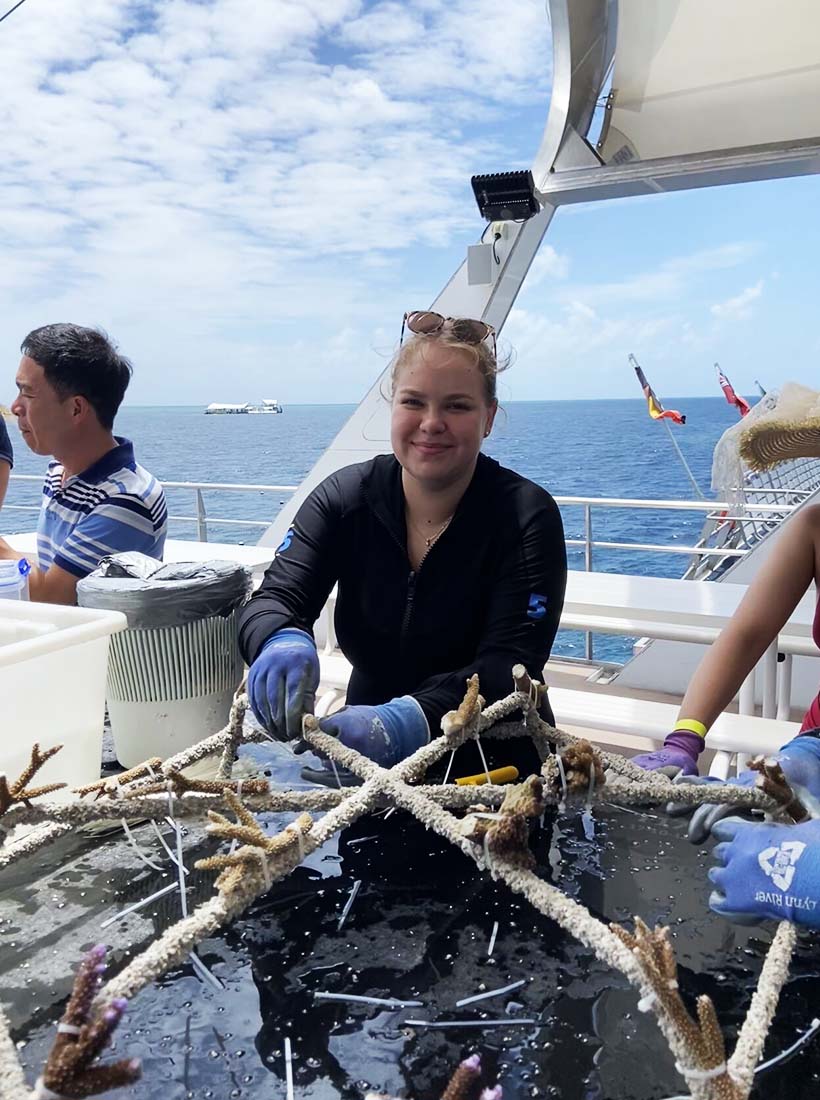
We travelled out to the Great Barrier Reef and stayed overnight at the Reef Magic Pontoon on Moore Reef. I worked with the team to attach fragments of Acropora corals to the Reef Stars and developed genuine hands‑on skills in the construction and preparation of the stars. I learned how to properly attach coral fragments, which is much fiddlier and more delicate than it appears. All fragments are responsibly collected using pieces that have naturally broken off the reef, ensuring that no healthy coral is removed. Each star holds fifteen fragments, secured with cable ties.
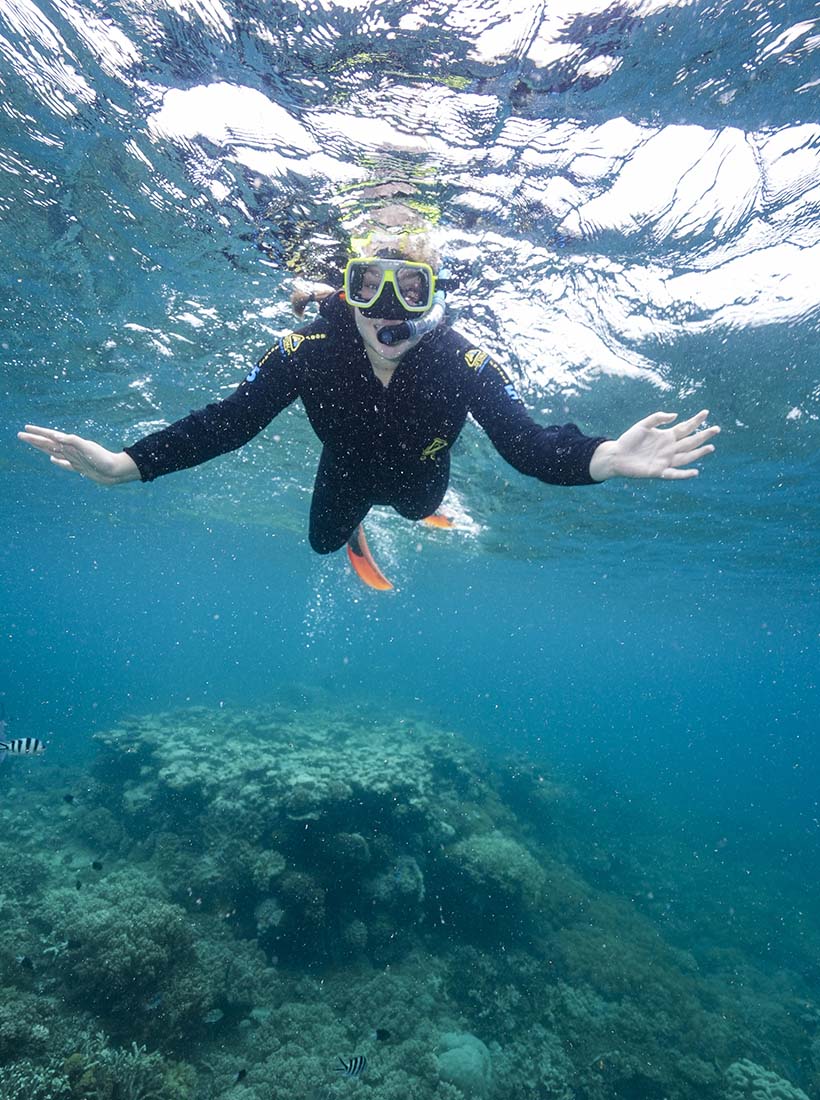
Once the Reef Stars were ready, we snorkelled them out to the deployment site and dropped them into the water. Deploying forty‑three stars over two days required a coordinated team of at least ten people, specialised equipment, and full‑day operations, which gave me a new appreciation for the scale and logistics involved in reef restoration. I also had the chance to practise my underwater photography skills in a real‑world research context and managed to capture some amazing photos.

Are you ready for your reef adventure?
Prepare to make discoveries we can't even dream about today and help solve future challenges by studying the Bachelor of Science at QUT. Major in Biological Sciences, Chemistry, Climate Science, Earth Science, Environmental Science, or Physics.
Day 3: When restoration comes to life
We started early to return to the site and watch the Reef Stars being properly installed. They are arranged like a giant jigsaw puzzle and tied together at the feet to create stable fields that encourage coral growth, stabilise rubble and promote long-term cover. We then visited an older Reef Star site, although it was almost impossible to see any stars at all. It was amazing to see that the structures had been almost entirely grown over in just a few years. Seeing such clear, visible evidence that this method of restoration is working was one of the most inspiring parts of the trip.
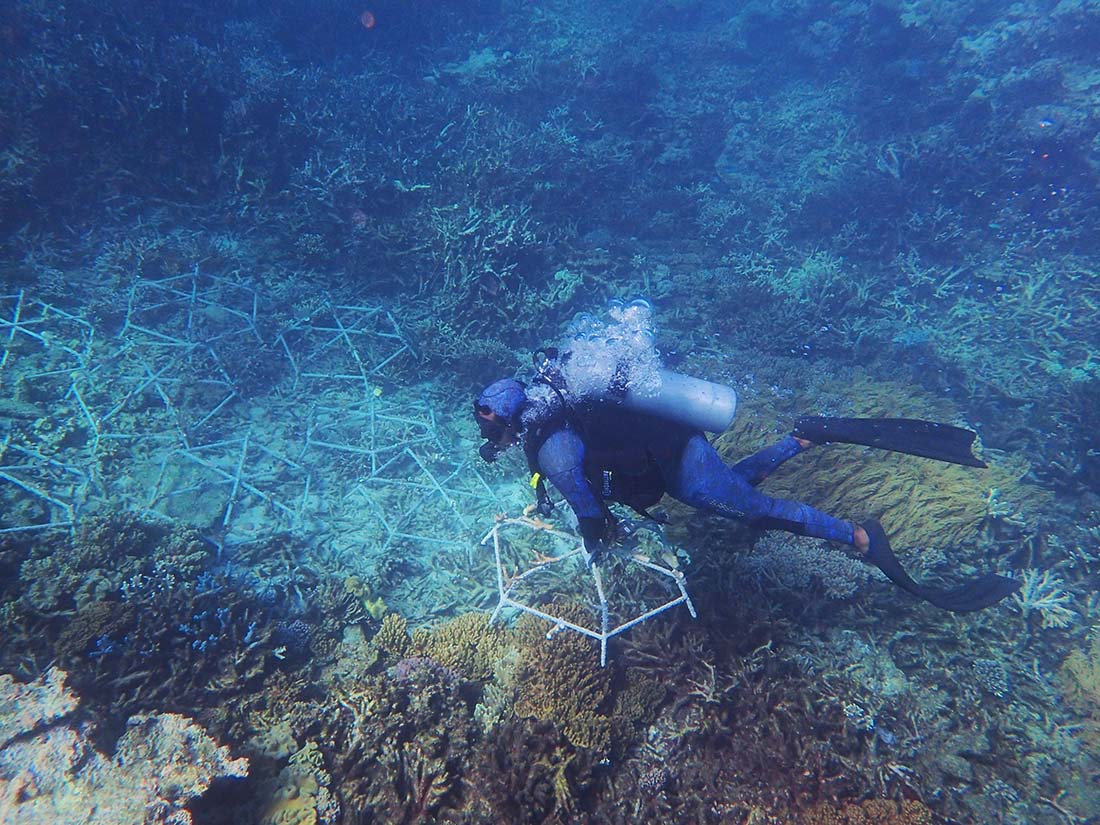
Photo credit: Lauren Hirst
Day 4: Connecting research to real-world restoration
This experience allowed me to broaden my research perspective beyond the laboratory. Through QUT’s Vacation Research Experience Scheme (VRES), I have been working on a project investigating QUT's bio-based adhesive for coral outplanting. My project supervisors, Dr Brett Lewis and Professor Scott Bryan, encouraged me to engage with restoration practices in the field so I could better connect my laboratory work to the realities of reef restoration, and I am grateful to them for helping to organise this opportunity.
This experience strengthened the connection between my research and its practical application and further reinforced my intention to continue into HDR study and pursue future work in reef restoration and marine science. I would like to extend my sincere thanks to Kayla Rowe, Eric Fisher, Freda Nicholson, GBR Biology, Reef Magic, and MARRS for hosting me during this experience.
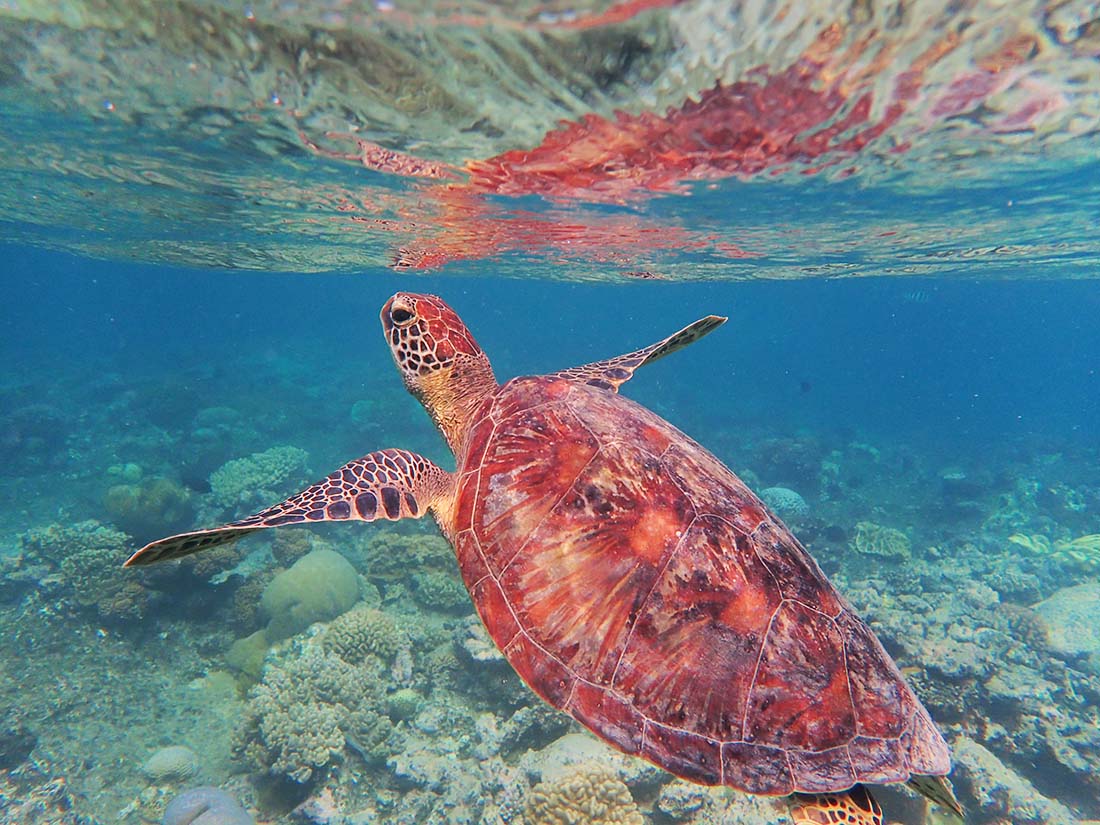
Photo credit: Lauren Hirst
Until next time...
Overall, this trip was an unforgettable experience and a real highlight of my science degree. Being able to apply what I’ve learned in the classroom to meaningful, real-world conservation work on the Great Barrier Reef was incredibly motivating, and it reinforced why I chose to study the Bachelor of Science in the first place. I’m so grateful for the opportunity to learn from people who are making a tangible difference, and I can’t wait to see where my science degree takes me next.