By Amanda Maslin, 26 May, 2026
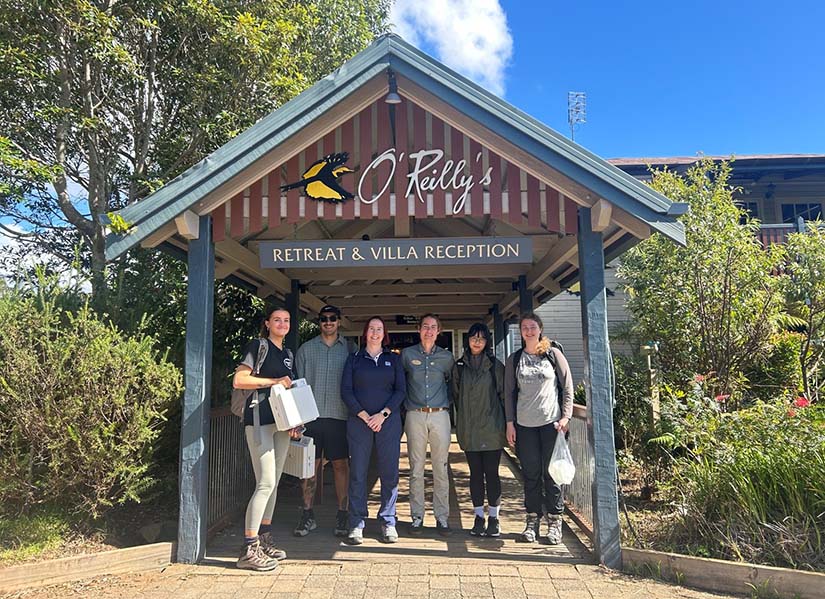
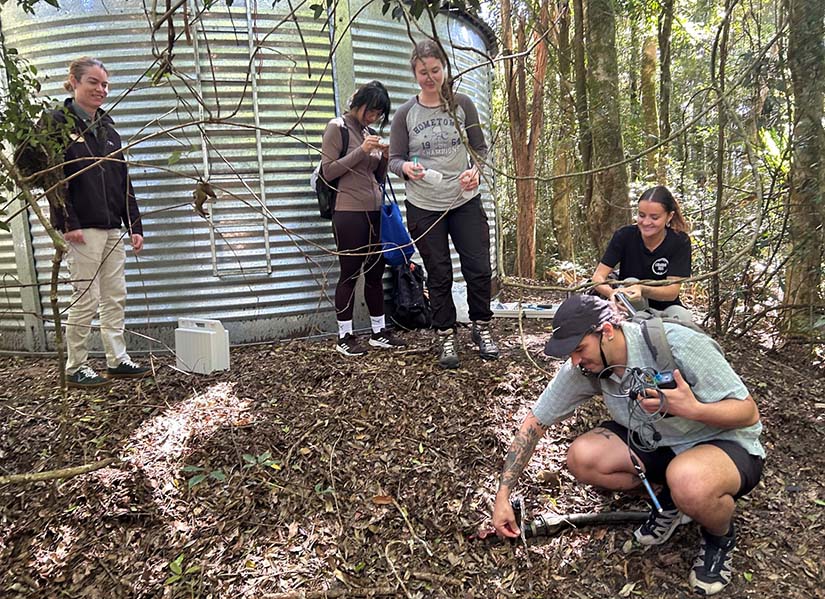
QUT Environmental Science students recently headed to O’Reilly’s Rainforest Retreat for their capstone Work Integrated Learning experience: a day designed to mirror exactly what environmental professionals do in the field.
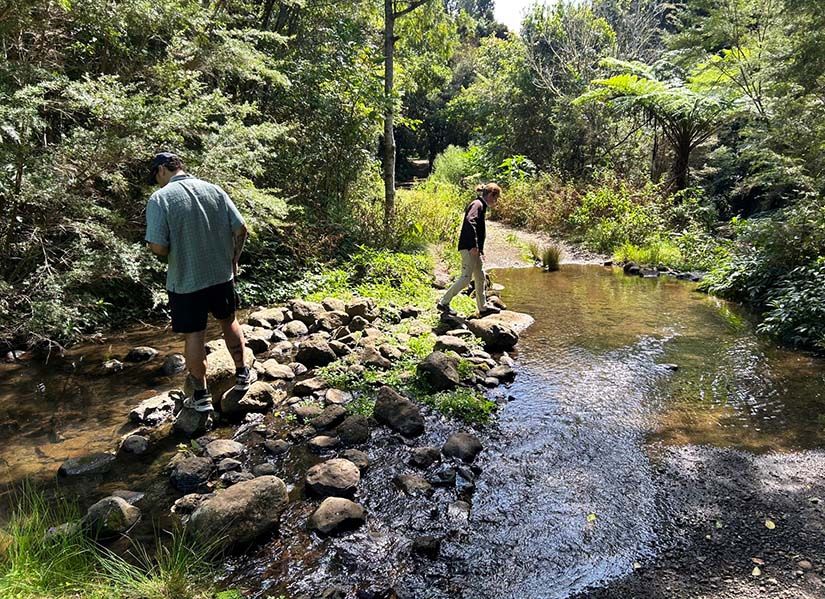
Led by Sustainability Manager, Jona Schummer, students identified sampling sites, tested water quality on location, and collected samples for laboratory analysis back on campus.
Applying professional skills on site
The trip pushed students to use the same skills expected in environmental consulting and government water monitoring roles. They applied critical thinking to choose meaningful sampling locations, used field techniques to collect and test water, and strengthened industry communication by working directly with O’Reilly’s staff to understand the site’s water challenges. These aren’t simulated tasks, they’re the real workflows used in water resource management.
'The opportunity to work on a real industry project was the most impactful part of the trip,' said environmental science student Kane Hawea (pictured second from left).
'Knowing our work would be used and valued by a real industry partner made the experience feel meaningful and cemented a lot of the skills I've developed throughout my degree.'
Work integrated learning in action
Collaborating with O’Reilly’s gave students the chance to contribute new data and insights to a genuine water management problem.
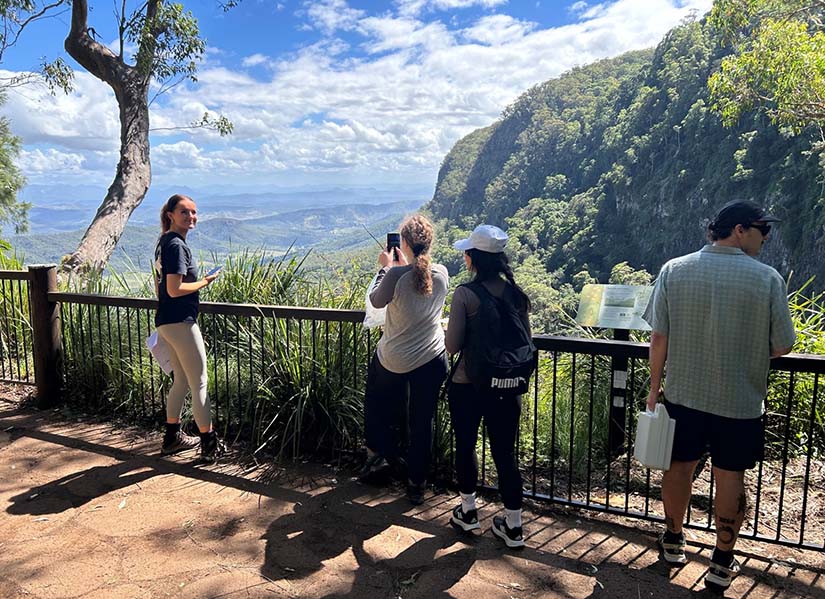
'Environmental monitoring requires flexibility and decision-making in real time, as conditions are rarely as controlled as they are in the lab or classroom scenario,' said Kane. 'It helped me understand the importance of collecting meaningful with the time and resources available.'
One of the standout moments came during an in-field discussion where students and the industry partner debated sampling strategies and future monitoring plans; a clear example of why QUT brings students into real environments to learn.

Did you know?
QUT science students have taken part in hands‑on experiences ranging from outback fossil internships to Great Barrier Reef restoration projects, giving them opportunities to contribute to real scientific work before they graduate? Work Integrated Learning (WIL) is built into every science major in the Bachelor of Science at QUT.
 Build career-ready science skills
Field experiences like the O’Reilly’s visit are just one example of how QUT builds real world learning into every science degree. From your first year through to your final capstone project, Work Integrated Learning gives you the chance to step into the shoes of a scientist and apply what you learn in practical, hands-on ways.
For Kane, the trip helped solidify his next steps.
'I came into this capstone knowing I wanted to specialise in water science. Having completed the project, I am even more motivated to pursue this career path and am confident to take the next steps,' he said.
Throughout your science course at QUT, you’ll take part in experiential learning; working with real data, real equipment and sometimes real industry partners. You’ll also build important skills like communication, project management and research practice, which help you understand how scientists work in professional environments.
By the time you reach the end of your degree, you’re using your knowledge to solve new, complex problems and contributing to real projects that matter.