By Amanda Maslin, 17 September, 2025
Did you know that as a QUT science student, your classroom isn’t limited to labs and lecture theatres? You’ll head out into some of Queensland’s most unique environments to put theory into practice.
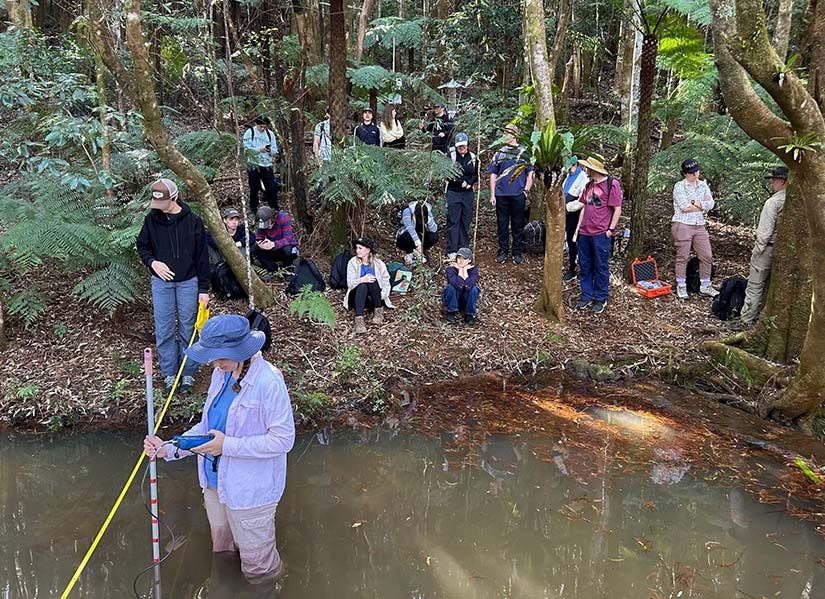
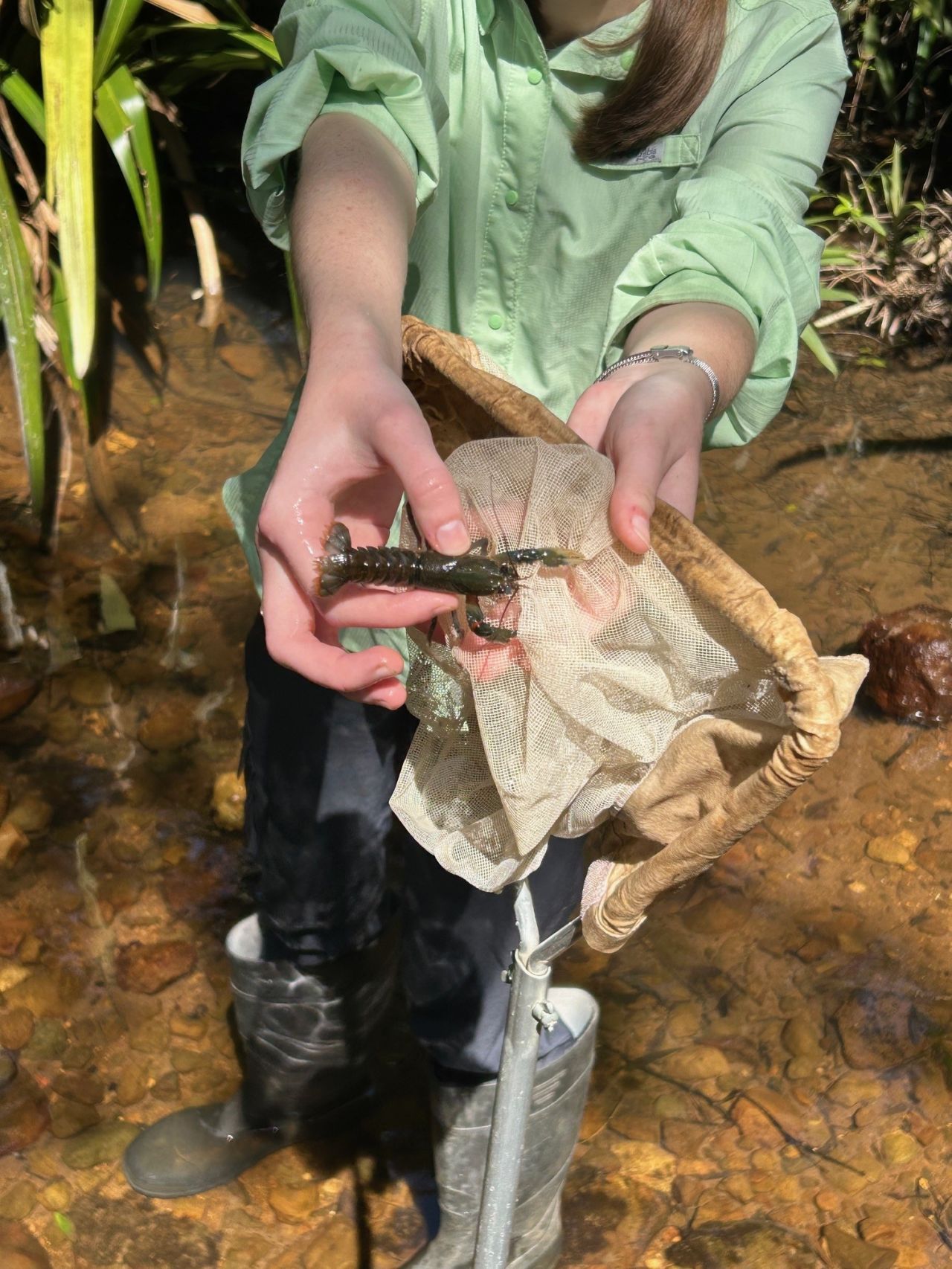
On this year’s groundwater field trip to Springbrook, our students tested monitoring equipment in World Heritage rainforests, learned directly from Traditional Owners and industry experts, and even joined crayfish monitoring with Queensland Parks and Wildlife rangers.
Learning in the field
The Springbrook field trip was designed around three key learning objectives:
- Develop practical skills in hydrological monitoring
- Build an appreciation of how interconnected hydrological systems are
- Understand the importance of integrated monitoring for water management
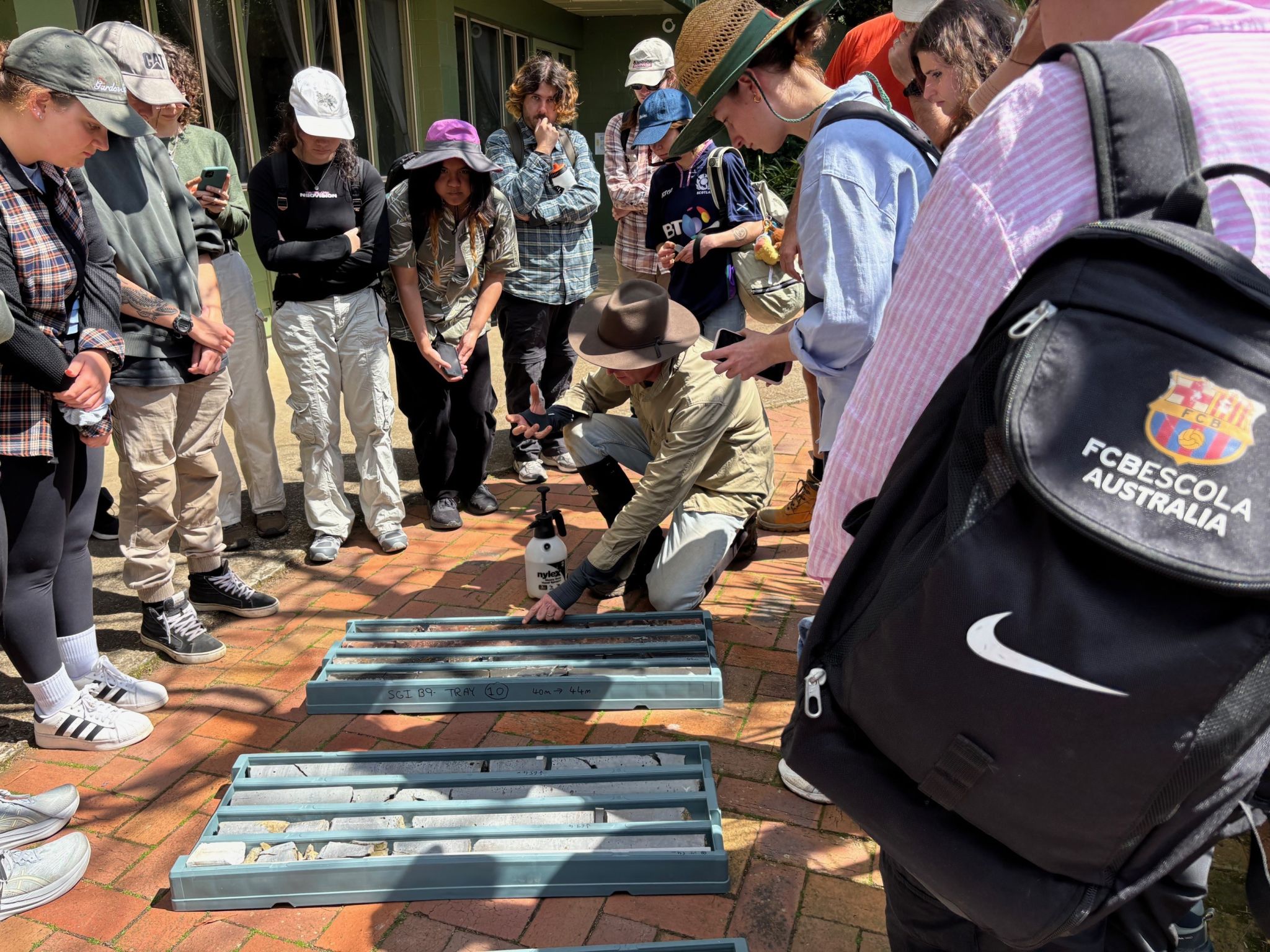
“Students used multi-meters, dip meters, flow meters, and water sampling equipment to collect physico-chemical and water level data which they’ll compare with four years of data from the Springbrook Groundwater Investigation,” said Dr Lucy Reading. “Some even joined in crayfish monitoring."
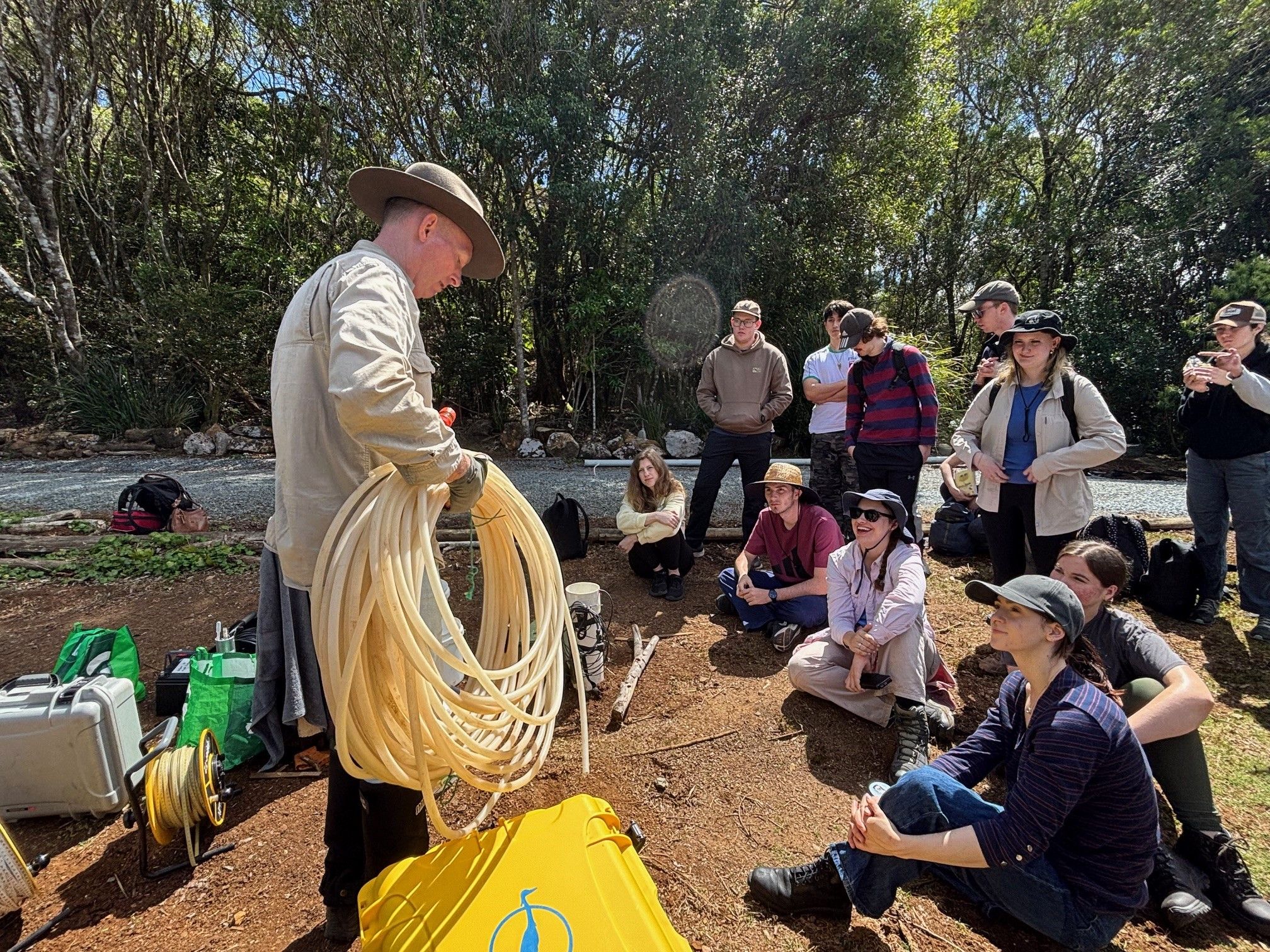
Students were particularly engaged by the cultural and ecological significance of Springbrook, as well as the chance to see innovative monitoring methods in action, including QUT’s new fog collectors, which help measure the role of cloud water in rainforest ecosystems.
"The highlight for me was getting in the creek to do monitoring surveys and seeing the groundwater bores and pumps in action," said Lauren Hirst, Bachelor of Science student. "I also loved the hike to the waterfall and being surrounded by such rich biodiversity, especially spotting the pademelons."
Connecting fieldwork to bigger challenges
"Field trips like this are not just about learning techniques; they connect directly to broader environmental challenges in Queensland, especially water management under a changing climate,’" said Dr Reading.
"QUT’s holistic ecohydrological monitoring approach at Springbrook can be adapted to other ecosystems, helping inform science-based policy and management.’
Students also got to hear from an incredible line-up of guest speakers:
- Mirrigen Roselene Best (Freshwater Kombumerri Ngarangwal Yoocum Yoocum woman of the Gold Coast and Saltwater Ngugi woman of Quandamooka, Moreton Bay) shared cultural perspectives on water and the importance of protecting Springbrook’s waterways.
- Grant Periott (City of Gold Coast) introduced students to the UNESCO World Heritage forests of Springbrook and the long-running Springbrook Groundwater Investigation, a collaboration between the City of Gold Coast, QUT, SeqWater, and the Queensland Government.
- Jim Stanley (QUT) highlighted his experiences in hydrogeological monitoring at Springbrook.
- Queensland Parks and Wildlife Service rangers spoke about the challenges of managing national parks and the unique characteristics that make Springbrook so important.

Want to go on a field trip to Springbrook?
Prepare to make discoveries we can't even dream about today and help solve future challenges by studying the Bachelor of Science at QUT. Major in Biological Sciences, Chemistry, Climate Science, Earth Science, Environmental Science, or Physics.
Pathways into research
Experiences like the Springbrook field trip could be just the beginning of your research journey at QUT. Through the Vacation Research Experience Scheme (VRES), you’ll have the chance as an undergraduate to step into real-world projects over the summer—working alongside researchers on areas like groundwater monitoring, ecohydrology, and science-policy translation.
And if you want to take it further, you can continue into postgraduate research, contributing to long-term projects at Springbrook and other unique environments. These opportunities let you build on your fieldwork, grow your skills, and make a real impact on the environmental challenges that matter most.