By Cayley Parker, 27 October, 2026

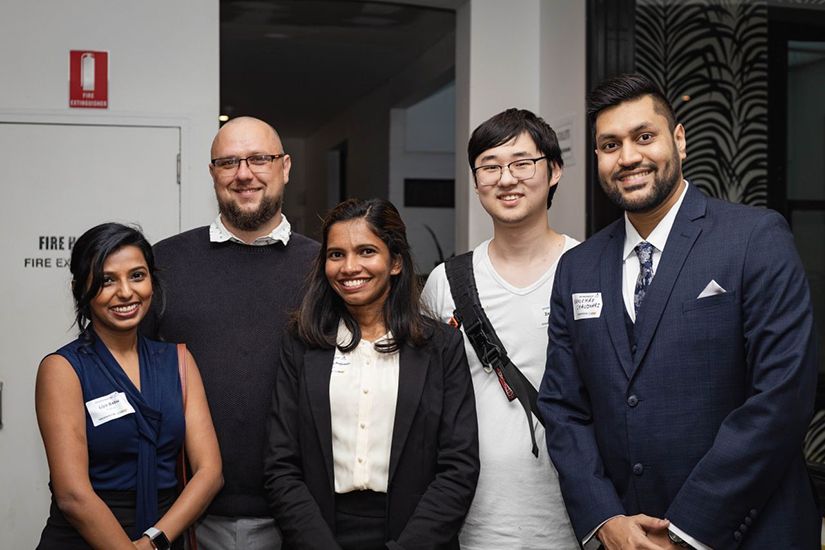
When Sanchay Chaudhari studied a Master of Information Technology at QUT, an industry capstone project gave him firsthand experience working on a real technology challenge.
Today, Sanchay is a Project Manager at OreFox AI, leading technology projects across mining, agriculture and search and rescue. He now partners with QUT on Work Integrated Learning (WIL) and capstone projects, supporting students through the kind of real-world project experience that helped shape his own career.
Building experience through an industry capstone
Sanchay chose QUT for its practical approach to learning, specialising in business analysis to combine his interest in understanding business problems with developing technical solutions.
During his degree, he worked on GeoDesk, a mining platform designed to give miners and geologists access to digital tools and field information in locations with limited connectivity.
"This experience allowed me to work on a real industry problem and develop skills in requirements gathering, stakeholder communication, task management and project delivery. These skills closely reflect the work I now do at OreFox AI," Sanchay said.
Since graduating, Sanchay's career has progressed from business analysis into project management and product delivery, where he now coordinates technical teams and guides projects from initial ideas through to practical solutions.
Supporting the next generation of IT students
Through OreFox AI, Sanchay works with Bachelor of Information Technology student teams on genuine business and technology challenges, providing project briefs, feedback and mentoring throughout the development process.
"My own WIL and capstone experience at QUT played an important role in preparing me for industry, so returning as an industry partner felt like a meaningful opportunity to give back," Sanchay said.
One project that stood out to Sanchay involved students working on OPSAR, OreFox AI's search and rescue planning platform. The team developed an approach to divide a large search area into practical segments and use road and track information to identify suitable access points for field teams.
"They considered how emergency teams would actually use the information in the field and how the output could support faster, more informed planning," he said.
Experiences like this have shown Sanchay the different perspectives students can bring to industry projects.
"Students help us reconsider how a problem is defined and identify opportunities we may have overlooked," Sanchay said.
What employers value beyond technical skills
Working on real industry projects also exposes students to aspects of technology delivery that can be difficult to replicate in the classroom, including changing requirements, deadlines, stakeholder expectations and responding to feedback.
Sanchay says technical ability matters, but it isn't the only thing he looks for when working with students or graduates.
"What matters is whether they ask thoughtful questions, accept feedback, solve problems and adapt when requirements change," he said.
"Technical knowledge is essential, but understanding how to collaborate, take ownership and deliver a useful outcome is what truly prepares students for the technology industry," Sanchay said.
Advice for future IT students
For students thinking about their future careers, Sanchay recommends gaining practical experience before graduation.
"Take capstone projects, internships, volunteer opportunities and personal projects seriously, because they teach you how to apply technical knowledge to real problems," he said.
Now working with students from the other side of the industry partnership, Sanchay says one of the most rewarding parts is that the learning continues both ways.
"I learn something new from every student and every team I work with.", he said.

Ready to gain hands-on experience while you study? Explore the Bachelor of Information Technology at QUT.
Looking to take your IT skills further? Explore our Master of Information Technology