By Talulah Jung, 17 September, 2025
This winter, I had the incredible opportunity to travel to Makassar, Indonesia, with my QUT research team to trial a new underwater bio-adhesive as part of global efforts to restore coral reefs. What followed was a whirlwind of cultural immersion, hands-on science, and unforgettable moments under the sea.
 First impressions of Makassar
After 15 hours of travel, I finally touched down in Makassar—a coastal city buzzing with energy yet balanced with a relaxed, seaside vibe. Think roadside food stalls, chaotic traffic, and the rhythmic call to prayer drifting across the skyline.
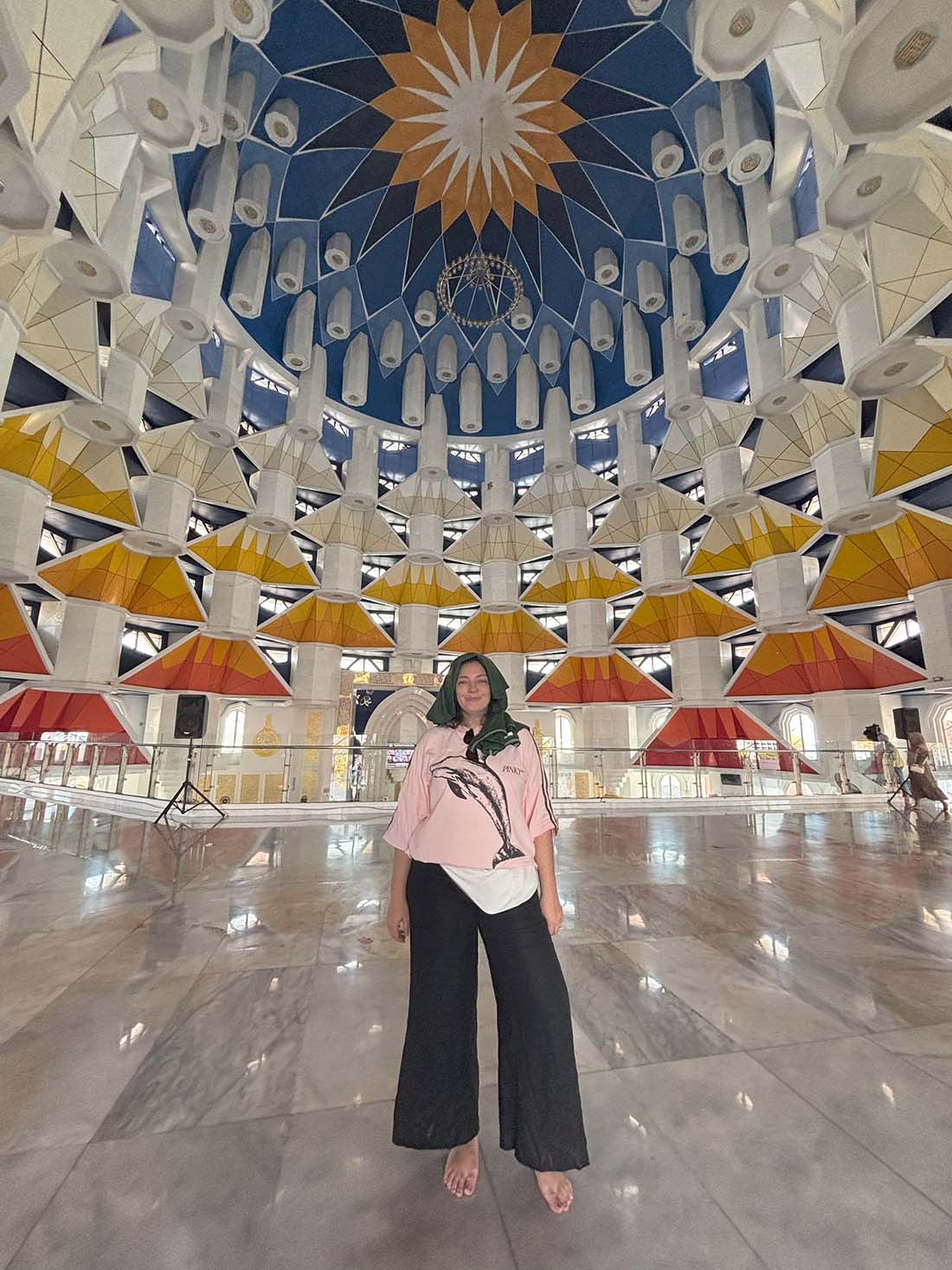
One of my first stops was the spectacular 99 Dome Mosque, designed by acclaimed Indonesian architect Ridwan Kamil. The kaleidoscope of domes rising over the waterfront was nothing short of breathtaking. The city itself was just as colourful, from ancient statues on street corners to markets spilling over with local flavours.
Meeting with the MARRS team
The real purpose of our trip began at the MARRS Reef HQ, where we were welcomed by the Mars Sustainable Solutions team. MARRS (Mars Assisted Reef Restoration System) is famous for its reef stars, hexagonal steel structures coated in sand that act as a framework for corals to grow. These reef stars have been deployed across thousands of square meters of damaged reefs, creating a foundation for fish, turtles, and other marine life to return. 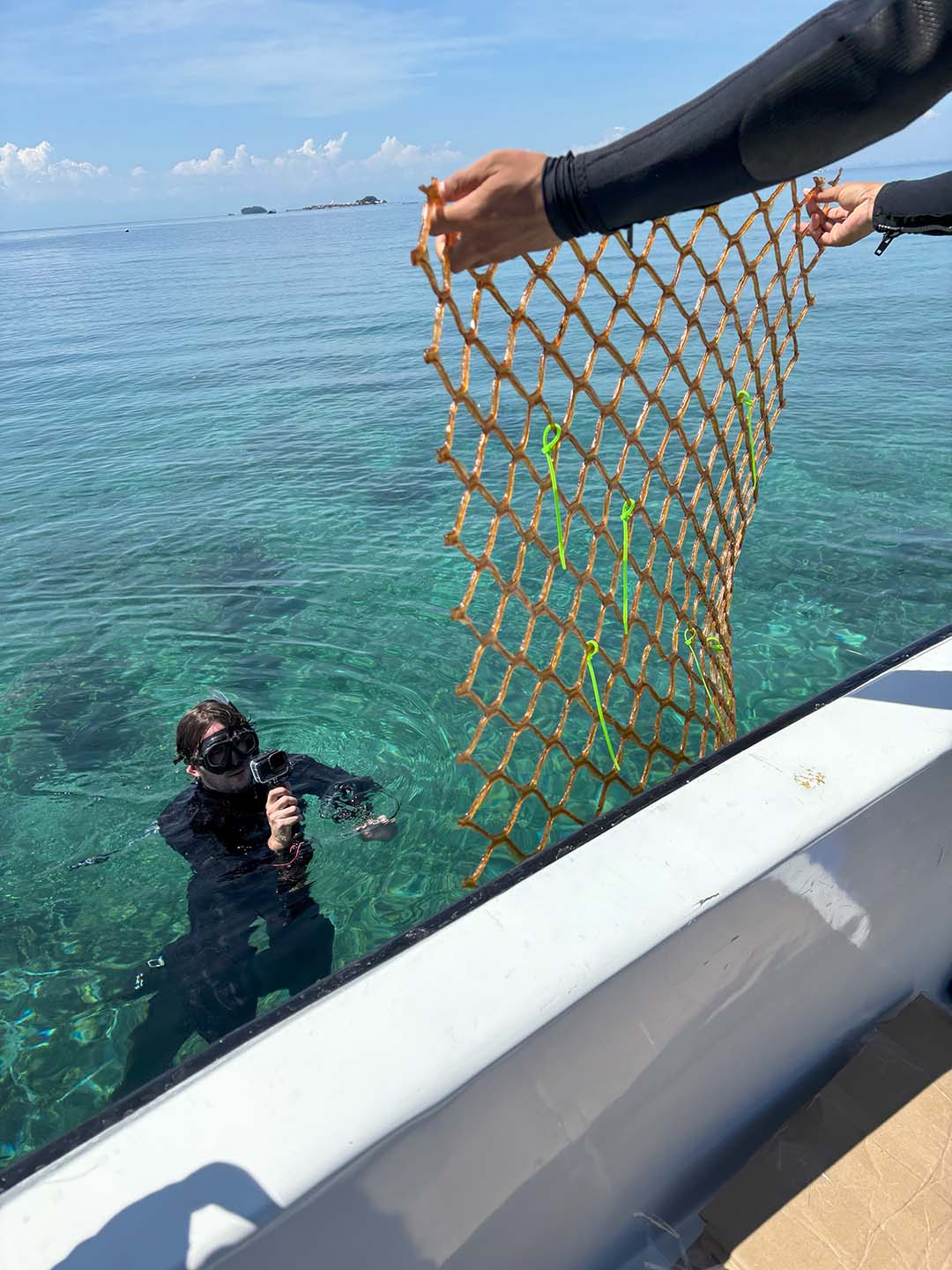 Our research team came to share something new: a prototype biomesh, made from eco-friendly, locally sourced materials. Designed to biodegrade overtime, the biomesh can be used to stabilise coral rubble and facilitate reef repair. The biomesh may be a plausible alternative to plastic mesh, which leach harmful microplastics into the marine environment. My job was to pilot test the bio-adhesive in the field and observe its capacity for rubble stabilisation. It felt incredible to contribute a piece of our QUT lab research to this vital, on the-ground restoration work.
Into the Coral Triangle
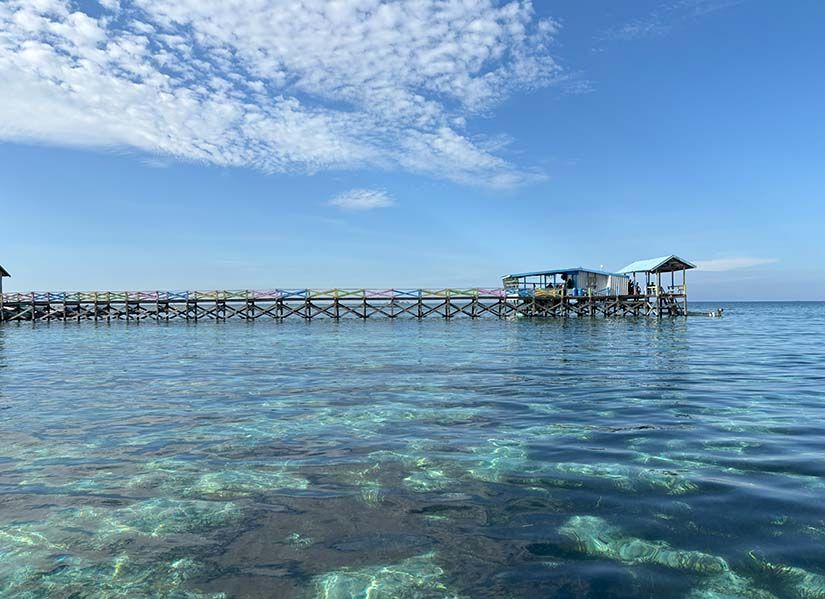
The next leg of our journey took us to Bontosua Island in the Spermonde Archipelago, home to the famous Hope Reef. This region sits within the Coral Triangle, an underwater wonderland covering six million square kilometres, home to 76% of the world’s coral species, 3,000 species of reef fish, and six of the world’s seven marine turtles. It sustains over 120 million people and is crucial to the health of our oceans.
After a fun, fast-paced speedboat ride, we arrived at the island, ready for the fieldwork ahead. The MARRS team set out an ambitious schedule:
- Snorkel over 2,500 m² of restored reef
- Help install 200 new reef stars
- Outplant over 1,000 coral fragments
- Test our biomesh on the reef for the very first time

Want to follow Talulah's steps?
Prepare to make discoveries we can't even dream about today and help solve future challenges by studying the Bachelor of Science at QUT. Major in Biological Sciences, Chemistry, Climate Science, Earth Science, Environmental Science, or Physics.
Fieldwork at Hope Reef
 The highlight was seeing our biomesh lowered into the reef. By stabilising coral rubble, the mesh creates a base for new corals to attach and grow, kickstarting the reef-building process from the ground up. Watching it in action for the first time was a dream come true; turning years of research into something tangible, alive, and already helping the reef.
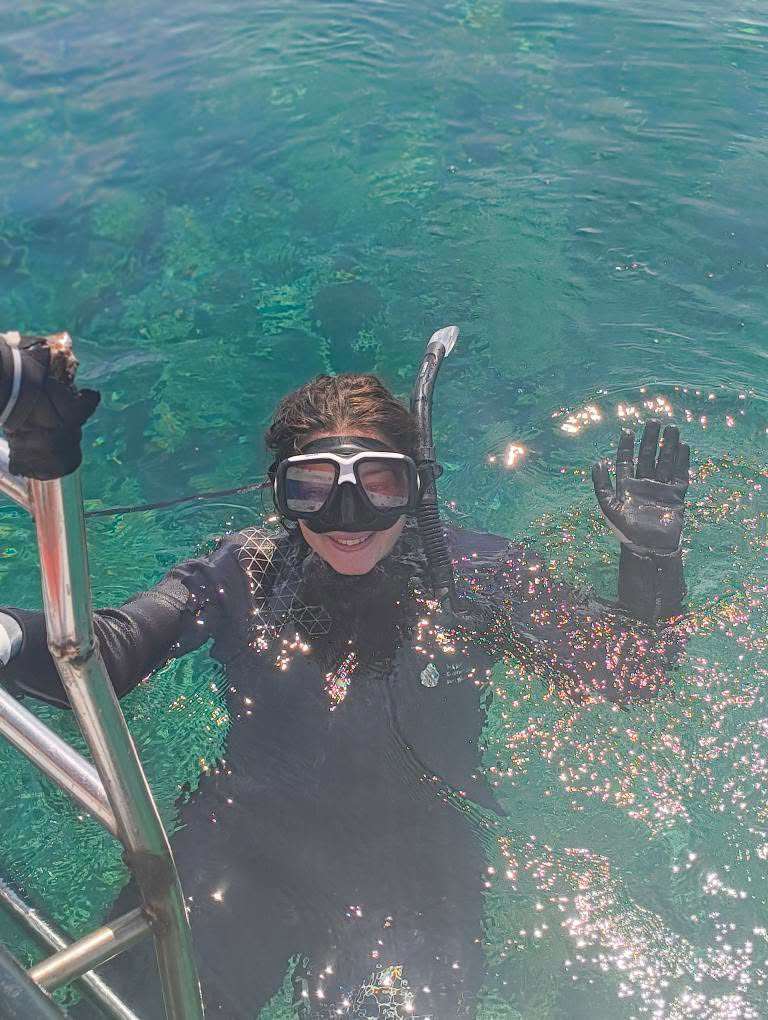
My own snorkelling adventure came with jellyfish stings (ouch), but I count it as part of my ocean ‘initiation.’
We also learned to build reef stars with the local island community, layering sand over the steel frames to make them more hospitable to corals. It was a reminder that reef restoration isn’t just about science. It’s about people, communities, and livelihoods too.
 Reflections
As the sun set on our final night, we shared a seafood feast with the MARRS team and reflected on the week.
For me, this trip was more than just fieldwork. It was about connecting our research to the real world, seeing the direct impact it can have on ecosystems and people, and being part of a global effort to protect our oceans.
This was only the beginning for our biomesh trials, and I can’t wait to see how the reef responds in the months ahead. Until next time, Makassar—you’ve given me memories (and stories) to last a lifetime.
Ready for your next adventure? Study the Bachelor of Science at QUT.