By Amanda Maslin, 2 December, 2025
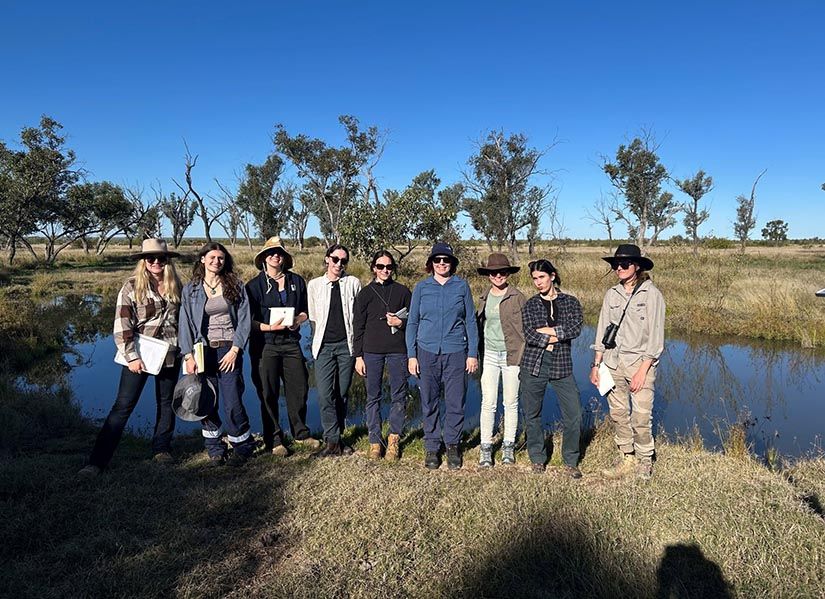
Eight final-year Environmental Science students recently travelled to Turraburra and Longreach for their individual capstone research projects completing fieldwork and participating in cultural learning activities alongside QUT staff and local partners. The experience gave students new perspectives on environmental science, Country and the kinds of career paths they may pursue next.
Immersed in Story, Culture and Country
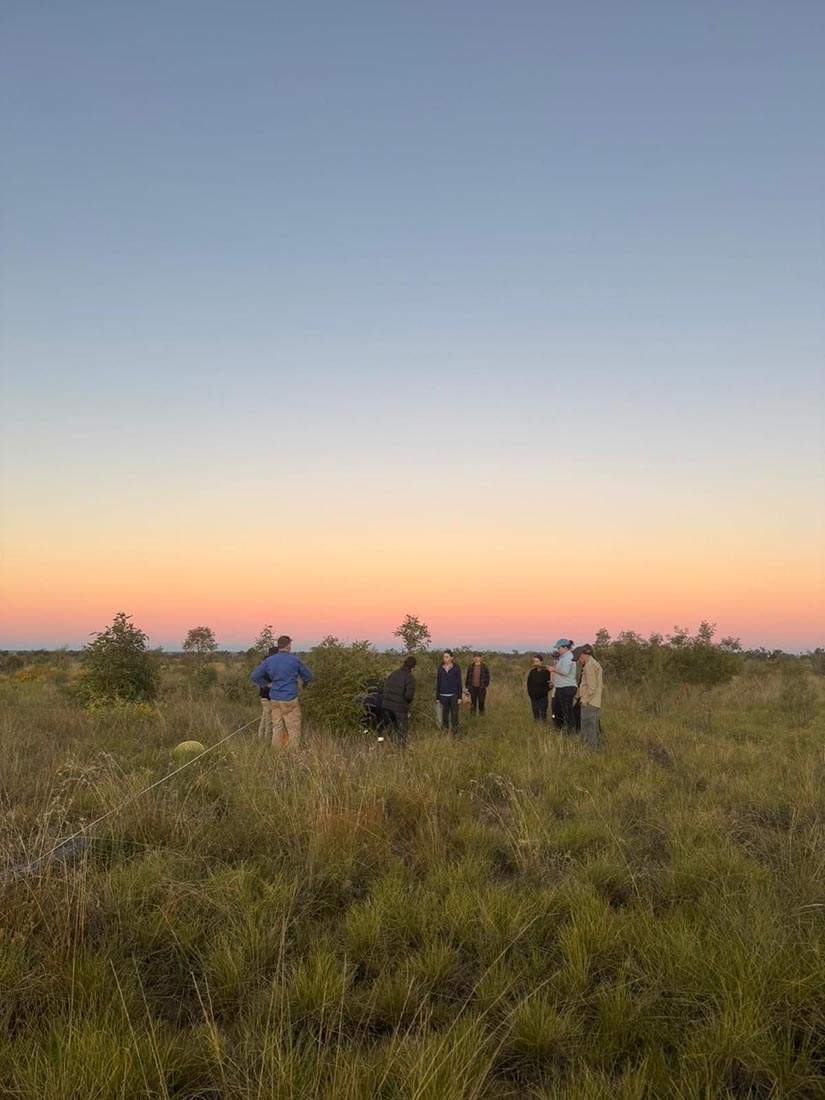 Their journey began on Iningai Country at Turraburra — a place rich with culture, story and deep environmental knowledge. They were hosted by Suzanne Thompson, Director of the Yumbangku Aboriginal Cultural Heritage and Tourism Development Aboriginal Corporation.
Environmental Science student, Amber Bruce, says the experience was unlike anything she’s done before:
'Suzanne spoke powerfully of the depth of Indigenous knowledge… it reinforced how important it is for Western science and Indigenous knowledge to come together when we care for Country.’
Environmental science student, Amy Miller, shared a similar reflection: ‘The insights shared by Suzanne will stay with me forever. We immersed ourselves in the culture and learnings of the Iningai people, and it completely reshaped how I think about co-design in environmental science.’
Around campfires and guided walks, students learned about cultural burning, bush foods, Indigenous artefacts and lore.
Hands-On Science in Longreach
 From Turraburra, the group travelled to Longreach where the scientific fieldwork ramped up. Students collected soil cores, water samples, vegetation data and eco-acoustic recordings, and visited ALTAR long-term monitoring sites used by QUT researchers.
'Through our fieldwork in Longreach, my project focussed on investigating the localised factors that influence soil organic carbon dynamics in Longreach,' Amy said (pictured on the left at the TERN Longreach Flux Tower, as part of the Australian Long-Term Agricultural Research.)
'With Australia's pursuit of Net Zero and the nation's ongoing development of carbon offsetting technologies, my project felt hugely pertinent to the current environmental science landscape.'
Amber’s eco-acoustics project — exploring how vegetation and artificial water points influence species assemblages — also gained momentum: ‘I’m eager to see what the results reveal to help guide how we care for arid rangelands more effectively.’

Keen to explore where environmental science can take you?
Discover the Bachelor of Environmental Science at QUT and find out how you can get hands-on experience, learn on Country and work alongside real researchers.
 Beyond the field
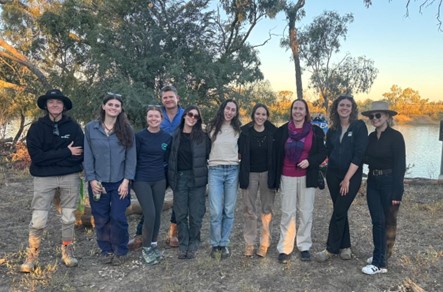
Dr Lucy Reading, who led the trip alongside QUT staff Professor David Rowlings, Olivia Bell, David Tucker and Sandra McEwan, says the impact of these experiences is enormous:
‘Getting to be part of experiences like this with my students is truly the most rewarding part of my job at QUT. And for many students, the experience sparked something bigger: Three of the students are now exploring further study options in environmental science because of what they experienced on this trip.’
For Amy Miller, the trip opened up a new door for her:
'I have decided to pursue a Master of Philosophy at QUT in soil greenhouse gas analysis! This decision was largely driven by the field experience at Longreach and Turraburra,' she said.
From cultural knowledge to cutting-edge research, the Turraburra–Longreach field trip offered students an inspiring look at the real work of environmental scientists — and the difference they can make in caring for Country.
Guaranteed field work and hands-on learning in the lab
The QUT Bachelor of Science degree features common units in the first year, giving you the opportunity to explore the full range of science majors before you choose your career specialisation from a wide range of majors.