Countdown on for student satellite space launch in Sweden
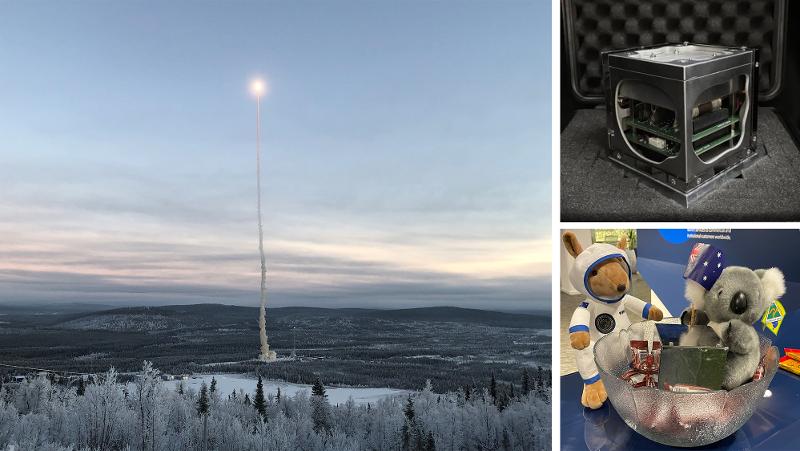
It’s a nail-biting week for a team of QUT students who are counting down to their palm-sized satellite being blasted into space aboard Swedish sounding rocket SubOrbital Express-5 after its launch window opens this Thursday at 8.01am AEST.
SATypus-ONE is a 10cm square CubeSat designed and built by QUT Aerospace Society (QUTAS) club members at their university workshop in Brisbane and named after Australia’s iconic platypus.
If all goes to plan, it will become the first payload built by QUT students to reach space.
The students are crossing fingers for favourable weather conditions from Thursday onwards, when the 11-day launch window opens at the Esrange Space Center in northern Sweden, which is owned and operated by Swedish company SSC Space.
QUTAS Space Infrastructure Systems program lead Luc Fichera said the team was expecting to only get two hours’ notice of the launch once mission control greenlighted suitable weather conditions.
They will then gather on campus to watch the public livestream by SSC Space, which built the 13-metre-high SubOrbital Express-5 rocket that will carry SATypus-ONE past the edge of space and back safely to Earth.
The satellite is one of 12 experiments already integrated into the 13-metre high rocket that will experience over six minutes (400 seconds) of microgravity during the 15-minute mission.
This short-but-valuable time will enable research teams who have bought space on the private rocket to analyse processes more clearly without the effects of gravity.
The diverse mix of 12 payloads from organisations in nine countries range from ‘KRABS’ – a biomedicine experiment investigating how human blood cells behave in microgravity – to ‘SpaceGinger-01’, an experiment looking at how microgravity affects samples of red hair taken from a famous Swedish influencer.
QUTAS member and former president Jaidan Rommel Griffin, who is studying electrical and aerospace engineering and physics, and QUT physics graduate Keiran Wagstaff sponsored the purchase of the payload space aboard SubOrbital Express-5.
Jaidan and Keiran are also co-founders of Brisbane space technology company ImplementSpace.
Jaidan has travelled to Sweden to watch the launch from mission control at Esrange Space Centre.
He said it had been a year-long labour of love for the QUT Aerospace Society team to reach launch week.
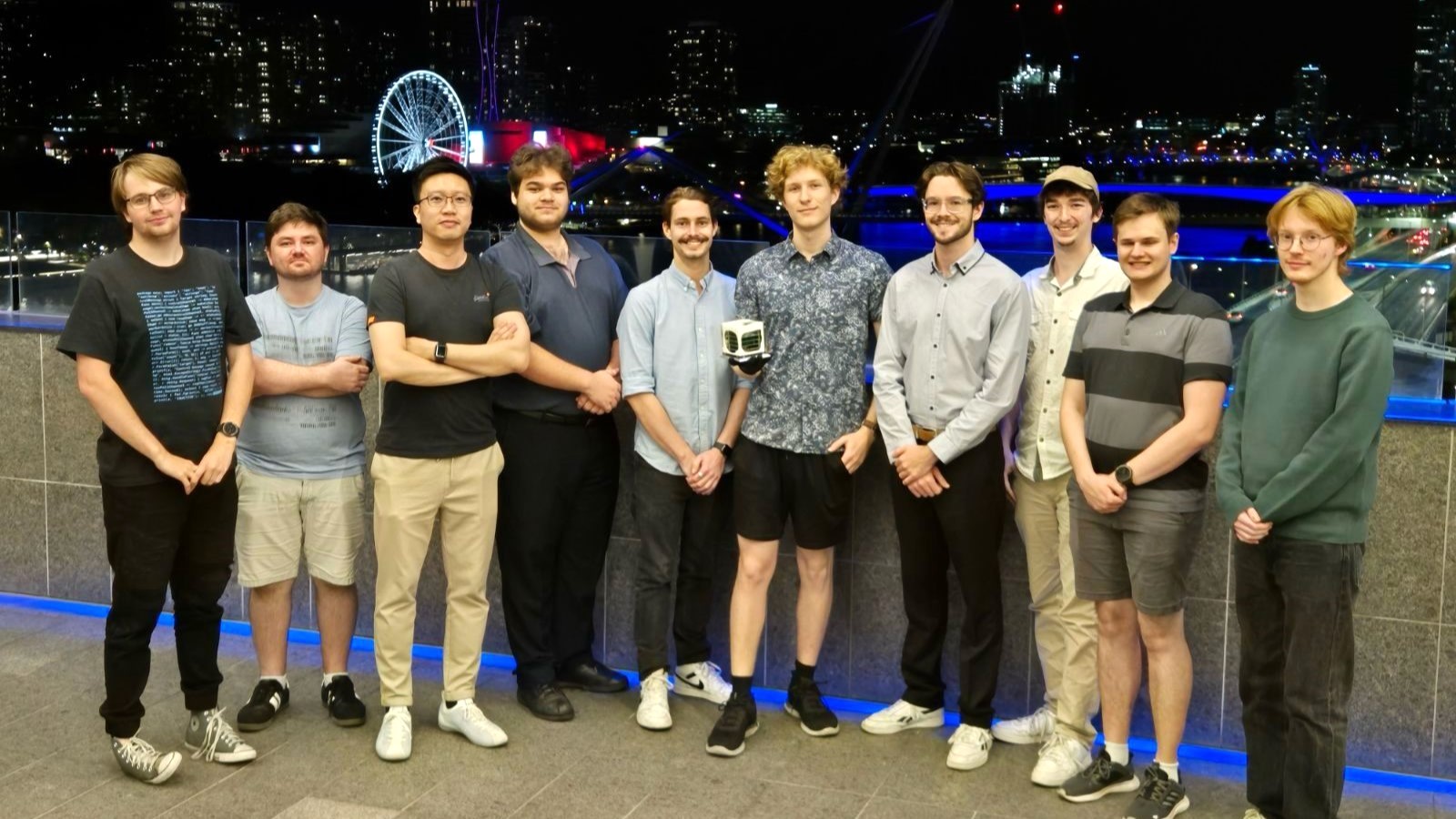
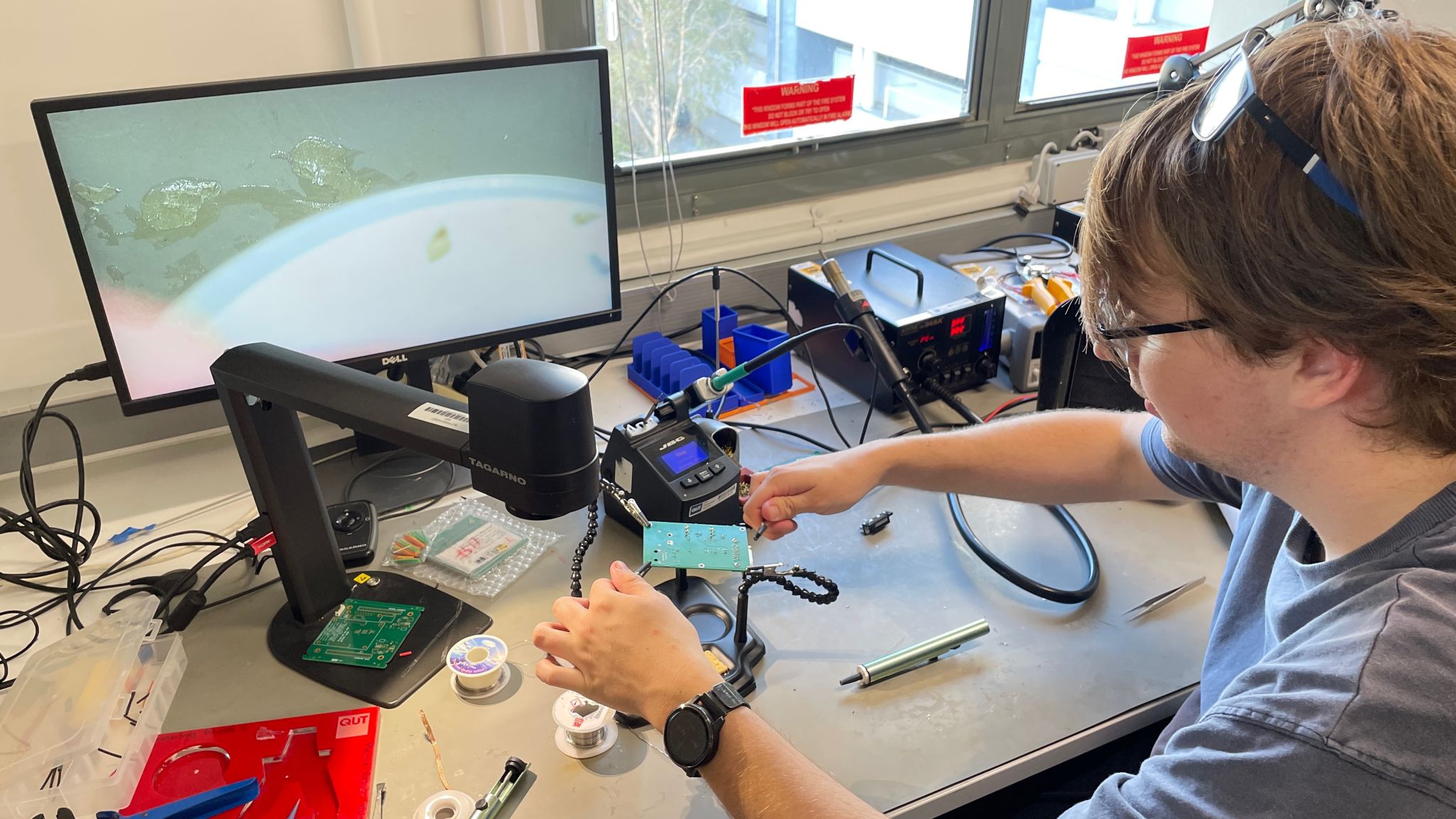
“At its peak the society had over 30 students involved in producing SATypus-ONE, from both double and single degrees in engineering and science – mainly electrical and aerospace engineering, mechanical engineering, software, IT and physics students,” Jaidan said.
“For this mission, SATypus-ONE has radiation sensors onboard to collect data on ionizing radiation originating from the Sun at an altitude of 100km to 250km above the earth.
“It contains two Kromek gamma-ray spectrometers that hope to collect data on solar activity and demonstrate that this research can be done with inexpensive off-the-shelf components assembled by students.
“As this is the first flight of any device or satellite designed and built by the students at QUTAS, the mission also serves to validate the satellite itself, proving that it can survive rocket launch and re-entry conditions.”
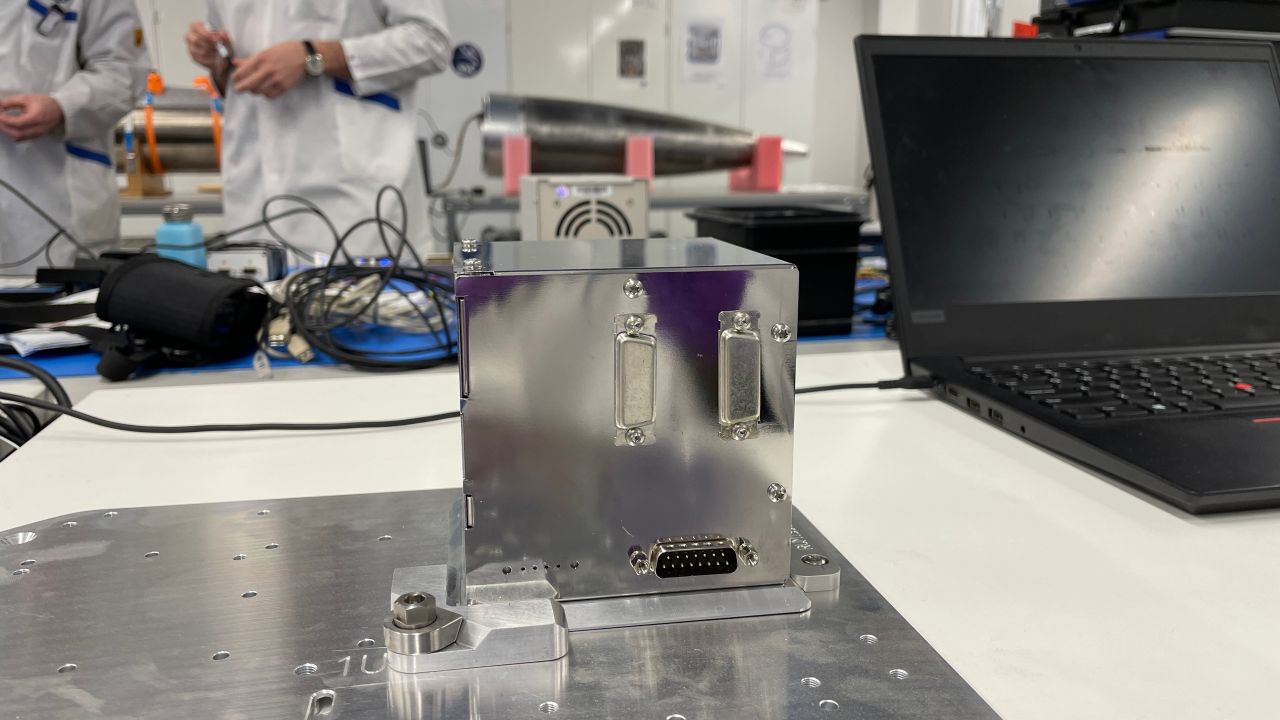
Luc, who is an electrical and aerospace engineering student, said SATypus-ONE had undergone rigourous pre-flight testing in Australia and Sweden.
“The satellite was sent to Sweden in mid-January after vibration testing at CSIRO to confirm that it will survive launch conditions,” he said.
“We also had to gain approval from the Australian Space Agency to be part of the launch.
“In Sweden, SATypus-ONE has successfully been put through a series of intense integration tasks and functional assessments by SSC Space engineers to make sure it is a safe addition to the rocket and can survive the mission.
“It will experience up to 20Gs and travel to a maximum 260km above the Earth’s surface at a speed of just under Mach 7.”
The SATypus-ONE team members include new society president Charlotte Kelly, Guy Carroll, Ethan Griffin, Lachlan Gough, Daniel Crossley, Joshua Major, Nick Probst, Brody Squires, Sam Friganiotis, Dermott Craig, Megan Barclay, Maurice Blake, Dee Yardley, Hayley Murphy, and Joade Lennox, Industry support was provided by mission director Dr Eric Yang and Matt Cook.
With the SATypus-ONE build complete, QUTAS members have already moved on to their next challenge – designing and building a larger CubeSat, Aculeus.
They plan to launch this satellite to around 10,000 feet in their own three-metre rocket, Lanius, at the 2026 Australian Universities Rocket Competition (AURC) from September 30 to October 4 at White Cliffs in New South Wales.
The students came third in last year’s AURC in the 5000 feet COTS division, with their rocket Mergellus reaching an altitude of over 4000 feet.
The society also takes part in regular rocketry days south of Brisbane, holds annual industry nights and does site tours to local industry members.
Main image at top (clockwise from left): the Esrange Space Centre in northern Sweden (photo courtesy of SSC Space), SATypus-oNE, and the satellite after its arrival in Sweden.
Media contact: Mechelle McMahon, QUT media officer, media@qut.edu.au


