
Faculty/School
Faculty of Science

Topic status
We're looking for students to study this topic.

Primary Supervisor
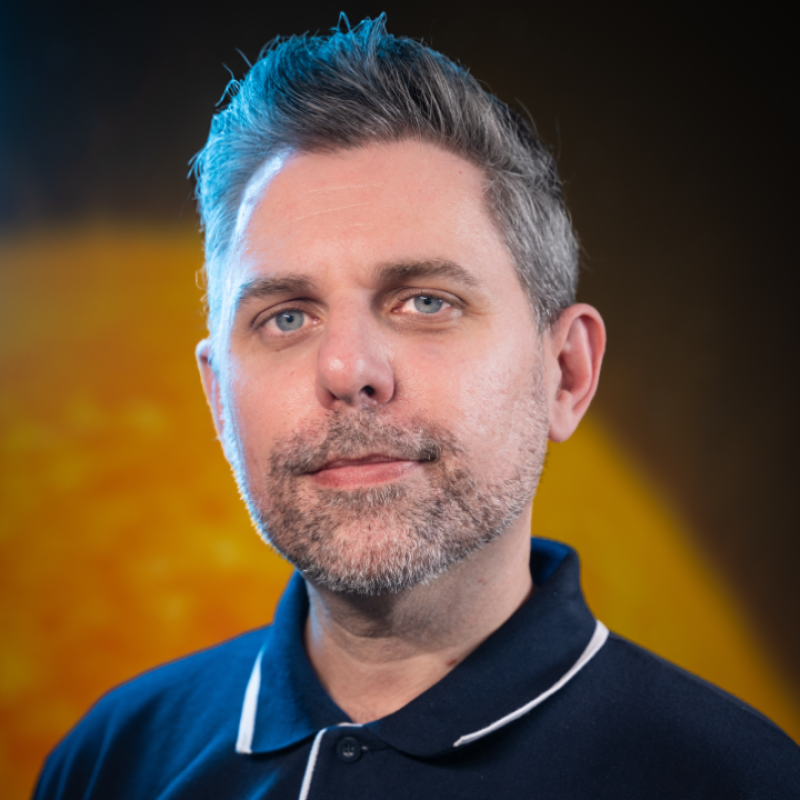
- Position
- Senior Lecturer
- Division / Faculty
- Faculty of Science
Overview
Modern machine learning (ML) models trained on large spectroscopic datasets can predict galaxy properties directly from spectra, without ever computing a physical model. But when such a model succeeds or fails, it is rarely obvious why. This project investigates the behaviour of an existing spectral machine learning model (SpecML) by probing its learned representations and linking model performance back to the properties of the underlying data. You will run the model's downstream prediction tasks, quantify where it performs well and where it struggles, and use dimensionality reduction to explore what the model has implicitly learned. The project combines observational astrophysics, representation learning, and data analysis, and requires no prior ML expertise beyond curiosity and a willingness to engage with code.
Research engagement
A short directed literature review on representation learning for astronomical spectra and spectral foundation models; execution of existing downstream prediction tasks and tabulation of model performance across galaxy samples; correlation of per-object prediction error with spectral properties including signal-to-noise ratio, redshift, and emission line visibility; exploration of the model's learned representations using dimensionality reduction techniques; a test of whether those representations encode galaxy properties the model was not trained to predict; and a written summary of findings.
Research activities
You will work with the QUT Astrophysics Research Group (QARG), under the supervision of Dr Michael Cowley and Carmen Martinez Harris. Activities include weekly supervision meetings, guided familiarisation with the pretrained model and its downstream tasks in the opening weeks, independent probing analysis and representation exploration through the middle of the project, and preparation of summary figures and a short report in the final stretch.
Research skills
Practical experience evaluating and interpreting a pretrained ML model; scientific Python for model inference, dimensionality reduction, and visualisation; systematic performance analysis linked to physical data properties; and scientific writing and presentation. These skills transfer directly to honours and postgraduate research in data-intensive astrophysics and applied machine learning.
Outcomes
The aim is to understand which tasks the SpecML model performs well and to connect its successes and failures to the properties of the input spectra. Expected outcomes include a set of performance figures across downstream prediction tasks, an analysis linking prediction error to spectral properties such as signal-to-noise and emission line content, a dimensionality reduction visualisation of the model's learned representations, a shortlist of new prediction targets that those representations appear to encode, and a short written report.
Skills and experience
Some prior exposure to astrophysics at second-year level or above is recommended. Working knowledge of Python is required. No prior experience with machine learning is expected
Start date
2 November, 2026End date
19 February, 2027Location
QUT Gardens Point campus, with flexibility for remote work once the computing environment is established.
Additional information
You will be provided access to group computing resources, a pretrained model with the tokenisation script, worked example notebooks from current downstream tasks, and code templates for the probing components. Supervision includes weekly one-on-one meetings and informal support from postgraduate group members.
Keywords
Contact
Michael Cowley
07 3138 9197
michael.cowley@qut.edu.au