
Faculty/School
Faculty of Health

Topic status
We're looking for students to study this topic.

Primary Supervisor
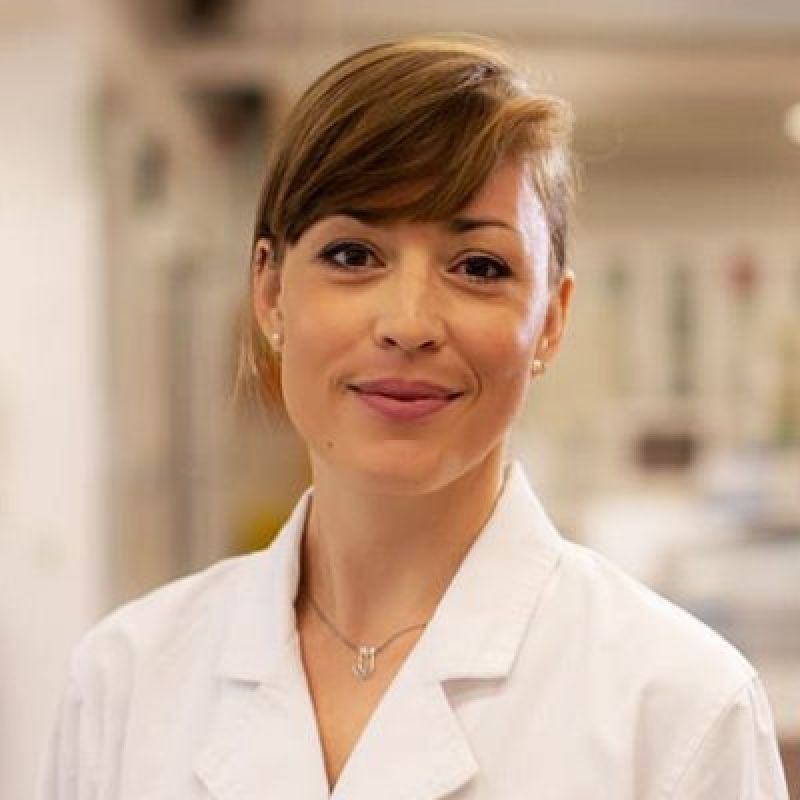
- Position
- Associate Professor
- Division / Faculty
- Faculty of Health
Other QUT supervisors
Overview
Bone metastasis is a major complication of advanced cancers, particularly breast and prostate cancer, and remains an incurable, palliative condition. A better understanding of how cancer cells interact with the specialised cells and extracellular matrix of bone is needed to identify more effective therapeutic approaches.
This interdisciplinary VRES project brings together cancer biology, bone biology, biomaterials science and biofabrication. The student will contribute to the development of miniaturised three-dimensional microphysiological models of bone metastasis containing both cancer cells and mature bone cells known as osteocytes. Using three-dimensional bioprinting, cancer cells and osteocytes will be positioned within engineered hydrogels so that their cell–cell and cell–matrix interactions can be investigated under controlled laboratory conditions.
The project will address fundamental questions about how osteocytes and the bone microenvironment influence cancer-cell behaviour, metastatic progression and responses to therapy. These advanced human-cell models have the potential to provide more physiologically relevant alternatives to conventional two-dimensional cell cultures, while reducing reliance on animal models and supporting more ethical and translationally relevant cancer research.
The project is connected to an Australian Research Council Discovery Early Career Researcher Award held by Associate Professor Nathalie Bock, titled Engineered Osteocyte Microenvironments. It is also embedded with the QUT-funded Max Planck Queensland Centre for the Materials Science of Extracellular Matrices (MPQC), an international research centre connecting QUT researchers with researchers from the Max Planck Institute of Colloids and Interfaces in Potsdam, Germany. The student will therefore undertake their project within a highly collaborative, internationally connected and competitively funded research environment.
Research engagement
The student will undertake a combination of literature-based and laboratory-based research. They will first review relevant literature on bone metastasis, osteocyte biology, cancer–bone interactions and three-dimensional disease modelling. With guidance from the supervisory team, they will then help develop and characterise a three-dimensional co-culture model incorporating cancer cells and osteocytes.
Depending on project progress, activities may include:
- culturing cancer cells and bone cells;
- preparing cell-compatible hydrogels;
- bioprinting cells within three-dimensional constructs;
- modifying culture conditions, including oxygen levels and hydrogel composition;
- inducing and measuring matrix mineralisation;
- immunofluorescence staining and confocal microscopy;
- quantitative reverse-transcription PCR;
- mineralisation and cell-viability assays;
- image analysis and quantitative assessment of cell morphology; and
- interpreting results and presenting the project’s findings.
The project scope will be tailored to the student’s experience and the time available. The student is not expected to arrive with expertise in all these methods and will receive appropriate training and supervision.
Research activities
The student will join the Bone and Tumour Bioengineering Research Group at the Translational Research Institute and will work closely with Associate Professor Nathalie Bock, postdoctoral researcher Dr Morenc and members of the broader MPQC research team.
They will participate in day-to-day research activities, including experimental planning, laboratory work, data collection, image and data analysis, research discussions and presentation of findings. The student will also have opportunities to engage with researchers working across biofabrication, cancer biology, bone biology and biomaterials science.
Research skills
The student will gain practical experience in contemporary cell and tissue-engineering research, including mammalian cell culture, hydrogel preparation, three-dimensional bioprinting and biological assay techniques. They may also develop experience in confocal microscopy, immunofluorescence, molecular analysis and quantitative image analysis.
More broadly, the student will learn how to:
- design and conduct experiments addressing a real-world biomedical problem;
- maintain accurate laboratory records;
- analyse and critically interpret experimental data;
- troubleshoot experiments and respond constructively when results are unexpected;
- communicate scientific findings to researchers from different disciplines; and
- work safely and collaboratively within a professional research environment.
The project will provide access to advanced research facilities and training while introducing the student to an international network of researchers. It will also provide insight into how an undergraduate research project contributes to a highly competitive, Australian Research Council-funded program of research.
Outcomes
The overall aim is to establish and evaluate a miniaturised three-dimensional model that can be used to investigate interactions between cancer cells, osteocytes and the bone-like extracellular matrix.
Specific aims may include:
- develop a reproducible bioprinted co-culture model containing cancer cells and osteocytes;
- determine how selected microenvironmental conditions, such as hydrogel composition, mineralisation or oxygen availability, affect the behaviour of the two cell populations;
- evaluate relevant cellular and molecular outcomes using imaging, biochemical and gene-expression methods; and
- generate preliminary data that can guide future studies of cancer progression and treatment response within the bone microenvironment.
Expected outcomes include an optimised experimental protocol, quantitative characterisation of the three-dimensional cultures and new preliminary insights into how osteocytes influence cancer-cell behaviour. The student will also produce a concise summary and presentation of their work. Successful results may contribute to subsequent experiments, conference presentations or research publications, although these outcomes may happen beyond the VRES timeframe.
Skills and experience
The project would suit an undergraduate student with an interest in cancer biology, cell biology, biomedical science, bioengineering, tissue engineering, biotechnology, biomaterials or a related discipline.
Previous experience with cell culture, microscopy or molecular biology would be beneficial but is not essential. The ideal candidate will be enthusiastic, reliable and willing to learn unfamiliar techniques. They should be able to follow laboratory procedures carefully, maintain accurate records and work effectively both independently and as part of a multidisciplinary team.
Research involving biological systems does not always proceed as expected. Curiosity, patience and resilience when experiments require troubleshooting are therefore particularly important. Above all, the successful student will bring genuine enthusiasm for contributing to the Bone and Tumour Bioengineering Research Group and investigating an important challenge in cancer research.
Start date
2 November, 2026End date
19 February, 2027Location
Translational Research Institute
Additional information
The student will receive close supervision from Associate Professor Nathalie Bock, Dr Morenc and members of the Bone and Tumour Bioengineering Research Group. They will have access to established laboratory protocols, specialist training, advanced cell-culture and biofabrication facilities, three-dimensional bioprinting equipment, confocal microscopy, molecular biology resources and quantitative image-analysis support. Assistance will be provided with experimental planning, laboratory techniques, data analysis, troubleshooting and scientific communication.
The project will be based within the collaborative research environment of the Translational Research Institute, providing opportunities to interact with researchers across cancer biology, bone biology, biomaterials and bioengineering. The student will also be encouraged to participate in research-group meetings and broader professional-development activities.
Students interested in applying are invited to contact Associate Professor Nathalie Bock directly at n.bock@qut.edu.au and provide a brief motivational statement outlining their interest in the project, together with a current CV.
Keywords
Contact
Nathalie Bock
0734437343
n.bock@qut.edu.au