Osteoarthritis stem cell therapy moves closer to patients thanks to new research collaboration
A SMART CRC collaboration between QUT and Magellan Stem Cells will move a promising new treatment for osteoarthritis closer to patients by strengthening the understanding of the cell therapy’s therapeutic pathway and supporting its progression through future clinical trials and product registration.
First published 17 November 2026
Zelestrocel is a donor-derived stem cell therapy being developed by Magellan to address the underlying changes in the joint that drives osteoarthritis, rather than simply managing its symptoms. The therapy has completed Phase 1/2a safety and efficacy trials, with Magellan progressing its Phase 3 clinical program.
Professor Prasadam said the collaboration provided an opportunity to apply QUT's osteoarthritis research and preclinical capabilities directly to the development of a therapy already progressing along the clinical pathway.
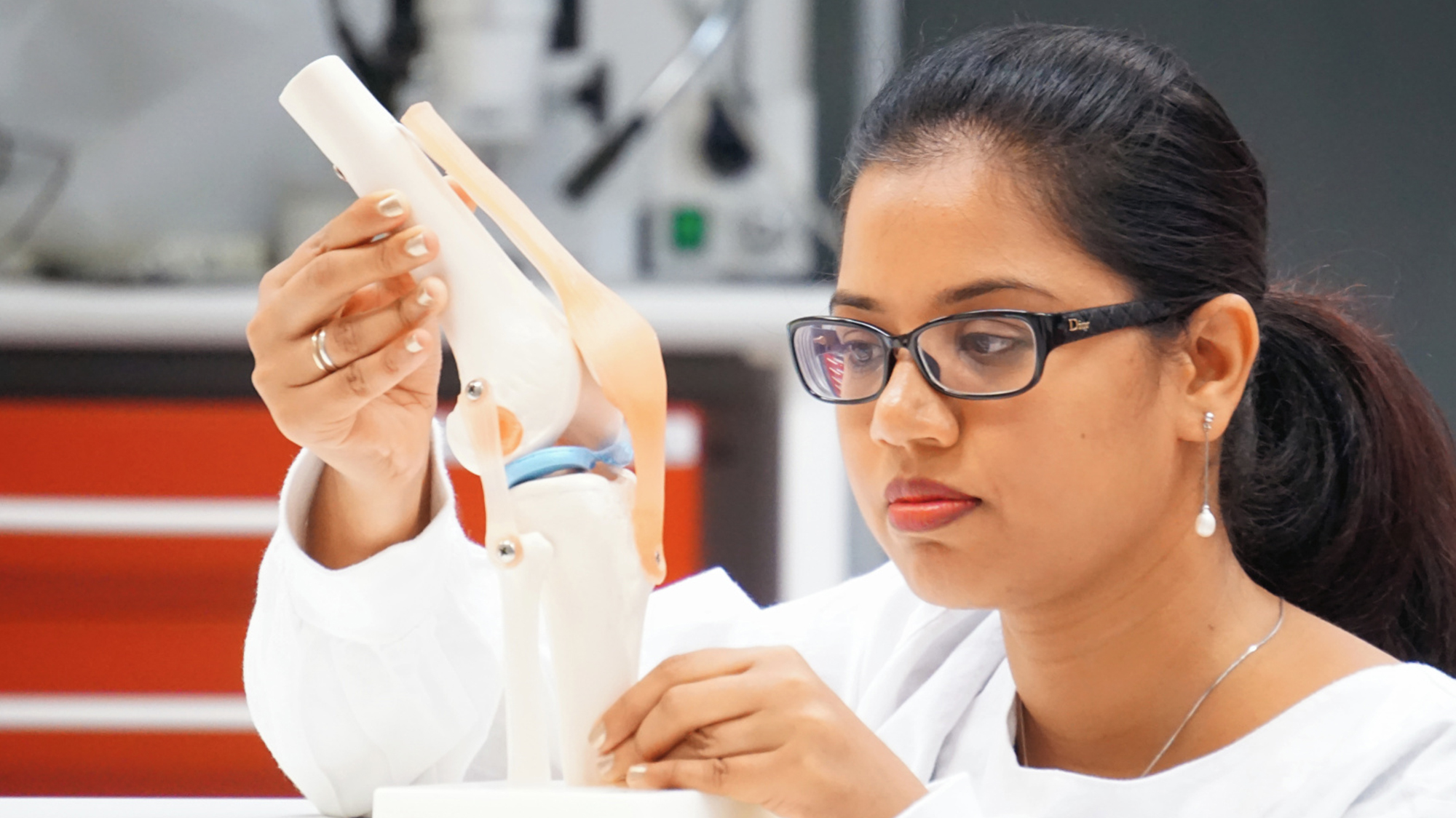
Associate Professor Indira Prasadam
"Our research aims to understand how Zelestrocel works at a cellular and molecular level within the osteoarthritic joint,'' Professor Prasadam said.
''By investigating its effects on cartilage, inflammation and the underlying biological pathways, we hope to uncover the mechanisms driving its potential therapeutic benefits.
“Understanding not just whether a therapy works, but how it works, is critical to optimising its use and supporting future clinical development.
''What is particularly important about this collaboration is that the research is connected directly to translation. The evidence we generate is intended to help answer questions relevant to the continued clinical and regulatory development of Zelestrocel.”
SMART CRC CEO Professor Simon Cool said the $2.1 million collaboration over 3 years, demonstrated the importance of integrating research expertise into industry development programs for better patient outcomes.
“The SMART CRC exists to bring industry and research together to solve challenges, reduce risk and help promising regenerative therapies progress towards patients,” he said.
“In this instance, Zelestrocel has already progressed significantly along the development pathway and through this project we are supporting the next stage of translation, getting this therapy to patients faster.”
Magellan Stem Cells CEO and CMO, Associate Professor Dr Julien Freitag said a robust evidence base was essential.
“As Zelestrocel advances through clinical development, continuing to expand our manufacturing capability is key,” he said.
“Working with QUT and the SMART CRC gives us access to specialised osteoarthritis and preclinical research capabilities that complement our clinical and manufacturing program and will generate important evidence to support the next stages of development.
“Our partnership with SMART CRC and QUT, brings Magellan closer to formal registration of our proprietary cell line Zelestrocel, and promises to provide Australians with access to an innovative therapy in the treatment of osteoarthritis – a recognised National Health Priority – resulting in significant community impact.”
Magellan’s Head Scientific Officer, Dr Kiran Shah acknowledged the importance of the SMART CRC collaboration in enabling clinical development in areas that promise to have significant community impact.
"With this important collaboration, Magellan Stem Cells, through support from QUT and SMART CRC will be able to bring our proprietary innovative cell therapy to the millions of people who suffer from osteoarthritis and address an unmet clinical need both nationally and internationally," he said.
Main image: Professor Travis Klein, Associate Professor Indira Prasadam and Associate Professor Larisa Haupt.
Riders of shared e-scooters are much more likely to attribute their near misses to inexperience than riders of privately owned e-scooters, a longitudinal study led by QUT road safety researchers has found.
A global study on the effects of migration on housing has found significant differences that depend on such factors as local housing market structure, geographic locations, housing supply, and migration types.