9 Oct 2026
QUT researchers named AAHMS Fellows
Distinguished Professor Lyn Griffiths AM and Distinguished Professor Yuantong Gu have been named Fellows of the Australian Academy of Health and Medical Sciences (AAHMS).
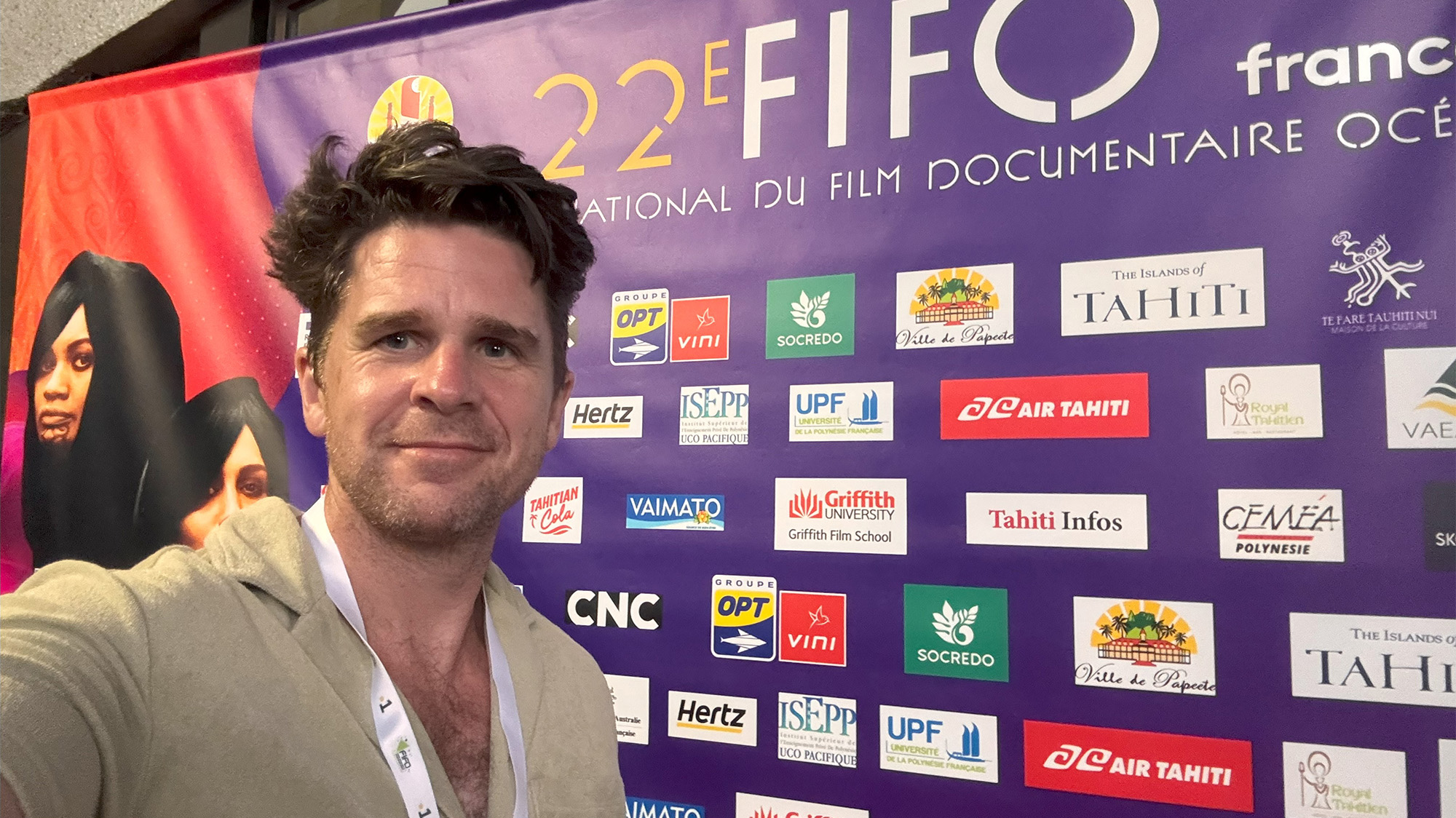
A report by QUT researcher Dr Ruari Elkington has spotlighted the transformative role of French language cinema in French Polynesia, with the Festival International du Film Documentaire Océanien (FIFO) emerging as a vital cultural force across the Pacific.

Dr Elkington, who attended FIFO 2025 in Tahiti as part of the Embassy of France to Australia’s ‘Australian French Studies in the Pacific’ grant, says the festival has become a cornerstone institution for Pacific storytelling, cultural preservation, and regional identity.
“FIFO is more than a film festival – it’s a cry of existence,” Dr Elkington said.
“It affirms Oceanian cultures and languages in the face of global media homogenisation, and it empowers local filmmakers to reclaim their narratives.”
Held annually at La Maison de la Culture in Pape'ete, FIFO has grown into a regional hub for documentary filmmaking, showcasing stories from across Oceania and fostering cross-cultural dialogue.
“The festival’s hybrid format and travelling cinema initiatives have expanded access to remote communities, while youth juries and digital streaming platforms have cultivated a new generation of culturally conscious viewers,” Dr Elkington said.
The report highlights the impact of French cultural policy and funding mechanisms, such as the Aide à la Production Audiovisuelle et Cinématographique (APAC) program, in supporting local film production. Such initiatives have helped establish a sustainable cinematic ecosystem in French Polynesia, where French and Polynesian languages coexist on screen.
Key recommendations include the development of educational initiatives to help audiences critically engage with both local and global media, reinforcing the value of authentic storytelling.
“French language cinema in the Pacific is not just entertainment, it’s a deeply meaningful cultural project,” Dr Elkington said.
“It preserves languages, strengthens identities, and connects the region to global audiences.”
His report also notes the increasing appetite among French Polynesian audiences for authentic local narratives, alongside their enjoyment of global blockbusters, a dual engagement he says reflects a maturing screen literacy and a desire for representation.
Dr Elkington, who was recently appointed to the Alliance Française de Brisbane and the Brisbane Board of the Alliance Française French Film Festival, says FIFO’s success offered a model for how regional festivals can drive industry growth and cultural exchange.
“FIFO has positioned Tahiti as the capital of Oceanian documentary,” he said.
“It’s a beacon for Francophone Pacific cinema and a testament to the power of storytelling.
“Looking forward, the challenge will be to maintain this momentum, continuing to strike a balance between French and Polynesian languages on screen, expanding distribution to ever more remote communities – possibly through improved internet access and streaming – and ensuring sustainable funding.”
For more information about FIFO and Dr Elkington’s research, visit Festival International du Film Documentaire Océanien.
Read the report The Benefits of French Language Film Festival Cultures in the Pacific: French Polynesia and the Festival International du Film Documentaire Océanien (FIFO), online.
Main image: Dr Ruari Elkington
Media contact:
Amanda Weaver
QUT Media
07 3138 2361 / 0407 585 901 (After Hours)


Distinguished Professor Lyn Griffiths AM and Distinguished Professor Yuantong Gu have been named Fellows of the Australian Academy of Health and Medical Sciences (AAHMS).
Empathy is more than simply understanding how another person feels, according to new research from QUT.