QUT Urban AI Hub researchers have identified more than 150 highly suitable public parking locations for solar-powered EV charging in Brisbane.
New framework brings together solar energy, transport access and electricity network planning.
Solar canopies at 10 assessed sites could generate 1.93 gigawatt-hours annually, serving more than 31,000 vehicles per year.
Park-and-Ride locations allow daytime charging while drivers continue their journeys on public transport.
Their study, SPACES: An integrated spatial, mobility, and energy assessment framework for planning solar-powered electric vehicle charging infrastructure, is published in the Research in Transportation Business and Management journal.
Lead author PhD candidate Niklas Tilly, from QUT’s School of Architecture and Built Environment, said electric vehicle charging connected two systems that were often planned separately.
“EV charging sits at the intersection of transport and energy, but planning for these systems has largely developed in parallel,” Mr Tilly said.
“Bringing them together means considering where people park, how long their cars stay there and how charging can make use of locally generated solar electricity.
"Public car parks can connect these systems through solar canopies above parking spaces and EV chargers below.
“Solar canopies can turn car parks into productive energy assets, generating electricity where vehicles spend time parked.
“They can also provide shade and reduce people’s exposure to heat, adding benefits for the wider community.”
Identifying suitable sites required assessing solar potential, travel patterns, charging access and electricity network conditions.
"To address this challenge, we developed SPACES (Spatial Planning Assessment for Canopy-based EV Stations) to help planners assess these factors together,'' Mr Tilly said.
"This framework combines spatial data on solar potential, land use, transport accessibility and socio-economic characteristics to identify promising locations. We then screened electricity network capacity to assess potential constraints.
“A car park may look suitable on a map, but we also need to understand how it is used and whether the local electricity network can accommodate charging."
The researchers assessed 10 representative Brisbane sites in detail, covering high-turnover parking and Park-and-Ride facilities.
Mr Tilly said Park-and-Ride facilities offered opportunities because vehicles remained parked for several daylight hours.
“Park-and-Ride facilities allow drivers to charge their cars while continuing their journey by bus or train, making use of solar electricity during longer daytime parking periods and potentially reducing demand on the local grid,” he said.
''This framework could help councils, transport agencies and infrastructure providers coordinate investment in solar energy and charging.
“The opportunity is to make better use of spaces our cities already have by producing renewable electricity, supporting everyday travel and improving the experience of using public car parks,” he said.
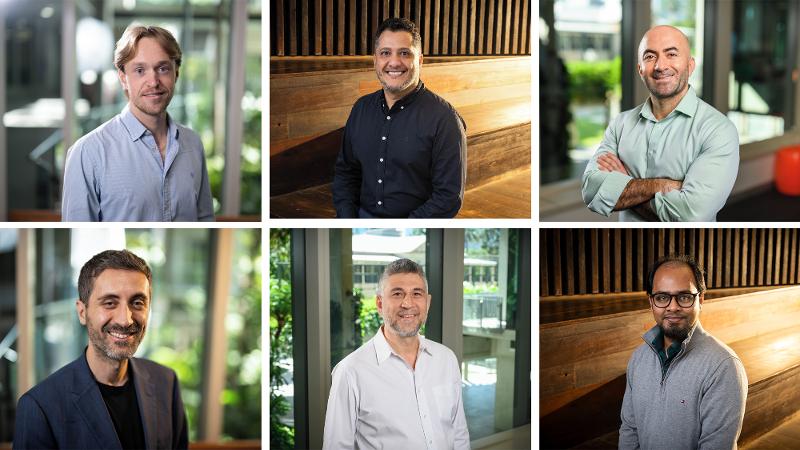
The research team comprised Mr Tilly, Abdulrazzaq Shaamala, Tahsin Hossain, Professor Tan Yigitcanlar, from QUT Urban AI Hub in QUT's School of Architecture and Built Environment; Dr Kenan Degirmenci from QUT's School of Information Systems; Professor Alexander Paz from QUT's School of Civil and Environmental Engineering; and, Associate Professor Takuro Kobashi from Tohoku University.
(Main image, clockwise from top left: Niklas Tilly, Abdul Shaamala, Professor Alexander Paz, Tahsin Hossain, Professor Tan Yigitcanlar, Professor Kenan Degirmenci).
Media contact: media@qut.edu.au.


