
A study of Aboriginal and Torres Strait Islander children has revealed that early cultural connections to Country, language and Mob are just as critical as preschool and playgroups in shaping wellbeing and success throughout school and into adolescence.
The Footprints in Time: Longitudinal Study of Indigenous Children (LSIC) Early Childhood Report, led by QUT researchers and commissioned by the Australian Government Department of Social Services, draws on 14 years of data from more than 1700 children and families.
QUT Professor Kristin Laurens, from the QUT School of Psychology and Counselling and QUT Centre for Inclusive Education who co-led the report, said the longitudinal nature of the study provided unique insights.
“Because families, children and educators have shared their stories over so many years, we can now see clearly how early childhood experiences continue to shape learning, wellbeing and identity well into adolescence,” she said.
The research shows that children in remote areas were more likely to take part in cultural activities, speak Indigenous languages and maintain connections to Country, while children in urban and regional areas were more likely to attend preschool and playgroups.
Both sets of experiences are said to be key, with cultural identity, family support and positive early learning opportunities all contributing to stronger outcomes later in life.
The report also found that children thrived when parents felt supported and confident in their roles; positive teacher connections helped build confidence and engagement through primary and high school; and safe, early access to technology allowed children to learn confidence and essential skills.
Report co-lead Associate Professor Jessa Rogers, a Wiradjuri scholar from the University of Melbourne, visiting fellow at QUT, and managing director of Baayi Consulting, said the findings underscored the role of culture in helping children thrive.
“When Aboriginal and Torres Strait Islander children are connected to culture from their earliest years, they develop stronger social and emotional wellbeing that carries through into their teenage years,” she said.
The report includes children’s own reflections woven into a collective poem describing what it means to “grow up strong” and shines a spotlight on real stories from communities across Australia, showing the diverse journeys children take to grow into thriving young people.
It also puts forward a number of recommendations that highlight the need to expand culturally responsive playgroups and parenting programs, strengthen opportunities for Indigenous language learning, grow the Aboriginal and Torres Strait Islander education workforce, and ensure equitable digital access for families in all regions.
“This research shows that when children are supported to grow up strong in their culture, their families and their learning, they carry that strength into every part of life,” Professor Laurens said.
The research team also included QUT researchers Dr Emma Carpendale and Lauren Piltz alongside Associate Professor Stuart Ekberg (Western Arrernte), Tirritpa Ritchie (Kaurna), Professor Kate Williams and Professor Donna Berthelsen, who hold adjunct appointments.
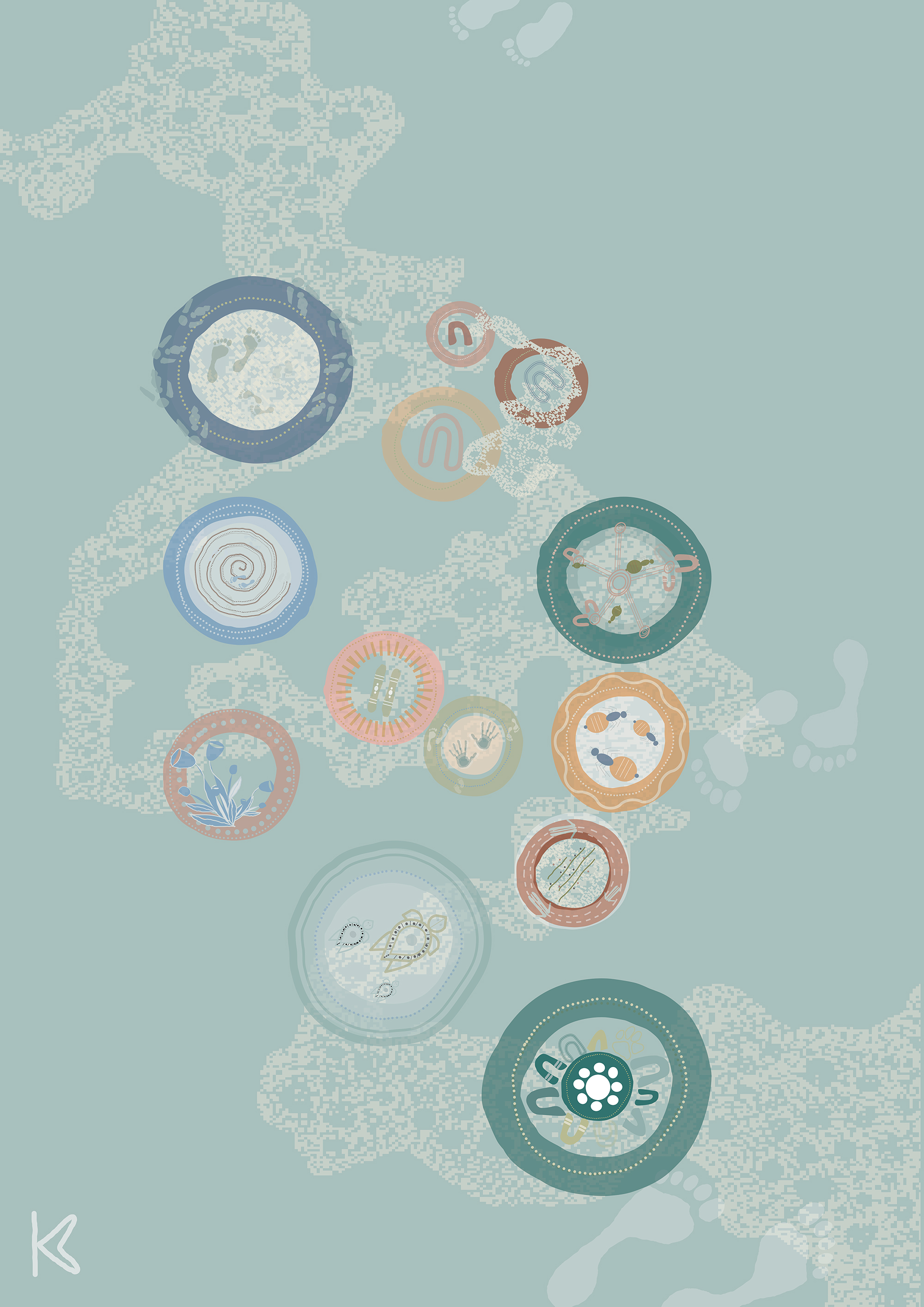
Western Arrernte artist Kylie Monteleone was commissioned to create a series of artworks that reflect and complement the study’s findings.
Read the full report, Footprints in Time: Longitudinal Study of Indigenous Children (LSIC) Early Childhood Report, online.
Main photo (clockwise from top left): Kylie Monteleone, Tirritpa Ritchie, Professor Kate Williams, Professor Stuart Ekberg, Professor Donna Berthelsen, Dr Emma Carpendale, Associate Professor Jessa Rogers, Professor Kristin Laurens and Lauren Piltz.
Media contact:
Lauren Baxter
QUT Media
media@qut.edu.au
07 3138 2361 / 0407 585 901 (After Hours)


