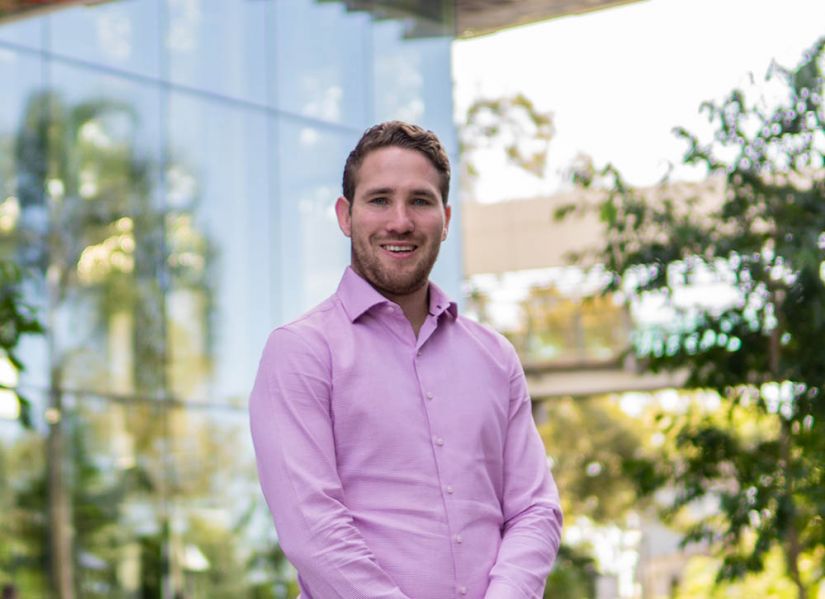
By Jed Fraser, 16 November, 2022
When Bidjara and Mandandanji man Jed Fraser studied the Bachelor of Exercise and Movement Science at QUT he learnt how to improve health at an individual level. He returned to study the Master of Public Health to widen his focus, and influence the social and cultural determinants of healthcare delivery.
Jump to:
- Supporting Aboriginal and Torres Strait Islander health work forces
- What’s it like studying public health at QUT?
- Advice for future public health students.
After graduating Jed joined Indigenous Allied Health Australia, leading programs that expand and develop the Aboriginal and Torres Strait Islander allied health workforce.
Now as a Government Relations Lead he develops health and workforce policy submissions, prepares briefing papers for Members of Parliament while continuing to support health workforce initiatives.
Why did you choose to study the Master of Public Health?
'If the COVID-19 pandemic showed the world anything, it is the value in public and population health. I wanted to study public health to get an understanding of how to co-design, implement and evaluate public health initiatives for Aboriginal and Torres Strait Islander peoples and communities.'
What made you choose to work in this area of public health?
'Aboriginal and Torres Strait Islander people are still racially discriminated against within the health sector.
Building the local health workforce mitigates this.
I wanted to support the existing Aboriginal and Torres Strait Islander allied health workforce, but also engage in national conversations that drive strategic and critical thinking for health and workforce policy.

An important part of my journey has been recognising the need to challenge Western paradigms and ways of working.
I have become increasingly interested in how we can bring different ways of knowing, particularly Aboriginal and Torres Strait Islander perspectives, into health policy and practice.
For me, this is about creating a broader view of health and the world, rather than relying on a single way of understanding what health and wellbeing mean.’
What do you find rewarding about your role?
'Working with young Aboriginal and Torres Strait Islander people within communities and seeing that they are inspired to work in health, but also how they take away health knowledge and improvement in health literacy so they can advocate for their own health.'

What I enjoy most about my role is that it allows me to work across different levels of the health system from government and policy development through to working directly with communities.
For me, it is more than just a job. It is an opportunity to put the knowledge and skills I gained through studying public health into practice and use them to make a meaningful difference for my people.’
Why did you choose to study at QUT?
'I wanted to explore components of health that I was interested in, that also linked to my work. I appreciated that I could bring my lens as an Aboriginal person to the course content and assessments.
The degree itself tests your intellectual capabilities in a good way. Academic staff encourage critical thinking and debate within classes, which translated into making me a better public health professional.
The academics were also very supportive across the whole master’s program, I felt valued as a student.
A big selling point for me was the flexibility around the final semester of the master’s program. I was able complete a dissertation on a topic I was passionate about, implementing the research skills I had developed throughout the course.’
What advice would you give to someone considering the Master of Public Health?
‘My advice would be to invest in mentors.
I have been fortunate to have great mentors who are leaders in the sector, and learning from them has been invaluable not only for my professional development, but also for my cultural and personal growth.
Public health is a field where relationships matter, and the people you learn from, and work alongside can have a significant influence on your career.
I also recommend investing in ongoing professional development.
Public health is constantly changing. You need to understand how complex systems operate, how decisions are made.
You need to know where to find and interpret relevant data and evidence, and how policy and legislation shape the health system. These are skills that you continue to develop throughout your career.
You will never know everything, and that is part of what makes public health such an interesting field.
Stay curious, keep learning, build strong relationships and be willing to reflect on your own practice. These qualities will help you become a better public health practitioner and, ultimately, have a greater impact through the work you do.'