
By Kim Alexander, Thea Ogle, 16 April, 2025
Cancer nurses play a vital role in enabling diagnosis and optimising treatment of individuals with cancer.
Course coordinator for the Graduate Certificate in Nursing (Cancer Care) Kim Alexander shares her insights into QUT’s cancer care major.
Jump to:
- Advances in cancer care
- Mentorship for developing advanced skills
- Hear from a graduate – Thea Ogle
- Support for undertaking PG study.
What do cancer nurses do?
Cancer nurses provide and coordinate comprehensive supportive care that addresses the broad range of needs of people affected by cancer, spanning physical, informational, emotional, psychological, social, spiritual, and practical support.
How is the field of cancer care changing?
The landscape of cancer nursing is rapidly evolving, driven by advances in individualised treatments and innovative technologies. This evolution creates exciting opportunities for specialisation and advanced practice, alongside the need for new models of care to support the increasing population of cancer survivors.
Cancer nurses play a vital role in enabling diagnosis and optimising treatment of individuals with cancer by providing care that addresses the challenges of cancer and its treatment, leading to the best possible health outcomes for our community.

How does postgraduate study in cancer care benefit current nurses?
Postgraduate study in cancer care provides in-depth training in areas such as advanced symptom management, precision oncology, survivorship, and care coordination.
At QUT we also focus on developing skills in evidence-based practice, leadership, and interprofessional collaboration.
We empower cancer nurses to adapt quickly to emerging challenges and lead initiatives that optimise service delivery and improve the lives of individuals impacted by cancer.
How does mentorship improve learning outcomes for postgraduate nursing students?
QUT PG cancer nursing students receive mentorship from internationally recognised leaders that helps them develop critical thinking, leadership skills, and a global perspective on oncology nursing.
The academics who contribute to the program are deeply informed by real-world application, drawing from decades of clinical practice and groundbreaking research. They are experts in areas such as survivorship care, symptom management, genomics, and wellness interventions.
Students exploring evidence-based findings from trials and programs that have been integrated into the curriculum, as well as developing practical, hands-on skills.
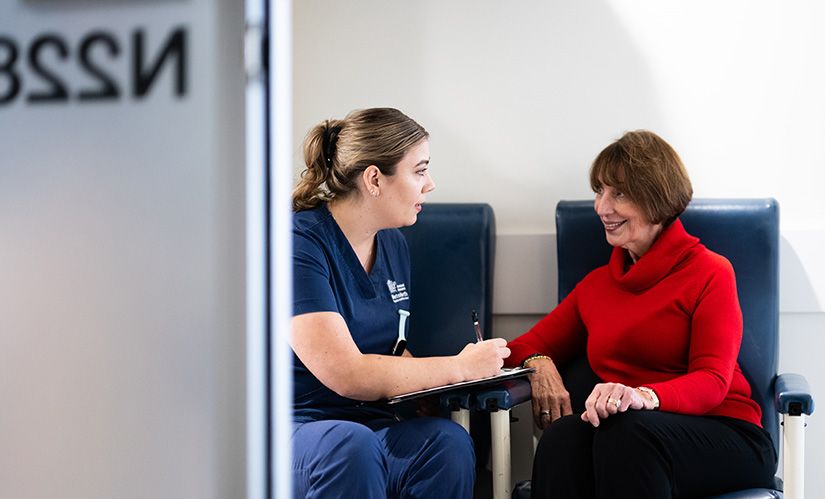
Can PG nursing students contribute to innovation?
Our academics' extensive professional networks provide opportunities for collaborations, clinical connections, and involvement in key initiatives.
Students are encouraged to focus on innovation and explore emerging solutions to address future challenges in cancer care delivery.
What it’s like studying cancer care nursing at QUT: Thea Ogle
I chose to study a PG program at QUT following my great experience as an undergraduate student at QUT, and through meeting dedicated cancer nursing academics at QUT.
QUT has a very strong cancer focus on cancer education and research via UG and PG units, and the dedicated cancer research centre. QUT is closely involved with cancer care professional associations, and also in developing accreditation for cancer care nurses.
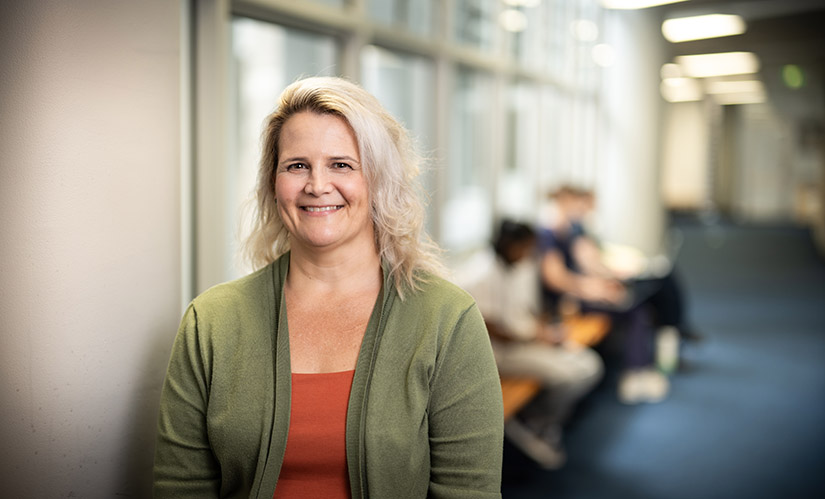
What is the benefit of studying the Graduate Certificate in Nursing?
The graduate certificate offers students the opportunity to think more deeply and critically about the activities that they are undertaking at work and engage more meaningfully with current evidence-based best practices in their field.
The grad cert also offers students professional engagement opportunities within their clinical speciality. QUT has excellent connections with industry. Many of our teachers and markers are clinicians who can pass on experience and expertise.
What are the new priorities for graduates working in cancer care nursing?
Cancer is increasingly seen as a chronic disease, so the challenge is to help people to live better for longer with ongoing symptoms associated with cancer occurrence and treatment.
Enhanced engagement for cancer survivors in the primary care space will be an increasing priority for cancer nurses.
Support for postgraduate nursing study
It can be challenging adding study to a busy clinical and social life. QUT offers flexibility, including online learning and personalised advice and support to help students balance studies with their personal and professional life goals.
The Graduate Certificate in Nursing is offered part-time and takes just one year to complete. It can be studied entirely online.
Hear from graduate Amber Adamson talking about her experience studying the Graduate Certificate in Nursing.
There’s also a range of scholarships that student may be eligible for. It’s always worth searching and applying. Search QUT scholarships.
The Graduate Certificate in Nursing offers Commonwealth Supported Places for domestic students, which covers part of the cost of the course and reduces what students pay in fees.
Authors

Professor of Cancer Nursing

Graduate Certificate in Nursing (Cancer Nursing)
Doctor of Philosophy