
By Anna Tate, 18 March, 2026
QUT psychology students can participate in monthly catch ups to explore ideas in a safe and supported way.
Exploring ideas, differences of opinion, and meaningful topics in a safe way is an important skill for anyone. It’s particularly valuable for psychology and behavioural science students.
Anna Tate is a QUT lecturer in psychology and counselling who runs Conversations That Matter, a space for students to get together and engage in powerful discussions. Anna shares her insights from facilitating this group.
Jump to:
What is Conversations That Matter?
Conversations That Matter is a facilitated conversation space that has been running for more than five years. It brings people together for thoughtful conversations about ideas and experiences that matter in everyday life.
The focus is on dialogue rather than debate.
Conversations are designed to support people to share perspectives, listen to different viewpoints, and engage with ideas without the pressure to agree or persuade or be right. Each session is intentionally structured and facilitated to support a respectful, relaxed and inclusive environment.
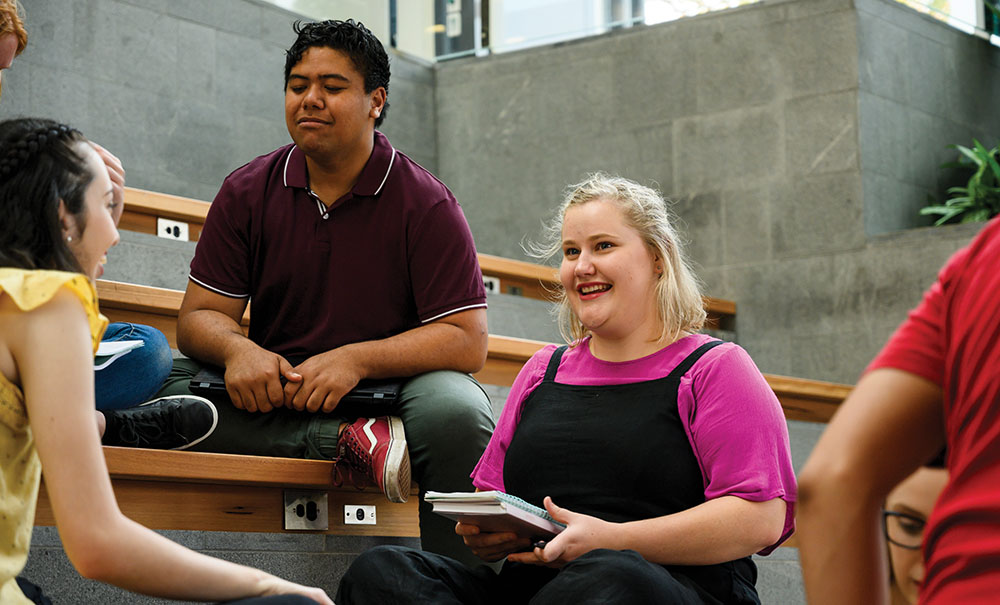
Why was Conversations That Matter started?
About 3.5 years ago, we were finishing up PYB356 Counselling Theory and Practice 2, and students across the tutorials expressed their disappointment that the subject was finishing.
In the Couselling Theory and Practice 2 unit we look at different topics including culture, gender, sizism, risk, and ableism. We’re wanting students to examine their own worldviews and consider the implications of imposing these on future clients.

For the students it became the one place where they were able to have ‘these types of conversations’ meaning you don’t go in trying to win an argument or be right—in fact there is deliberately no ‘right’ answer.
Instead, we ask students to consider different perspectives.
We ask you to reflect and notice unexamined assumptions you’ve made, consider theoretical ideas and then come away with a clear learning and an idea on how you’re going to apply it, what you’ll do with the knowledge you’ve gained from the conversation.
These conversations became a way of transforming theory to practice. To give students the conversational tools and intellectual framework to ensure that practice is ethical and culturally safe.
Develop a richer understanding
‘Conversations That Matter is a space I’ve had the privilege of being part of for over three years.
Each month, we explore topics such as love, connection, power, and hope. I often arrive with a clear sense of what the topic means to me, and leave having heard such a rich range of perspectives that I somehow walk away knowing both more and less at the same time.
It’s a space where my thinking is stretched, where I connect with others on a unique level, and where I feel inspired and invigorated to carry these conversations into my life beyond the room.’
Phoebe Hicks
How does Conversations That Matter work? Do you meet in person?
We meet in person in the E Block usually from 6pm - 8pm, although a day version is starting this semester as well.
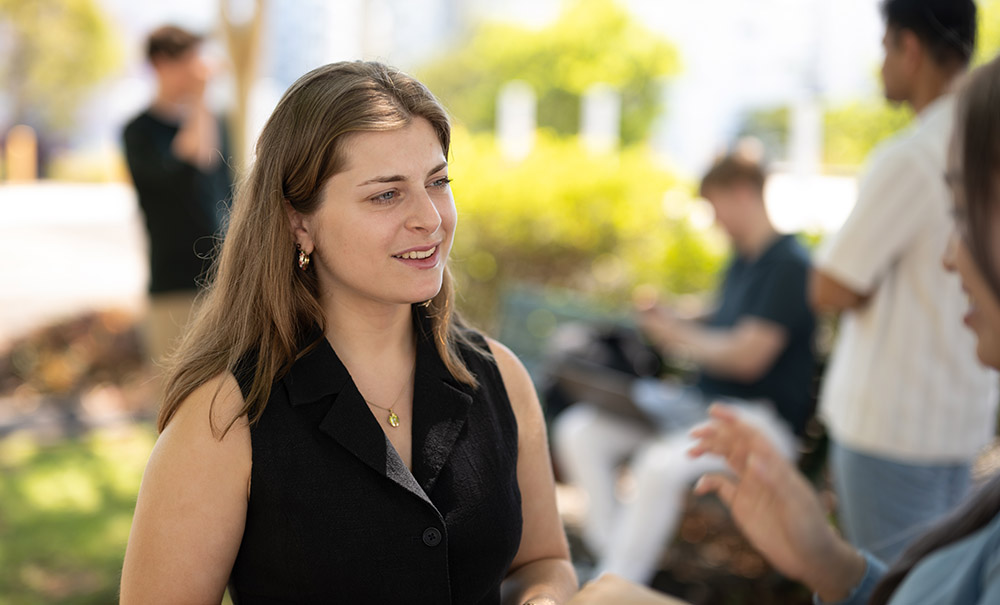
Myself or a student will facilitate the conversation. We follow the same structure as the tutorials. Always an introduction because although there are regulars there are also many people who come and go when they can so there is never a group where everyone knows each other.
We aim to meet once per month. We change the night so that people who have something on every Tuesday for example don’t automatically miss out. So, one month Monday, next Tuesday etc.
What has been the impact of Conversations That Matter?
In a time when many conversations feel rushed or polarised, these sessions offer a slower, more reflective way of engaging with ideas and with one another.
Participants often leave with new questions, fresh perspectives, and a deeper appreciation of how differently people can think and experience the same topic.

For me as a facilitator, I think it's probably the best thing I've ever been part of. I can't tell you how many times I've walked away with new ways of thinking about things that I had never considered.
Over time, Conversations That Matter has become a place where connections form naturally. Some people attend regularly, others join when they can, but many have developed lasting friendships, ongoing connections, and professional relationships through the conversations.
Space to reflect and explore
'Conversations That Matter provides me with a space to access two really important things.
First, it gives me the time and space to pause, reflect on my beliefs and outlooks, and form clearer, more concrete ideas about what I actually think on certain topics.
Secondly, it allows me to place my perspectives alongside those of others in the room. Often my views are challenged, which helps me better understand how differently people can see the same concept and reminds me that there is never just one “right” way to view the world.'
Ed Brockhurst
Who can join Conversations That Matter and how do they do that?
We have been running the group for behavioural science students who have completed Counselling Theory and Practice 2 .
However, increasingly, we are opening up. We have had a law student who heard about it and contacted me via Linked In. They came along and were great, so this gives me encouragement.
I’ve been worried about opening it up and people thinking it’s debating or finding the answer. Many folks who come, come from diverse backgrounds so ensuring the space is respectful is also hugely important.
Students can get in touch with me via Linked In or can join the Facebook group Conversations That Matter to find more information.
Does this spark your interest? Find out more about studying psychology at QUT: