By Ben Ready, 28 September, 2026
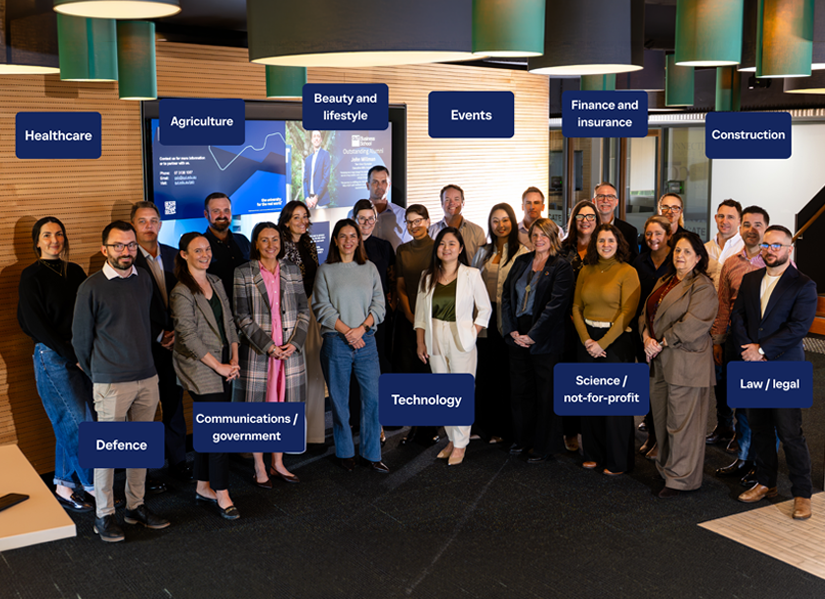
Great leaders are rarely created in isolation. The most complex challenges demand perspectives that extend beyond any one discipline, cutting across technology, finance, people, strategy and organisational change. QUT Executive MBA associates learn alongside experienced leaders from diverse industries and disciplines, challenging them to see complex problems through a different lens.
That’s why one of the most valuable aspects of the QUT Executive MBA isn’t just what you learn. It’s who you learn with.
Delivered part-time over 23 months, the program combines hybrid learning with monthly Friday-to-Sunday intensive weekends in Brisbane, designed to fit around executive careers.
Each intensive weekend brings together experienced professionals from sectors as varied as healthcare, agriculture, government, defence, technology, sport and the not-for-profit sector, creating an environment where ideas are challenged, assumptions are tested, and students learn as much from one another as they do from their lecturers.
That mix of experience creates conversations that rarely happen within a single organisation or industry, giving associates the opportunity to test their thinking against different perspectives and take those insights back into their own leadership practice.
Learning beyond your industry
For Rebecca Hamilton, a senior healthcare leader at St Andrews Hospital in Ipswich, gaining a broader perspective on leadership was one of the biggest attractions of the program.
Rebecca had already completed a Master of Health Service Leadership and a Master of Nurse Practitioner Studies before deciding an Executive MBA would help prepare her for executive leadership.
Unlike her previous postgraduate study, where almost every classmate came from healthcare, the Executive MBA exposed her to professionals with entirely different experiences.
“Our cohort has people from so many different professions,” she said. “I’m studying alongside the owner of a hairdressing chain, a Head of Information Technology, a Chief Innovation Officer and many others. You get exposed to perspectives you’d never encounter in your own workplace.”
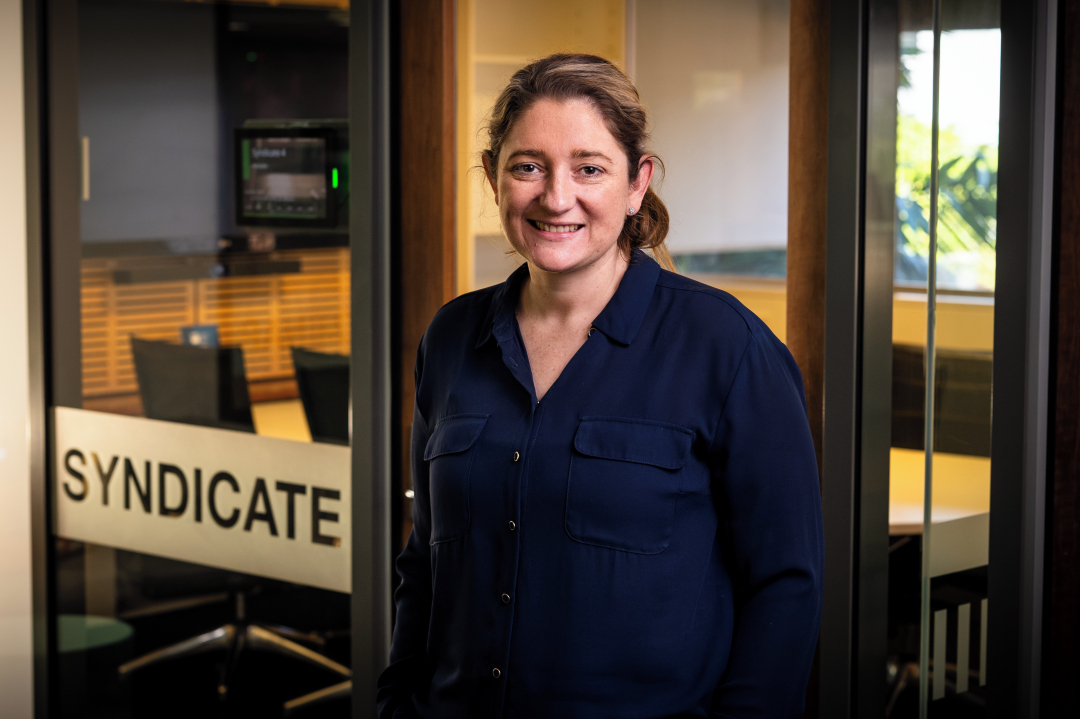 QUT Executive MBA student, Rebecca Hamilton
That diversity has already influenced how she approaches leadership challenges within her own organisation.
One discussion about a major workforce transformation initiative proved particularly valuable. Rather than hearing only healthcare perspectives, Rebecca gained insights from classmates working in industries where operational and commercial considerations often outweigh the emotional dimensions common in healthcare.
“Being in healthcare, everything is emotive because it’s impacting peoples’ lives,” she said. “Having somebody who doesn’t come from that background has been really good because they can look at the same problem without having that emotional response.”
Building the confidence to lead
For Anthony Chappell, Operations Manager at agricultural producer DA Hall & Co in Toowoomba, the Executive MBA has broadened his perspective on leadership and given him greater confidence to contribute beyond his operational expertise.
After beginning his career as a fitter and turner, and progressing through maintenance, production, and operations management, Anthony enrolled in the QUT Executive MBA program to prepare for more senior leadership roles.
While working towards these goals, he said one of the biggest surprises had been the calibre of his classmates and the way the cohort works together.
“There is rarely one correct way to lead or solve a problem,” he said. “The Executive MBA cohort has a huge range of experience, and people can look at the same issue and arrive at very different conclusions. It has been great for me to see different perspectives around ideas”
These different perspectives have also challenged Anthony to reflect on his own approach to leadership.
“I’ve learnt that good leadership isn’t always about having the answer first. It’s often about listening to different perspectives, being prepared to challenge your own thinking and then having the confidence to make a decision.” The Executive MBA has also helped Anthony broaden his business knowledge beyond his operational expertise.
“The program has been great at rounding out my knowledge,” he said “Strategy and commercial discussions feel much more natural to me now. I’m more confident asking questions about an investment, its benefits and how it creates value for an organisation.”
With that broader understanding has come greater confidence to contribute across the business.
“Because of what I’ve learnt in the Executive MBA, I can contribute far more to these discussions than I had previously thought.”
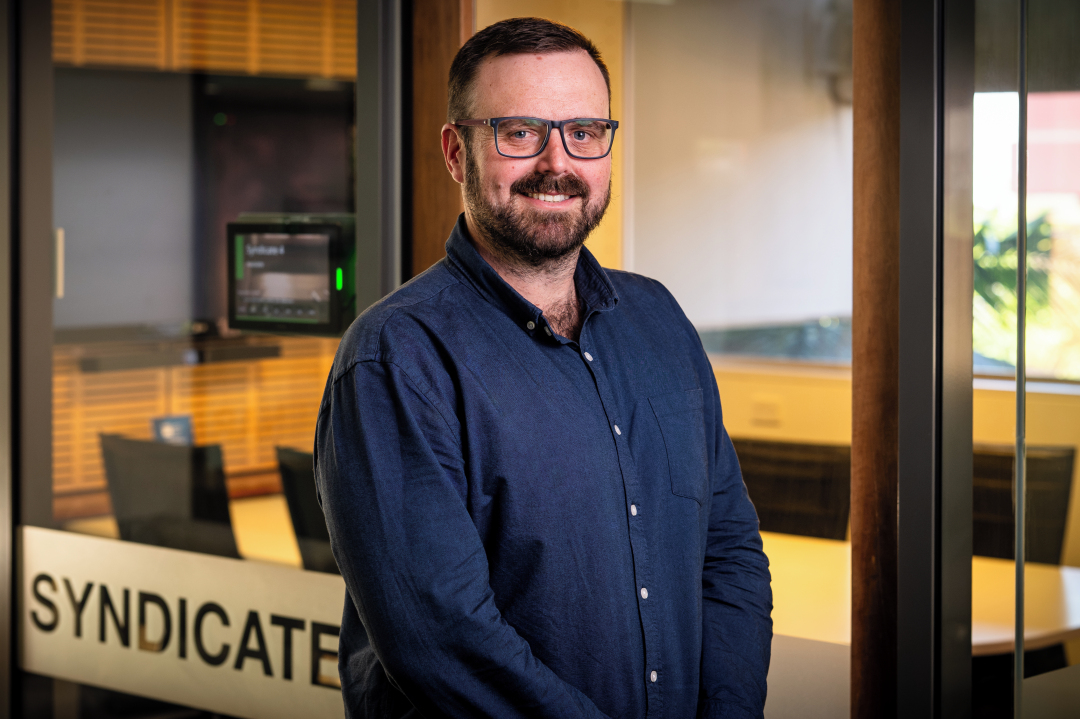 QUT Executive MBA student, Anthony Chappell
Bringing different perspectives together
For Northern Rivers Community Foundation executive Kiri Dicker, the QUT Executive MBA represents more than an opportunity to develop new management skills.
It is helping her explore the increasingly important intersection between commercial thinking and social impact.
Kiri has spent her career in the not-for-profit sector, working across social impact and philanthropy. But as she considered the next stage of her career, she became increasingly interested in how businesses, corporate foundations and other private-sector organisations can apply commercial resources and disciplines to create social and environmental outcomes.
“There are an increasing number of businesses doing social impact-related work, and I could see an opportunity to take the experience I have developed in the not-for-profit sector and apply it in a more commercial environment,” she said.
“I’ll always want to do something that creates social or environmental good, but I’m increasingly interested in how you can combine that purpose with the resources, scale and commercial thinking of the private sector.”
This ambition also influenced Kiri’s choice of MBA. While she considered programs specifically focused on social impact, she deliberately chose QUT’s broader Executive MBA because she wanted to move beyond the professional environment she already understood.
“I’ve spent my whole career around people working in social impact. I know the language and I understand that world,” she said. “What I wanted was to learn new skills and spend time with people who approach problems from very different perspectives.”
Her cohort has provided exactly that contrast, bringing together executives from sectors including defence, mining and resources alongside a much smaller number of not-for-profit leaders.
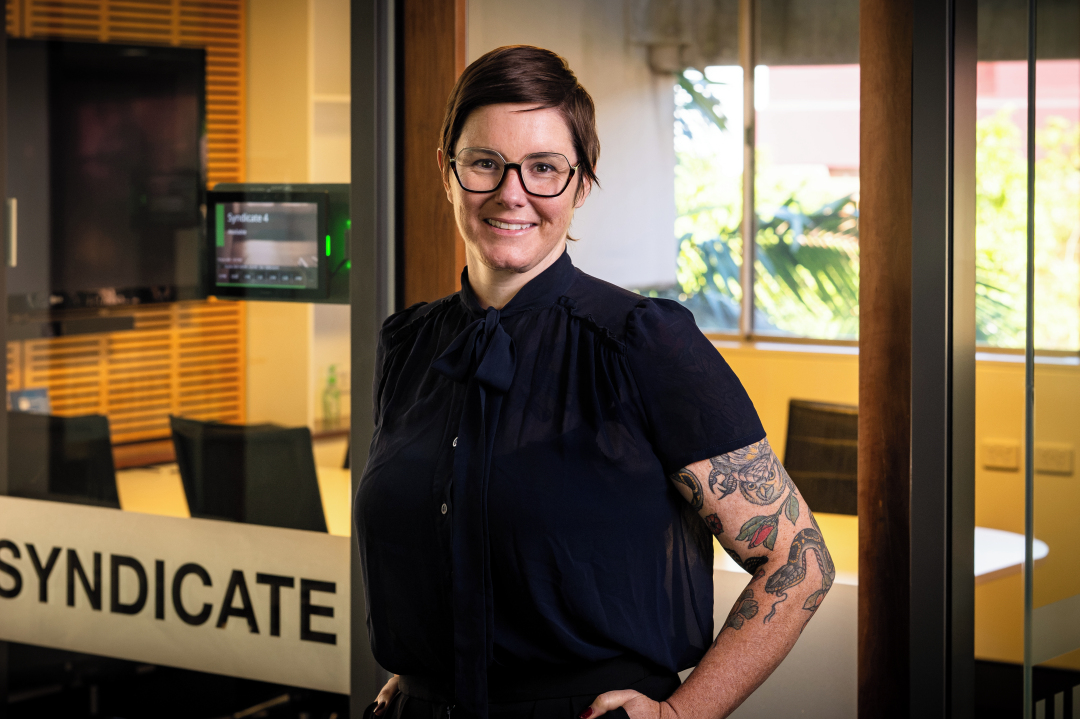 QUT Executive MBA student, Kiri Dicker
The diversity has exposed Kiri to different approaches to investment, risk, strategy and decision-making, while also giving her an opportunity to contribute the systems and human-centred thinking developed during her social-impact career.
That exchange becomes particularly apparent in the classroom. Subjects such as Systems Thinking for Managers and Problem Framing for Creative Action play to Kiri’s existing strengths, while Financial Management and Accounting for Decision Making are pushing her beyond familiar territory and broadening her capabilities.
“Creative problem-solving plays to my strengths, but accounting and finance are much newer to me” she said. “That is one of the real strengths of the cohort. I can learn from people who are strong in those areas, while hopefully bringing something useful from my own experience as well.”
Connected by purpose, not geography
One of the QUT Executive MBA’s greatest strengths is its monthly intensive weekend format, allowing experienced professionals to continue working while benefiting from regular face-to-face learning. For students travelling from outside Brisbane, it also creates a highly connected cohort that develops through shared experiences, discussion and collaboration.
Travelling from Toowoomba each month, Anthony says the journey has never been a burden. “I actually look forward to the weekends,” he said. “It doesn’t feel like a chore. I enjoy coming down, spending time with a great group of people, challenging myself and learning something new.”
Rebecca agrees that the monthly intensives help create a close-knit cohort.
“We’re a very close-knit cohort,” she said. “We’re very supportive of each other, and I know we’ll continue to stay in touch after the program.”
Beyond the classroom, classmates celebrate birthdays together, support one another through major life milestones and even participate in each other’s community fundraising events as a group. The relationships built throughout the program often continue long after graduation, becoming trusted professional networks that graduates rely on throughout their executive careers.
For professionals considering an Executive MBA, their experiences reinforce an important lesson. The value of the qualification is not simply the knowledge gained from textbooks or lecturers. It is the opportunity to learn alongside experienced leaders whose industries, careers and perspectives differ entirely from your own, and to build relationships that continue to shape your leadership long after graduation.
Ready to take the next step in your leadership journey?
Applications are now open for QUT’s Executive MBA January intake. Learn more and apply today.
This article is republished from MBA News. Read the original article here.
Author

Ben Ready founded MBA News in 2014 and is the Managing Editor. He is a former business and finance journalist with Australian Associated Press (AAP) and Dow Jones Newswires in London. Ben completed his MBA in 2012 and was awarded the QUT GMAA Entrepreneurship Prize. He is also the founder and Managing Director of RGC Media & Mktng (rgcmm.com.au).