By Ben Ready, 8 January, 2026
In the second half of the QUT Executive MBA (EMBA), something significant shifts. The units continue to challenge, and the cohort discussions remain rich and thought-provoking, but students begin to move beyond theory, stepping into a deeper sense of identity and clarity around the kind of leader they aspire to be.
And they are not doing it alone.
Through the Business Leadership Practicum, every student is paired with an Executive Advisor (EA), an experienced senior leader who walks alongside them as they navigate the complex terrain of strategy, governance, decision making and self-awareness.
These partnerships, shaped around trust, candour and curiosity, are consistently rated as one of the most impactful elements of the program.
For Kristy Hammond, a Senior Partner in Davidson’s advisory practice, becoming an EA felt like a natural continuation of her lifelong commitment to building capability in people.
Kristy’s own QUT EMBA journey gave her first-hand insight into just how transformative this mentoring could be.
During her program, she was matched with a mentor she still speaks of with deep gratitude.
“I was incredibly privileged to have my mentor as both an ally and a confidant,” she says. “We had some wonderful, robust conversations over my 10 months in that second year.”
It was that experience that motivated her to return to QUT as a mentor herself.

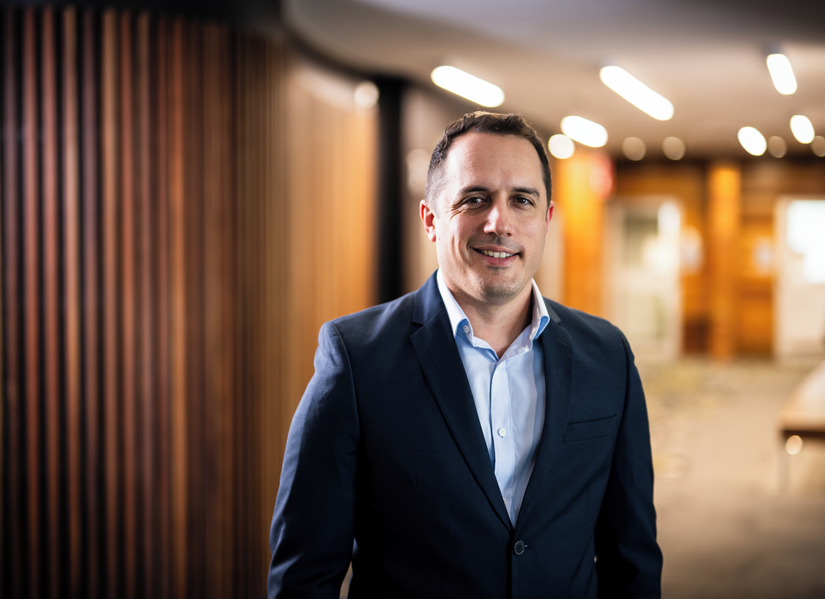
QUT EMBA graduate and Executive Advisor (EA) Kristy Hammond
Mentoring in the EMBA is not about tutoring students through assignments or revisiting subject content. While the curriculum often sparks discussion, the meetings become a space for sense making, bridging theory with real-world lived leadership experience.
“We would use the EMBA units as a guide when it made sense,” Kristy said. “But our focus was typically around leadership… the intrinsic, softer pieces that make my mentee, and how they could elevate those as they built their career.”
Her meetings with her mentee mirrored the natural rhythm of professional life.
“We connected monthly,” she said. “Half a dozen cups of coffee and conversations about their leadership journey.”
The conversations flowed both ways.
“I probably went into it assuming I’d be the one asking a lot of questions, prompting reflection and insight, but just as many thoughtful questions came back by my way.”
This balanced, human, experience driven learning is what sets the practicum apart. Kristy describes the EA relationship as a safe space where students can test ideas openly, without fear of judgement.
Bringing Leadership Theory to Life
For Travis Whebell, an engineering and projects leader at Glencore, the mentoring component was one of the most valuable parts of his QUT Executive MBA experience.
After 15 years in technical and operational roles, he entered the program seeking deeper leadership capability.
“I wasn’t looking for more technical depth. It was time to develop greater leadership capacity, the EMBA provided not just theory, but practical frameworks that could be applied immediately in the real world, alongside the pressure testing and executive mindset required to lead at scale” he said.
At the same time, he had stepped into a business improvement role and saw immediate opportunities to apply insights from the program in real time.
Mentoring played a crucial role in bridging the gap between leadership theory and practical application.
“There’s some pretty deep leadership theory you need to get through,” he said. “But then it’s about talking to your mentor about their experiences with that… bouncing off the theory of what’s happening in the real world with real leaders and the decisions they’re making.”
His EA came from an entirely different sector, the Head of People in the transport industry, something he sees as an advantage, rather than a mismatch.
“I don’t think QUT are trying to match you industry for industry,” he notes. “They’re intentionally mixing things up to give you a broader perspective and complementary experience.”
He also highlights the value of taking ownership of the mentoring relationship.
“The onus is on the mentee to make it happen. You get out what you put in,” he said.
In practice, Travis often shared articles or theories ahead of the meeting, using them to anchor the discussion. The insights he gained helped shift his own leadership mindset, from one grounded in technical problem solving to one grounded in complexity, collaboration and strategic thinking.
“I used to have this root cause analysis mentality,” he recalls. “But there are wicked problems in organisations that just aren’t that simple. The leader’s role is not to have all the answers, it’s about creating the conditions for sense-making and forward momentum. That shift has helped me develop a broader enterprise perspective and the systems-level thinking increasingly expected by boards and C-suites.”
Leadership, Confidence and Career Momentum
Across both perspectives, one message is clear. Mentoring in the QUT Executive MBA is a catalyst for transformation.
For students, it sharpens self-awareness, builds confidence and provides real world insight that accelerates their leadership capability. For Executive Advisors, it is an opportunity to give back, drawing on decades of professional experience to support the next generation of leaders.
In a world where complexity is increasing, where the challenges leaders face no longer fit neatly into models or frameworks, the QUT Executive MBA mentoring program offers something rare and invaluable: human connection, wisdom and guidance at exactly the moment students need it most.
Ready to take the next step in your leadership journey? Applications are now open for QUT’s Executive MBA January intake. Learn more and apply today.
This article is republished from MBA News. Read the original article here.
Author

Ben Ready founded MBA News in 2014 and is the Managing Editor. He is a former business and finance journalist with Australian Associated Press (AAP) and Dow Jones Newswires in London. Ben completed his MBA in 2012 and was awarded the QUT GMAA Entrepreneurship Prize. He is also the founder and Managing Director of RGC Media & Mktng (rgcmm.com.au).